📰 @KestralJ and colleagues from @wetsus, Paqell and @WUR found that a more basic #pH enhances polysulfide generation, even with bacteria present. This could just be the key to produce more solid #sulfur to reuse.
👇 more here: https://t.co/OjFPTiYwgN
📰 Whether used to convert toxic environmental pollutants into desired #sulfur solid, or to mine more valuable metals from contaminated water. Suyash Gupta and coworkers describe the works of extreme sulfur bacteria in their new #review
👇 more here: https://t.co/jg7rzBvzge
📰 Rich communities of microbes 🦠 in our #groundwater sources, and plenty of oxygen can help #micropollutant breakdown in #aquifers. Adding food sources mostly works opposingly.
👇 New study by @WUR and Wetsus more here: https://t.co/2XCGNyISBf
📰 Algal blooms and #eutrophication are still caused by excess P even at low concentrations. By doping goethite nanoparticles with zinc, Wetsus and @tudelft scientists tailored the adsorbent surface to make it a figurative phosphorous magnet.
👇 more here: https://t.co/vKMpGsTM4O
This Tuesday, January 16 2024, 12.30, Sam Rutten (MST dept./@wetsus) will defend his PhD thesis entitled ‘Nanofiltration of Greywater to Remove Micropollutants’. More information at https://t.co/n2NU17v3oY #TwenteMembranes#PhD#UTwente#Nanofiltration#OMP
By prioritizing targeted increases in rainfall, forestation programs may not only mitigate global climate change itself but also reduce its concrete negative effects such as droughts.
More here 👇
https://t.co/qgZ0nqGy1y
📰 Suyash Gupta and her colleagues found the key #microbes 🦠 that convert toxic sulfide to #sulfur in biodesulfurization systems. Plus, they studied at what conditions these microbial workhorses prefer to grow and why
👇 more here: https://t.co/zzE8DLaWgu
📰 Microbes can make drinking water from #aquifers clean again. With the help of oxygen, a little time, and some carbon at times, #micropollutant#biodegradation could clean up potable sources
👇 more here: https://t.co/EEnBzod5Ow
📰 #nanofiltration#graywater reclamation sounds good, but how do we ensure our safety throughout? @Sam__Rutten investigated ways to detect broken filters. And best of all, it works marvelous at pilot-scale
👇 more in @EnvSciTech or here: https://t.co/LRNWPgyfWg
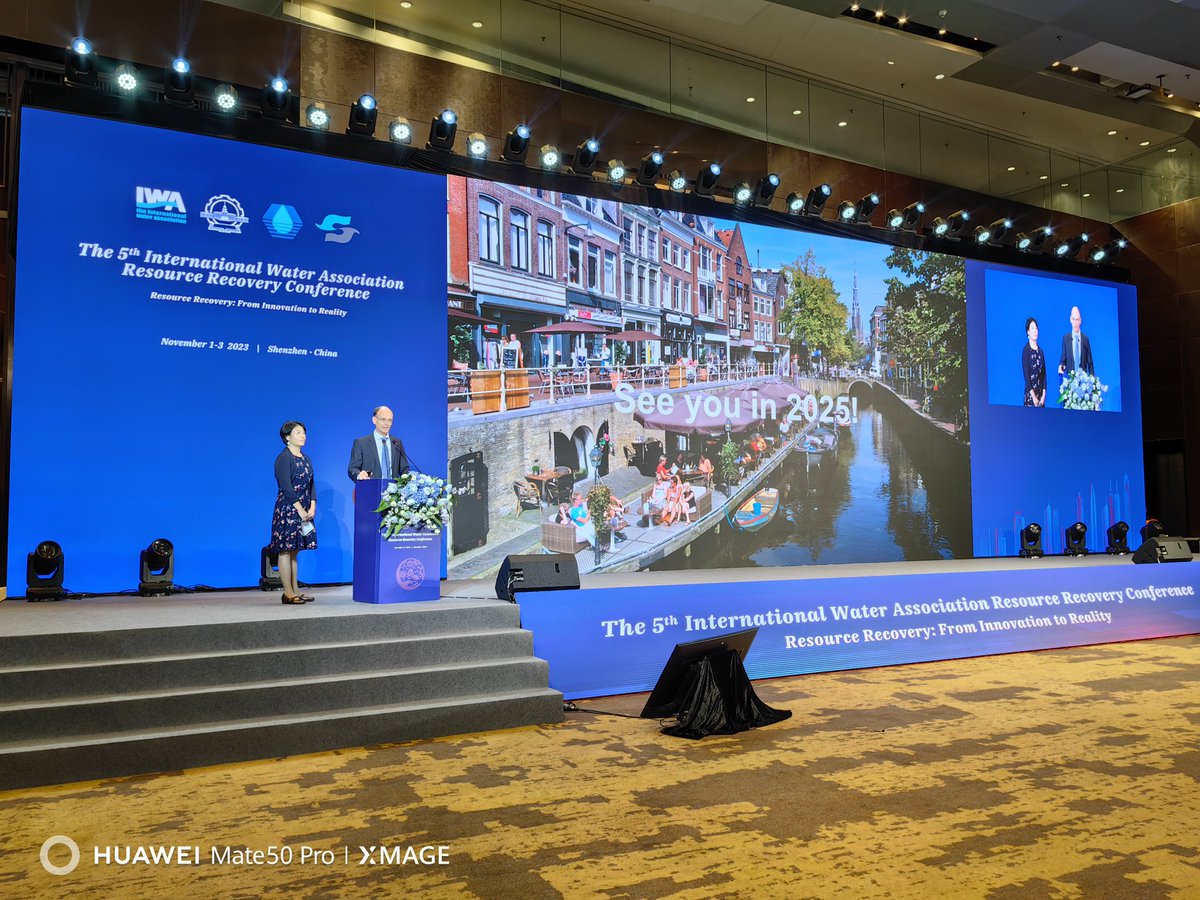
We are very happy to announce that the 6th IWA Resource Recovery Conference in 2025 will take place in Leeuwarden, The Netherlands. Wetsus will take care of the organisation together with the academic and industrial partners in our network.
It's almost time for @Aquatech! Wetsus will be represented with the @Watercampus, at the InnovationLAB and in an industrial setting, #ICWW organized by @ProtThomas and @LeonKorving. Hope to see you there!
📰 Removing toxic gases with the power of bacteria is getting better and better💪🦠 @KestralJ and colleagues from @wetsus and @WUR are tracking the compound that could be the key to more usable solid #sulfur
👇 more here: https://t.co/RumDCnrWU7
📰 Rusty particles can help us regain #phosphorus. Now Carlo Belloni and colleagues are unravelling the complex interactions, so we #reuse this great adsorbent.
New research in @Chem_Eng_J by @Wetsus, @RidRst, & @tudelft.
👇 and more here: https://t.co/bSgsXjzL0K
Our new article from @ATMESPHERE1 is online! We produced butyric acid from CO2 in MES cells with >70% selectivity, and proposed a strategy to upgrade it to valuable butanol. Thanks to all coauthors from @LEQUIA_UdG, @GemmLab_UdG and @wetsus.
https://t.co/twDdCm0MH4
📰 Plenty of oxygen, heaps of different bacteria, and a healthy amount of carbon help to break down pesticides, pharmaceuticals. New study of Wetsus and @WUR on #micropollutants#biodegradation in @SciTotEnv
👇 more here: https://t.co/RAoWiiLmyH
Visualization of Polyhydroxyalkanoate Accumulated in Waste Activated Sludge - Very nice microscopy work by @R_Pei_@TNWTUDelft@wetsus https://t.co/1SnKS08Ody
Have you ever wondered what conditions stimulate #PHB and #EPS production in anodic biofilms? Check it out here: https://t.co/Zg7Cx75pRY! #WaterResearch
Thanks to all co-authors, #NWO, #WUR, and #wetsus!
The filters achieve removal of organics (10-45%), 99% of manganese, 100% nitrification and >70% removal of various micropollutants. Read all about it in @HAZMAT_journal: https://t.co/UAEZo7UDF3 @WetsusScience with Amanda Larasati, GertJan Euverink, @GagliaMC