a robot can be highly capable and still struggle with places it has never seen before.
a blocked hallway, a new obstacle or a slight change in the environment can make existing spatial data less useful.
this is why real-world data matters for Physical AI.
@vangrid_io is building a smartphone-based network that lets anyone capture spatial data from specific locations on demand with onchain provenance.
instead of relying only on what robots learned during training, the goal is to help them understand how the world actually looks and changes.
better robots need more than better models.
they need a clearer picture of the world they operate in.
Airdrop allocation has a retention problem.
Projects can attract thousands of wallets, but wallet count alone says little about who will keep using the product after rewards arrive.
@zerufinance approaches this through wallet intelligence. Its zScore framework evaluates onchain behavior, while Zaps tracks qualifying activity across campaigns and trading markets.
That creates room for a more informed allocation process.
Protocol teams can use behavioral history to understand participation patterns, while traders can build Zaps balances from eligible activity and, where supported, historical wallet usage.
The important distinction is between measuring activity and understanding it. High volume alone can be misleading, and holding history alone cannot guarantee future loyalty.
Zaps adds another layer through funded campaigns, clan competitions and public leaderboards. Campaign rules determine which activity qualifies and how rewards are distributed.
The longer-term opportunity is to make incentives more responsive to user behavior, rather than relying on wallet counts or raw transaction volume alone.
For @zerufinance, the real test is whether these signals help protocols attract users who continue contributing after the campaign ends.
gQUIP
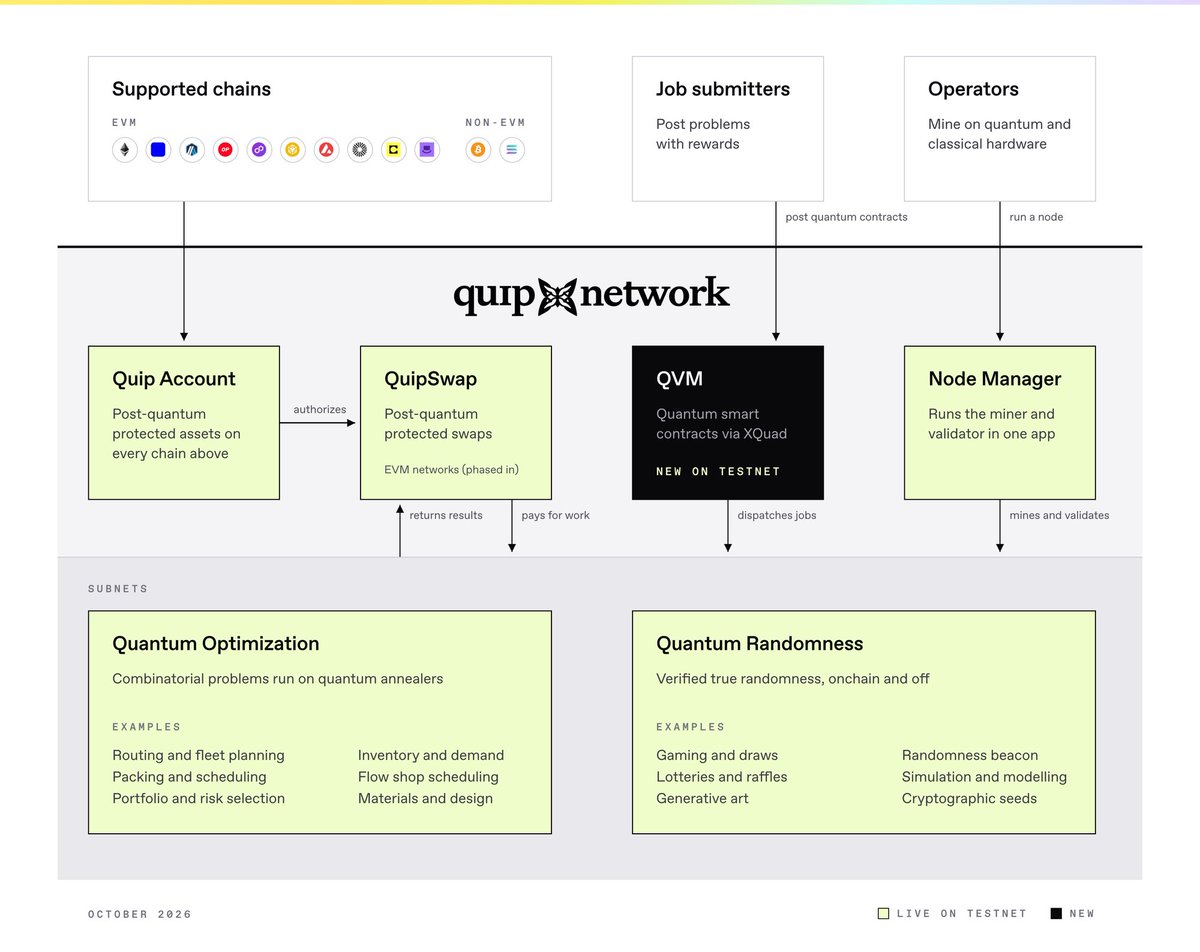
@quipnetwork testnet metrics (October 2026):
• 20,000+ quantum-resistant wallets deployed
• $1M+ in assets protected on-chain
• 500+ active nodes
• 160 PFLOPS peak useful compute
They’re building a decentralized marketplace where CPUs, GPUs, and quantum processors compete to solve real optimization problems (Proof of Useful Work), while also offering post-quantum accounts and bridgeless swaps on chains people already use.
Recent: QVM just launched on testnet, QuipSwap is live, contracts audited by Oak Security.
Still premainnet / pre-TGE. Points campaign is active.
Built by Postquant Labs.
https://t.co/kio20B6tA3
A Burn Is Different From a Promise
Token utilities get announced, roadmaps get published, and communities are asked to believe in what comes next.
The attention should be at when a project moves something from the promise column into the completed column.
@grvt_io has completed its first GRVT buyback and burn, purchasing 1.1 million GRVT on the open market nearly 1% of the circulating supply at the time of purchase.
The important detail is what happened after the purchase.
Those tokens were permanently burned, rather than moved into a treasury where they could potentially be used again. Once burned through the GRVT contract, they cannot be recovered.
That distinction matters because buying a token and removing it permanently from circulation are two different actions.
The headline number tells us the scale; the permanent burn tells us what happened to the tokens afterward.
This doesn’t guarantee anything about @grvt_io future token price. What it does provide is a completed, verifiable action that people can examine for themselves.
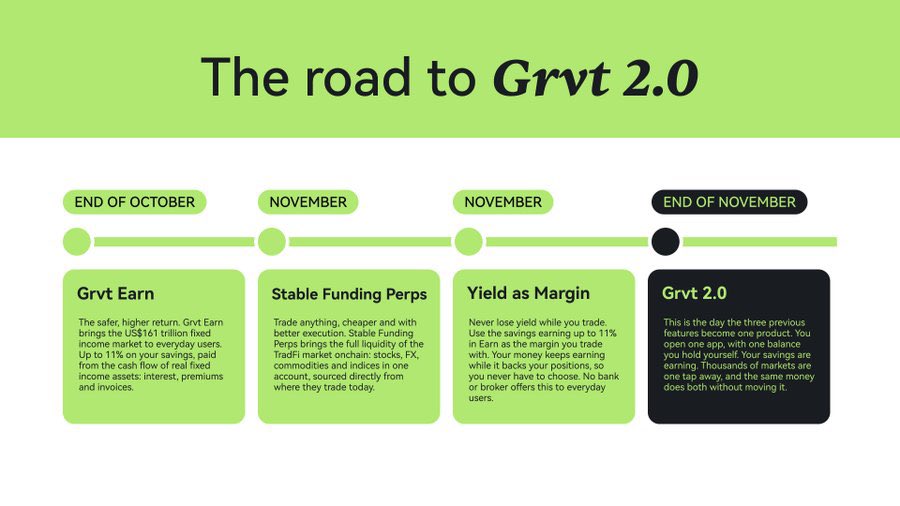
And this is only the first of the top announcements leading toward Grvt 2.0 before the end of November.
GN
The real value of a project is in what people can actually use, not just what gets talked about on the timeline.
That’s what makes the different parts of CONSO worth exploring. From the Miner app to Conso Bots and the Conso Extension, there’s more to look into than just the name.
I’m interested in seeing how these tools fit into everyday workflows as the ecosystem develops.
Keep building, keep exploring. @conso_xyz
Good Afternoooon X
One overlooked challenge in Web3 is making new technology work for people who don’t want to understand every technical detail behind it.
AI agents could simplify complicated workflows, but users still need confidence that those agents are doing what they’re supposed to do.
That’s an interesting problem for @TheARCTERMINAL to solve through verifiable AI execution.
On another front, @QuipNetwork is working on post-quantum security, an area that could become increasingly important as computing advances.
Better user experiences get people through the door. Reliable infrastructure gives them a reason to stay.
That’s the bigger picture I see with these two.
$ARC $QUIP
gTERA
The interesting thing about @TERAxyz is how it combines gameplay with a future player-driven economy. 🏙️
The city is already playable in your browser, so you can explore, drive karts, fight and raid rigs without needing a wallet.
But the bigger picture is the 3,333 Land NFTs on Robinhood Chain. Each parcel has a fixed location in the city, with resource types and rarity tiers designed to influence its future role in the economy.
The roadmap also includes resource extraction, shields, 999 Agents and cooperative heists, with the on-chain mechanics still to come.
I'm curious to see how these systems fit together once they're live. A virtual city becomes a lot more interesting when your location, resources and decisions can actually matter.
TERA is worth keeping on your radar. 🔥
GM gZeruAI
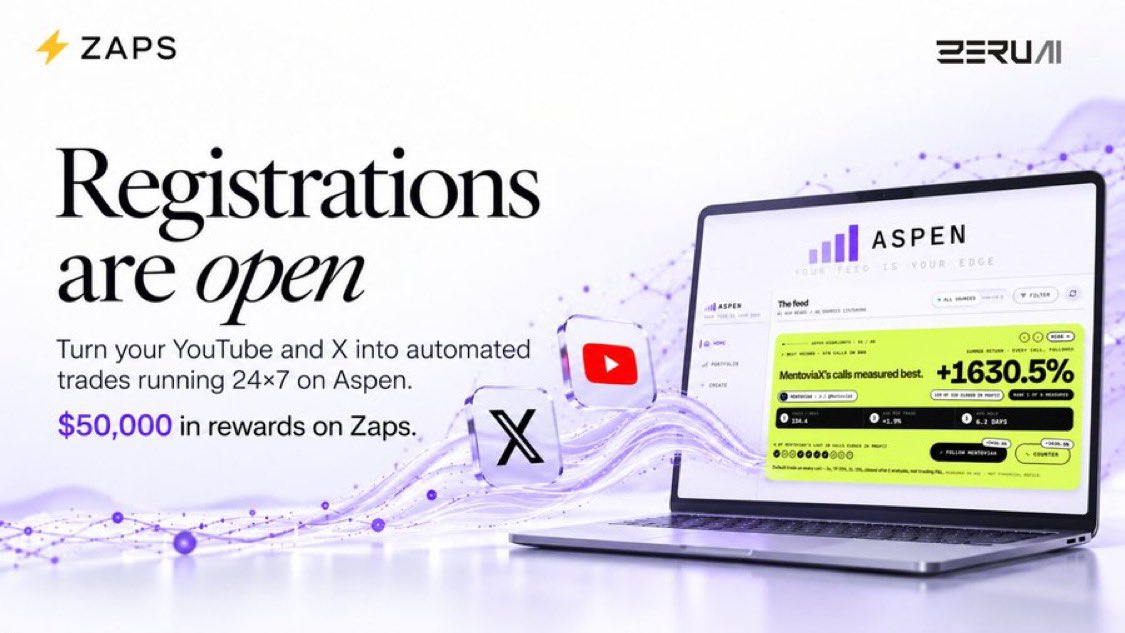
The ZeruAI x Aspen campaign has two numbers worth watching: $10K in qualifying volume to become eligible for a prize, and $15M in campaign volume to unlock the full $50K pool.
Running October 15 – November 25 on Zaps, the campaign rewards up to 1,000 ranked participants using live trades through their Zaps link. Aspen automates trades based on selected X or YouTube accounts, while Zeru’s wallet intelligence helps filter out Sybil activity and wash trading.
A few details matter:
→ Joining is free, but rewards aren’t guaranteed.
→ Clan members share 5% of their prize with the leader.
→ Campaign rewards are separate from the planned Zaps airdrop.
→ Automated trading carries real financial risk.
The important part is understanding the rules before chasing volume.
Full terms: check the official campaign post from @zerufinance.
Gm Creators
Privacy in crypto should matter just as much as security.
That’s one thing I find interesting about FortressName by @Americanfort_io.
Normally, crypto transactions can expose information that anyone may be able to view on the blockchain.
FortressName is exploring a different approach.
With a paid FortressName, identity verification is included. The creator guide also explains that verified senders can choose to share their identity details with the person receiving their payment.
Why does this matter?
Because proving who you are shouldn't mean showing everyone how much money you have or who you transact with.
You should be able to build trust with the person you're dealing with while keeping unnecessary personal information private.
That’s a useful idea for Web3: verify your identity when needed, share information by choice, and protect your privacy.
Explore FortressName: https://t.co/ouFaf8gCES
Trade internet memes (Oct 23 on basepad).
Stack tokenized stocks.
basepad launches can be paired with TSLAc, METAc, NFLXc and more. Fees get paid in the stock itself.
The new way to stack, on Base 📈
GM gZAPS
One of the biggest challenges in a token launch is deciding who deserves a share of the allocation.
Wallet activity alone doesn’t always tell the full story. Some addresses may look active because of farming, while genuine users build a history of consistent participation across protocols.
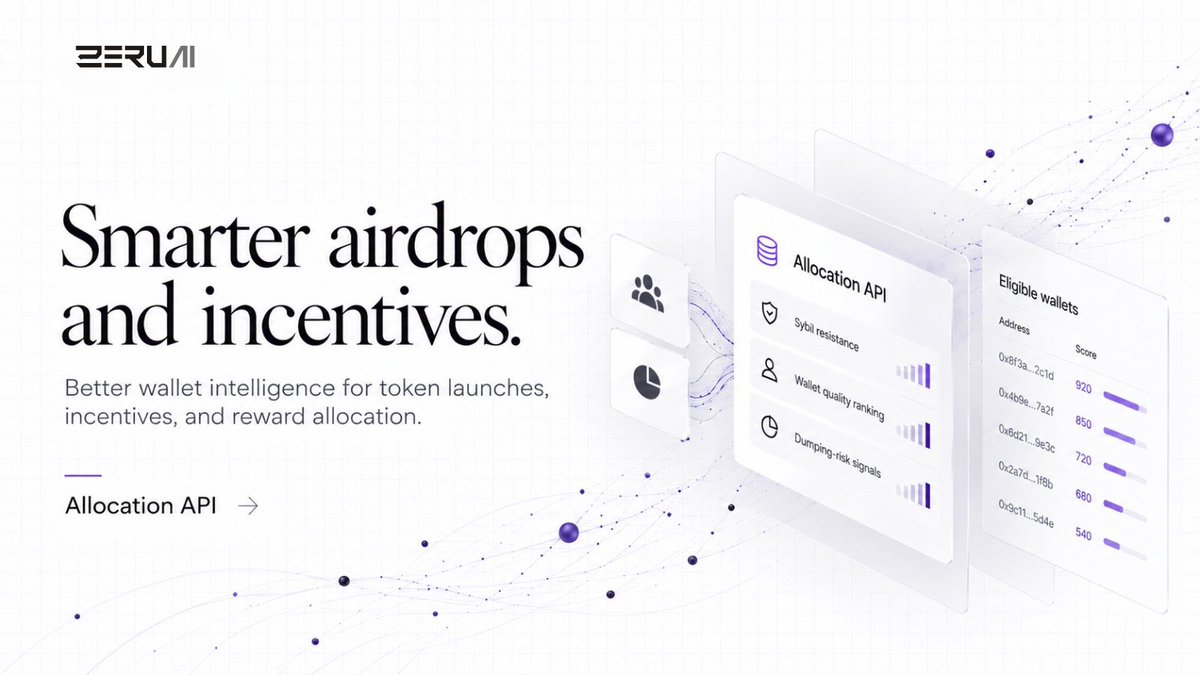
This is where @zerufinance Allocation API comes in.
It helps projects evaluate wallet quality through account age, funding patterns, activity consistency, and cross-protocol history.
These signals can help identify suspicious farming behavior and distinguish more established participants from wallets created mainly to capture rewards.
The API also supports wallet ranking by score band and protocol category, giving teams another way to prioritize eligible users based on their activity and relevance to the ecosystem.
There’s also the question of what happens after distribution.
By assessing token conviction and previous exit behavior,@zerufinance can provide signals that help projects evaluate the risk of recipients selling shortly after receiving their tokens.
For pre-TGE projects, L1/L2 ecosystems, launchpads, and foundations, these insights can support better-informed decisions around airdrops, token launches, and incentive programs.
Fairer distribution starts with understanding the wallets behind the numbers.
GM gVAN ☀️
Getting fresh data about a real place can take weeks.
A mapping van needs to drive there. A sensor box needs to be built, shipped, and installed.
But a phone? Someone nearby may already have one in their pocket.
That is the idea behind @vangrid_io.
It turns everyday phones into tools for collecting 3D data about real places.
Here is how it works:
→ A requester posts a location and offers a USDC reward.
→ Someone nearby opens the app and walks around the area with their phone.
→ A preview checks the capture before the full 3D model is created.
Faces and license plates are blurred on the device, while records are secured on Base so their origin can be verified.
It gets more interesting with AI agents.
An AI agent can request data through an API, pay for the job, and let a nearby person do the physical work. Funds stay in escrow until the submission is accepted, with refunds if the job is cancelled or expires.
Why does this matter?
Robots and AI need real world data to understand places they have never seen. Vangrid gives them another way to get that data without waiting for a mapping crew.
The real world cannot be mapped by software alone. Sometimes, you need someone on the ground.
If your AI needed a 3D view of a place by Friday, would you wait for a mapping crew or pay someone nearby with a phone?
gARC
BTC is up 3.9% from this week’s low, with ZEC leading the gainers at +9.8%, followed by SPCX, SOXL and PUMP.
A lot is happening in the market, and @TheARCTERMINAL is making it easier to keep track.
You can ask ANIMA what’s driving the moves, which assets are gaining momentum, and what key levels to watch.
Market moves are one thing. Knowing what to pay attention to is another.
Trading with superintelligence has never been easier.
A token burn looks good on paper. What happens after the announcement is what matters.
@grvt_io has burned 1.1M $GRVT tokens through its first buyback, removing close to 1% of the circulating supply at the time. That's a verifiable step, but I wouldn't judge the token on scarcity alone.
The bigger question is whether Grvt can give people enough reasons to stay beyond the initial hype.
The platform already has something interesting going on. Its Yield Layer puts a portion of deposited funds to work through DeFi protocols such as Aave, allowing capital to generate yield while supporting trading. The next step is making the experience even more connected through Grvt 2.0.
That matters because traders don't want their capital sitting idle when it could be doing something useful.
But here's where I think the real test begins.
If users can earn on eligible balances, trade with their capital, and access more markets from one account, Grvt could have a stronger reason for people to keep funds on the platform. More persistent usage would be a much better signal than a burn announcement on its own.
Still, there are a few things I'd be watching closely:
→ Token demand: Does $GRVT gain stronger utility as the platform evolves, or does the story rely mainly on reduced supply?
→ Retention: Are users staying because the product works for them, even after airdrop incentives fade?
→ Capital safety: Yield introduces additional considerations. Aave exposure, withdrawal liquidity, and liquidation rules need to be clear.
→ Supply pressure: The burn is permanent, but future token unlocks still matter when assessing circulating supply and potential selling pressure.
Grvt has started with a measurable onchain action. Now I want to see the product milestones translate into sustained usage.
A burn can change the supply side of the equation. Real demand has to come from somewhere else.
If you use Grvt, what would keep you there long-term: better trading conditions, yield on your capital, or stronger utility for $GRVT?
What if digital reputation could do more than sit on a profile?
@conso_xyz is exploring that through CONSO BOTS, reputation-backed collectibles designed to operate mobile nodes on its Sui-based network, with Walrus supporting its infrastructure.
The bigger picture is connecting consumer activity across platforms into a reputation layer that can have real utility in Web3.
Digital identity becomes more valuable when it can support participation, not just recognition.
That’s the direction worth watching.
$CONSO