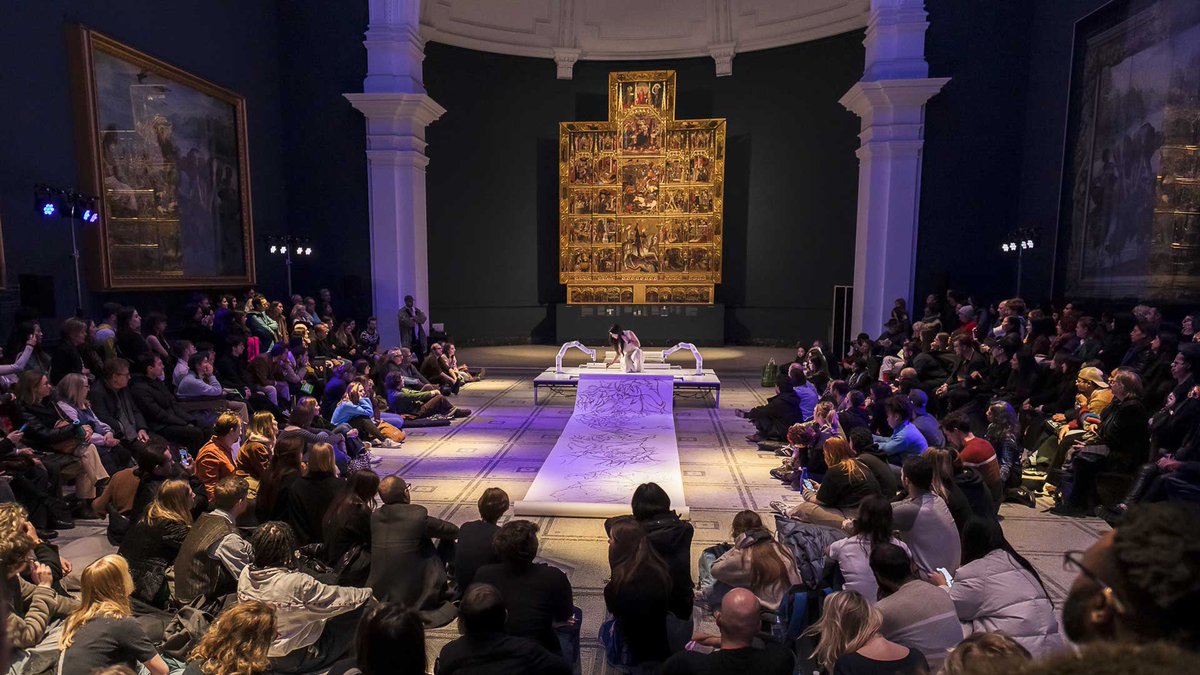
Last day in HK. Beautiful city and much to reflect on for how we can continue to build this ecosystem as a collective.
One of my big takeaways is just how obvious it is becoming *to the world* that digital art is the art of this era. It is the most accessible and engaging format, and the only with the surface area to invite real co-creation. But it is also the work that is asking the most important questions of the moment - questions humanity at scale are now confronted with trying to answer. Namely, how do we resolve the increasing ubiquity of agents and models and algorithms in our daily lives and what does it mean for human agency and human-technology collaboration?
It’s also clear to me that this ecosystem is replete with some of the (1) best humans, and (2) hardest working people I have ever encountered. The artists and gallerists literally work morning to night on the presentation and communication of their work. In most cases there is a beautiful dance between artist and gallery - iterating over the course of the week together, supporting each other, and often taking a brief moment to exhale together over quick food and drink to end the day.
In terms of the HK market in particular - this seems like the single largest opportunity for the expansion of digital art practices. I expect this ecosystem to grow massively in Asia in the coming 12-24 months.
Salute to all who showed up with so much integrity and hard work this week to help amplify the voices of these artists. These are the early days of a digital art renaissance.
Imagine I told you five years ago we would one day be showing art at Art Basel in Hong Kong
It would be so popular that crowds of tens of thousands would fill up the space and there was no room to even walk
Wake up
It’s not a dream
This is just a start
This is how we build
How Digital Art was Bought & Displayed in the Early 2000s
"A new generation of artists and gallery owners wants you to think of [televisions] as something else: an empty picture frame. Purveyors of a relatively new genre, so-called digital art, aim to fill that blank screen."
Quote from 'Digital art sellers aiming to fill blank TV screens' by Andrea Petersen for The Wall Street Journal, Feb 2005 // Clip from AP covering Whitney Museums 2001 Bitstreams exhibition.
They said photography wasn’t art.
They said cinema wasn’t art.
They said video games weren’t art.
Now they say AI arts/digital art isn’t art.
I’ve spent over a decade with my studio team turning millions of data points into living, breathing artwork experiences ethically — at MoMA, at the Guggenheim, at the Venice Biennale. Not because a machine told me what to create, but because I had a vision that no traditional tool could realize.
Denying all AI technologies as an artistic medium doesn’t protect art. It limits it. The artists who embrace new tools don’t replace the old masters — they join them.
Art is not defined by the brush. It’s defined by the intention, the emotion, and the courage to see the world differently.
Dear artists,
Curators and collectors are trying to find your work, so PLEASE do yourself a favor and do the following:
1. Have a link in your bio to your available work! No one wants to have to look for hours through your feed to see if they can find a link to a piece or go through every platform searching for you.
2. If you have a Linktree: great — but please update it. Again, having tons of expired or broken links is very confusing and frustrating. Update it and keep it current.
3. Have a webpage. You can do something very simple with AI or with any web-building tool. Something that says who you are, what your practice is like, shares your overall work, and shows your available work. Again, make it easy for a collector to fall in love with you.
4. In your X bio, have something that makes sense (or points to something that makes sense, like a website). If they’re looking at your X profile, chances are something caught their attention or someone recommended you. Let them know who you are as an artist.
5. Please put prices on your pieces! It is very hard for a collector to offer to buy without knowing your price point. They don’t want to go too high, but they definitely don’t want to go too low and offend you. Take the guessing out of it. State your price (and adjust accordingly). If you don’t want to do this on a platform, at least do it on your webpage so collectors can understand your general price range.
6. Have some sort of pricing strategy that you can stand behind. Don’t make it seem like you have completely different pricing depending on which platform the collector finds you on. Do all your pieces have to have the same price? Absolutely not. Is it based on how much time you put into the piece? No. It is based on what you believe the piece is worth. Make it make sense to you, and it will make sense to a collector — but be consistent.
7. And lastly, be active. I don’t mean you have to post 10 times a day or that you even have to have new work. But if a collector sees that you’ve had no activity for over six months, they might assume things have changed and you’re no longer interested in selling. Most collectors want to buy beautiful work, but they also want to support an artist’s journey. If you’re no longer interested in the journey, they might not be either.
Rooting for all of you artists out there! The bear market is tough but there are many people looking for your work! 🫂❤️
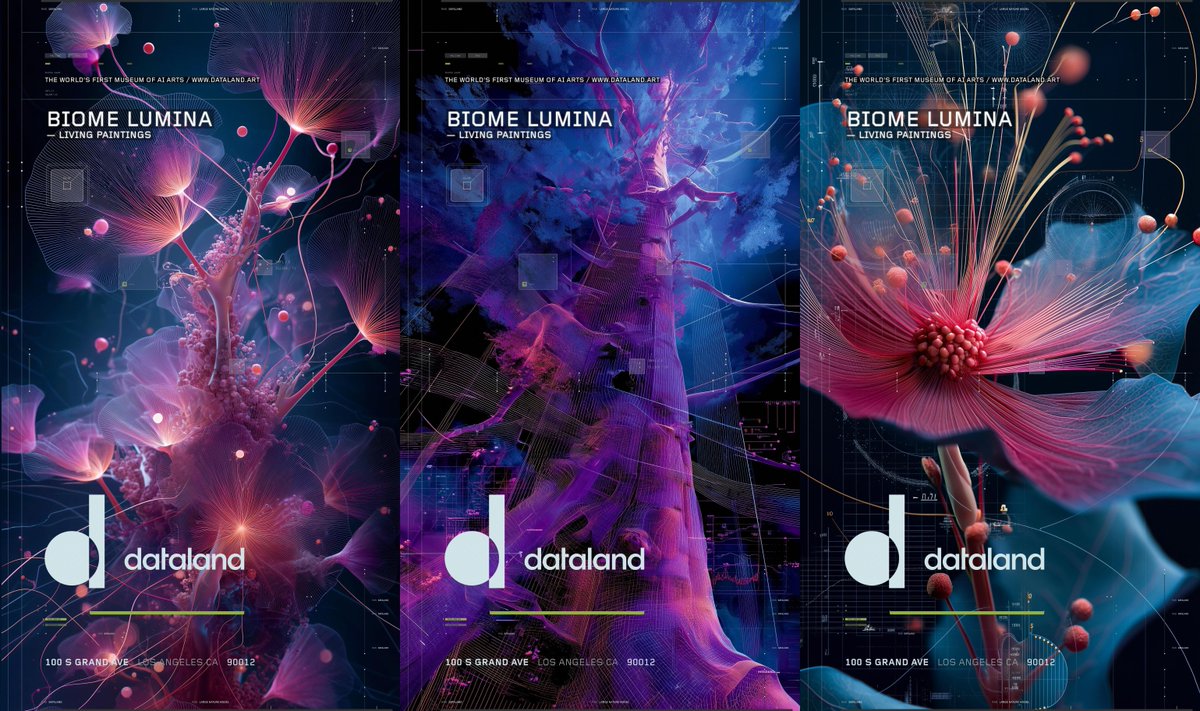
Calling all creative technologists & artists. 🎨💻
The search is underway. We've teamed up with @refikanadol for a @DatalandMuseum residency exploring AI, nature & design.
✨ Get $25k funding + access to the Large Nature Model.
https://t.co/hmxLYQUJyV











![Noahbolanowski's tweet photo. How Digital Art was Bought & Displayed in the Early 2000s
"A new generation of artists and gallery owners wants you to think of [televisions] as something else: an empty picture frame. Purveyors of a relatively new genre, so-called digital art, aim to fill that blank screen."
Quote from 'Digital art sellers aiming to fill blank TV screens' by Andrea Petersen for The Wall Street Journal, Feb 2005 // Clip from AP covering Whitney Museums 2001 Bitstreams exhibition.](https://pbs.twimg.com/media/GwALfOaWQAAyuSy.jpg)