Most trading content starts with the result.
We are starting with the process.
Wheel Strategy Lab documents a systematic options strategy in public — before the outcome is known.
Every week begins a new research cycle.
Starting with Cycle #1, we're keeping a public trade log.
Cycle #1
VZ $46.50 Put
Aug 3 → Aug 7
13 contracts
Net premium: $390
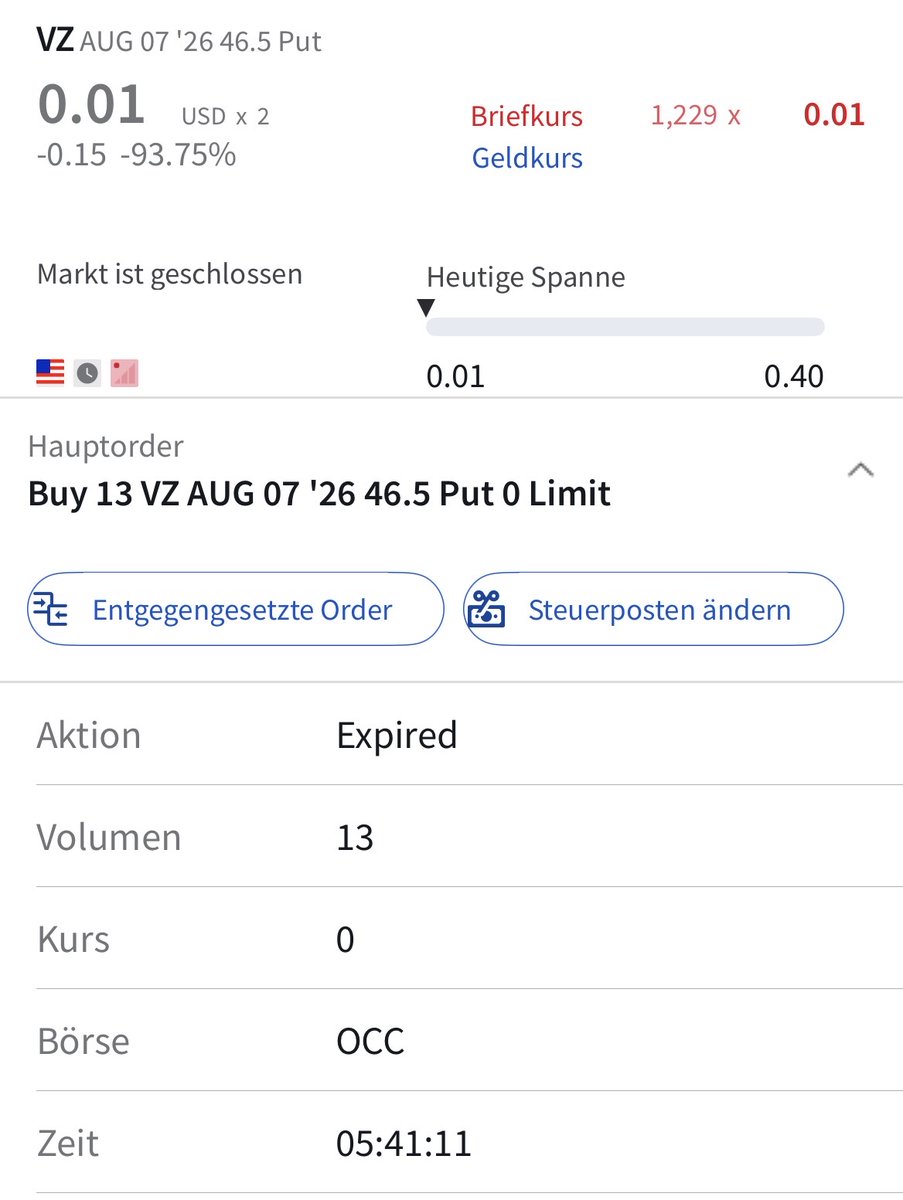
Outcome: Expired worthless
One cycle at a time, including the uncomfortable ones.
Research → Execute → Review → Improve.
Cycle #1 — Outcome
VZ $46.50 short put
Expiration: Aug 7
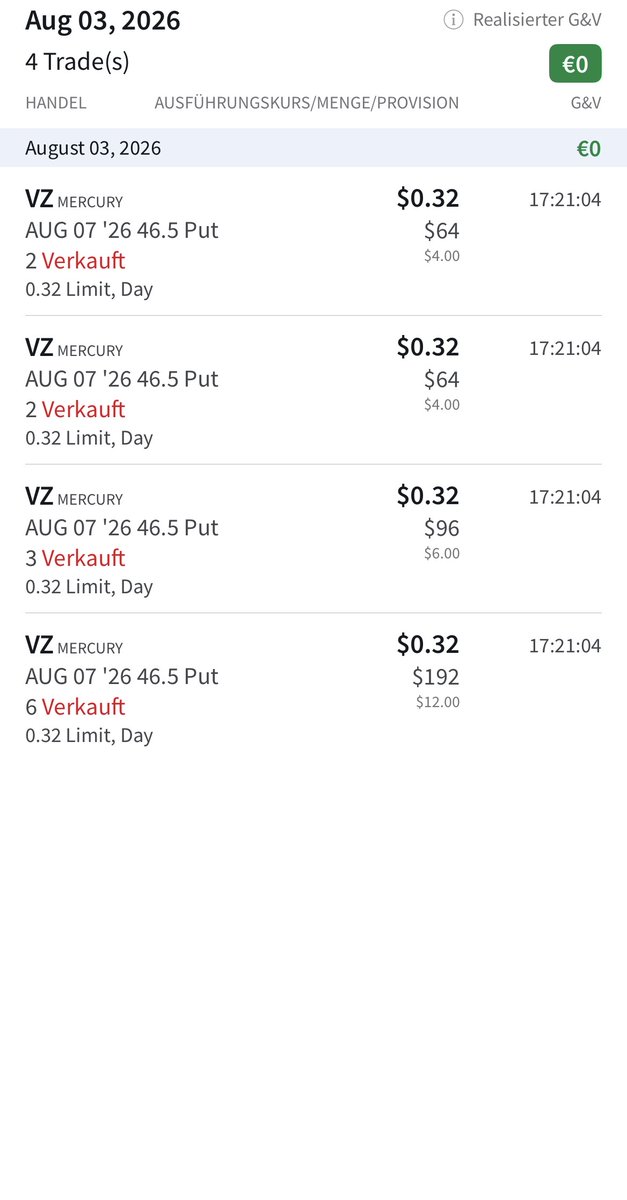
13 contracts at $0.32
Gross premium: $416
Net premium: $390
VZ closed at $46.99.
The position expired worthless.
But the path to expiration was more interesting than the final result.
Cycle #1 — Review
VZ recovered and closed at $46.99, $0.49 above our strike.
The put expired worthless.
The takeaway isn't simply the +$390.
A 4-day position experienced a material external shock and temporary ITM exposure — and still completed the original thesis.
@Invest_Brandon Interesting perspective. We run a Wheel strategy, so we regularly face the decision of writing a covered call after assignment or simply holding the shares. What signals or criteria help you decide between the two?
@OptionsOptimaX Interesting perspective. What made a setup “ultra-high conviction” for you? Was it mostly IV, valuation, technicals, or something else?
@NoobTheta Thanks for sharing. I also think capital efficiency is often overlooked. Have you found this approach to be consistent across different market conditions?
I thought finding good trades would be the hard part.
5 days into building an options account on X, I’ve already reported 4 impersonators, followed one by mistake, received a fake DM, and seen X act on one report.
Is this normal for new creators?
The four IBKR entries are partial fills of one order:
2 + 2 + 3 + 6 = 13 contracts.
The $60,450 figure represents the cash obligation if all 13 puts are assigned—not a realized loss or current capital outlay.
Cycle #1 — Research
We are documenting the full Wheel decision process before the outcome is known.
This cycle:
271 option setups
→ 15 shortlisted candidates
→ 15 qualitative risk reviews
→ 1 live position
No individual ticker is shown until the final execution decision.
Cycle #1 — Live execution
Sold 13 VZ Aug 7 $46.50 puts at $0.32.
• Gross premium: $416
• Commissions: $26
• Net premium: $390
• Assignment value: $60,450
The position is live and the decision is locked.
Outcome and review will follow after expiration.
ROC-AUC measures ranking across the full dataset.
For the three highest probability bins, calibration is the more relevant check: do forecasted outcomes match realized outcomes?
Here, 91.9% forecasted closely matched 91.5% realized.
WRM-001 — Model monitoring
Overall ROC-AUC: 0.734.
In the three highest probability bins:
• Forecast: 91.9%
• Actual expired-worthless outcome: 91.5%
• N = 776
Calibration gap: -0.4 percentage points.
@OptionsJive@jschultzf3@tastytrade Interesting distinction. In our historical short-put data, delta worked as a useful ranking benchmark, but it was not interchangeable with a calibrated expiration probability.
Our next step is to examine where that gap changes across different market conditions.
In our research, “expired worthless” is the desired short-put outcome: the premium is retained and no assignment occurs.
The dataset partly overlaps with model training, so this is not yet an independent out-of-sample result. Future live cycles will be documented prospectively.
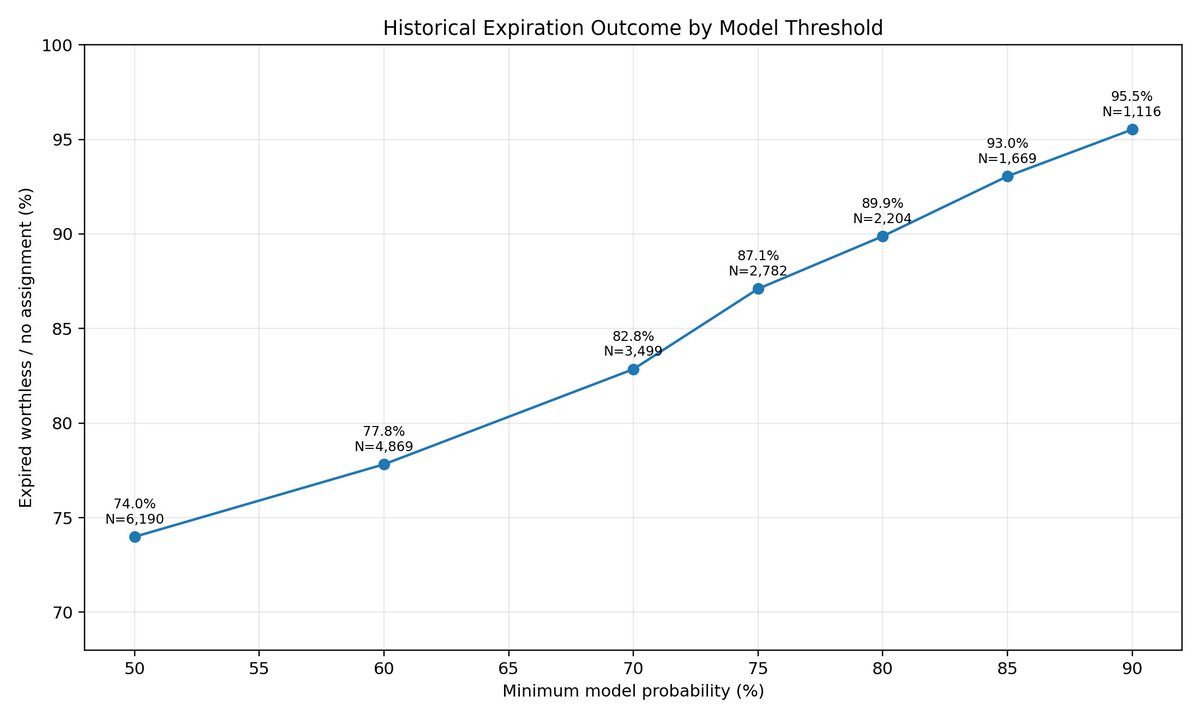
In our historical short-put dataset, higher model probabilities were associated with more puts expiring worthless.
At >80% model probability:
• 2,204 setups
• 89.9% expired worthless
Historical research — not a live trading signal.