Despite bipartisan support for LWCF, congressional gridlock has created a one-two punch for outdoor recreation: inaction will stall efforts to conserve key habitats & suspend our best tool for opening access to 9.52 million acres of public land that are isolated by private lands.
We urge @Interior to reconsider this decision. Mitigation is a fundamental tenet of habitat conservation and recovery of threatened or endangered species. The federal government should play a leadership role in establishing common sense standards. https://t.co/oft74h6adF
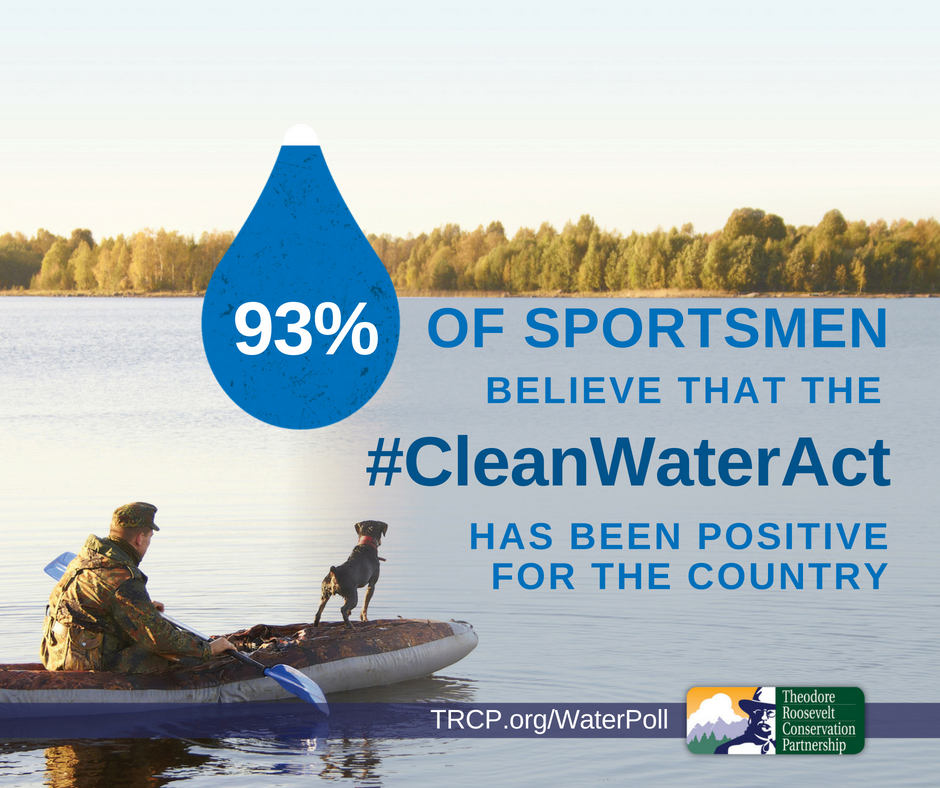
93% of sportsmen believe the #CleanWaterAct has been positive for the country, but we can't afford to backslide on the progress we’ve made. Providing federal safeguards for our waters is not a question of quality of life versus jobs or the economy. https://t.co/pwI1ZllVK5
Thank you @senpatroberts and @senstabenow for producing a strong, bi-partisan conservation title in the Senate #FarmBill. Look forward to working with the conference committee to deliver a bill that merges the best parts of House and Senate proposals.
The House #farmbill includes many of our community’s recommendations, although we would have liked to see it move forward without the short-sighted funding provisions or the handful of unacceptable amendments. https://t.co/beObleWlH9
This bipartisan Farm Bill sets the high-water mark for conservation on private lands that make up over 70% of the country. We applaud @SenPatRoberts & @SenStabenow for a bill that addresses pressing needs around habitat conservation and sportsmen’s access. https://t.co/rIuoA2G93d
Partisan brinksmanship fails again. Today’s vote underscores the need for House and Senate to produce an on-time, bipartisan #farmbill. Allowing conservation $ to expire in September is unacceptable. https://t.co/mTwRsHMN44
T.R. understood there would be development & conservation on public lands, as did Congress in 1965 when it authorized oil & gas development, dedicating some revenues to conservation & access via LWCF. @SecretaryZinke has the chance to reaffirm that model. https://t.co/WRgEHeUYZE
This kind of deal doesn’t get done without the hard work of many people, including conservation groups, sportsmen, industry stakeholders, and government—from appropriators & authorizers to leadership. The community should be proud of what our decision makers have accomplished.
Hunters and anglers especially have reason to cheer for the wildfire funding fix contained within Congress' FY18 spending bill, which will ensure that the @forestservice can get back to the business of maintaining healthy habitat and excellent facilities.
@TheTRCP@Interior@forestservice@NatResources FLTFA is an important and broadly supported program that has successfully conserved important wildlife habitat and increased access to our public lands for hunting and fishing.
With 70% of the US made up of private lands, it’s irresponsible NOT to know or care about the #FarmBill. It makes walk-in access possible, provides assistance to landowners who want to limit toxic runoff into our waterways, and helps to boost habitat for critters we care about.
Hunters and anglers are fierce stewards of public lands, but it may surprise some to learn that the Farm Bill represents the single largest federal source of conservation funding. https://t.co/37lCIkJu5e
An infrastructure bill should present an opportunity to enhance natural solutions for infrastructure challenges. Restoring wetlands & creating wildlife-friendly roadway passages boosts fish & wildlife habitat, and helps mitigate flooding during more frequent catastrophic storms.
Make no mistake, we are paying attention to the clear shift away from budgeting for public land acquisition and questioning whether the infrastructure plan is really implying that we should sell off public lands to make improvements to roads, bridges, and airports.
The $887-billion outdoor recreation economy relies on healthy fish and wildlife populations, quality habitat, and the upkeep of public land infrastructure, and we will continue working with Congress and the administration to ensure these basic tenets of conservation are upheld.
Unfortunately, this budget proposal seems to indicate that cash-strapped conservation agencies deserve these cuts, while public land facilities, forests, waterways, wetlands, and millions of acres of sagebrush continue to fall by the wayside.
As it is, federal funding for conservation represents barely 1% of the budget, having been slashed in half over the past 30 years, and it would be impossible to balance the budget on the back of conservation. https://t.co/DQ9kzNlQH3