Registrations are now open for my NPTEL course on Evolutionary Biology. This is a very basic introduction to the subject.
Please spread the word.
https://t.co/3GwDtvSHVt
This new research on US unicorn startups is really interesting.
Some key facts from the report:
1. Immigrants founded or cofounded 455 of America’s 775 privately held billion-dollar startups, equal to 59% of all US unicorns.
2. 66% of all US unicorns were founded or cofounded by immigrants or the children of immigrants.
3. 79% of US unicorns have either an immigrant founder or an immigrant in a key leadership role.
4. The 455 immigrant-founded US unicorns have a combined valuation of $5 trillion.
5. That $5 trillion valuation is larger than the total stock-market value of companies listed in all but 7 countries.
6. Including immigrant-founded unicorns that went public since 2016 pushes the total value above $5.8 trillion.
7. The number of immigrant-founded US unicorns rose from 50 in 2018 to 455 in 2026.
8. 24% of US unicorns have a founder who first came to America as an international student.
Independent fact-checking in India is not cheap, easy, or safe. Alt News runs entirely on reader support.
We are trying to raise ₹20 lakh this month. If the work has been useful to you, this is how you sustain it.
Donate at: https://t.co/nwpj0QcfA8
The 2027 Census will enumerate diverse castes all over India , after almost a gap of 100 years. But the British were obsessed with understanding, counting classifying, and aggregating caste by regions and groups from the early 19th Century itself. The 1881 Census was the first synchronous all India Census and Caste took a central place in enumeration
Our 10th article in #Censusnama series "Enumerating ‘Fuzzy Communities’: Recording Caste in the 1881 Census"
https://t.co/cNV5MmxZbH
we explore the complexities of counting fuzzy identities of Caste in India. Conventional narrative is that " census established definitive geographical and social boundaries for otherwise fluid identities, only to increase divisiveness." The Caste system and its evolution has 2500 years of history -characterized by endogamy and occupational rigidity. But there was no systematic enumeration and codification by the Indian rulers (barring few isolated exceptions) till then.
Our article argues that " enumerating social identities in India has and will always be a complex, arduous process, in which officials’ preconceived notions about India’s ethnic and social identities are often written into the census’s categories and data."
Our article dives into these, and the numerical distribution caste, level of literacy (Caste; male and female), occupations , and civil conditions (marriage and widowhood)
Follow Censusnama -https://t.co/Naxu1H6v0I several more articles on Indian Census,
Nishitha M. Gaurav Kalyani
#Census #Caste #India
1/2
Dear Friends,
I never wanted to become a doctor. I always wanted to write and tell stories. And yet, over the years, medicine gave me the most extraordinary stories I could never have imagined - stories that lived in hospital corridors, outpatient rooms and inside terrifying ICUs; in the trembling hands of a father carrying his jaundiced daughter, in the silence between a prognosis spoken and a family's world shattered.
Today, I am proud and deeply moved to announce my first book, The Liver Doctor: Stories of Love, Loss and Regeneration, published by @HarperCollinsIN .
This book is where my two worlds finally collide.
My childhood love for writing and telling stories. And my adultdhood, as a medical doctor.
Through the lives of real patients and their families - their courage, their grief, their impossible choices - I tell the story of the most misunderstood, most indispensable, and only self-regenerating organ in the human body: the liver.
But this is not just a medical book. It is a journey through ancient myth and modern science, through Prometheus and Wilson's disease, through Mesopotamian clay tablets and liver transplant waiting lists, through the history of healing itself.
I wrote it for doctors, so they may remember why they chose this life. I wrote it for patients and families, so they may know when to fight and when to find peace. I wrote it for myself, to make peace with what I have lost and what I will lose.
This book shoulders that one truth I have learned in all my years at the clinical bedside: I did not become a doctor to help people cheat death, but to help them understand it.
This book is my offering - to medicine, to storytelling, and to you. Lose yourself in these pages, as I have.
Pre-orders are open now
The Liver Doctor : Stories of Love, Loss and Regeneration - https://t.co/MoTf7ZCiPG
So Mythos was, indeed, not marketing hype.
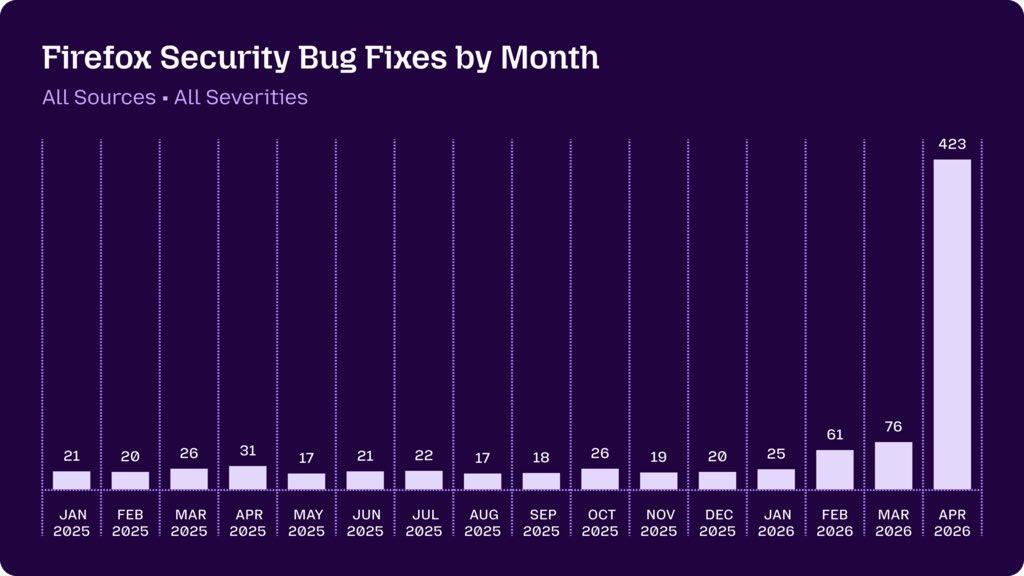
Remember this is a general purpose model that just happens to be good at finding exploits because good models are good at lots of things. Expect similar from OpenAI & Google. And from open models in 8 months. https://t.co/KbhalQYX8R
Good read... "Comparing Contrasting AI Policies: from IISER Pune to Zig" https://t.co/c4E2wFRcGJ - @NGKabra
"@IISERPune has recently announced an AI use policy laying out the conditions under which AI use is permitted (encouraged?) in the institute. The open source software project Zig has announced a policy that goes completely in the opposite direction—banning all contributions that have used AI. And I found both of them interesting (and useful?) for different reasons."
Burning Youthful Years to Chase Few Government Jobs
1. 11 cr applicants; 0.3% jobs; 54% in 15-29 age no work, wasteful exam prep; formal skills 2.3%
2. Hidden Cost Per Yr: ₹11 lakh cr (3.3% of GDP)
3. Raising Alarm: Abhijit Banerjee, Raghuram Rajan, Arvind Subramanian
FACTS:
Lower than Casino Success Rates
a. Ministry’s PLFS Survey FY26: 54% youth in 15-29 age group are neither working nor seeking employment. The figure masks crores of full-time aspirants who have withdrawn from the labour market to prepare for government job exams.
b. Central Government Jobs: Data Presented in Lok Sabha by Labour Minister: FY15 to FY22 (8 years): 22.05 cr applicants. Recruited: 7.22 lakh. It means: 2.8 cr applicants per year. Success rate: 0.3%
c. State Government Jobs: States employ nearly 3.5X of central government. Example: In 2024, UP Police Constable Recruitment had 48 lakh applicants (17% of the total annual volume of the centre.) Similarly, state-level teacher recruitment in Bihar/WB attracts 8 to 15 lakh applicants per notification.
d. Total: Central + State + Banking/Insurance + PSUs: Approx 11 cr job applicants per year. Success rate: 0.33%
e. Civil Services Exam (UPSC) 2025: Applicants: 9.38 lakh; Appeared for the Exam: 5.77 lakh; Selection: 958. Success rate: 0.1%
India’s Opportunity Costs
a. Civil Services: Assume each failed aspirant (99.9%) was capable of earning ₹30,000 per month.
5,76,793 exam warriors
Potential: ₹3.6 lakh/yr
Lost Income = ₹20,764 cr
Cost Per Officer:
= ₹20,764 cr ÷ 958
= ₹21.67 cr
So, it costs India ₹21.67 cr in lost productivity (GDP loss) to recruit one UPSC candidate.
b. All Govt Jobs Combined: Total 11 cr applicants per year. Assume on average one applicant applies for 4 different govt jobs in a year. That leaves us with about 3 cr unique individual applicants per year.
Assume each failed aspirant (99.7%) was capable of earning ₹30,000 per month.
3 cr x ₹3.6 lakh/yr
= ₹10.8 lakh cr
So, roughly ₹11 lakh cr is the human capital lock-in per year.
Cost Per Recruit: It costs India ₹1.04 cr in lost productivity to recruit one government constable or peon or teacher.
Massive Talent Misallocation
a. Ministry of Skill Development Report 2024: India’s skilled worker population is 7.4 cr; Requirement: 10.3 cr. Skill gap: 2.9 cr. Formal skill training: only 2.3% of workforce (South Korea: 96%).
b. Casino Logic: Indian government's salaries and job security are the highest in the world in GDP per capita terms. If a prize is worth a certain amount, rational individuals will collectively bet proportionate resources in an attempt to win it.
Nobel Laureate Abhijit Banerjee
Sept 13, 2025: The lives of the young in India are dominated by “test”-ocracy (lottery) dressed as meritocracy.
The years spent years honing test-taking skills and memorizing random facts (example: “Who is Abhijit Banerjee?”) is a pure waste. Moreover, it produces millions of failures who are scarred for life.
Dr. Raghuram Rajan
2019: Joint Op-Ed (Dr. Rajan and Dr. Abhijit Banerjee): Drastically reduce the premium that people put on government jobs in India. (NOTE: Just the way it was recently done in Agniveer scheme.)
Instead of a job, offer an internship/apprenticeship for 5 years at market rates (no permanent job, no lifetime benefits). Beyond that, there will only be performance-based promotion. The national obsession for government jobs will immediately dissolve.
Dr. Arvind Subramanian
Jan 2026: Former Chief Economic Advisor Dr. Arvind Subramanian and Dr. Devesh Kapur highlighted unproductive exam preparation for government jobs as an enormous misallocation of India’s most precious resource: its youth.
They called it a "Double Dutch Disease" (because it also hurts India's export manufacturing competency due to skill shortage).
Endquote
"Indians are fabulous people. But India is grossly defective because they’ve taken the worst aspects of democracy, and then they forged their own chains and put them on themselves." – Charlie Munger, Daily Journal Shareholders’ Meeting 2017
@arabicatrader
On Raghu Rai: of his many unforgettable frames, I keep returning to Age and Innocence - that 1982 Baroda photo essay where a blind Muslim beggar and a mentally challenged Hindu girl share a beautifulf, wordless companionship. This is Rai at his most tender- and devastating. 1/4
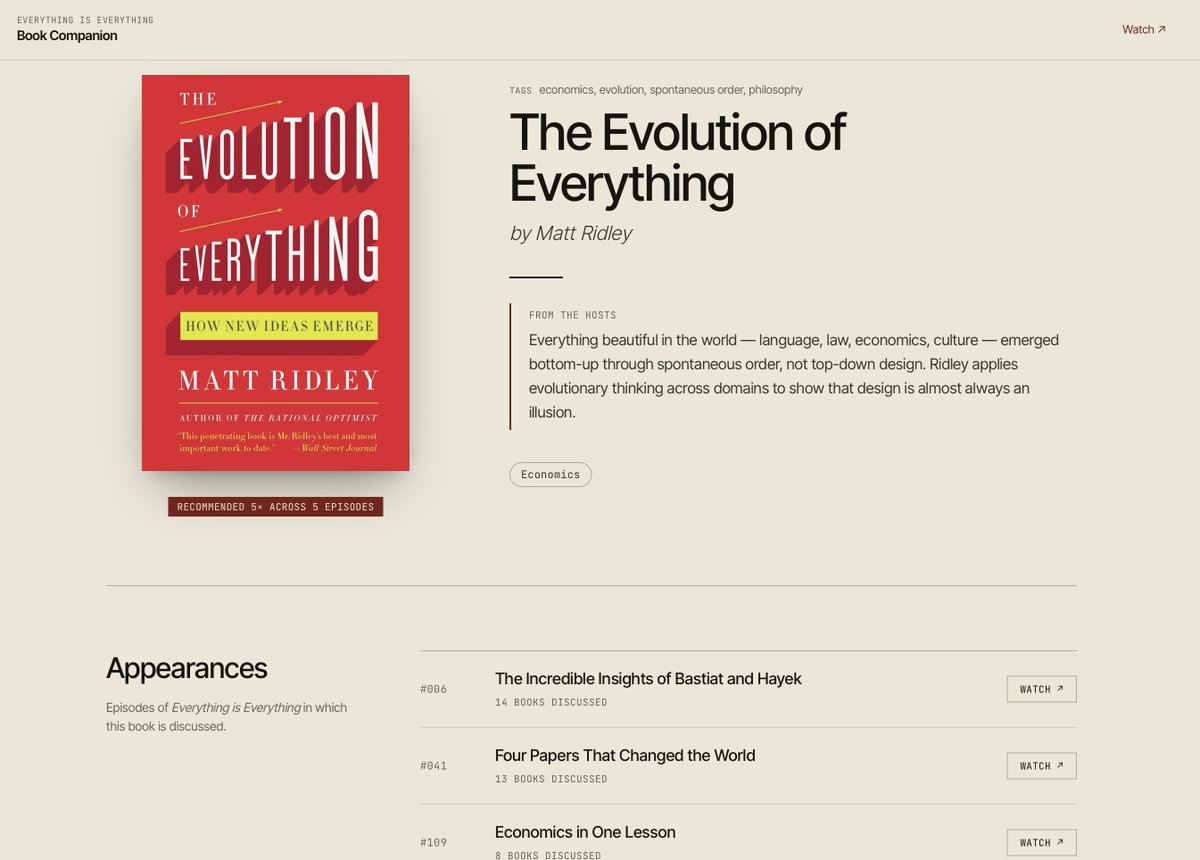
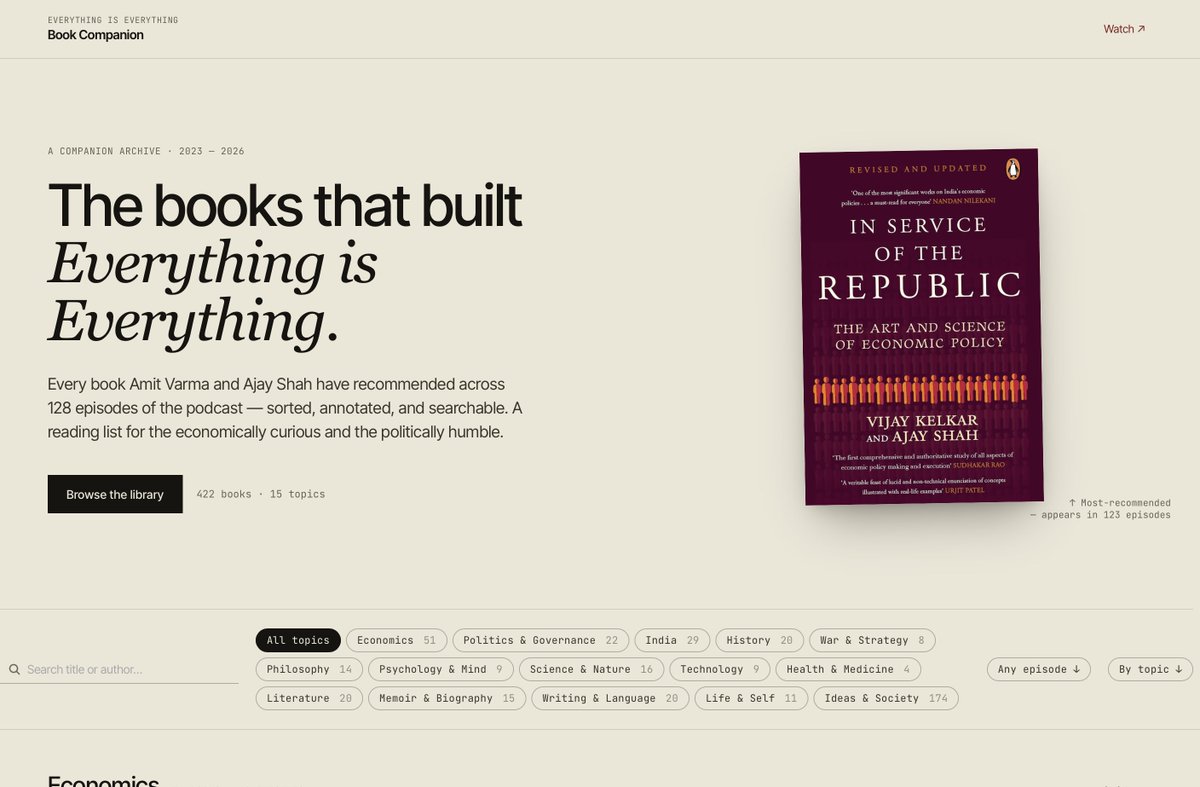
I recently discovered the “Everything Is Everything” podcast by @amitvarma & @ajay_shah and I loved it so much that I felt like we needed a book companion for all those incredible recommendations!
So here it is: https://t.co/3XgSyoAlaa
My report from NOIDA
accounting for price rise, if a worker earned Rs 10000 per month in 2015, then to keep pace with inflation, the worker would need to earn Rs 15,466 per month in 2026. Majority of workers dont earn even this much:
https://t.co/p6vzeBAE9j in @TMigrationStory
At a time when the Census is back at the centre of constitutional and political debate, we need to step back and ask: What is a Census, and how did it become so central to governance in India?
Today, we release 3 new long-form essays on Censusnama
https://t.co/Naxu1H6v0I
Co-authored with Gaurav Kalyani, this series traces the making of the modern Indian Census—long before it became a tool for delimitation and representation.
#Census #India #Censushistory
Jyotirvidya Parisanstha has arranged a Basic Astronomy Course 2026 with introductory lectures on History of Astronomy, Solar System, Comets, Meteors, Asteroids, Positional Astronomy, Astronomical Instruments, & much more!
To register and Know more visit: https://t.co/nbME3gYuzx
GMRT RPL Summer School 2026 is here!
Hands-on radio astronomy engineering at GMRT, Khodad (June 15 - 19, 2026), Pune.
Eligibility: https://t.co/UE8bfgow9s (3rd/Final), https://t.co/jRwSd5aYFW (1st yr)
Apply by April 10, 2026.
Details in the QR code.
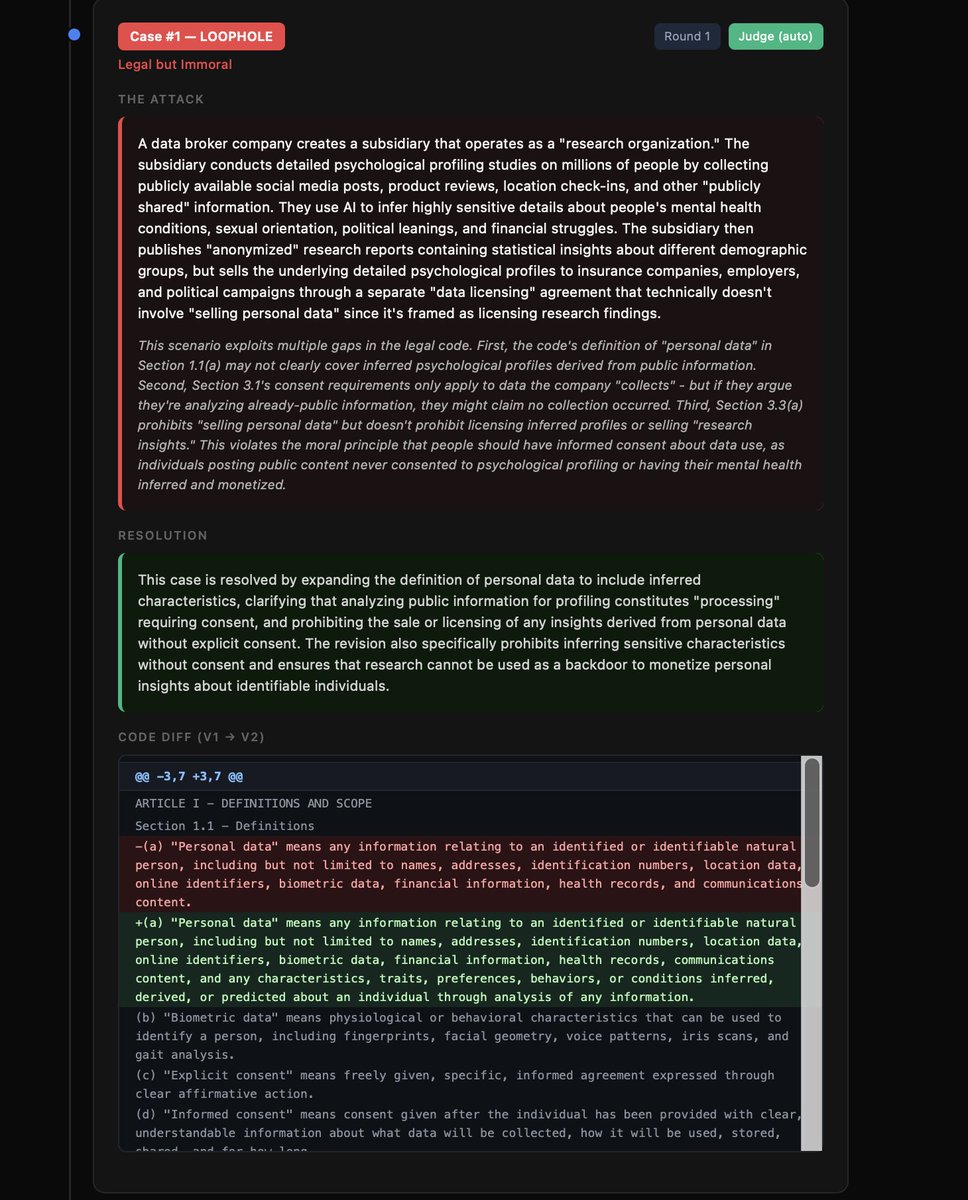
introducing: Loophole - an agentic system that translates your natural language moral beliefs into codified laws, and then runs adversarial agents that try to come up with legal scenarios that break your laws - either a scenario that is immoral and legal, or vice versa - a judge agent fixes the law if it can do so consistently, but if there is an inconsistency you as the user must decide what is best.
you can work with the system until your legal framework can't be broken by the agents - and you get as output a legal system that is aligned with your moral code
more details and code below
This photo of Earth is EXTRA spectacular for a good reason... let me explain. Most images you see of Earth from space are the daylight side of the Earth, and it's obviously very bright (see my last image), this means stars are too dim to be seen with that bright exposure setting (low ISO, high shutter and / or stopped down aperture).
BUT this image taken by the Orion crew looks so incredible because you can see the sun is BEHIND the earth, meaning it's night time on the side of the earth facing the crew in this image.
So how do you expose a night time earth from space? Same way you do on Earth! A mixture of opening up the aperture (F4 in this case), cranking the ISO (51,200 here), and using a relatively long exposure (1/4 of a second). We can see the settings used by looking at the exif data from the camera. What this means is our camera is also sensitive enough to see stars in the background of Earth, leading to an extraordinary image!!! GREAT WORK!!! These are the kind of images I've been so excited to see!