I’m happy to announce that my new book, Absolute Dialetheism: Hegel, Schelling, and the End of Alterity (Edinburgh UP), is officially released today! Here’s an introduction to the book:
https://t.co/dPAbPL28Ag
@ScottAndrewHill Brian Davies, David Bentley Hart, and Denys Turner all come to mind here. Tillich is not a Thomist, but in prot circles I tend to associate that theological approach with the first volume of Tillich's systematic theology
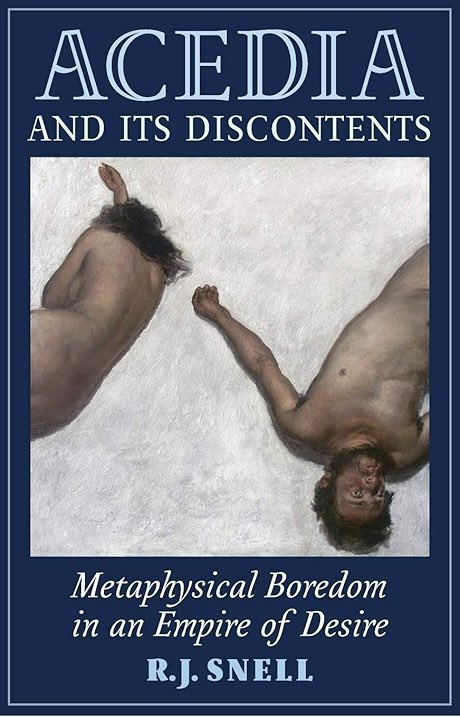
@lukeburgis It seems close to me to the vice of acedia. The kind of curiositas promoted by permascroll apps or info-tainment podcasts strikes me as being effective only because it feeds and temporarily staves off profound (almost metaphysical) boredom.
Big Tech’s “threaten everything beautiful, while immiserating you, ruining your opportunity to work, rendering you servile and dependent forever” campaign is for some reason not a huge hit with the young.
@MichaelMcGetti6 Sallis takes this insight in a deconstructive direction, arguing because the ground of being/appearance cannot itself fully appear, knowledge is structurally incomplete. It is fascinating how his deconstruction is so close a more full-blown idealism.
@MichaelMcGetti6 That seems exactly right to me. The final chapter of Sallis’ delimitations might be a fruitful companion here. He argues that a phenomenological re-reading of Plato should lead back to a consideration of the ground/chora which (I think) he reads as Kant’s productive imagination.
Don’t miss your chance to read the new Cambridge element, Heidegger’s Phenomenology, by James Kinkaid! Free access available until 1 May at
https://t.co/kBWHadS7GA
#cambridgeelements#philosophy
@Philip_Goff I would be curious to see how he understands his version of divine command theory to intersect with skeptical theism. I think both positions ultimately fail for the same reason (they destroy any analogy between human and divine “goodness”), but I’m curious how he reads it.
@MichaelMcGetti6@troutsky_ I think this difference still merits further exploration. Dews does a good job articulating Schelling’s critique (one which I don’t buy), but I think this life vs. logic angle would be worth writing up
Out now!
'A Phenomenology of the Divine Image' brings Gregory of Nyssa into dialogue with French phenomenology and explores the importance of embodiment to the doctrine of imago Dei.
Learn more: https://t.co/t3iCMGfXOO
Preview: https://t.co/ih2qhik104
It is great in the unique breadth with which Schelling became the true source of contemporary philosophy and theology: a scope that ranges from the secular adventism of Heidegger (a secularization of an eschatological Christianity) to a “metaphysics of revelation” (in which,
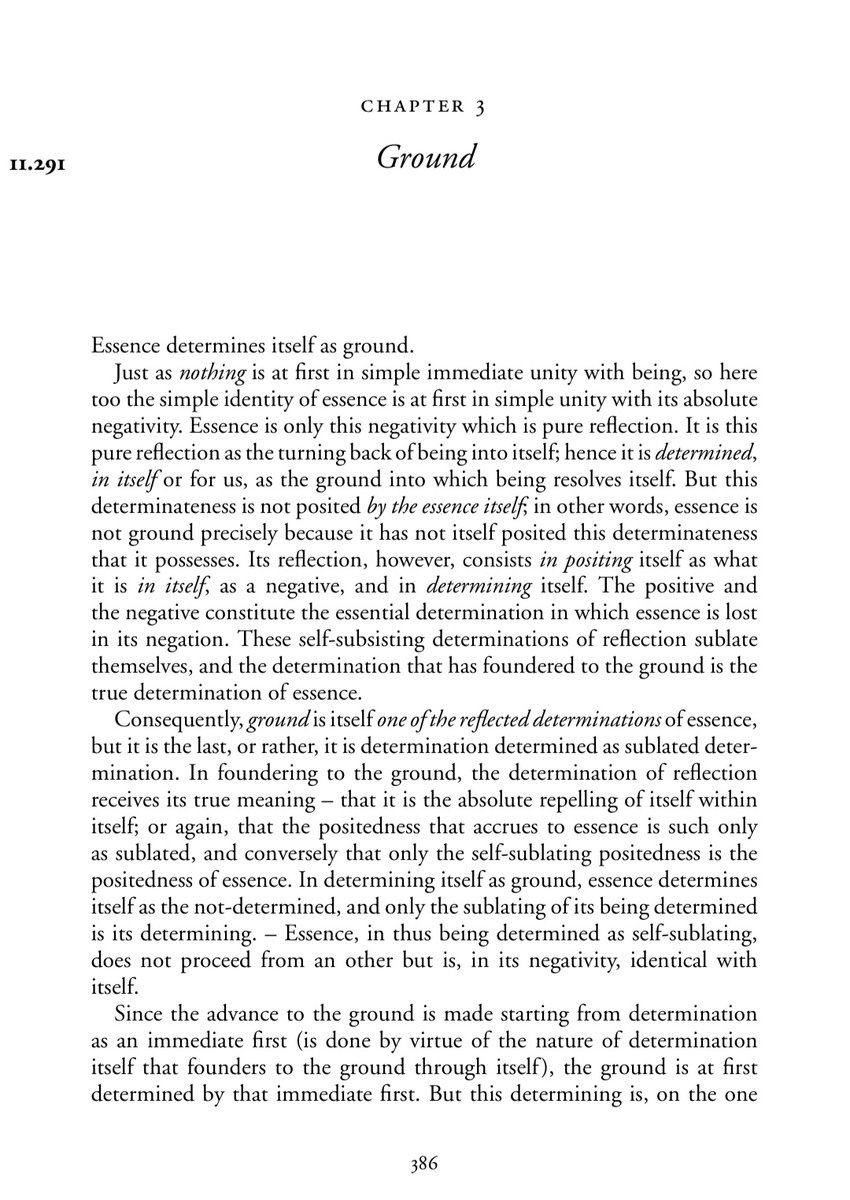
Reading some analytic philosophy today. Getting into the grounding literature. This piece is quite good - he makes a ton of useful distinctions (ground, grounded, absolute ground, formal ground, real ground, complete ground). Found his take on Leibniz helpful as well.