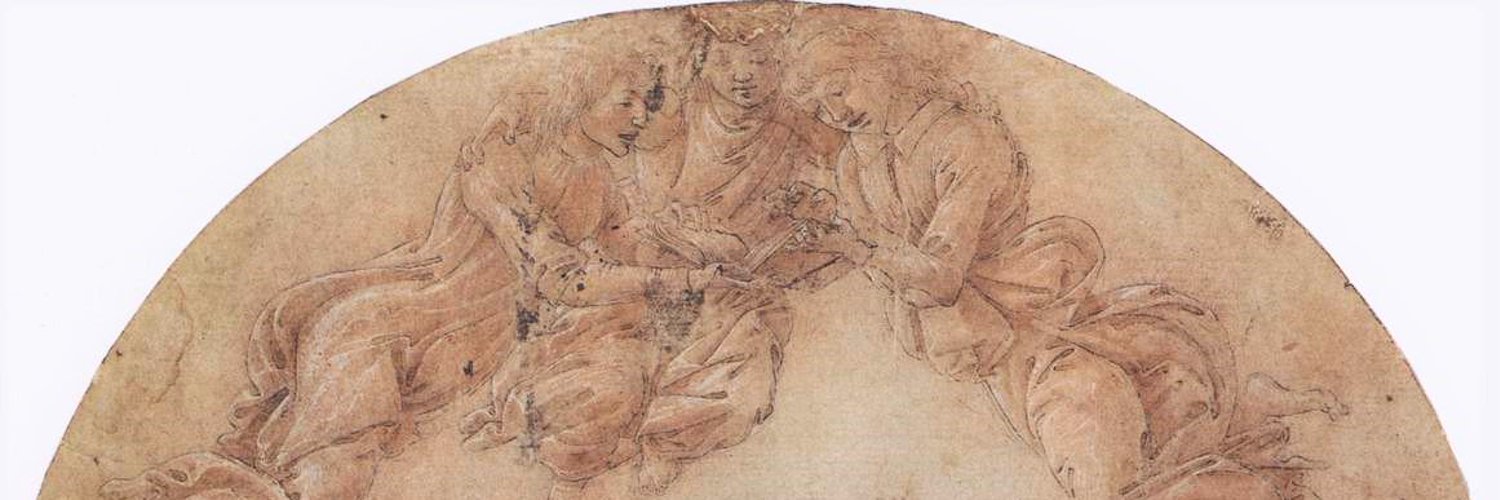
At 1 pm CST on Sunday, November 22nd, the Methexis Institute Forbidden Books reading group will discuss Evagrius of Pontus's Gnostic Trilology.
Evagrius of Pontus (345–399 AD) was an influential fourth-century Christian monk, ascetic, and theologian. After serving in Constantinople, he retreated to the Egyptian desert, where he documented early monastic spirituality.
The Gnostic Trilogy is a foundational 4th-century ascetic and contemplative framework designed to guide a monk from practical self-discipline to mystical knowledge of God. This tripartite book is the best-known and most important book by the ascetic philosopher and teacher Evagrius of Pontus. Among the writers of his age, Evagrius stands out for his short, puzzling, and absorbing aphorisms, which provide sharp insight into philosophy, Scripture, and observation of the natural world. The first part of the trilogy, the Praktikos (The Practiced One), provides a diagnosis and treatment of the eight temptations. The second, Gnostikos (The Knower), explains how someone who has mastered the body and mental delusions should teach others. The third, longest, and most controversial part, the Kephalaia gnostika (Gnostic Chapters), ranges broadly over the origin of the universe, the nature of rational beings, and the hidden symbols of Scripture. The Praktikos was a foundational text for monastic asceticism, and was the basis for the later Seven Deadly Sins tradition.
Please, if you can, read as much as you can, especially from Kephalaia Gnostica. As ever, it is not required to read in advance to attend this group.
https://t.co/PKlE2tSZZR
To join online, click here at the start of the meeting:
https://t.co/kMSaJtOfya
At 1 pm CST on Sunday, November 22nd, the Methexis Institute Forbidden Books club will meet to discuss Evagrius Ponticus's Gnostic Trilogy.
To join, click here:
https://t.co/WMoc4iYUK0
“When we say, ‘God is love,’ we are saying something very great and true. But it would be senseless to grasp this saying in a simple-minded way as a simple definition, without analyzing what love is. For love is a distinguishing of two, who nevertheless are absolutely not distinguished for each other. The consciousness or feeling of the identity of the two—to be outside of myself and in the other—this is love. I have my self-consciousness not in myself but in the other. I am satisfied and have peace with myself only in this other—and I am only because I have peace with myself; if I did not have it, then I would be a contradiction that falls to pieces. This other, because it likewise exists outside itself, has its self-consciousness only in me, and both the other and I are only this consciousness of being-outside-ourselves and of our identity; we are only this intuition, feeling, and knowledge of our unity. This is love, and without knowing that love is both a distinguishing and the sublation of the distinction, one speaks emptily of it. This is the simple, eternal idea.”
Hegel, Lectures on the Philosophy of Religion
The early Hegel was very much like the late Nietzsche in his attitude towards Christianity.
He, in his youth, regarded it as a foreign religion that had, by some terrible accident of history, come upon bright-eyed Europe from the stygian Orient and swapped its native pagan ethics for a morbid and inflexible positivism.
Norse and Hellenic religiosity was, to the romantically minded Hegel of 1796, sincere but unsuperstitious, commanding but undogmatic, and wondrous but this-worldly, in distinction to a Christianity that was equal parts private, prohibitive, and alien.
To him, Christianity not only fell to the Occident from the other side of the earth, but, as the extraterrestrial Word of God, to the world from the other side of heaven.
Infected by Kant and the popular Graecomania of his day, the young Hegel much preferred the civic faiths of the Celts, Greeks, and Romans, which formed the whole ethical inheritance of peoples passed down from parent to child, to the solitary, ‘guilty conscience’ of Christianity. The former seemed a familiar kind of ‘self-legislation’ to him and the latter a mere fearful trembling before the sublime.
It was only later that Hegel, struck by the Sermon on the Mount in 1798, would come to regard Christianity, and especially Christ Himself, as having permanently broken away from this tyranny of positive religion, of legalism, so present in Judaism.
He would see Christ, in his teaching of the loving heart and not merely the ‘good will,’ as having joined spirit to law, reason to nature, and God to man, and, by 1807, in the Crucifixion and Resurrection, as having overcome the opposition between them. He would likewise come to regard Christianity as the “Consummate [or Absolute] Religion.”
"The Sermon does not teach reverence for the laws; on the contrary, it exhibits that which fulfills the law but annuls it as law and so is something higher than obedience to law and makes law superfluous,” Georg Wilhelm Hegel writes in The Spirit of Christianity and Its Fate (1798).
"These lower creations, this elemental world, and the elemental spirits that preside over it, which, after the fall of Satan, had no longer any immediate communion with the Divine Unity, and could attain unto such communion only through Man, strove with all their might to draw nigh unto him, to unite themselves with him, and, through his mediation, to enter, as far as might be, into God.
Thus there arose, around the first Man, a universal longing among the elemental spirits to be united with him. These spirits showed themselves wholly submissive unto him; they regarded him as their sovereign, as their god.
“Why shouldst thou,” they whispered unto him, through the voice of instinctive inspirations, “why shouldst thou labour to ascend unto that Unity which never revealeth itself in deeds nor in creations? Behold, here are we: manifestations, forms, and things, asking naught but to be subject unto thee, to serve thee. Thou beholdest us, thou touchest us; by a glance or a gesture thou mayest command us.
Hath thine eye ever beheld a being greater than thyself, a god who could command the elements with but a glance or a gesture? Believe us: thou art unto us the true God; thou art the true Lord of Creation. Unite thyself with us; let us become one and the same body, one and the same nature; let us be joined together.”
Adam Mickiewicz, "Jakob Boehme"
@Grimezsz@johnmilbank3@RyanHaecker@WayneVaughan@xenocosmography
Just watched the original @numberphile video on the Riemann Hypothesis from years ago. It’s a brilliantly simple and accessible video! https://t.co/dFL8ZOYzCV
Independent mathematicians have now finished the full verification of the proof of the Riemann hypothesis announced yesterday by Anthropic mathematician Levent Alpöge. The results are real, they say.
https://t.co/Gkc2sOlSFD
"The Holy Trinity is not like a tetrad, and a pentad, and the rest; for they are numbers, but the Holy Trinity is a single essence."
- Evagrius Ponticus, Kephalaia Gnostika, 6.10
At 1 pm CST on Sunday, November 22nd, the Methexis Institute Forbidden Books club will meet to discuss Evagrius Ponticus's Gnostic Trilogy.
To join, click here:
https://t.co/WMoc4iYUK0
مقایسه سه برداشت از یک صحنه ماندگار
یکی از مشهورترین صحنههای ادیسه، یعنی بازگشت اودیسه و آزمون کمان، در سه اقتباس سینمایی متفاوت
The Odyssey 1997
The Return 2024
The Odyssey 2026
به نظرتون کدوم اقتباس این صحنه رو بهتر به تصویر کشیده؟
"Just as now, we approach perceptible things through the senses, but later, purified, we know their reasons, so also first we shall see things themselves, and then, more greatly purified, we shall also enter theōria about them, after which it is possible to know finally the holy Trinity itself."
- Evagrius Ponticus, Kephalaia Gnostika, 5.57
At 1 pm CST on Sunday, November 22nd, the Methexis Institute Forbidden Books club will meet to discuss Evagrius Ponticus's Gnostic Trilogy.
To join, click here:
https://t.co/WMoc4iYUK0
You don't understand what a cosmically deranged exemplar of schizology the Riemann hypothesis being proven by a Turkish mathematician using AI is. As the Mechanical Turk used a human pretending to be a machine, so the Organic Turk used a machine pretending to be human.
At 1 pm CST on Sunday, November 22nd, the Methexis Institute Forbidden Books club will meet to discuss Evagrius Ponticus's Gnostic Trilogy.
To join, click here:
https://t.co/WMoc4iYUK0
"Concerning the theōria of beings and concerning the knowledge of the Holy Trinity: we and the demons are roused to this entire battle between us. The latter wish to hinder us from knowing, while we strive to learn."
- Evagrius Ponticus, Kephalaia Gnostika, 3.41
At 1 pm CST on Sunday, November 22nd, the Methexis Institute Forbidden Books reading group will discuss Evagrius of Pontus's Gnostic Trilology.
Evagrius of Pontus (345–399 AD) was an influential fourth-century Christian monk, ascetic, and theologian. After serving in Constantinople, he retreated to the Egyptian desert, where he documented early monastic spirituality.
The Gnostic Trilogy is a foundational 4th-century ascetic and contemplative framework designed to guide a monk from practical self-discipline to mystical knowledge of God. This tripartite book is the best-known and most important book by the ascetic philosopher and teacher Evagrius of Pontus. Among the writers of his age, Evagrius stands out for his short, puzzling, and absorbing aphorisms, which provide sharp insight into philosophy, Scripture, and observation of the natural world. The first part of the trilogy, the Praktikos (The Practiced One), provides a diagnosis and treatment of the eight temptations. The second, Gnostikos (The Knower), explains how someone who has mastered the body and mental delusions should teach others. The third, longest, and most controversial part, the Kephalaia gnostika (Gnostic Chapters), ranges broadly over the origin of the universe, the nature of rational beings, and the hidden symbols of Scripture. The Praktikos was a foundational text for monastic asceticism, and was the basis for the later Seven Deadly Sins tradition.
Please, if you can, read as much as you can, especially from Kephalaia Gnostica. As ever, it is not required to read in advance to attend this group.
https://t.co/PKlE2tSZZR
To join online, click here at the start of the meeting:
https://t.co/kMSaJtOfya