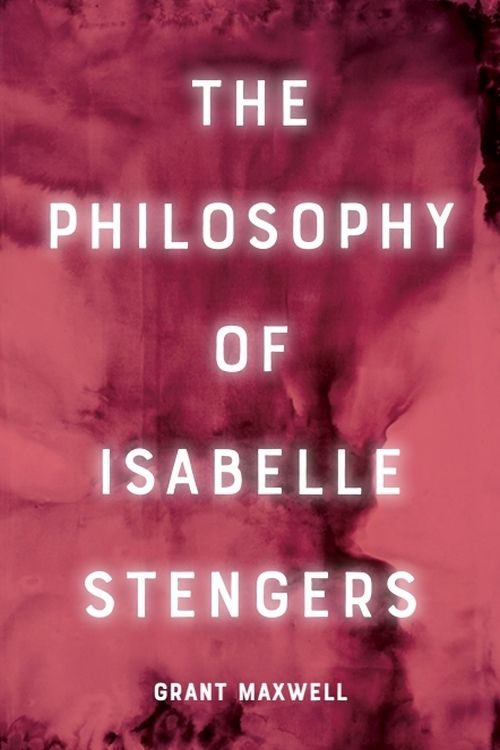
@terrabeastia Yes, I’m in the early stages of a project on this subject, and I suspect that Guattari’s Chaosmosis will play a central role as his view aligns well with the one I’m developing.
“Anyone looking to contain AI must explain how a distributed, global, capitalist system of unbridled power can be persuaded to temper its acceleration.” Mustafa Suleyman
these came in the mail today—paperback edition of my translation of Axel Cherniavsky’s exceptional work on Deleuze is now available from Edinburgh Press!
“Not to withdraw from the process, but to go further, to ‘accelerate the process,’ as
Nietzsche put it: in this matter, the truth is that we haven't seen anything yet.” Deleuze and Guattari
@shitTOGv2@amalgamatomaton I did WIP then DR and NP, which was a good order because it allowed me to see the differences between the monographs and cowritten works.
People who claim that Deleuze is merely incoherent or obscurantist aren’t giving the time and attention required to understand his work. He enacted the primary conceptual innovation of the 20th century after Hegel in the 19th. Of course his writing is difficult.
@THamelryck I wouldn’t call Deleuze either a prophet or a romantic, but this gestures toward the subject of my forthcoming book, Deleuze and Polytheism.
@amalgamatomaton I’d suggest starting with one of the books on individual authors if you’re especially into any of them (Nietzsche, Spinoza, Leibniz, Bergson, Proust, etc.). If not, I started with What Is Philosophy?, which was a good point of entry.
@khalilacp I disagree. He was certainly deeply interested in Nietzsche, though his politics aren’t particularly Nietzschean. Nietzsche’s politics were problematic while Deleuze was extremely progressive and pluralist, deriving his politics more from Spinoza and Marx.