The Austrian Alps have reported a record amount of snow for September. ❄️⛄️ The Rudolfshütte station recorded 145 cm, an unprecedented amount for the Austrian Alps below 2400 m in September: https://t.co/xso0HiRfBL
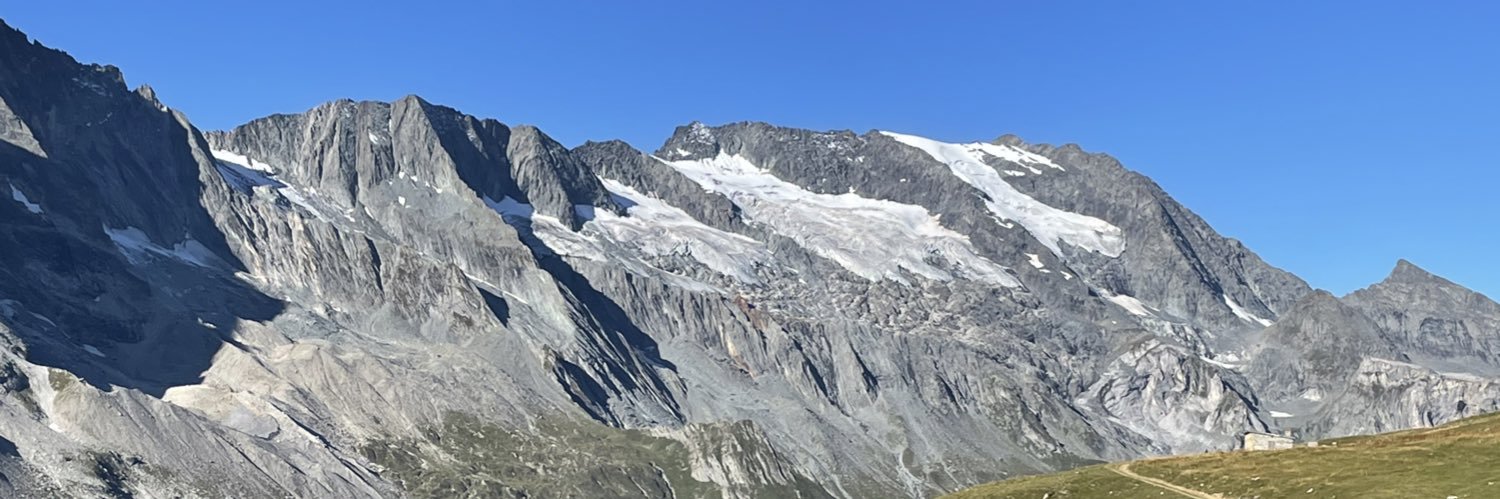
Astounding changes at the #Tschierva#Glacier (GR) captured by Leo Hösli. The glacier has lost about 1 km of its length since 1935. A recent #landslide on April 14th at Piz Scerscen has covered the glacier's tongue in debris, changing its ablation dynamics.
@explorerspod Although no (real) biographies I can recommand
1. Scott and Amundsen by Roland Huntford
2. Roald Amundsen’s Belgica Diary by Hugo Decleir (ed.), the translated diary from Norwegian into English
On August 14, WHO declared a global health emergency over rising mpox (formerly monkeypox) cases in Africa, driven by a new strain, Clade Ib. The DRC reports nearly 18,000 cases and 535 deaths this year. Clade Ib is distinct from the 2022 outbreak strain, Clade IIb.
In 2020, Democrats chose Milwaukee, marking the first Midwestern convention outside Chicago in over 100 years. The GOP hasn’t forgotten and held their 2024 RNC in Wisconsin.
Smallpox was a deadly disease that has been recorded since ancient times. It killed around 30% of those who developed the disease.
In 1980, it became the first disease to be eradicated worldwide. This considerable achievement resulted from centuries of coordinated effort and scientific development.
People were able to fight the virus by developing and refining smallpox vaccines, using quarantine control measures, and applying ring vaccination.
Many countries — in Europe, the former Soviet Union, and many island nations — eliminated smallpox around a century ago. This is shown on the map, whose data was compiled by researchers Frank Fenner and colleagues in 1988.
Smallpox continued to kill in many countries in South Asia, Africa, and South America until the 1970s. It remains a vivid memory for many older people alive today.
(This Daily Data Insight was written by @salonium.)
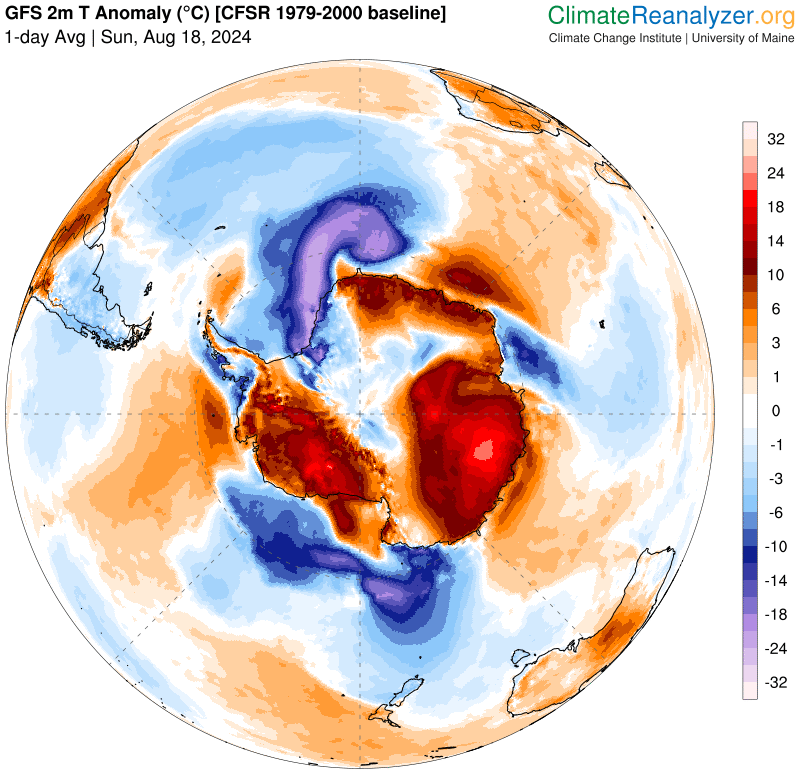
The winter heatwave in Antarctica is continuing for a second month, and presently the heat anomalies have settled over West Antarctica and and the sector of East Antarctica centred on Totten Glacier.
1/2
#IPCC#ClimateReport shows heatwaves in Europe will become more frequent, more intense & will last longer.
By 2050, about half of the European population may be exposed to high or very high risk of heat stress during summer.
➡️ https://t.co/FkIviyk5Qp