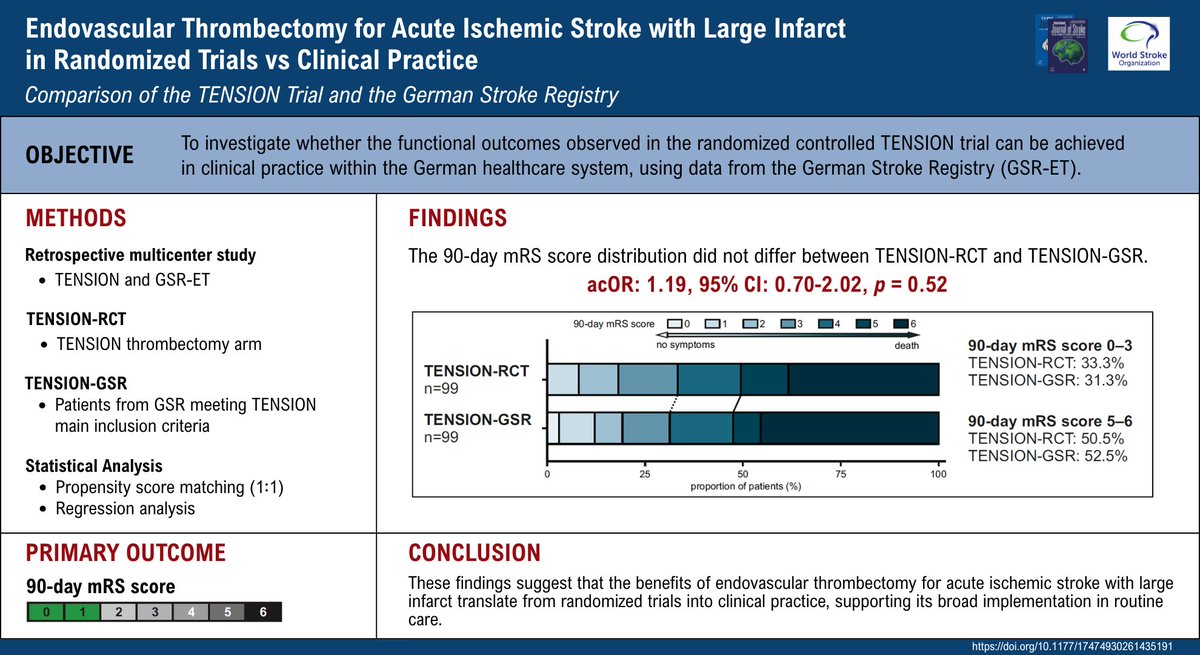
📊TENSION trial results are reproducible in routine care
🇩🇪🧠German Stroke Registry data shows similar 90‑day results to the RCT, supporting wider adoption of thrombectomy for large‑infarct stroke
https://t.co/OYqxkT0mrK @WinkelmeierMD@Fie0815@FabianFlottmann@MDoctoronboard
📊TENSION trial results are reproducible in routine care
🇩🇪🧠German Stroke Registry data shows similar 90‑day results to the RCT, supporting wider adoption of thrombectomy for large‑infarct stroke
https://t.co/F38kU4kQZl @WinkelmeierMD@Fie0815@FabianFlottmann@MDoctoronboard
📊TENSION trial results are reproducible in routine care
🇩🇪🧠German Stroke Registry data shows similar 90‑day results to the RCT, supporting wider adoption of thrombectomy for large‑infarct stroke
https://t.co/F38kU4kQZl @WinkelmeierMD@Fie0815@FabianFlottmann@MDoctoronboard
📊TENSION trial results are reproducible in routine care
🇩🇪🧠German Stroke Registry data shows similar 90‑day results to the RCT, supporting wider adoption of thrombectomy for large‑infarct stroke
https://t.co/F38kU4kQZl @WinkelmeierMD@Fie0815@FabianFlottmann@MDoctoronboard
Article Commentary: “General Anesthesia Versus Conscious Sedation in Thrombectomy Patients With Low NIHSS Anterior Circulation Stroke”
In this #BloggingStroke post, Jason Vuong discusses #Stroke article by Heitkamp et al. #AHAJournals
https://t.co/aE9KLpRNf9
🧵In an observational study based on the German Stroke Registry, the rate of successful recanalization was comparable between patients with anterior circulation LVO with low NIHSS on presentation undergoing EVT with local anesthesia/conscious sedation versus general anesthesia.
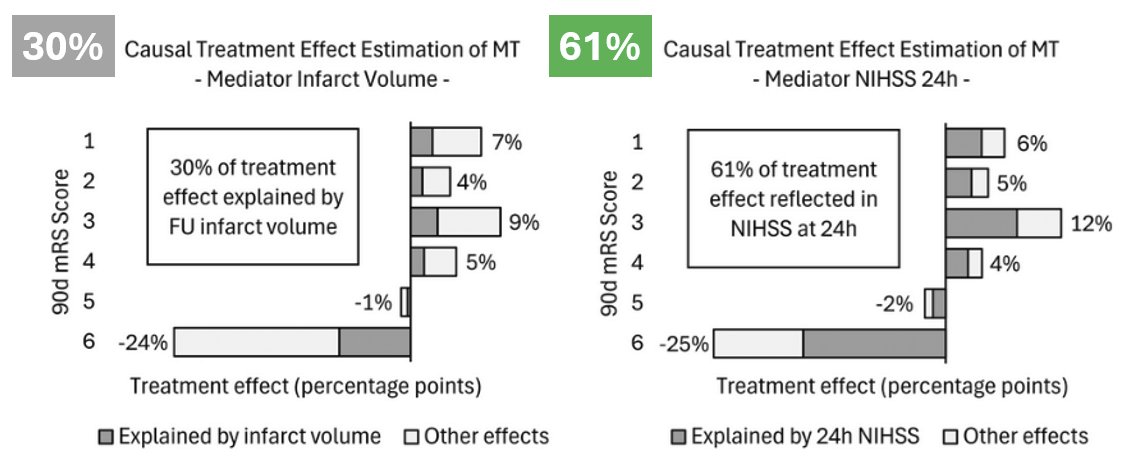
#STROKE: Subanalysis of the #TENSION trial showed that factors beyond infarct volume, such as the involvement of specific brain regions, disruption of structural networks, selective neuronal loss, and compensatory mechanisms, may significantly impact functional outcomes.
LVO with NIHSS score 0-5: GA with better recanalization but poorer outcome⁉️https://t.co/t052BEZQvh GSR🇩🇪cohort: 582 pts. after propensity score matching. @AmeerEHassan@esmintsociety @DGNR_org @eneri_neuro@shazamhussain
Arterial Collaterals and Endovascular Treatment Effect in Acute Ischemic Stroke with Large Infarct: A Secondary Analysis of the TENSION Trial | Radiology https://t.co/79Na0GEoHg
These findings suggest that patients with large ischemic stroke manifesting within 12 hours after onset should undergo endovascular thrombectomy irrespective of single-phase CTA collateral status.
Don’t miss the companion editorial by @AnassBenomarMD & @RaymondJeanMD1: Another Step Toward Thrombectomy for All Patients with Severe Ischemic Stroke. 🧠🚑Dive into the latest insights on expanding thrombectomy access. #NeuroRadiology#Stroke
https://t.co/GIywRSM8ZZ
In patients with large ischemic stroke, thrombectomy within 12 hours significantly reduces 90-day functional disability compared to medical treatment—regardless of collateral status on single-phase CTA. #Stroke#NeuroRadiology@WinkelmeierMD
https://t.co/5uMkKu3se8