This room is thought to have been Michelangelo's 'Secret' hideaway and drawing board ...
It was an art historian's chance discovery of a lifetime. About 50 years ago, a museum director in Florence, Italy, found a hidden room whose walls were covered in drawings believed to be the work of Michelangelo and his disciples. Although the drawings are not signed by the master, art experts say some of the sketches in charcoal and chalk are almost certain to be Michelangelo originals. They could shed light not only on the Renaissance artist's creative process but also on a mysterious and dangerous period in his life.
The room is located in Florence's Basilica di San Lorenzo. That was the official church of the Medici family, the famous patrons of the arts who governed Florence, and later Tuscany, for centuries. Around 1520 AD, Medicis commissioned Michelangelo to design a family mausoleum. It came to be known as the Medici Chapels. Visitors to the Chapels speak in hushed tones as they admire the nude marble sculptures adorning the tombs of Lorenzo de' Medici and two other relatives. The naked forms allegories of four parts of day project an intense sensation of serenity and philosophical contemplation.
Historians believe Michelangelo eventually betrayed his patrons by joining a 1527 AD, revolt that drove the Medicis out of Florence. When the family returned three years later, Michelangelo is thought to have gone into hiding for months in the secret dwelling below the chapels. The hidden room, 23ft by 6 1/2ft, was discovered in 1975, by a museum director who spotted a trapdoor below a wardrobe that led to the room. After cleaning the walls, museum director discovered dozens of doodles and scribbles on the walls. Some of the drawings called to mind known works by the master.
"You have to go down a series of very steep steps, and you start seeing all these drawings that are breathtaking," says Paola d'Agostino, director of the Bargello Museum that oversees the Medici Chapels. She says the drawings in the hidden room are varied. Some recall Michelangelo's frescoes in the Sistine Chapel. One is similar to the artist's bigger-than-life David sculpture. There's also a drawing of Laocoon, based on a statue from antiquity depicting a mythological attack on a Trojan priest and his two sons by writhing sea snakes. Michelangelo was in Rome when statue was unearthed in 1506 AD.
"Michelangelo was obsessed, as were all the other sculptors of the time," says D'Agostino, "because it was the incarnation of movement and deep expression in sculpture." There are as many as 70 different sketches on the room's walls. Art experts disagree on how many of them were drawn by the master himself. "I think maybe less than half a dozen could possibly be by Michelangelo," says William Wallace, a Michelangelo scholar at Washington University in St. Louis who has viewed the drawings in Florence.
Even if the sketches are not all works by the master, Wallace says their discovery was an exciting addition to Renaissance scholarship. "It's a glimpse into something of the culture of the time. These drawings are part of the day-to-day routine of what a bunch of people had to do to put together a complicated and important work like the Medici Chapel," he says.
Medicis pardoned Michelangelo after their return to power. But following the end the republic of Florence, he left his native city for Rome in 1532 AD, and never returned. The mausoleum remained unfinished. Nevertheless, says D'Agostino, it became what she calls the school of the world. "It became the place where everybody from all over Europe, draftsmen, sculptors, painters went to look at Michelangelo's work," she says.
#archaeohistories
Why Didn’t Henry VII Give Richard III a Proper Burial?
When King Richard III was killed at the Battle of Bosworth Field on August 22, 1485, his victorious rival, Henry VII, faced a difficult political challenge. Richard was the last Yorkist king, and many still supported his claim to the throne. Rather than honoring him with a grand royal funeral, Henry chose a more modest burial at the Franciscan Greyfriars church in Leicester.
Several reasons explain this decision. First, Henry wanted to emphasize that Richard had been a defeated usurper rather than a legitimate monarch worthy of royal honors. A lavish burial could have strengthened Yorkist loyalty and undermined the new Tudor regime. Second, Henry needed to secure his own fragile claim to the throne and present Bosworth as a decisive victory that ended the civil wars known as the Wars of the Roses.
However, Henry did not leave Richard unburied or dishonored entirely. Contemporary accounts suggest that Richard received Christian burial rites, and a modest tomb was erected over his grave. While far from the magnificent resting places of other English kings, it was not the anonymous disposal often imagined.
In the end, politics outweighed respect. Henry VII's treatment of Richard III reflected the realities of securing a new dynasty after decades of civil war, rather than simple personal hostility toward his fallen rival.
#History #HistoryWillRemember #MiddleAges #EuropeanHistory #BritishHistory #England #EnglishHistory #Medieval #WarsOfTheRoses #MedievalHistory #RichardIII #MedievalEngland #HouseOfYork #RoyalHistory #RichardOfGloucester #MedievalEngland #HenryVII #TudorHistory #BattleOfBosworth #EnglishHistory #MedievalEngland #RoyalHistory #HistoryFacts
Archaeologists have excavated thousands of texts from a village of ancient Egyptian civil servants, and one read, “Let there be brought some fresh goose fat directly, very, very quickly because the cat has eaten that which was brought to me yesterday.”
https://t.co/mD0WIoSyXT
The ‘Escrick Ring’ which was found in a field near Escrick in North Yorkshire in 2009. Dating to the 5th or 6th century AD, the ring is possibly Merovingian in origin. Now part of the collections at the Yorkshire Museum in York. 📸 My own. #FindsFriday#YorkshireMuseum
St Oswald's priory, Gloucester, once housed the remains of Aethelflaed, Lady of the Mercians and her husband until the remains were lost in the destructive reformation
Ecgberht was consecrated as bishop of Lindisfarne by Archbishop Eanbald II of York and bishops Eanberht of Hagustaldes ham (Hexham) and Badwulf of Candida Casa / Hwit Aerne (Whithorn) at Bigwell (Bywell) #OTD in 803. The Latin poem De abbatibus was dedicated to him. 📸xlibber
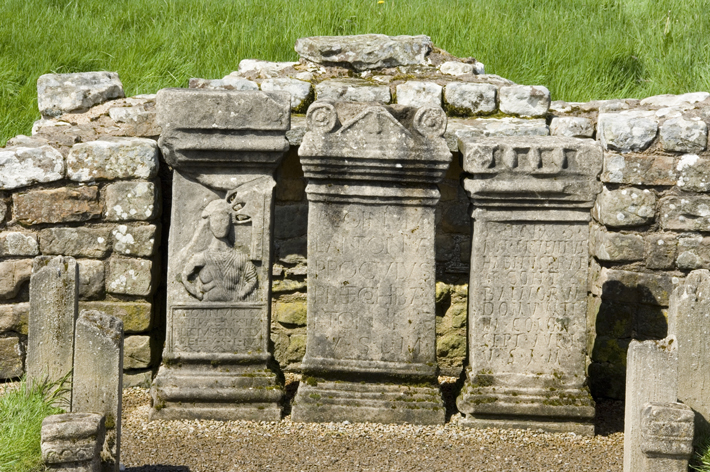
The remains of one of the 3rd century granary buildings at Vindolanda Roman Fort, just south of Hadrian’s Wall in Northumberland. 📸 My own. #RomanFortThursday#RomanBritain#Vindolanda
Mark from Belfast just called it what it is on @BenKentish@LBC:
“30 women were murdered… not one road was closed, not one protest.
What was the connection? They were murdered by white locals.”
One stabbing by a Sudanese man and the whole place is engulfed with riots, fires, attacks on Whites, Black & Brown people across Belfast.
Years of local white men killing women nothing.
Undiluted racism. He is not the only local to have said this! Who is behind this violence? 👇 #BelfastRiots #CallItWhatItIs
10 June 1942. SS forces killed all males over 15 in the Czech village of Lidice in a horrific reprisal for the assassination (or justifiable homicide) of the leading SS figure Reinhard Heydrich who died on 4 June 1942 after a bomb attack on his limousine on 27 May 1942 in Prague.
Well-attended visit today by CAS members to understand the exterior of the church of St John the Baptist, Chester's original cathedral. Many thanks to Pauline Clarke for organising and Church Archaeologist Simon Oliver for leading our members around.
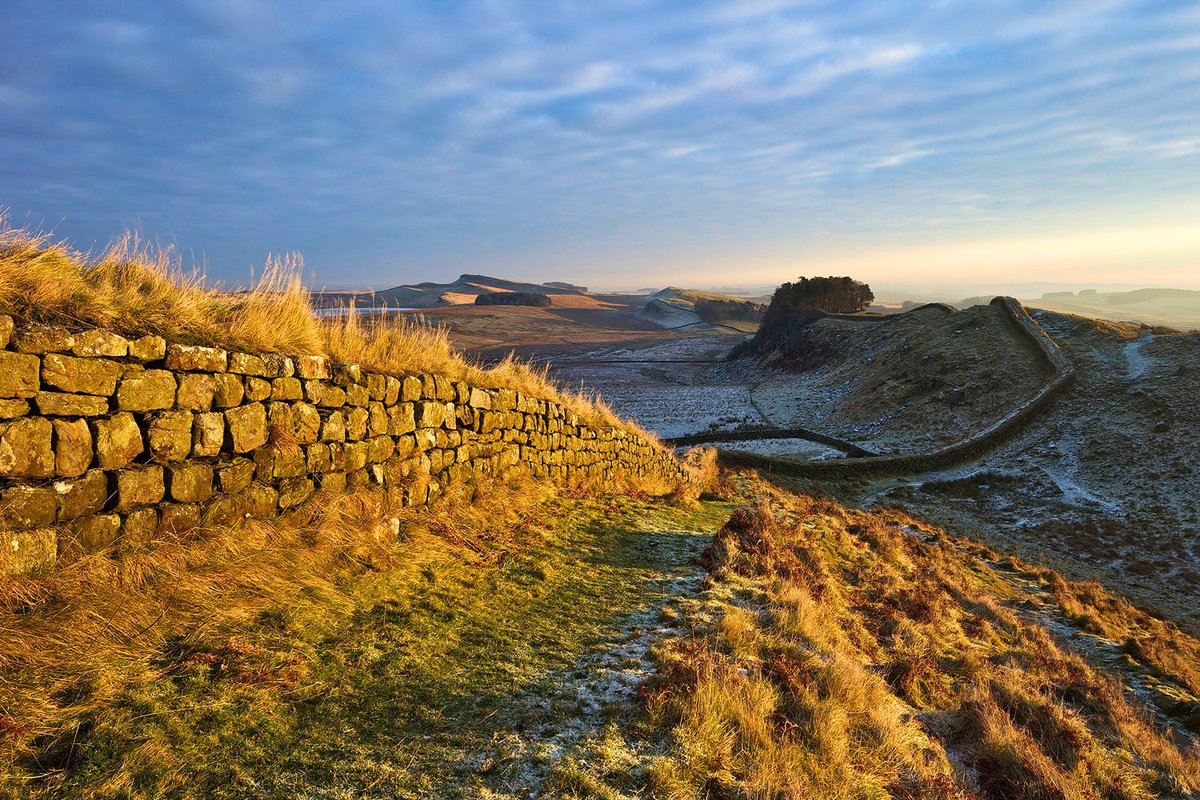
At 73 miles long, it spanned Great Britain west to east; Hadrian’s Wall was one of the clearest symbols of the might of Roman Empire at its frontier. Now archaeologists are getting to know the families who lived there—how they ate, prayed, and gossiped.
https://t.co/ZN1ZdSbPVh
“Hail Éarendel, brightest of angels, sent over Middle-earth to mankind!” — anonymous poet, c. 9th century
Éarendel or ‘dawn-wanderer’ was an Old English name for the morning star: the bright planet Venus that rises before the sun in the late-night sky, heralding the dawn. Even when the Anglo-Saxons became Christians, their admiration for it survived.
Today is the feast of St Barnabas, which (before the Gregorian calendar reform) used to be the date of the summer solstice, and the longest day in the year. There was an old rhyme:
'Barnaby bright,
The longest day and the shortest night.'
The Feast Day of St #Barnabas, once celebrated as midsummer.
Painting is of St Barnabas church at Bromborough, Wirral.
Demolished 1828 in a ruinous state.
#Bromborough, once #Brunburh.
The English Civil War.
7 to 11 June 1644, the Siege of #Liverpool comes to a bloody end.
Prince Ruperts troops breach the city's defenses, and there is fierce fighting into the town.
It's a massacre.
Surviving Parliamentary troops evacuate by sea.
Bodies lie in the streets.