"What's a compounding engine?"
"I've broken it into just two factors. Efficiency, how much profit you make on every rupee deployed, that's your ROCE, your ROE. And the one nobody ever talks about, reinvestment rate."
"Say we start a pani puri cart together with 10,000 rupees. Day one, we do 20,000 in revenue, 10,000 profit. Day two, we take 5,000 out as our salary and put 15,000 back into the business."
"If the business has room to grow and efficiency stays constant, that 15,000 becomes 30,000. Put 20,000 back on day three, it becomes 40,000. That's compounding. That's earning growth.
"Cut open any business in the world down to its basic structure, and it's exactly this. Capital efficiency, plus a way to redeploy the profit back into itself."
@AkshaySGulati on How to Do Company Analysis
Watch Full Podcast : https://t.co/tgYEvnj49j
If you want help spotting which of your own holdings actually have this compounding engine running, Book a Free Call Here : https://t.co/Vah5j3yIit
For 18 years, one craft: equity research. Discover how my invitation-only PMS works — 7 high-conviction stocks, your own demat, performance-only fees. Investments are subject to market risks.
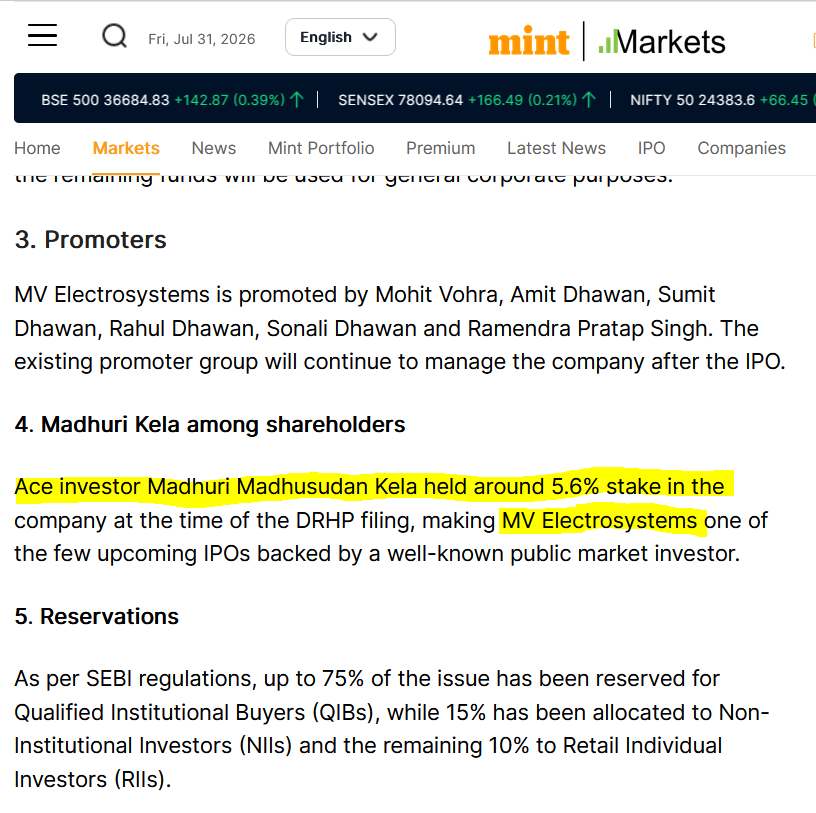
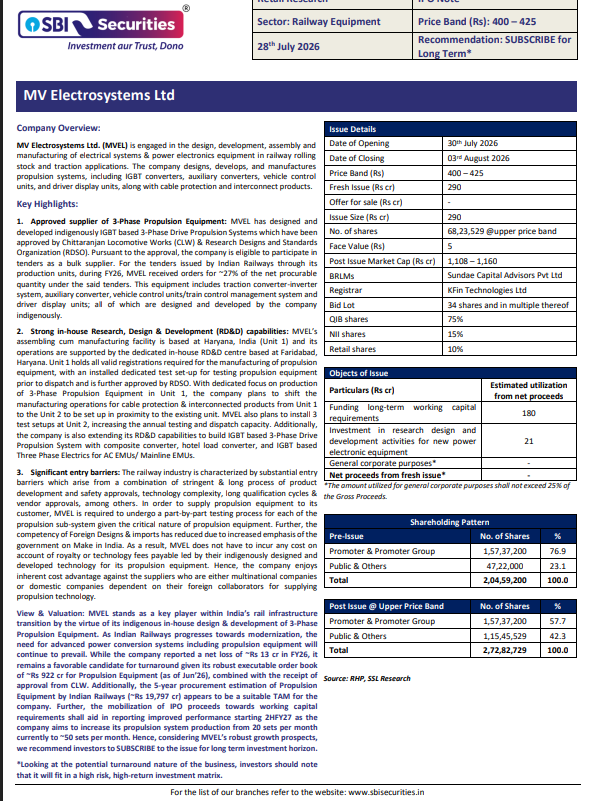
Madhu Kela holds 5.6% stake in MV Electrosystems. IPO is oversubscribed 12x. GMP 30%. Co makes Propulsion Equipment for Railways. Significant entry barriers. Order book is ₹921.64 Cr (18.6x of FY26 revenue). TAM is ₹19797 Cr. Loss ₹13 Cr in FY26. Favorable turnaround candidate
Forget stock tips or ideas, this is the real funda of wealth creation.
People spend lot of time, energy & effort looking for the next multibagger, but in reality big wealth isn't created by finding 1 magical stock. It is actually created through a few important boring habits followed consistently for decades.
Start early. Invest regularly. Increase your investments as your income grows. Stay invested when markets fall.
It sounds simple because it is. The difficult part is sticking to it.
Here is what the numbers actually tell us.
1. Starting early is your biggest advantage
If a 25 year old invests ₹10,000 every month in a broad market index fund earning an average 12% annual return, the corpus can grow to roughly ₹3.5 Crores by age 55.
Now compare that with someone who starts at age 35 with the exact same monthly investment. By age 55, the corpus is only about ₹1 Crore.
Nothing changed except starting 10 years later.
That single delay can cost more than ₹2.5 Crores because time is doing most of the compounding.
2. The biggest gains usually come in the final years
Many investors quit too early because the early years feel slow.
With a ₹10,000 monthly SIP earning 12% annually, you invest about ₹12 Lakhs in the first decade and build a portfolio worth around ₹23 Lakhs.
By the end of the second decade, that grows to nearly ₹1 Crore.
Then something interesting happens.
During the final 10 yrs, the same portfolio grows from around ₹1 Crore to almost ₹3.5 Crores!!
Over 70% of the final wealth is created in the last decade, only if you stay invested long enough to experience it.
3. Small annual increases can make a huge difference
Yes salaries do increase over time, but many SIPs never do.
A flat ₹10,000 monthly SIP for 20 years at 12% grows to around ₹1 Cr.
Now imagine increasing that monthly investment by just 10% every year.
Your total investment becomes roughly ₹68 Lakhs, while your final portfolio grows to nearly ₹2.3 Cr
4. Every EMI has an opportunity cost
A car loan with a ₹25,000 monthly EMI for 5years means paying ~ ₹15 Lakhs for an asset that keeps losing value.
Instead, if that same ₹25,000 is invested every month for five years and then allowed to compound for another 15 years, it can grow to more than ₹1.2 Cr
Avoiding the wrong expense is super vital in making wealth.
5. Surviving market crashes is part of investing
Market corrections are normal : A 20% to 40% fall has happened many times before and will happen again.
The investors who usually suffer the most are not the ones who picked bad companies but the ones forced to sell during difficult times.
Keeping 6 to 12 months of expenses in liquid funds or fixed deposits gives you the freedom to leave your long term investments untouched while markets recover.
👉 Here's the bigger picture:
History has shown that India's equity markets have rewarded disciplined investors over long periods. Even after taxes and inflation, diversified equity investments have delivered attractive real returns over multi decade periods.
You don't need to predict market moves or cycles and yes you certainly don't need to trade every week.
You don't need to find the next hidden multibagger.
Save consistently & agressively & make sure you top up your investments as your income grows. Stay invested through the ups and downs.
Over time, those simple habits have created far more wealth than chasing the latest market trend ever has.
A introspective few questions for you:
• At what age did you start your very first SIP?
• What do you find harder: handling market volatility or resisting lifestyle inflation?
• Do you increase your mutual fund SIP every year or is it still the same as when you started?
I am bullish on Zinc.
Right now Zinc is the new Silver.
People close to me know I have been overweight on Zinc for the past few days.
I know how to spot the trend and I trust my own study.
That’s why I don’t run around networking.
My work runs purely on my research.
https://t.co/yyVlVGZPDl
L&T Precision Engineering and Systems has inaugurated a new Satellite Assembly & Integration Facility at its Precision Manufacturing & Systems Complex (PMSC) in Coimbatore, Tamil Nadu.
The facility supports:
Assembly and integration of large satellites.
Simultaneous production of multiple small satellites.
Advanced cleanrooms, testing stations, and end-to-end integration infrastructure.
It was inaugurated by M. Sankaran, Director of the U R Rao Satellite Centre (URSC), ISRO, and marks a milestone in strengthening India’s indigenous space capabilities.
This development strengthens private sector capacity in India’s upstream space ecosystem of satellite manufacturing and integration.
“T10/B50 ratio measures the income of the top 10% of people relative to the bottom 50%.
“For SBI, this ratio is around 5–6, meaning the top 10% earn approximately 50–60 lakhs, while average employee earns around 9 lakhs.”
“For ICICI Bank, this ratio is more than 30, implying that the top employees may earn 1–2 crores, while the bottom half may not even earn 5–6 lakhs.”
“For Scandinavian countries, this ratio is around 7, whereas for India, it is around 23. This indicates that the degree of income inequality is much lower in Scandinavian countries.”
- G. Maran (Co-Founder and Executive Director of Unifi Capital)
There is so much happening in advanced electronics manufacturing.
Westway Electronics (Weston TV) has confirmed that every one of their LED TVs uses LED chips manufactured by Polymatech Electronics in Tamil Nadu.
Polymatech currently produces 2 billion LED chips per year there and is scaling toward much higher volumes.
A real domestic win in the opto-semiconductor space.
India’s semiconductor supply chain is quietly rising.
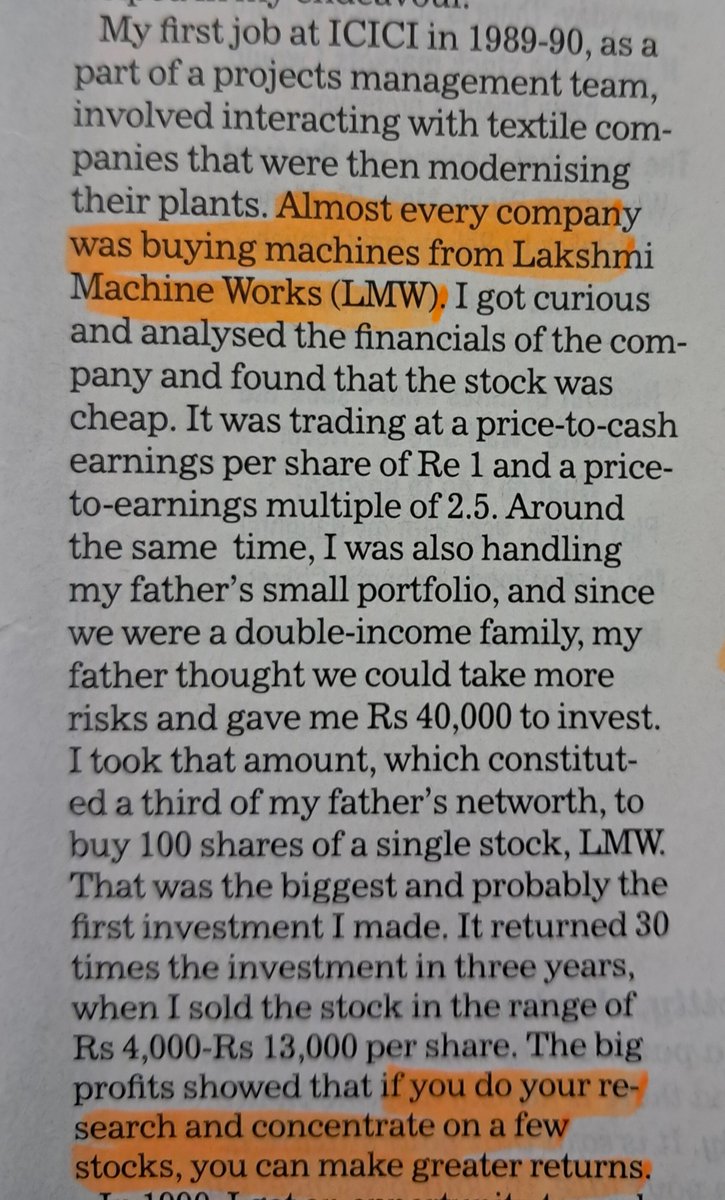
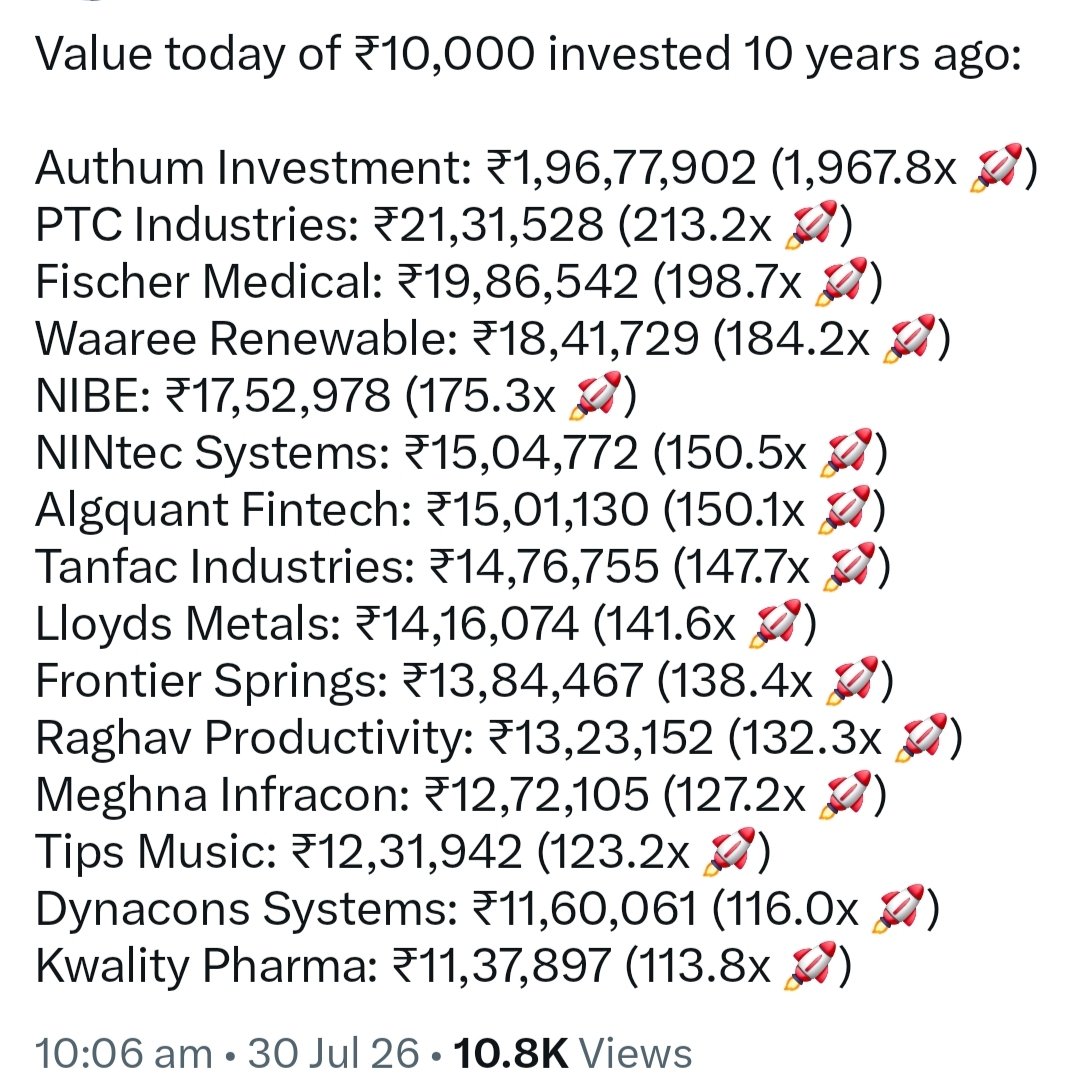
Insane. But how many people hold this & made generational wealth? Probably most exit after 2-3X / & allocated small percentage in their portfolio.