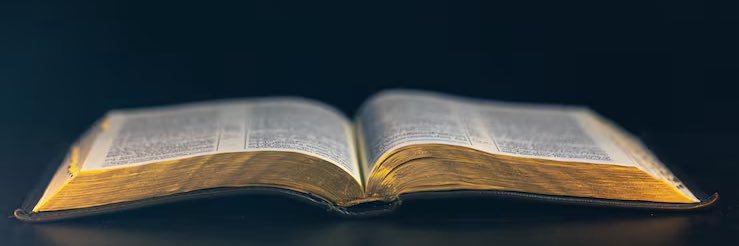
Future posts will draw exclusively from the 66 books of the Protestant Bible (Genesis to Revelation) and will:
1. Quote the verse
2. Provide cross-references from other canonical books to clarify meaning.
3. Demonstrate how these passages harmonize, upholding the inerrancy of Scripture.
First that’s an argument from silence. Which was exactly my point, you can’t definitively point to an oral teaching.
Second 4/6 of the teachings in that passage are explicitly taught in Scripture. But more importantly they’re called “elementary teachings” and the entire point of the context is to move on from them to maturity.
Third Catholics and Orthodox disagree on multiple aspects of baptism, and yet both claim oral tradition. If an oral apostolic teaching on baptism had actually been preserved, then wouldn’t you two churches agree on it?
I keep the command in full. Paul’s not saying half of what he taught was oral and the other half written. There’s no distinction between what was oral/written.
The problem is you can’t point to a teaching given by word and not epistle. Can you point to something taught orally by Paul that isn’t recorded in Scripture?
He was speaking to John, that’s not debatable.
“When Jesus then saw His mother, and the disciple whom He loved standing nearby, He *said to His mother, “Woman, behold, your son!” Then He *said to the disciple, “Behold, your mother!” From that hour the disciple took her into his home.”
John 19:26-27
@BatmanJ27190203@Be_Like_JChrist You're not even arguing with what I'm saying and don't have the reading comprehension to understand what verb tense the word "AM" is.
There's nothing more to be said to someone so obstinate. Goodbye
You're ignoring the grammar. Past tense for his deliverance, PRESENT TENSE for his being a sinner.
Paul calls the Corinthians saints and then spends 16 chapters in 1 Corinthians correcting them! So if "saint" means sinless, why does Paul address those people as saints?
Saints are ones set apart for God.