📝Today, we release new longitudinal analysis that shows that insecure work in the UK is a trap for millions not a short-term stop gap (1/8).
#NoProgress
🔗https://t.co/JE2swMySi2
@BRHarrison_ In a second statement, @AmanNavani_ said the Chancellor faces a significant challenge as subdued private sector wage growth and rising prices means millions of workers are still waiting for recent economic growth to reach their pay packets (2/2): https://t.co/gmFcWenFJ6
Ahead of next week's Budget, the Work Foundation has responded to the latest labour market statistics from the ONS.
@BRHarrison_ focussed on the jobs drought as vacancies fall to their lowest level for 12 years outside of the pandemic (1/2): https://t.co/JfKJnFMBtY
Our modelling also suggests the Fund could reduce Universal Credit support costs for local young people by 29%.
And help communities respond to future jobs droughts.
Read the report: https://t.co/xDTpRujeVN 7/7
NEW REPORT: Local leaders should be given the power to create more than 50,000 good quality jobs for young people in places hardest hit by the jobs drought.
New Work Foundation at Lancaster University research proposes a Community Jobs Fund. 1/7
Up to 80 local authorities could have access to the Community Jobs Fund, supporting up to 54,000 young people in places with the fewest opportunities.
Our modelling suggests this could reduce the number of young people who are NEET across the UK by up to 5%. 6/7
READ: Stabilisation is not recovery: what next for jobs, pay and living standards?
Earlier this week, we hosted an online event to look at what the ONS labour market inflation statistics mean for workers, employers and the Government. https://t.co/i7wvpZ6svZ
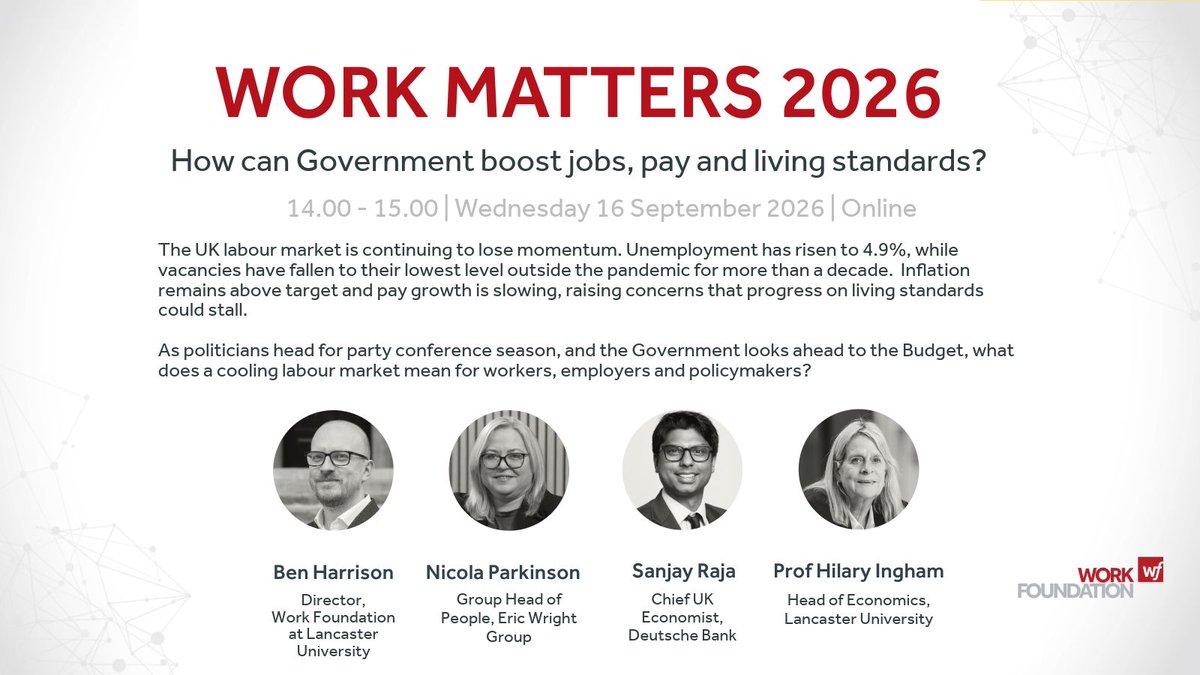
EVENT: Join us at 14.00 on Zoom for our next #WorkMatters event on how can Government boost jobs, pay and living standards as the UK labour market loses momentum?
Sign-up: https://t.co/NlbCJBbe92
READ: Why place matters in the youth employment crisis
Earlier this week with @CentreforCities, we brought together regional leaders and experts to discuss how metro mayors can help tackle the youth employment crisis: https://t.co/fPWNwJzQkz
EVENT: How can Government boost jobs, pay and living standards as the UK labour market loses momentum?
Join us at 14.00 on Wednesday 16 September for our online Work Matters 2026 event, exploring the big challenges facing the UK labour market.
Register: https://t.co/IvU3XXEFSo
Online event: Join @WorkFoundation & @CentreforCities at 14.00 on 8 Sept to explore what Metro Mayors & mayoral authorities can do to tackle the youth inactivity challenge.
We're delighted to be joined by @olivercoppard (Mayor, South Yorkshire): https://t.co/XJyCR57OOj
"And there is scope for Government to provide additional support to employers to improve recruitment, induction, mentoring and workplace adjustments to help ensure these workplace policies are not creating additional barriers to young people seeking work.” (8/8)
Comment from @BRHarrison_, on the latest NEET figures from @ONS:
⬇️ “Today’s figures indicate there are no quick fixes to the youth employment crisis facing the UK. The number of young people out of education, employment or training may have dipped just below one million (1/8)
“In particular, to ensure the Jobs Guarantee genuinely strengthens the first rungs on the jobs ladder for young people it must create additional, secure jobs that provide realistic routes to sustained employment and progression. (7/8)