The practice of sterilizing poor, Black women by hysterectomy without their knowledge or consent was called Mississippi Appendectomies. Attending physicians were paid. Their residents received surgical practice by performing these procedures.
Freedom fighter, Fannie Lou Hamer went into a Sunflower County, MS hospital for what she was told was the removal of a cyst. She left without a womb. This happened throughout the late 60s and early 70s as Black people fought for civil rights and economic empowerment. A court case filed by the SPLC on behalf of the 12 and 14 year old Relf sisters found that during this period, hundreds of thousands of poor Black women and girls had been sterilized using government funds.
Following the sterilization by hysterectomy of a 16 year old Chicago girl who was removed from her father’s care and made a ward of the state which approved the procedure for specious claims of cervical cancer, representative Emil Jones charged the state of Illinois with genocide.
Relf v Weinberger, 1974
The Southern Poverty Law Center filed a lawsuit on behalf of the Relf sisters and exposed the widespread sterilization abuse funded by the federal government and practiced for decades. The district court found an estimated 100,000 to 150,000 poor people were sterilized annually under federally funded programs. Countless others were forced to agree to be sterilized when doctors threatened to terminate their welfare benefits unless they consented to the procedures.
👇👇
https://t.co/OS7zZHi6ew.
#fannielouhamer #mississippiappendectomies #forcedsterilisation #eugenics #sterilization #hysterectomy #medicalracism #MedicalApartheid
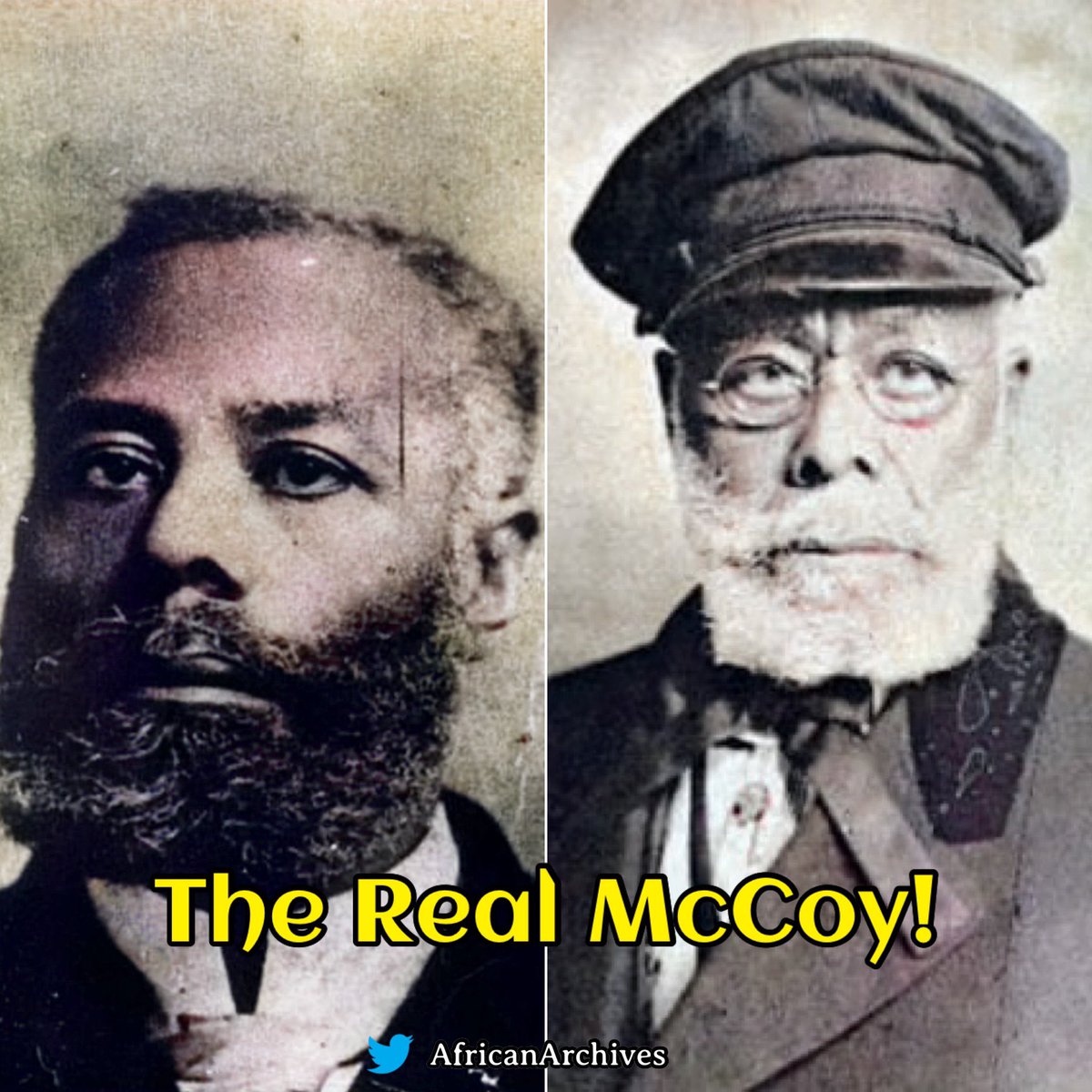
Elijah McCoy invented a superior automatic oiling system for steam locomotives, which allowed them to operate longer without the need to stop.
His invention was the origin of the phrase "The Real McCoy" when people wanted his superior products!
——Elijah J. McCoy was born on May 2, 1844, in Colchester, Ontario, Canada, to George and Mildred Goins McCoy.
—The McCoys were fugitive slaves who had escaped from Kentucky to Canada via the Underground Railroad. In 1847, the large family returned to the United States, settling in Ypsilanti, Michigan.
—Beginning at a young age, Elijah McCoy showed a strong interest in mechanics. His parents arranged for him to travel to Scotland at the age of 15 for an apprenticeship in mechanical engineering. He returned home to Michigan after becoming certified as a mechanical engineer.
—Despite his qualifications, McCoy was unable to find work as an engineer in the United States due to racial barriers; skilled professional positions were not available for Black people at the time, regardless of their training or background.
—McCoy accepted a position as a fireman and oiler for the Michigan Central Railroad. It was in this line of work that he developed his first major inventions. After studying the inefficiencies inherent in the existing system of oiling axles, McCoy invented a lubricating cup that distributed oil evenly over the engine's moving parts. He obtained a patent for this invention, which allowed trains to run continuously for long periods of time without pausing for maintenance.
—McCoy continued to refine his devices, receiving nearly 60 patents over the course of his life. While the majority of his inventions related to lubrication systems, he also developed designs for an ironing board, a lawn sprinkler, and other machines.
—Although McCoy's achievements were recognized in his own time, his name did not appear on the majority of the products that he devised.
—Lacking the capital with which to manufacture his lubricators in large numbers, he typically assigned his patent rights to his employers or sold them to investors. In 1920, toward the end of his life, McCoy formed the Elijah McCoy Manufacturing Company to produce lubricators bearing his name.
—McCoy married Ann Elizabeth Stewart in 1868. She died four years after their marriage. In 1873, McCoy married Mary Eleanor Delaney. In 1922, the McCoys were involved in an automobile accident. Mary died, while Elijah sustained critical injuries from which he never fully recovered.
—Elijah McCoy died in the Eloise Infirmary in Detroit, Michigan, on October 10, 1929. He was 85. He is buried at Detroit Memorial Park East in Warren, Michigan.
🖊️🖊️As the only admin behind this page, I try to research to educate. If you appreciate this effort, you can support to help the page thrive on https://t.co/vf5SMSPu4z. Your support is deeply appreciated! Or just follow the page for articles. #Blackhistorymonth
On this day in 1920, Andrew "Rube" Foster organized the first African-American baseball league, the Negro National League, in Kansas City. #Blackhistorymonth
Over 315 years ago, [7/2/1706], Kimpa Vita was burned alive with her son on her back by Catholic missionaries
Kimpa Vita was killed for preaching the return to roots, African/Kongo traditions, the return to Mbanza-Kongo land now in Congo of her ancestors that was abandoned after the death of the sovereign Vita-A-Nkanga in the famous Battle of Mbwila (Ambuila - 1665).
Kimpa Vita was killed because she advised the Kongo people to abandon foreign beliefs (Catholicism), and for conducting a spiritual struggle against the Portuguese.
She was baptized with the name of Ana Beatriz when she was a child. But when he started her fight, she rejected the baptism name and adopted the name, "Kimpa Vita or Kimpa Kya Nvita" which means " *NEW WAY TO MAKE WAR"*. A war that she considered spiritual.
*Kimpa Vita was burned alive with her son on her back by Catholic missionaries.* #Africa
The haunting sculptures of slaves in a lake in memory of African ancestors who drowned as they were being transported across the Atlantic Ocean as slaves. Ghanaian artist Kwame Akoto-Bamfo Project portrays Africans who were imprisoned, kidnapped or coerced into slavery. #Africa
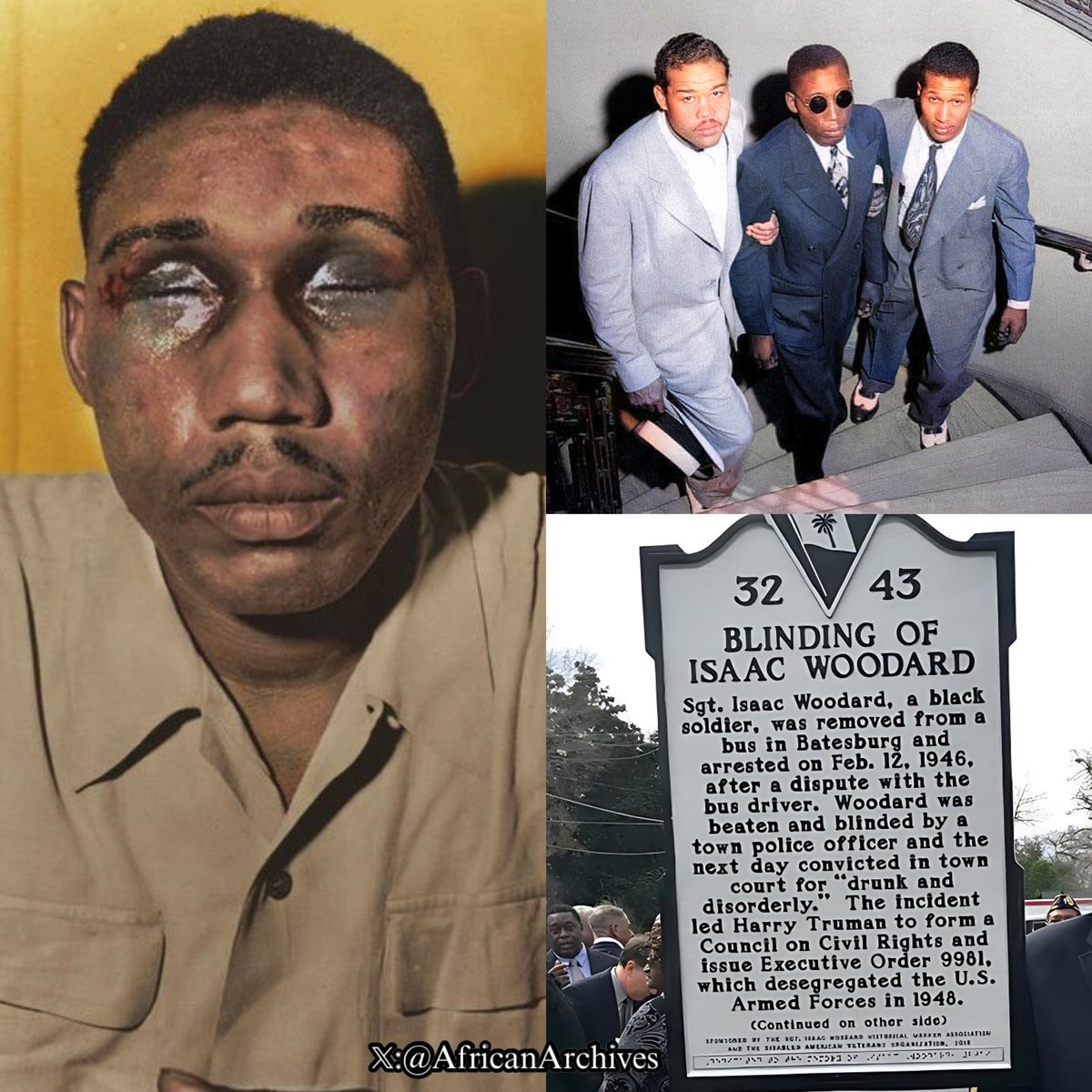
On this day in 1946, Isaac Woodard, WWII veteran, hours after being honorably discharged, was attacked by South Carolina police while still in uniform when taking the bus home & left permanently BLIND The officers were acquitted by an all white jury.
—Isaac enlisted in the U.S. Army in 1942 at Fort Jackson in Columbia, S.C, and served in the Pacific Theater as a longshoreman in a labor battalion. In February 1946, the decorated soldier received an honorable discharge at Camp Gordon, which is located near Augusta, Georgia.
Along with other discharged soldiers, Woodard boarded a Greyhound bus on February 12 to travel home. A conflict was triggered when the white bus driver belittled the army veteran for asking to take a bathroom break.
At the next stop, Woodard was met by the Chief Linwood Shull of the Batesburg, South Carolina police. While still in his army uniform, the police forcibly removed him from the bus and arrested him for disorderly conduct.
They beat Woodward, and the next day he was convicted of 'drunken and disorderly conduct' and fined $50. They also refused to take him to hospital after beating him for several days. The beatings that he suffered while in police custody caused him Permanent Blindness.
🖊️As the only admin behind this page, I try to research to educate. If you appreciate this effort, you can support to help the page thrive on https://t.co/vf5SMSPu4z. Your support is deeply appreciated! Or just follow the page for articles. #BlackHistoryMonth
💃Ditch the winter shivers in style with Heatsoft Cozy Leggings – the ultimate weapon for fashion-forward ladies! Embrace warmth and elegance with our Heatsoft technology and plush fleece lining. Elevate your winter wardrobe – grab yours today!
👉 https://t.co/f9VvIdaLoX
Mary Jane Patterson made history when she became the first black woman to receive a college degree when she graduated from Oberlin College in 1862.
She was also the first black principal at America's first public high school for black students. (Preparatory High School for Colored Youth known today as Dunbar High School, Washington, D.C.)
—Born in Raleigh, North Carolina, she was the oldest of seven children.
In 1856, she and her family moved to Oberlin, Ohio, where they joined a growing community of free Black families who worked to send their children to the college. Her father worked as a master mason.
For many years, the family boarded large numbers of Black students in their home.
In 1862, Patterson graduated from Oberlin College, earning her historic degree.
On September 21, 1864, she applied for a position in Norfolk, Virginia, at a school for Black children.
On October 7, 1864, E. H. Fairchild, principal of Oberlin College's preparatory department from 1853 to 1869, wrote a recommendation for an "appointment from the American missionary Association as a ... teacher among freedmen."
In this letter, Fairchild described Patterson as "a light quadroon, a graduate of this college, a superior scholar, a good singer, a faithful Christian, and a genteel lady. She had success is teaching and is worthy of the highest ... you pay to ladies."
The following year, she became an assistant to Black educator Fanny Jackson in the Female Department of the Institute for Colored Youth in Philadelphia.
In 1869, Patterson accepted a teaching position in Washington, D.C., at the newly organized Preparatory High School for Colored Youth -- later known as Dunbar High School.
She served as Dunbar's first Black principal from 1871 to 1874.
During Patterson's administration, the name "Preparatory High School" was dropped, high school commencements were initiated, and a teacher-training department was added.
Her commitment to thoroughness as well as her personality helped her establish the school's strong intellectual standards.
Patterson also devoted time and money to other Black institutions in Washington, especially to industrial schools for young African-American women, as well as to the Home for Aged and Infirm Colored People.
Her achievements as a leading Black educator influenced generations of African-American students and paved the way for other Black female educators.
🖋️if you love our content, please consider supporting our page on https://t.co/16fHyPFENu (follow the ko-fi page too for weekly posts roundup)
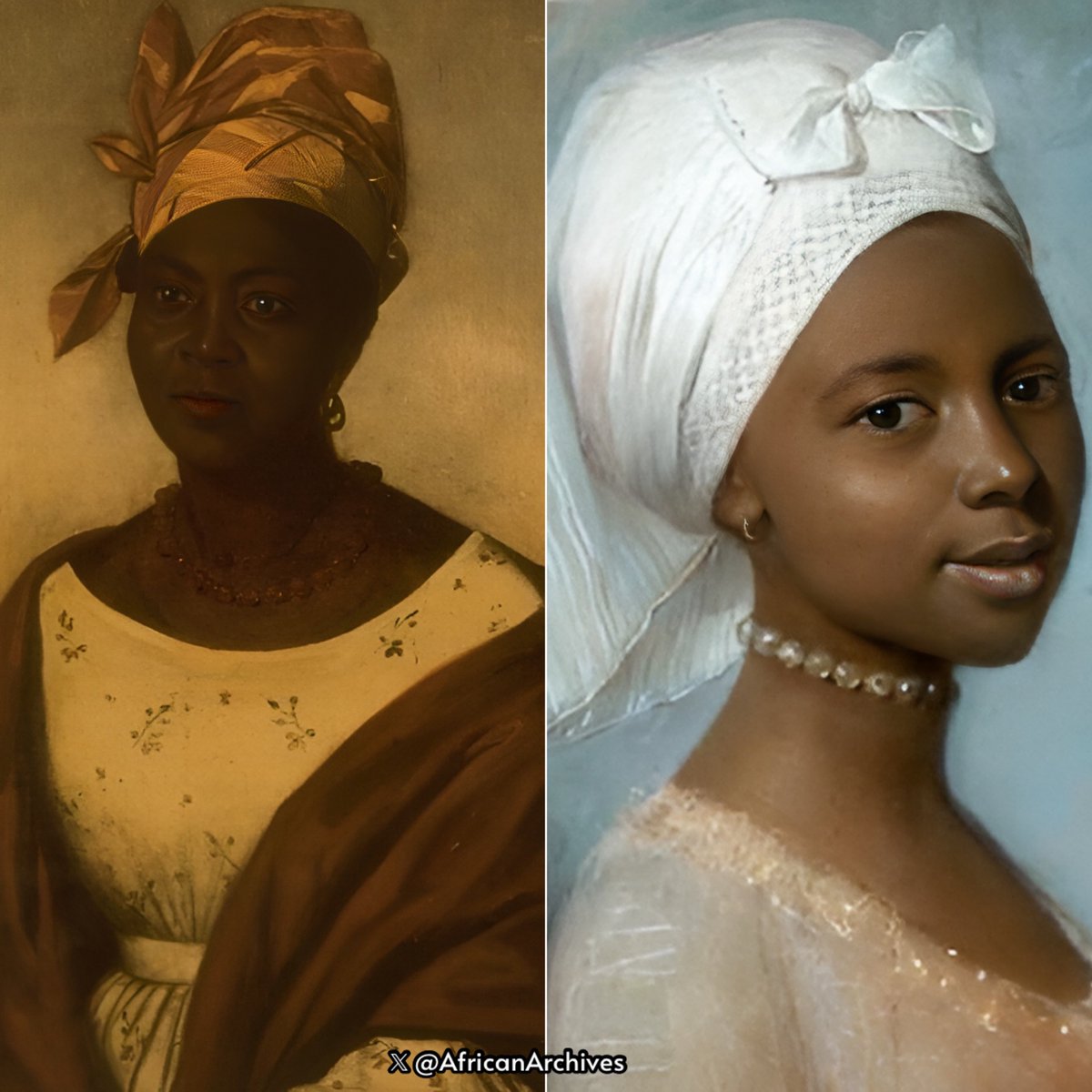
The Tignon laws of the 18th century were laws that banned black women from exposing their natural hair in public.
Their hairdos was obscuring the status of the white women and this threatened the social stability. The law would control colored women “who dressed too elegantly..”
Resembling today’s West African Gele, a tignon is a type of head-covering. It is a large piece of material wrapped or tied around the head to form a kind of turban concealing the hair.
Tignons were worn by free and slave Creole women of African descent in Louisiana from 1786. Historically, their prevalence was as a result of sumptuary laws passed in 1786 under Governor Esteban Rodriguez Miró.
These prescribed and enforced appropriate public dress styles for women of color in a white-dominated society. Hence, they were made as a way of regulating the appearance of black women in the U.S.
During the period, when black enslavement in America was at its peak, and places like New Orleans was unique in its high population of gens de couleur libres (free people of color), black women’s beauty and features often attracted white men who approached them as suitors.
This enraged white women who perceived them as competitors. Evidently, African women competed openly with white women through elegant dressing, including adorning their textured hair with gems, beads, and other accents that made them stand out from white women and possessing great beauty.
To take care of this perceived menace, series of sumptuary laws birthing the Tignon Law were put in place in order to stop white men from pursuing and engaging in affairs with women of colour, “while also being a class signifier,”
🖋️if you love our content, please consider supporting our page on https://t.co/16fHyPFENu (follow the ko-fi page too for weekly posts roundup)
🐜 Have a question for the cast of Marvel Studios’ #AntManAndTheWaspQuantumania? Tweet them now with the hashtag #AskMarvel and stay tuned to see if they get answered in an upcoming episode!







![Joe__Bassey's tweet photo. Over 315 years ago, [7/2/1706], Kimpa Vita was burned alive with her son on her back by Catholic missionaries
Kimpa Vita was killed for preaching the return to roots, African/Kongo traditions, the return to Mbanza-Kongo land now in Congo of her ancestors that was abandoned after the death of the sovereign Vita-A-Nkanga in the famous Battle of Mbwila (Ambuila - 1665).
Kimpa Vita was killed because she advised the Kongo people to abandon foreign beliefs (Catholicism), and for conducting a spiritual struggle against the Portuguese.
She was baptized with the name of Ana Beatriz when she was a child. But when he started her fight, she rejected the baptism name and adopted the name, "Kimpa Vita or Kimpa Kya Nvita" which means " *NEW WAY TO MAKE WAR"*. A war that she considered spiritual.
*Kimpa Vita was burned alive with her son on her back by Catholic missionaries.* #Africa](https://pbs.twimg.com/media/GGKIlgoWoAAPpAI.jpg)