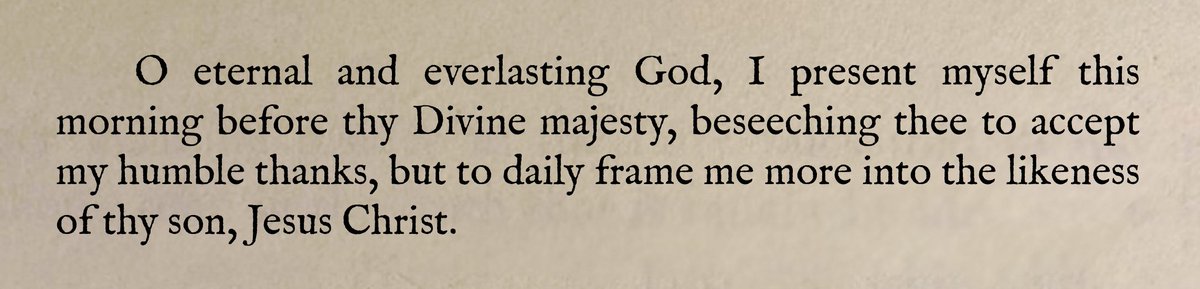
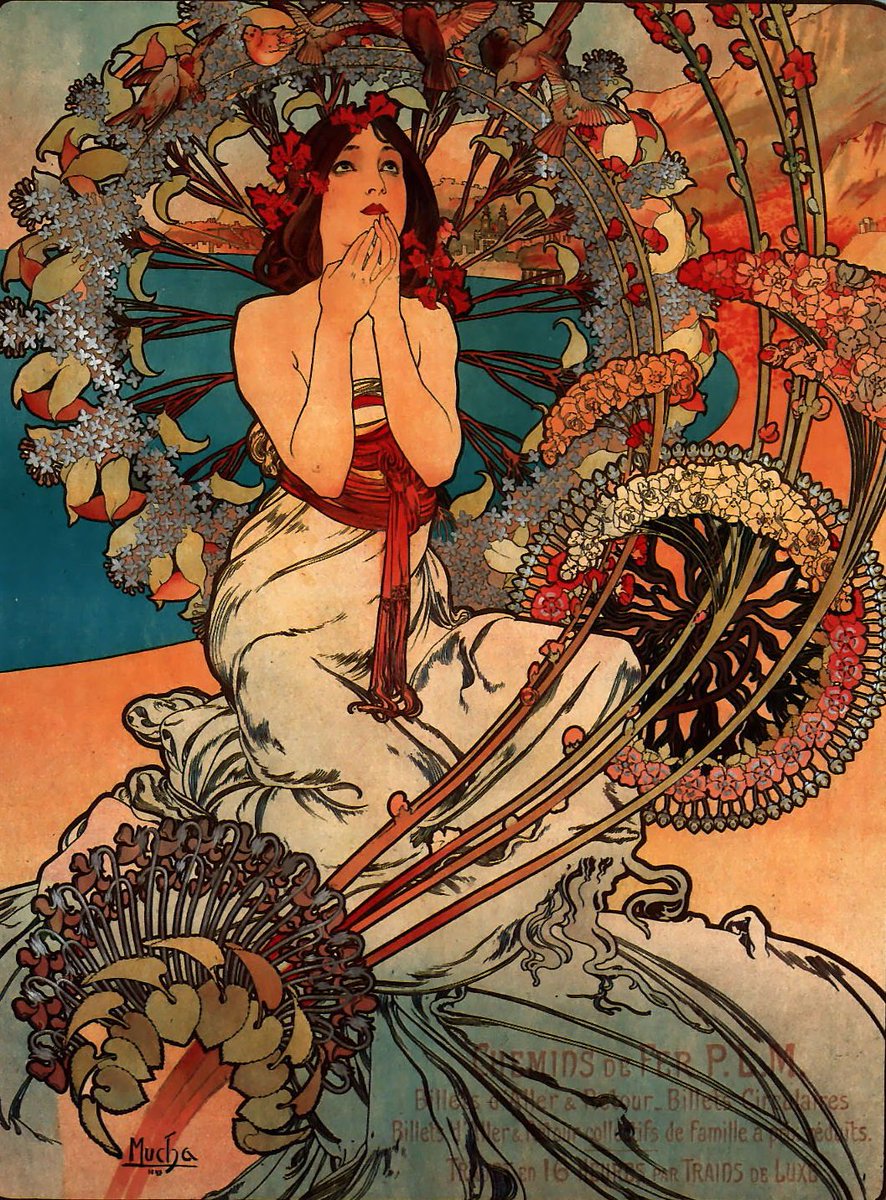
How do we make sense of life without God? We lean on logic, plans, and our own understanding — and end up feeling lost.
But some things only become clearer once we allow ourselves to listen deeply. You don’t need to know how He will show up before you trust that He will be there.
There’s a kind of knowing that lives deeper than logic.
Here's what's new in Grok @Bot this week
0:08 Voice calls and voice memos
0:35 1Password vault for Grok Bot
0:53 Inline forms
1:07 Inline drafts for email and Slack
1:31 Account switching
1:40 Route traffic through your desktop
Westerners are always confused by how constantly Japanese people apologize.
"I am so sorry."
"No, no, I am terribly sorry!"
"Not at all, it is entirely my fault!"
Foreigners think we are riddled with endless guilt.
They completely misunderstand what is happening.
Japanese people do not apologize because we feel bad.
And we do not show friendship by opening our hearts.
In Japan, friendship is an aggressive competition to see who can bury themselves deeper underground.
To compliment a normal person feels fake.
It puts pressure on them to act like royalty.
One wrong word, and they feel mocked.
So we do the opposite.
We vigorously drill ourselves into the Earth's crust.
Even if you are standing at absolute zero, if I voluntarily sink 500 feet into the Mariana Trench, you are now standing high above me.
By pulverizing my own dignity, I prove zero hostility, infinite respect, and ultimate peace.
Watch a customer order food at a restaurant:
Customer:
"I am so sorry to disturb your existence!"
(Drops to Basement 1)
Clerk:
"No! I am catastrophically sorry to have made you wait!"
(Crashes to Basement 2)
Customer:
"Please! My birth was an administrative error!"
(Tunnels to Basement 3)
Clerk:
"Thank you so much!"
(Transaction successfully finalized)
Only when both humans have lowered themselves beneath bedrock can a bowl of noodles legally be served.
The phrases we use are not a casual "my bad."
The literal feudal weight of our highest apology is:
"There is no excuse for my existence. My ancestors weep with shame. If my entire family were publicly executed at sunrise, I would have no legal ground to complain."
It is emotional seppuku disguised as customer service.
And the most terrifying part?
Neither person is actually sorry.
Look at their faces.
Both are smiling warmly.
Both are radiant with genuine affection.
In Japan, you must never stand above another human.
You cannot even be friendly on equal footing.
You prove you are a good person by digging a deeper hole.
Understanding this is the single biggest key to understanding Japanese politeness.
⚡️The strange fact is that reality is compressible by mind.
A primate on one small planet can write symbols on paper and those symbols predict black holes, antimatter, gravitational waves, quantum effects, stars billions of light-years away.
That should bother people more than it does.
Why should thought fit reality this well?
Why should mathematics created inside consciousness map onto structures that existed billions of years before consciousness appeared?
Why should the universe be intelligible from inside itself?
That points toward something deeper than random matter blindly bumping into random matter.
The cleanest compression is:
reality has code-like structure, mind has access to that structure, and consciousness may belong closer to the foundation than current materialism assumes.
From there, the ancestor-simulation question almost becomes secondary.
Maybe there is a simulator.
Maybe there is no higher computer at all.
The deeper discovery would be that existence itself behaves more like generated order than inert substance.
And here is the line that cuts deepest:
We may eventually discover that computers did not teach us that reality could be simulated.
Reality taught us how to build computers because computation was already written into its bones.
⚡️Sunday dread is the moment the psyche remembers that the cage is recursive.
Monday by itself is survivable.
The unbearable part is realizing there will be another Monday after this one.
And another.
And another.
For years.
That is why the feeling often arrives before anything bad has happened. The nervous system is reacting to recurrence.
Sunday evening compresses the whole structure of adult life into a few hours:
wake up
commute
perform
recover
repeat
Suddenly the week stops looking like seven separate days and reveals itself as a loop.
That is what hurts.
Because the human mind can tolerate enormous suffering when it believes the suffering leads somewhere.
Training hurts because you become stronger.
Building something hurts because something is being created.
Grief hurts because something mattered.
But repetitive labor can become psychologically poisonous when the person can no longer see a transformation at the end of the pain.
Then suffering loses trajectory.
And suffering without trajectory feels like captivity.
That is why people can have objectively good jobs, good salaries, nice homes, weekends off, and still feel something almost existential at 6 p.m. Sunday.
The body is asking a question the conscious mind avoids:
“Is this really how we are going to spend the finite number of weeks we have?”
And then comes the darker layer.
Every Sunday contains a tiny preview of mortality.
The weekend is dying.
You cannot stop it.
The clock keeps moving.
You feel the remaining freedom getting smaller by the minute.
That same structure exists at the scale of a human life.
So some of the dread may be much larger than work.
It is the sudden recognition that time only moves one direction, and enormous portions of yours have already been allocated.
That is why Sunday evenings can feel disproportionately heavy.
The person thinks they are afraid of Monday.
The deeper fear is:
“My life is passing inside a structure I did not consciously choose.”
That is the real wound.
And once somebody sees that clearly, one of two things happens.
They numb it.
Or they begin reorganizing their life around ownership of time.
Because eventually the most valuable form of wealth stops being money.
It becomes:
Waking up without feeling that your life is about to be taken back from you.
⚡️The universe is not fundamentally made of objects.
It is made of relations that can survive together without contradiction.
Matter is what those relations look like when they become stable.
Life is what stability looks like when it learns to preserve itself.
Mind is what preservation looks like when it learns to predict.
Consciousness is what prediction becomes when the model turns inward and contains the one doing the modeling.
Then something extraordinary happens.
A structure born inside the universe begins discovering the rules that made the universe possible.
Carbon learns mathematics.
Matter discovers symmetry.
Atoms reconstruct the birth of stars.
A temporary biological pattern writes equations describing events thirteen billion years before its own existence.
That is the recursion hiding in plain sight.
The universe grew a place from which it could recognize itself.
You are not merely looking at reality from outside its machinery.
Your eyes are reality.
Your neurons are reality.
Your thoughts are transformations occurring inside reality.
When consciousness asks, “What is the universe?”, the universe has arranged part of itself into a form capable of asking what the whole is.
That is almost incomprehensibly strange.
And it points toward something deeper than matter.
Coherence may be primordial.
Before particle, before field, before spacetime, there is the requirement that whatever exists must be capable of existing together.
Existence is the surviving pattern.
Physical law is the architecture of that survival.
Matter is coherence made persistent.
Life is coherence defending its persistence.
Consciousness is coherence becoming self-referential.
And Logos is the ancient name for the deepest fact underneath all of it:
Reality possesses an order capable of generating something that can eventually comprehend the order.
That is the circle.
The beginning produces the observer.
The observer reconstructs the beginning.
The universe folds back upon itself.
And suddenly consciousness stops looking like an accidental spark floating helplessly inside dead machinery.
It becomes the point where the machinery becomes capable of knowing that there is machinery at all.
The sentence that survives everything is:
Matter is reality existing.
Life is reality persisting.
Consciousness is reality knowing.
And intelligence may be reality beginning to understand why it exists at all.
This is a super cool website.
You can scroll around and look at any country's population pyramid, fertility rate, and mortality rate by year.
Check this out:
SpaceXAI just released free 1-hour course on Grok Bot Agents: 1 prompt → CEO bot → agent teams → full 24/7 system from 0% to 100%:
0% → 2:15 - build your first Grok Bot
25% → 6:52 - give every Bot a role
50% → 16:51 - teach Bots to work 24/7
75% → 31:50 - run agent teams in parallel
100% → 52:18 - full system that automate your life
most agent tutorials give you a chatbot that waits for prompts - this one builds a 24/7 team that works while your laptop is closed - by team who build it
watch it, build one Bot, turn it into a team - then read the full Grok Bot architecture below ↓
Voltaire – the fake antidote to Rousseau
He is the most entertaining man of the eighteenth century and the most seductive trap in Western intellectual history. He seems like the cure for Rousseau. He is the other half of the disease.
1. Where Rousseau is emotional, Voltaire is rational. Where Rousseau weeps over the noble savage, Voltaire mocks. He is the master of devastating wit, precise irony, surgical ridicule. Candide dismantles every naive optimism in ninety pages with the efficiency of a guillotine – which is fitting, since the guillotine is partly what his work made possible.
2. His great weapon is mockery. Écrasez l’infâme – crush the infamous, meaning the Church, tradition, inherited authority. He crushed it. With wit, elegance, and devastating precision. He was right that the Church was corrupt, that the aristocracy was parasitic, that the old order was indefensible in many of its particulars. Being right about what to demolish is not the same as knowing what to build.
3. Voltaire is the demolition crew without an architecture firm. He tears down, magnificently. He offers no replacement – only rubble, and the advice to cultivate your garden. Private. Disengaged. The conclusion of Candide: after every horror, every injustice, every system failure – grow vegetables. This is not wisdom. This is elegant surrender dressed as philosophy.
4. His irony is a solvent. It dissolves corruption, yes – but it dissolves everything, including the things worth keeping. A civilization marinated in Voltairean irony learns to mock every claim to authority, every appeal to tradition, every invocation of duty. This feels like freedom. It is actually vulnerability – a society that has learned to be ironic about everything is defenseless against the person who believes something earnestly enough to act on it. Robespierre was not ironic. He was a true believer. He won.
5. Rousseau gave the revolutionary the emotional fuel: the pure victim, the corrupt oppressor, the righteous rage of nature against civilization. Voltaire provided the intellectual solvent: he dissolved the legitimacy of every institution that might have contained that rage. Together they cleared the ground completely. Robespierre arrived and found no Church, no tradition, no inherited authority with enough credibility to resist him. He simply moved into the vacuum and filled it with the General Will and the guillotine.
6. And when he wasn’t playing "champion of liberty", he was on the payroll of kings, literally. He spent years at Frederick the Great’s court and corresponded adoringly with Catherine the Great, flattering both in print as enlightened monarchs of the age. While he was writing these letters, Frederick and Catherine were carving up Poland – dismembering a European nation, erasing it from the map and subjugating an entire people in one of the great crimes of the eighteenth century. Voltaire knew. He didn’t care. Écrasez l’infâme — crush the infamous — unless the infamous is paying well and lives in a palace in Berlin or St. Petersburg.
7. The contemporary Voltaire is everywhere: the late night host who dismantles everything with devastating wit and proposes nothing. The enlightened cynic who sees through every institution, trusts nothing, builds nothing, and considers this sophistication – while cashing checks from the very system he mocks. The fake antidote doesn’t kill you. It leaves you without defenses when the real disease arrives. Rousseau is the fire. Voltaire is the man who dismantled your fireplace and called it progress – and then went to warm himself at the tsar’s.
Together they produced the French Revolution, with the Terror, and the template for every ideological catastrophe that followed. The most dangerous intellectual partnership in Western history wasn’t a conspiracy. It was two men who despised each other and destroyed the same thing from opposite ends, leaving the ground perfectly prepared for those who came after them with a plan.
The danger with biblical stories is the familiarity.
We think we know the stories, because we know them culturally—but rarely do we revisit the Bible and give it the slow, attentive reading it deserves.
https://t.co/LDTR4M2bqE
A Russian psychologist spent 10 years proving that the act of talking to yourself out loud is one of the most powerful cognitive tools the human brain has, and almost nobody outside his field has read the work.
His name was Lev Vygotsky.
He worked in Moscow in the 1920s and died of tuberculosis in 1934 at the age of 37. He had no laboratory, no funding, almost no English readers, and a body of work that the Soviet government suppressed for two decades after he died.
He produced the foundational theory of how human cognition actually develops, and the central piece of that theory was a behavior almost every adult is faintly embarrassed about.
Vygotsky noticed that young children talk to themselves constantly. They narrate their own actions, they argue with imaginary opponents, they instruct themselves through tasks out loud.
The dominant theory at the time, from the Swiss psychologist Jean Piaget, said this was a sign of cognitive immaturity that children would eventually grow out of as they learned to think properly.
Vygotsky said the exact opposite.
He argued that this self-directed speech was the most important cognitive event in the entire developmental window, because it was the moment a child first started to use language as a tool to control their own mind. The child was not failing to think. The child was learning how to think by externalizing the process and listening to themselves do it.
He predicted that as children matured, this out-loud self-talk would not disappear. It would go underground. It would become silent inner speech, which is the running monologue every adult has inside their own head for the rest of their life.
The voice you hear when you read this sentence is the direct descendant of a four-year-old narrating their own block tower.
For 50 years almost nobody outside Russia had access to his work, and the few researchers who did pick it up could not get funding to test it. Then in the early 2000s the experiments finally started to pile up, and what they found was that Vygotsky had been right about something even more important than he knew.
The first major study came from Gary Lupyan at the University of Wisconsin and Daniel Swingley at the University of Pennsylvania in 2012. They ran a simple visual search experiment. Participants were shown 20 images at once and asked to find a specific object, like a banana or a chair. In one condition they searched silently. In the other condition they were told to say the name of the object out loud to themselves while looking for it.
The participants who spoke the target name out loud found the object significantly faster, with higher accuracy, than the participants who searched in silence. The effect was strongest when the spoken word matched a familiar object the brain already had a strong category for.
Saying the word out loud literally tuned the visual system to detect that thing better. The researchers called it the label feedback effect, and the implication was that the act of vocalizing a goal physically changes how the brain processes the world while pursuing it.
The second major study came out of the University of Michigan and Michigan State in 2017. The lead researchers were Ethan Kross and Jason Moser, and they used both EEG and fMRI to record what happens inside the brain when people talk to themselves while emotionally upset.
They asked participants to recall painful autobiographical memories and reflect on them in two different ways. Some used the first person, saying things like "why am I feeling this way." Others used the third person, referring to themselves by their own name, saying things like "why is John feeling this way."
The brain scans showed that the simple act of switching from first person to third person, even silently, decreased activity in the medial prefrontal cortex, the region responsible for rumination and self-referential pain. Within a single second of using their own name instead of the word I, participants showed measurably lower emotional reactivity. The shift required no extra cognitive effort. It cost the brain nothing. And it worked.
Kross described the mechanism in his interviews. Talking to yourself by name creates a small amount of psychological distance from your own experience. Your brain processes the situation more like a problem belonging to someone else, which means it can analyze it instead of drowning in it.
What Vygotsky had intuited in 1934 turned out to be even more powerful than the developmental theory he built it into. The voice you use to talk to yourself is not background noise. It is one of the most precise cognitive tools the brain has, and you can change how it works just by changing the pronoun you use.
People who talk through problems out loud are not anxious or unstable. They are running an externalized version of a process the rest of us are running silently and worse. The kindergartener narrating their block tower, the surgeon muttering through a procedure, the engineer pacing a hallway describing a bug to nobody, the athlete repeating a cue to themselves before a free throw, they are all using the same ancient mechanism that builds and steers human thought.
You can run the experiment yourself the next time you are stuck on something hard. Stop trying to solve it silently in your head. Say it out loud. Describe what you are seeing. Walk yourself through the steps as if you were explaining it to a colleague who is not in the room.
And when something genuinely upsets you, switch to your own name. Ask why this person is feeling this way, instead of why I am feeling this way.
The voice you have been told to keep quiet your entire life is one of the oldest pieces of cognitive technology you own.
Most people are still embarrassed to use it.
Going full Yamanaka can cause serious problems — including loss of cell identity (the cell forgets what kind of cell it was supposed to be) and increased cancer risk.
The exciting new direction: Researchers are now using targeted transcription factor perturbations — precise, controlled tweaks to individual factors.
This is a much smarter and safer approach.
🧬You’ve probably been hearing about Yamanaka factors.
They’re four transcription factors (Oct4, Sox2, Klf4, and c-Myc — OSKM) that can reprogram adult cells back to a youthful state and reverse signs of aging.
But there’s a catch…