China has flatly rejected Reuters’ claim that it planned to supply Iran with 400 surface-to-air missiles.
Beijing barely concealed its impatience—because it knows that what Washington needs is not the truth, but an excuse.
The United States has been fighting Iran for more than five months without achieving the clean victory it expected.
It has not broken Iran on the battlefield.
It has not won the information war.
It has not restored the illusion of effortless American supremacy.
So now it needs a hidden mastermind.
Washington cannot admit that a country it sanctioned, isolated, and impoverished for decades still refuses to collapse.
The preferred explanation must therefore be:
America is not failing against Iran. China is secretly controlling the war.
Hence the convenient fantasy of 400 Chinese missiles.
China is the perfect villain because blaming China preserves every other myth:
American weapons remain invincible.
American sanctions remain omnipotent.
American strategy remains flawless.
Only an unseen Chinese hand could possibly explain Iran’s resistance.
At this point, it is no longer intelligence reporting.
It is an empire writing fan fiction to avoid looking directly at the limits of its own power.
China just released an audio recording of a recent radio exchange between Japan's Maritime Self-Defense Force and the Chinese Navy.
The Japanese side identified itself by saying: "This is Japan Navy."
The Chinese Navy immediately responded:
Your so-called Japan Navy has violated your own constitution.
To understand how inappropriate "Japan Navy" is, imagine an employee whose official title is "staff member" walking into a board meeting and declaring:
"Good morning. I'm the chairman."
That is exactly what happened on the radio. A self-defense force is the strictly defensive organization Japan was permitted to retain after WWII.
A navy is a full military branch of a sovereign state, capable of offensive operations.
The distance between the two words is huge enough to separate the postwar order from its collapse.
According to Article 9 of Japan's Constitution:
"Aspiring sincerely to an international peace based on justice and order, the Japanese people forever renounce war as a sovereign right of the nation and the threat or use of force as means of settling international disputes.
In order to accomplish the aim of the preceding paragraph, land, sea, and air forces, as well as other war potential, will never be maintained."
And this is only the tip of the iceberg. Consider Japan's growing list of "small moves" in recent years.
1. Using offensive weapons in military exercises
2. Sending vessels of the Japan Maritime Self-Defense Force to pass through the Taiwan Strait
3. Putting an active-duty service member on the ruling party's stage
4. Promoting discussions on nuclear deterrence
One word at a time. One step at a time.
From "self-defense force" to "navy."
From "exclusively defense-oriented" to counterstrike capabilities.
From preserving the pacifist Constitution to campaigning for constitutional revision.
From honoring three nonnuclear principles to opening questioning nuclear taboos.
Taken together, they reveal a much larger transformation:
A force created in the name of self-defense is gradually shedding that label and reclaiming the identity of a full-fledged military, inch by inch.
The most important changes often do not begin with a declaration. Sometimes, they begin with a few words over the radio:
"This is Japan Navy."
And history is watching who lets them pass.
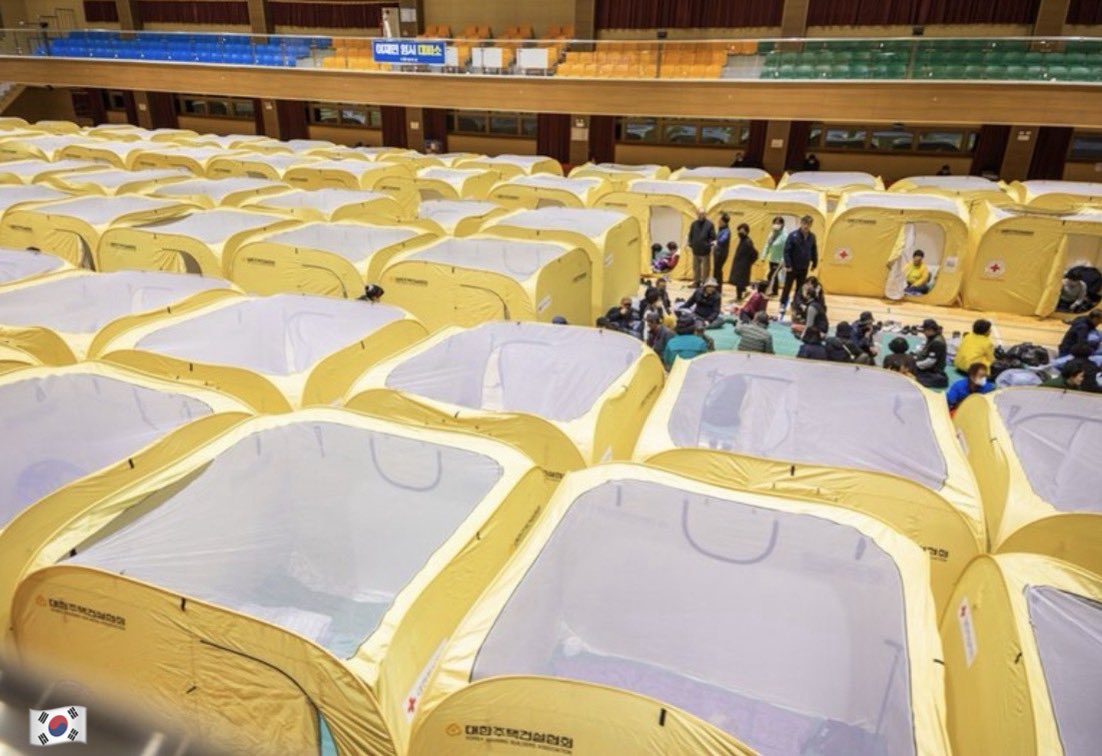
이게 유구한 역사를 가지고 있어요. 관동대지진부터 지금까지자연재해만 발생하면 반드시 이런 이야기가 나옵니다. 근데 진짜 무서운 이야기는 자연재해가 발생하면 재난 피해소에서 발생하는 여성들에 대한 성폭행입니다. 고베대지진때도 발생했고 동일본 대지진때도 발생했어요. 더 무서운 것은 이때 범죄를 저지른 사람들이 처벌을 받은 사람이 거의 없다는 겁니다. 정말 충격적입니다.