Official X Hospital account. AI healthcare, patient support and DAO governance ecosystem. We never ask for seed phrases. No medical or financial advice.
Your healthcare data is yours.
But do you really have control over who accesses it?
XHOS is working toward a more transparent and accountable healthcare system.
Let’s play a game.
You wake up tomorrow and you’re given complete access to your healthcare data.
Every record.
Every update.
Every access.
Every authorization.
What’s the FIRST thing you’d check?
What if your medical record had a history you could actually see?
Not just the diagnosis.
Who accessed it.
When it was accessed.
What was changed.
What you gave permission for.
Now imagine that history couldn’t simply disappear.
Interesting thought, right?
So how does XHOS work?
The idea
Patients, doctors, donors and partners connect through a decentralized ecosystem
Governance happens through a DAO, funding can be made more transparent, and important actions are verified on-chain
Less “just trust us”
More “you can verify it
Maybe the future of healthcare isn’t just about better medicine.
Maybe it’s also about giving people more visibility into their own data, funding, and decisions.
That’s the part of healthcare we’re exploring at XHOS.
Join the conversation: https://t.co/M3F0jLsG2z
Henrietta Lacks died in 1951
Her cells are still alive today, helping scientists study cancer, diseases and more
But her cells were taken without her knowledge or consent
Science gained something extraordinary
But who got to decide what happened to it?
Thats what matters
Hot take:
Your medical history should not feel like a password someone else owns.
You should know who can access it.
You should know what happened to it.
And you should be able to verify it.
Why is this still such a crazy idea?
well it’s not anymore XHOS is bridging that g
Imagine your hospital knows your entire medical history.
Your doctor knows it.
Your insurance company might know it.
AI might process it.
And somehow…
you’re the one person with the least control over it.
Make it make sense.
Healthcare + Web3 sounds strange.
Until you think about it.
Sensitive data. Funding. Verification. Governance.
These are all problems where transparency matters.
That’s the space XHOS is exploring.
Crypto taught us one thing:
You don’t always need a central authority to verify what happened.
So why can’t we apply the same thinking to healthcare?
That question is worth exploring.
and we are exploring at XHOS
join: https://t.co/i9ZG1JR4fH
Your medical data may be one of the most valuable things about you.
So why do you have so little control over it?
Maybe healthcare needs a new model of ownership.
What do you think?
What if healthcare funding was easier to track?
Not “trust us.”
Not “we’ll show you later.”
But something you can actually verify.
That’s one of the ideas behind XHOS.
AI is moving deeper into healthcare, but there’s a question we need to ask:
Who controls the data AI learns from?
Healthcare innovation means very little if privacy and trust are left behind
This is where Web3 gets interesting
AI is moving deeper into healthcare, but there’s a question we need to ask:
Who controls the data AI learns from?
Healthcare innovation means very little if privacy and trust are left behind
This is where Web3 gets interesting
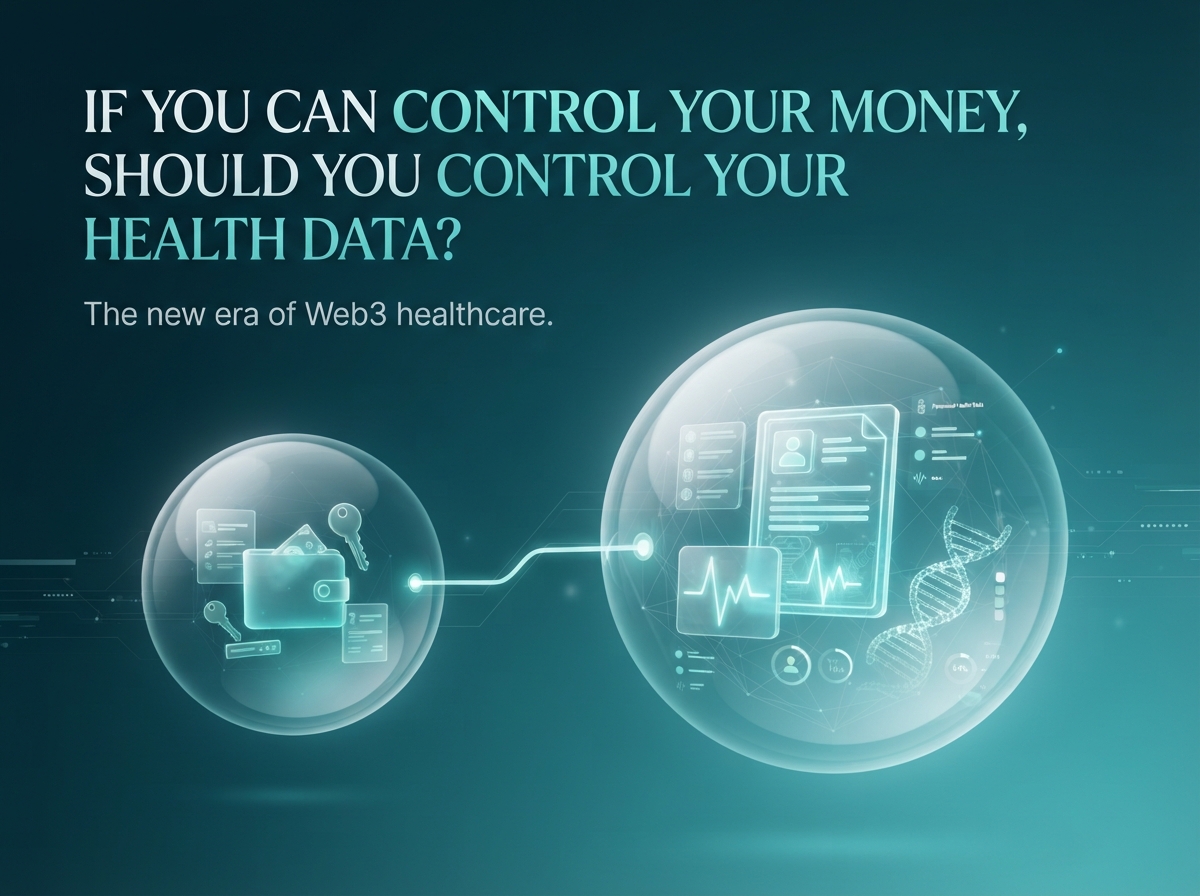
Crypto proved that people care about controlling their money
The next question is:
Should people have more control over their healthcare data too?
Different problem. Same question of trust.
thats the question XHOS is answering
join the conversation: https://t.co/M3F0jLsG2z
What would you change about healthcare?
That’s the conversation happening at XHOS.
Healthcare meets Web3, and the community is just getting started.
Join us: https://t.co/M3F0jLtdS7
Most Web3 communities are built around trading
XHOS is building around something different healthcare
We’re bringing together people interested in healthcare, technology, Web3 and the future of decentralized systems.
Want to explore, come Join us: https://t.co/M3F0jLsG2z
@SecKennedy This is a huge investment, especially for communities that have struggled with access to quality healthcare The real test now is making sure the funding actually translates into better care on the ground