🚨 Physicists now suspect our universe has a MIRROR twin — a cosmos running backward in time ⏳
If that’s true, we’re only seeing half of reality, because the Big Bang may have created two universes, and we’re living in just one side of the cosmic mirror. 🌌🪞
🔭 Most people never notice this.
You can often tell which space telescope captured an image just by looking at the brightest stars.
✨ Hubble: 4 diffraction spikes
✨ James Webb: 8 diffraction spikes (6 long + 2 shorter)
Which one's images do you like more: Hubble or JWST?
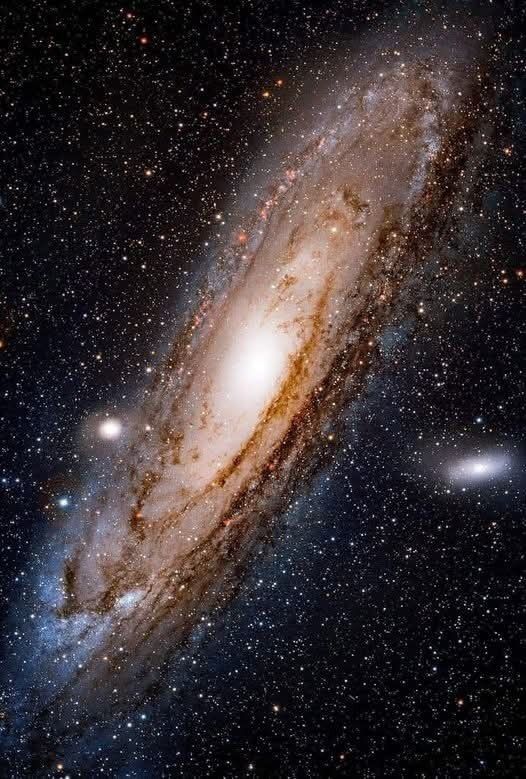
The majestic Andromeda Galaxy (M31) captured through an 11-inch telescope beneath the crystal-clear desert skies. ✨
Located about 2.5 million light-years from Earth, Andromeda is the closest large spiral galaxy to our own Milky Way—and one day, the two galaxies will merge in the distant future.
📸 Credit: David Dayag
🔭 Most people never notice this.
You can often tell which space telescope captured an image just by looking at the brightest stars.
✨ Hubble: 4 diffraction spikes
✨ James Webb: 8 diffraction spikes (6 long + 2 shorter)
Which one's images do you like more: Hubble or JWST?
Inspired by the famous Cosmic Cliffs in the Carina Nebula, where new stars are born inside towering clouds of gas and dust.
Photo taken by the James Webb Space Telescope - JWST.
🌌 About 7,600 light-years from Earth.
#JWST#CarinaNebula#SpaceArt#Astronomy
🔭 A new era of astronomy is about to begin.
NASA's Roman Space Telescope is preparing for launch and could reveal millions of new cosmic objects. 🌌
#NASA#Space
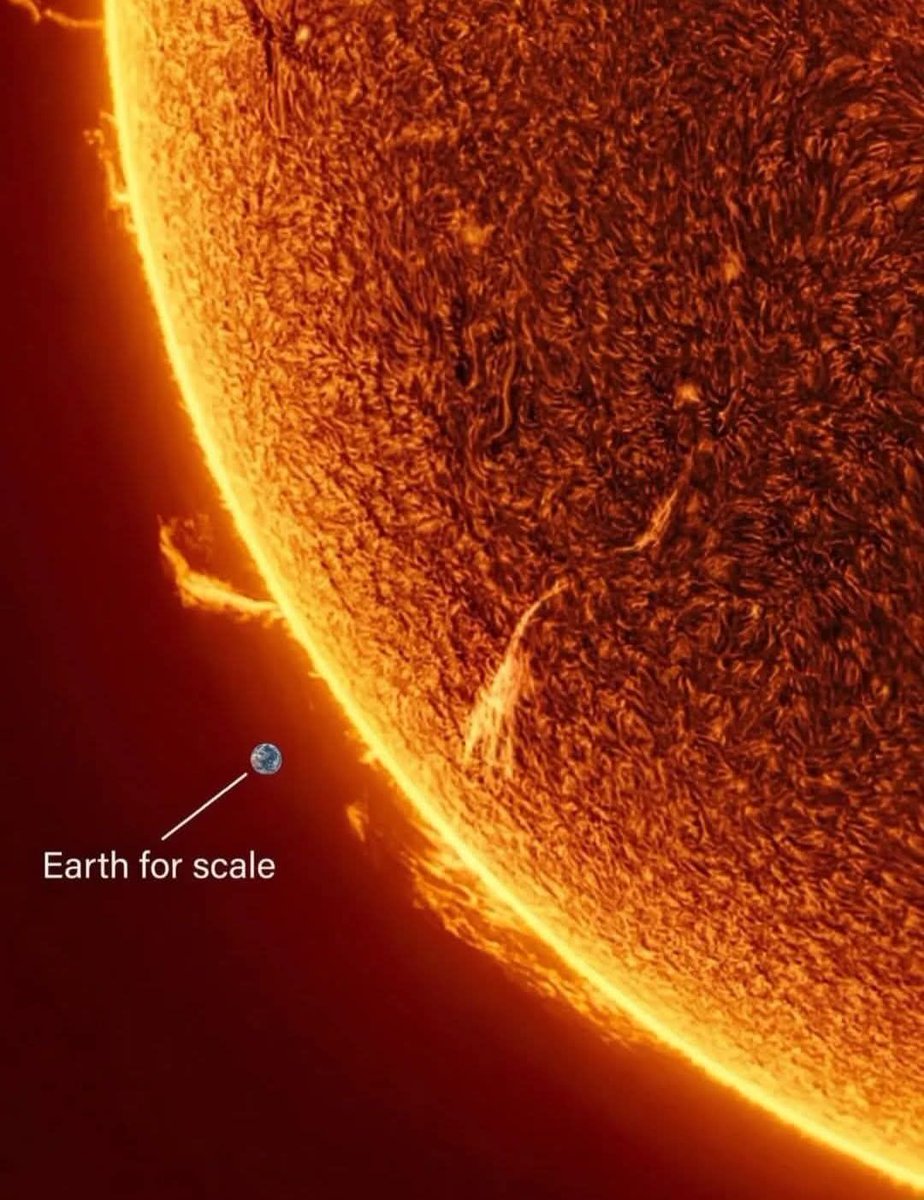
The Sun's edge is alive with glowing patterns and towering solar prominences—massive arcs of superheated plasma stretching far into space. The tiny blue-and-white dot labeled "Earth for scale" reveals just how enormous our star truly is. Our entire planet appears almost invisible because the Sun is more than 100 times wider than Earth. ☀️🌍✨
Three new International Space Station crew members will launch aboard a Soyuz MS-29 spacecraft on Tuesday, July 14, to join the Expedition 74 crew the same day live on @NASA+. More... https://t.co/0GxxFhDHvR
ハッブル宇宙望遠鏡がとらえた渦巻銀河NGC 1637。エリダヌス座の方向、地球から3800万光年の距離にあります。渦状腕のあちらこちらで、若い大質量星からの紫外線によって励起されたガスがピンク色に輝いています。
https://t.co/wVlmAxL1qI
Image Credit: ESA/Hubble & NASA, D. Thilker
🔥 Firefly Aerospace is preparing to expand spacecraft production.
As demand for lunar missions grows, companies beyond SpaceX are scaling up faster than ever. 🌕
#Firefly#SpaceIndustry#Moon
☄️ Astronomers may have found one of the oldest comets ever discovered.
The object could have formed before our Solar System, making it a rare window into the early universe.
🚀 A spacecraft is about to rescue another spacecraft.
NASA's Swift Space Telescope is losing altitude.
A robotic space tug will dock with the satellite and raise it back into orbit—the first orbital rescue mission in history.