GC @Multicoin. Board @nakamoto @BlockchainAssn @fund_defi FLAA. Lecturing Fellow @DukeLaw. Opinions are my own. Not a solicitation / offer for advisory services
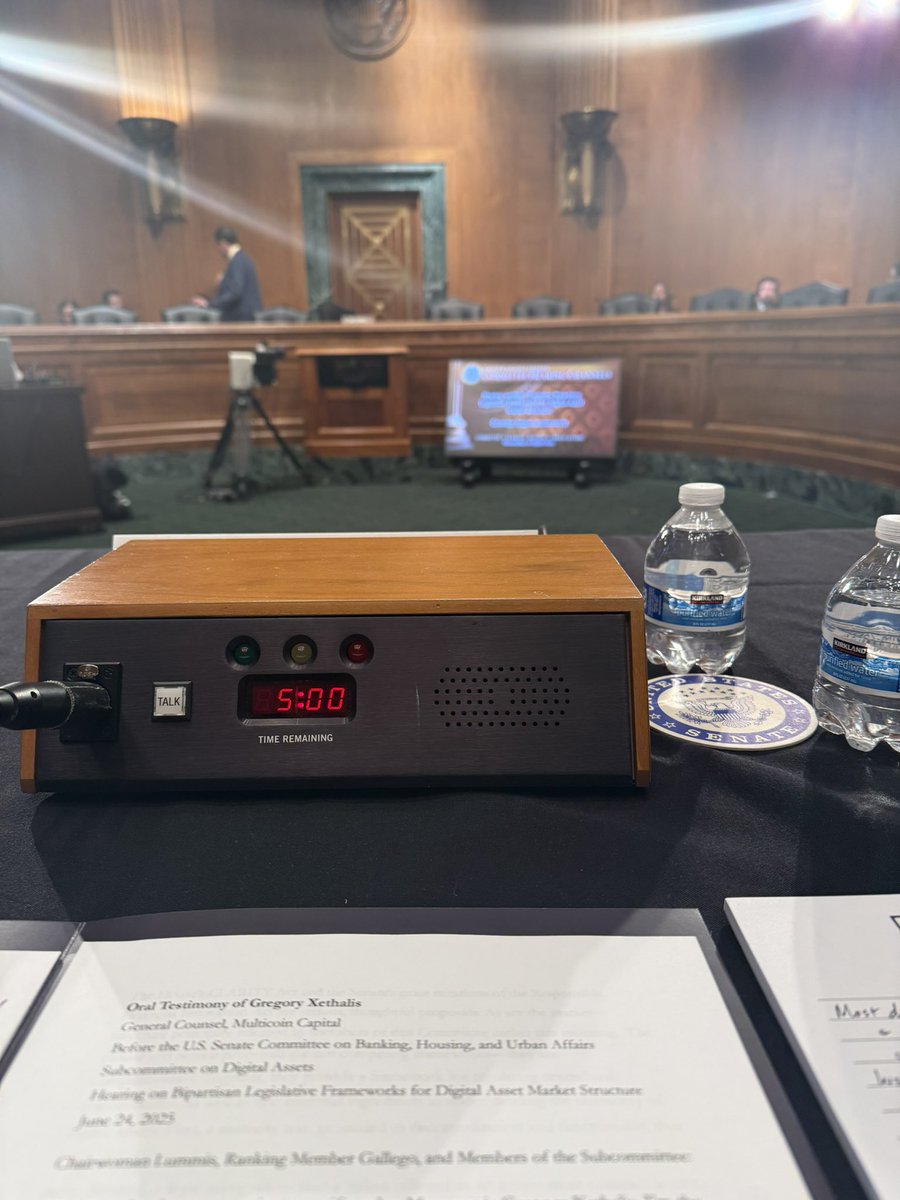
On Tuesday, I had the honor of testifying before the Senate Banking Committee’s Digital Asset Subcommittee as they move on from GENIUS to consider market structure legislation. Some highlights from the hearing.
1/ Voters want Congress to establish clear rules for digital assets.
DCG’s 2026 Harris Poll found that 81% of registered voters support a clear regulatory framework, and 60% want Congress to act now rather than wait for perfect legislation.
Vanderbilt today published "The University and Its Purpose: A Declaration of First Principles."
Adopted by Vanderbilt’s Board of Trust, the declaration reaffirms the enduring commitments that define and sustain America’s great research universities.
https://t.co/86lTCbKGbp
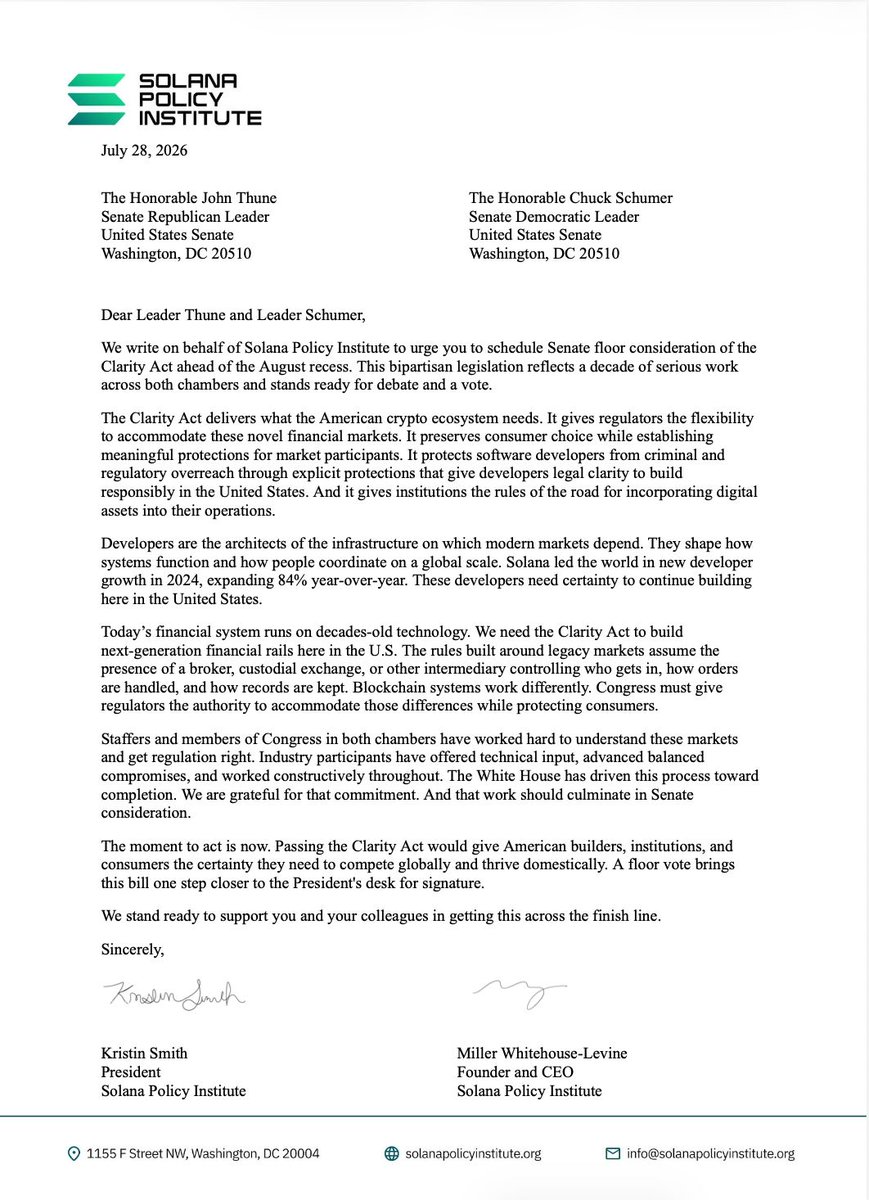
1/ We're calling on Senate leadership: schedule a floor vote on the Clarity Act ahead of August recess. American builders, institutions, and consumers are waiting for the certainty that only passage can deliver.
Last year, @buffalu__ authored SIMD-0286, which proposed raising the block limit to 100m CUs. Today, it was finally merged—a major step in increasing bandwidth for Solana.
Block space on Solana is a finite resource that block producers have to carefully budget when packing transactions into a block. Raising the block limit to 100m CUs increases the amount of block space available in each block, resulting in higher TPS and higher rewards per block.
As the largest block producer on Solana, we are excited about the impact of SIMD-0286 and optimizing Jito's block building infrastructure to maximize the value in every block.
Accelerate.
The Clarity Act draws the right line: writing and publishing open source code is protected activity, not a regulated service.
For a decade, developers have built DeFi in the open. Legal certainty on this point is what keeps that work, and the people doing it, in the US.
I have spent the past year making this case to policymakers in Washington, London and Brussels. Passing the bill is how Congress turns that principle into law.
This is not a constructive or serious proposal from these groups, and it actually shows their hand: they want every software developer to be treated like a financial intermediary even when that isn’t what they are/ the technology is doing. Countless hours have been spent working with law enforcement groups to address their concerns and make it clear what Clarity Act does and does not do, and the response to that hard work appears to be an 11th hour DOA “offer” via press release. This is not what good faith looks like.
We remain available to work productively with lawmakers and stakeholders who actually want to do so.
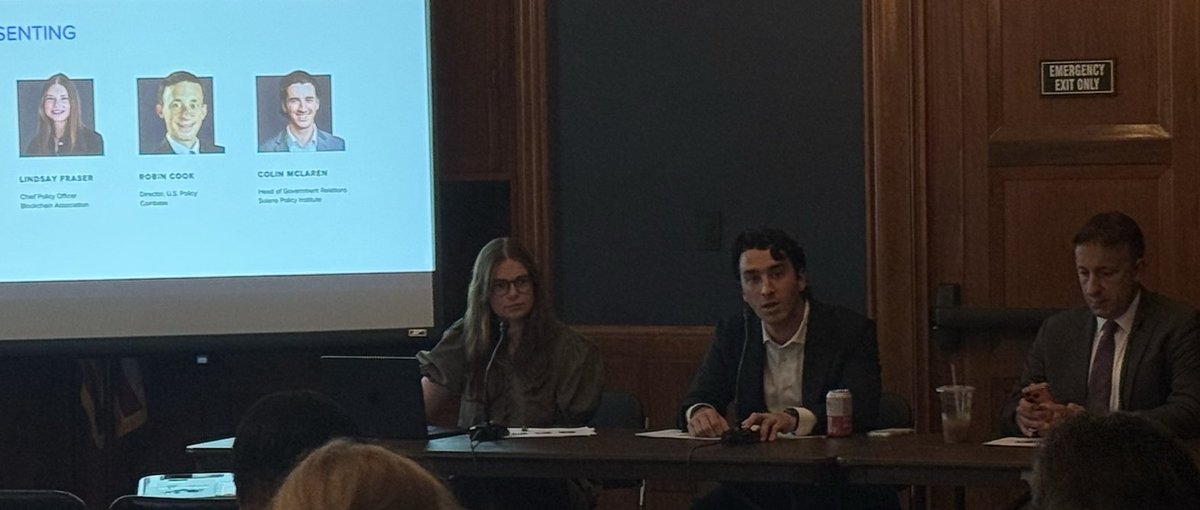
Today, our team was on Capitol Hill to provide congressional staff with an overview of the latest Clarity Act text.
BA’s @lindsayfraser0 was joined by @SolanaInstitute’s @thecolinmclaren and @Coinbase’s @robinrcook to walk through the bill’s key provisions and their practical implications.
Really nice letter from Stef and the Paradigm team on Event Contracts. Particularly like the point on 4(c) and "well-understood categories."
Getting into the weeds on technical points is important. A good thing to remember on how a legislative mandate becomes good rules.
Yesterday, @Paradigm filed a comment letter with the @CFTC on its latest prediction market rule proposal, the most significant regulatory effort in this space to date. The NPRM gets a lot right, but we suggest a few places where the Commission can sharpen its proposal.
CLARITY is essential. You can use the link below from @SolanaInstitute or the @BlockchainAssn's https://t.co/4381RMKS6w AI tool to write your Senator to demand action on CLARITY.
Yesterday, we were happy to jointly submit a comment to the CFTC's Prediction Markets rulemaking. The letter applauds the CFTC's work and highlights the importance of (i) event contracts to broader markets, and (ii) getting the "involve" language correct.
Event contracts have been recognized as an important innovation for the better part of two decades, with the first academic market launching in 1988. Now they're in the mainstream and demonstrating their general commercial value across markets analog and crypto.