Early research suggests that sildenafil, the erectile dysfunction drug commonly known as Viagra, may help stop cancer from spreading, not through its well-known effects on blood flow, but by disrupting how tumor cells manage cholesterol.
Read more: https://t.co/frmD2Gg2B1
1/5
I'm a cardiologist. Here's why I recommend men take 5 mg of tadalafil — Cialis — every single day.
Not for ED. Not for performance.
I take it for the same reason every serious longevity physician I respect does: to protect my cardiovascular system, my brain perfusion, and my endothelial health at the most fundamental level.
This drug — famous for all the wrong reasons — has quietly become one of the most powerful tools in preventive cardiology. And the data is now too strong for me to keep quiet about it.
Breakthrough compounds may reverse nerve damage caused by multiple sclerosis | University of California - Davis
Summary:
Researchers have identified two compounds, K102 and K110, that could repair the nerve damage from multiple sclerosis. These drugs help regenerate the protective myelin sheath and balance immune responses. Licensed by Cadenza Bio, the discovery represents a leap from lab research to potential clinical therapy. If successful, it could transform how neurodegenerative diseases are treated.
---
Multiple sclerosis (MS) is a long-term autoimmune condition that affects over 2.9 million people around the world. In MS, the immune system mistakenly attacks the myelin sheath, a protective layer that insulates nerve fibers. This damage interrupts communication between the brain and body, leading to symptoms such as numbness, tingling, vision problems, and paralysis.
Although existing treatments can help reduce inflammation, there are still no approved therapies that protect neurons or rebuild the damaged myelin sheath. Scientists have now made significant progress toward that goal with support from the National Multiple Sclerosis Society. Their work has led to the discovery of two compounds capable of promoting remyelination, the process of repairing the myelin coating on nerve fibers.
The study, published in Scientific Reports, was led by Seema Tiwari-Woodruff, a professor of biomedical sciences at the University of California, Riverside, School of Medicine, and John Katzenellenbogen, a professor of chemistry at the University of Illinois Urbana-Champaign (UIUC). The research was funded through two National MS Society initiatives: a standard investigator-initiated grant and the organization's Fast Forward program, which accelerates commercialization of promising research.
"Our work represents more than a decade of collaboration, with the last four years focused on identifying and optimizing new drug candidates that show strong potential to treat MS and possibly other neurological diseases involving demyelination," Tiwari-Woodruff said.
With this support, the team launched a drug development program that has since been licensed by Cadenza Bio, Inc. Backed by investor funding, the company has continued advancing the research and is preparing for clinical testing of what could become a first-of-its-kind treatment for people with MS.
From discovery to development
This new work builds on earlier studies involving a compound called indazole chloride, which had shown promise in promoting myelin repair and regulating immune responses in mouse models of MS. However, indazole chloride lacked the chemical properties and patent potential required for clinical and commercial use, Tiwari-Woodruff explained.
Working with UIUC chemists Katzenellenbogen and Sung Hoon Kim, who created new versions of the molecule, Tiwari-Woodruff's group, led by recent UC Riverside graduate Micah Feri, screened more than 60 analogs of indazole chloride. From this effort, they identified two standout candidates, K102 and K110. Both showed better safety, efficacy, and drug-like characteristics in tests using mice and human cells.
Among the two, K102 emerged as the leading candidate. It not only stimulated myelin repair but also helped regulate immune activity, a critical balance for MS therapies. The compound also performed well in human oligodendrocytes -- cells responsible for producing myelin -- derived from induced pluripotent stem cells, suggesting the results could translate effectively from animal studies to human disease.
Normally, oligodendrocyte precursor cells develop into mature myelin-producing cells that repair nerve insulation. In MS, this repair process often breaks down, leading to lasting nerve damage. A compound like K102 that can restore myelin could help improve nerve signal transmission and potentially limit long-term disability.
"K110 is also a strong candidate," Tiwari-Woodruff said. "It has slightly different central nervous system effects and may be better suited for other conditions like spinal cord injury or traumatic brain injury, so we're keeping it in the pipeline."
From bench to biotech
Tiwari-Woodruff and Katzenellenbogen credit the National MS Society's Fast Forward program as a turning point. Fast Forward accelerates the commercialization of promising therapies by promoting academic-industry partnerships. The highly competitive grant enabled Tiwari-Woodruff and Katzenellenbogen to generate sufficient data to license the rights to Cadenza Bio to develop K102 and K110. The patents are jointly held by UCR and UIUC, with an exclusive, worldwide licensing agreement in place between the universities and Cadenza Bio.
"This project has been a good example of how long-standing academic collaborations can lead to real-world applications," Katzenellenbogen said. "Our shared goal was always to take a promising idea and develop it into a therapy that could help people with MS. We're finally getting close to that reality."
Initially, UCR's Office of Technology Partnerships collaborated with UIUC to seek patent protection. Grace Yee, assistant director of technology commercialization at UCR, said the joint efforts of UCR, UIUC, and the National MS Society advocated for and promoted the technology to investors and industry for commercial development.
"Our entrepreneurs-in-residence also helped advise the project, so the team was able to develop materials and messaging to highlight the project's commercial value," she said. "When investors expressed interest in the technology, UCR and UIUC helped them understand how the technology addresses an unmet need in treating MS. These efforts led to the licensing agreement with Cadenza Bio."
Elaine Hamm, chief operating officer at Cadenza Bio, said she and Carol Curtis, cofounder of Cadenza Bio, were impressed by the possibility of moving from slowing axon damage to repairing axon damage.
"This is the future we want to build," Hamm said. "It is why we licensed the technology, and why we are excited to move it forward to patients in need."
More than a decade in the making
Tiwari-Woodruff and Katzenellenbogen have worked together for more than 12 years. Tiwari-Woodruff's move from UCLA to UCR in 2014, she said, turned out to be a pivotal decision.
"The support from UCR -- from leadership to infrastructure -- has been extraordinary," Tiwari-Woodruff said. "None of this would've been possible without that backing. Funding for academic labs like mine and John's is crucial. This is selfless work, driven by a deep love of science and commitment to human health."
Though the initial focus is MS, the team believes K102 and K110 could eventually be applied to other diseases involving neuronal damage, including stroke and neurodegeneration.
Cadenza Bio is now advancing K102 through the necessary non-clinical studies required to support first-in-human clinical trials.
"We're hopeful that clinical trials can begin soon," said Tiwari-Woodruff. "It's been a long journey -- but this is what translational science is all about: turning discovery into real-world impact."
Read more:
https://t.co/33i0aMAPNf
Two new compounds may reverse nerve damage in multiple sclerosis.
Researchers have identified two compounds – K102 and K110 – that show real promise in repairing nerve damage caused by MS. Traditional therapies focused on reducing inflammation and preventing further damage.
These compounds not only stimulate remyelination but also help regulate the immune response that drives the disease. One molecule in particular, K102, has shown strong results in human cells derived from stem cells, an important milestone for future therapeutic use.
The technology has been licensed to Cadenza Bio, a biotechnology company that is now preparing to advance the compounds into clinical trials.
If proven safe and effective in humans, these molecules could potentially reverse some of the neurological damage caused by multiple sclerosis, improving symptoms such as vision loss, mobility problems, and sensory disturbances; something current treatments cannot achieve.
While still in early development and requiring extensive human testing, this work represents a significant step forward in the search for disease-modifying and reparative treatments for multiple sclerosis and possibly other neurodegenerative conditions.
["Chloroindazole based estrogen receptor β ligands with favorable pharmacokinetics promote functional remyelination and visual recovery." Scientific Reports, 2025]
Branched chain aminos (e.g. leucine & valine) help build muscle but also activate mTOR. Here, Lamming & team report that restricting valine extends the lifespan of male mice 23%, indicating high protein diets deserve scrutiny from a longevity perspective 🐭
Intermittent fasting is thought to be good for longevity but its health effects aren't well studied. A 6-month 5:2 fasting program (i.e. 2 days of low cals/week) improved blood pressure, cholesterol, inflammation & adiponectin & many benefits persisted for another 6 months!
Aging is controlled by single genes
Aging is slowed by adversity
Aging regulators can be modulated by small molecules
Aging is slowed by eating stressed plants
Aging is largely epigenetic noise
Cellular damage accelerates epigenetic age
Aging is a disease
Aging is reversible
Arguing humans can’t live much longer is like arguing about the limits to the speed of a transatlantic trip before air travel is invented
— Leon Peshkin 👏
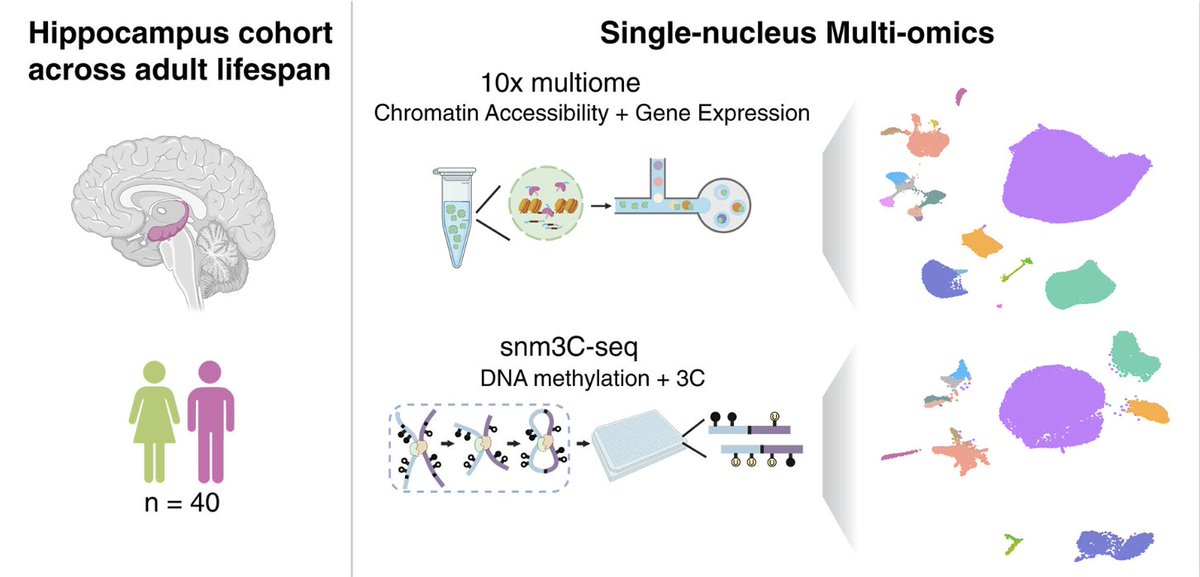
Aging doesn't just change what brain cells do, it changes what they are! New study shows microglia cells replaced over time by monocyte-like inflammatory cells due to DNA methylation changes, consistent with brain aging and dementia resulting from epigenetic information loss👏🧵
@MakisMedicine Hi dr makis - I have just been diagnosed with multiple sclerosis with a spinal cord lesion and multiple brain hyper intensity lesions - would 44mg be safe from a pet supply ? Thanks so much 🙏 this looks promising


![Rainmaker1973's tweet photo. Two new compounds may reverse nerve damage in multiple sclerosis.
Researchers have identified two compounds – K102 and K110 – that show real promise in repairing nerve damage caused by MS. Traditional therapies focused on reducing inflammation and preventing further damage.
These compounds not only stimulate remyelination but also help regulate the immune response that drives the disease. One molecule in particular, K102, has shown strong results in human cells derived from stem cells, an important milestone for future therapeutic use.
The technology has been licensed to Cadenza Bio, a biotechnology company that is now preparing to advance the compounds into clinical trials.
If proven safe and effective in humans, these molecules could potentially reverse some of the neurological damage caused by multiple sclerosis, improving symptoms such as vision loss, mobility problems, and sensory disturbances; something current treatments cannot achieve.
While still in early development and requiring extensive human testing, this work represents a significant step forward in the search for disease-modifying and reparative treatments for multiple sclerosis and possibly other neurodegenerative conditions.
["Chloroindazole based estrogen receptor β ligands with favorable pharmacokinetics promote functional remyelination and visual recovery." Scientific Reports, 2025]](https://pbs.twimg.com/media/G5-ThNRW8AAOQSK.png)