A reminder:
The educator who looks calm and organised right now is probably juggling:
End-of-year reports
Data stuff
Transition meetings
Behaviour concerns
Parent communications
September planning
Trips and events
Safeguarding responsibilities
…while still giving their best to every child in front of them.
The mental load carried by educators at this point in the year is enormous.
If you know a teacher, teaching assistant, leader or support staff member, take a moment to thank them today. They deserve it.
❤️
My Year 6 class and I have loved doing the 1st book as part of our critical thinking lessons. We compare notes every week on how well we did from Saturday's show when it is on! They would love this 🤞
Going to give away some copes of Quiz Book 2 today. Just share this post saying who you want it for and why. Will select some winners.
It is also available for a couple of days under half price for Black Friday https://t.co/QRsh8aKZ2Y
#the1percentclub#giveaway#BlackFriday
We are giving a few more new books away. They are not even out yet! All you have to do is repost and say who you are watching TONIGHTS BRAND NEW EPISODE with and how well you think you will do. And a book might come your way. Good luck!
#The1PercentClub#Giveaway
Teaching prime numbers soon?
This handy flow chart guides children through how to work out whether numbers to 100 are prime or not!
Download for free here:
https://t.co/9sbuBPAeab
Slimmed Down Spelling appeared in The TES on 25th May 2001. It adapts my approach to reading to take account of the way we adjust our thinking in order to spell. I've used it consistently since.
An early success was a 15 year old, assessed as Dyslexic, who is now a Dr, and a current student Vet, who had one lesson at the age of 14, and responded with "I feel I should applaud you."
Please try it. It's free, and I'm happy to demo. It is consistent with brain research on the formation and consolidation of neural networks. I'm posting it here as my website provider, Typepad, has closed down. I will post the grammatical element of Simple Gifts next week.
Simple Gifts: Grammar and Spelling for Children and Young Adults. Part 2, Slimmed Down Spelling.
Part 1 of Simple Gifts shows how the essential features of English grammar can be taught in ways that children and adult learners find easy to understand. This second part, Slimmed Down Spelling, is the outcome of practical work with people learning to spell. I have been working on it since 1996, initially as a development from the approach to reading that appeard in The Literacy File.
Key points:
We use plain English. No technical terms are needed.
We understand and explain that English spelling, because of its history, is an example of fuzzy logic. The letters tell us broadly what we need to know, but not always precisely. The history of English spelling is set out in David Crystal's Spell It Out. This book should be required reading in all initial and in-service training.
The result of this fuzzy logic is that information from letters in English needs to be interpreted, for example to see the difference between should and shoulder. An area of the brain, described by Professors Blakemore and Frith in The Learning Brain as the "word form area" is activated in order to do this. It is not needed in highly regular languages such as Italian.
I have found that these two maxims help children and adults to learn to read and spell in a language based on fuzzy logic:
We use what the letters tell us, but we don't believe the letters tell us everything.
and
The language is a thousand years old. If we were a thousand years old, we'd have a few wrinkles.
The second point is based on the influx of French into English following the Norman conquest. I illustrate this by showing this excellent animation of the Bayeux tapestry, discussing the character of William I - children understand bullies - and saying the word table, slowly, in French, so that children can hear the l before the e. Many other words have the same origin, and spelling pattern.
Because of the large number of words in English, and the small number of letters in the alphabet, letters can't always represent one sound each, as in cat, hat etc. Sometimes they work in groups, sometimes words have an extra letter that changes the sound of another (in face, the e indicates a change from the most frequent sound indicated by a, and softens c). Most words in which this happens are also shared with French. Most words with an extra letter have only one. Sometimes the extra letter is a double letter, usually to act as a wall and keep a voice (vowel) sound short. The good news is that we don't have triple letters, other than in joke words such as Aaaaargh!
The outcome is that spelling can be explained in these four principles of Slimmed Down Spelling:
1. If we hear a sound when we say a word carefully - without taking any shortcuts - we need at least one letter for it. We use a letter to represent a sound because we hear it. This covers roughly three-quarters of spelling.
2. Sometimes letters work in groups –eg, station has one sound per letter for the first three letters then the group tion. We use a group when we’ve learned we need it – this way, we don’t guess at what group we might need.
3. Some words have an extra letter, eg made, chaos. We use an extra letter when we’ve learned we need it. Sometimes there is a function for the extra letter – eg plague where the u stops the e from softening the g, as it would in page.
4. Sometimes, because of shortcuts in speech, or changes in the way people speak, the letter we need is not the one we think we need. These letters are awkward, and we only use them when we’ve learned we need them. The easiest example is probably was rather than woz. This is Germanic, and wa is found in a range of shared words with German, including warm and Wasser (Water), both of which, in German, have the normal short sound of a. Once again, we use an awkward letter only when we’ve learned we need it.
Once we’ve learned to spell a word – and we never copy – we find at least one other that is like it, and preferably a group. This helps us build up our understanding of patterns, and is especially useful to people who do not find learning to spell straightforward. A tiny number of words, such as through, do not have another with the same pattern of sound and symbol, and have to be reinforced by other means, such as examples, pics and, always, discussion of why they are awkward.
It usually takes children and adults six weeks to three months to learn to apply these principles. They work. But they are designed to teach people to spell and not to promote a political agenda. Slimmed Down Spelling was originally published in The Times Educational Supplement, and there is more detailed discussion of word patterns in my book, Using Phonics to Teach Reading and Spelling. It works.
Anything I do to help colleagues parents and children with any aspect of education is now completely free, including expenses. The original TES piece, commissioned by Diane Hofkins, is here https://t.co/RlOEHMsTf1
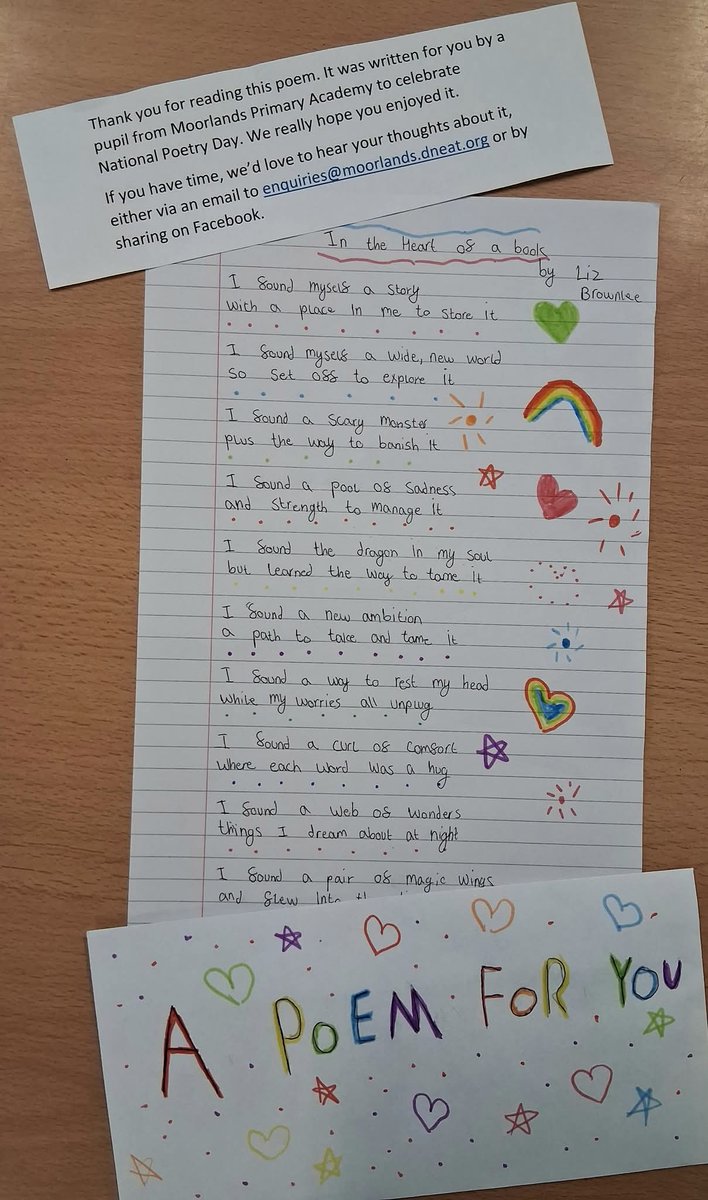
Every year our pupils deliver #PoetryPost to the local community and every year they're absolutely thrilled with the positive response it receives. There's more information about how it works on the @OpenUni_RfP site. https://t.co/OelLUDgjno #edutwitter
@Headteacherchat I still use them and did a whole lesson the other day on mental calculations strategies from the NNS document. A forgotten but invaluable resource!
@Mr_Minchin Decimal dash with my Y5s. Use different coloured cones to put decimals to different dps and then task teams to do different challenges to compare them, order them or convert them to fractions or percentages