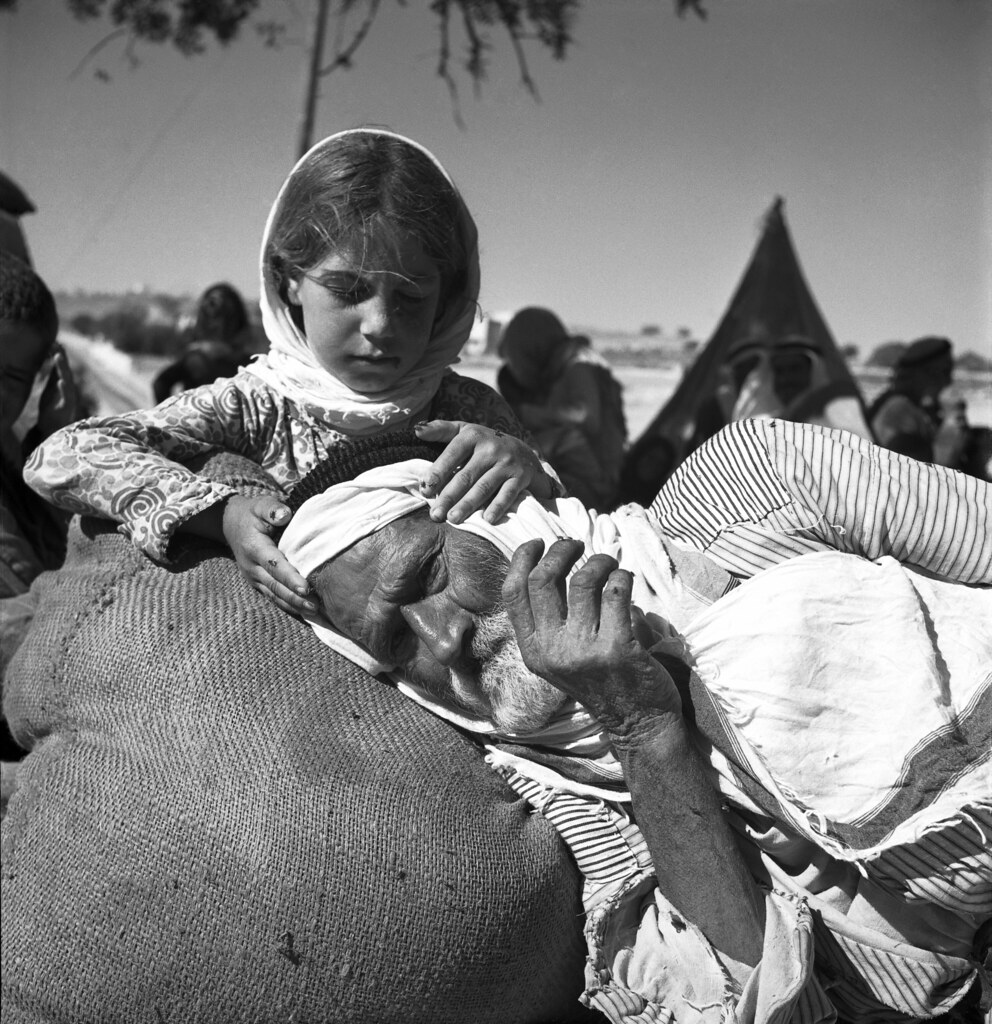
This picture is taken in 1948.
We are living in 2026.
The Palestinian grandchildren of the children displaced in 1948 are still refugees.
The Palestinian miracle is not survival alone, but persistence: faith in our destiny, and an unbroken attachment to our beautiful land.
Let me explain what this means so that you understand better.
.
Sometimes tiny cells in our stomach get very stubborn and turn into bad guys called cancer. They grow way too fast and don't listen to the body's rules.
.
But you see, these smart scientists in Korea didn't want to fight them with big scary bombs and bazookas like old medicines do. Instead they sat the cells on a wooden bench and said "Look here you stubborn cells, why don't you just remember who you really are and be good again?
.
So they made a pretend computer twin of our belly cells. Just like a magic video game version. (something like that sha) so they played around in the game to find the three bossy switches that were making the cells stay stubborn.
.
.
Those three bossy switches have funny names. They are MYB, HDAC2, and FOXA2.
Fantastic 3 lool
.
The scientists turned those three mean switches Off. Poof.
And just like that guess what? The stubborn cancer cells were like "Ohhh… I remember now!
.
Then they calmed down, grew up properly, and turned back into nice, normal belly helper cells. No more bad growing.
They then tried this in Mice, and the poor mice got better. The bad lumps got smaller because the cells stopped being the bullies they were.
It's like telling your barking Dog at home to shusss and calm down. And it actually calms down.
.
.
This isn't ready for humans yet, as it's still developing. But it's going to help out someday. And well, a lot of people are gonna be wayyyy happier.
.
.
.
Kudos to the scientists once again and I'm super happy about this development and the positive impact it's going to have on affected people 💪🏾💪🏾
.
✍️ Vincent The Therapist
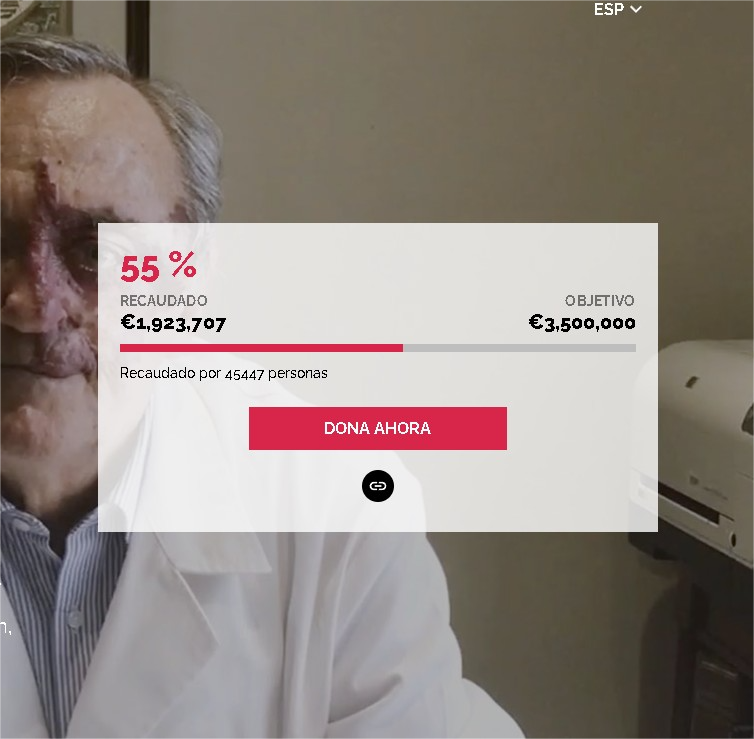
this is making me cry. he could cure cancer, he could cure fucking cancer and spare millions the agony of the disease and he has to beg on TV for funds instead of gold falling right into his lap.
This isn’t a random scientist who got lucky.
Mariano Barbacid discovered the first human oncogene in 1982. He isolated H-RAS from bladder cancer cells and proved a single point mutation could trigger cancer. That finding launched the entire field of molecular oncology.
KRAS mutations cause 90% of pancreatic cancers. For 43 years, oncologists called KRAS “undruggable” because the protein had no obvious binding pocket. Barbacid spent the last decade using genetically engineered mice to systematically test every node in the KRAS signaling pathway, looking for combinations that would work without killing the patient.
The triple therapy blocks KRAS three ways at once: the main growth signal, the escape routes through EGFR and HER2, and the stress-response backup through STAT3. Cut the engine, seal the exits, disable the emergency system. Tumors vanished in mice and didn’t return for 200+ days after treatment stopped.
Pancreatic cancer has a 13% five-year survival rate. 8% for the ductal adenocarcinoma type this therapy targets. Most patients live one year after diagnosis.
The catch: this is preclinical. Human trials are 3+ years away. One of the drugs, RMC-6236, might get approved this year, but the full triple combination has regulatory hurdles.
Still. The man who discovered human oncogenes in 1982 may have just figured out how to eliminate the cancer those genes cause. That’s a 43-year arc from first principles to potential cure. Science rarely works this clean.
Haecho from Korea: "My name is Ahyun Kim and I am from South Korea. If you’re seeing this video, we have been intercepted at sea and I’ve been kidnapped by the Israeli’s occupation forces or forces of a country that participating in Israel's genocide of the Palestinian people..."