George Michael died in his sleep on Christmas Day 2016. The world mourned the voice, the music, the icon.
Then something unusual happened.
In the days that followed, ordinary people began to speak — not celebrities or publicists, but volunteers, charity workers, waitresses, and strangers who had quietly carried a secret for years. One by one, they stepped forward to describe the same man: someone who had spent decades giving away millions of pounds in near-total secrecy, and who had actively fought against anyone finding out.
A woman appeared on the TV game show Deal or No Deal and mentioned she needed £15,000 for IVF treatment. George Michael was watching. The next day, he quietly phoned and paid the full amount. She didn't know who her donor was. She only found out after his death, when the story broke online.
A volunteer at a London homeless shelter noticed a familiar face one evening — serving food, cleaning tables, blending in. It was George Michael. He had asked the staff not to tell anyone he was there. He came back more than once. "I've never told anyone," the volunteer later posted. "He asked we didn't. That's who he was."
Every Easter, DJ Mick Brown would run a charity appeal at Capital Radio for Help A London Child. Every year, without fail, a call would come in at 3:30 in the afternoon. A £100,000 donation. No fuss. No publicity. George would give and hang up.
After his mother died, he organized a private concert — entirely unannounced — for the NHS nurses who had cared for her. It was not filmed. It was not advertised. It was simply a thank you, offered directly to the hands that had shown kindness when fame could offer none.
He donated royalties from "Jesus to a Child" to children's charities for years. The Terrence Higgins Trust, which he supported for decades, confirmed he gave generously and consistently — insisting his name never appear in any fundraising materials. Childline's founder later revealed he had donated millions, entirely anonymously, over the course of his life.
He struggled, too. Publicly and painfully. Addiction. Loss. The relentless scrutiny of fame. But those who knew him said the struggles never hardened him. If anything, they deepened his understanding of what it means to need help — and to receive it without strings.
In 1999, a journalist managed to get him to comment on the rumors of his giving. He said simply: "I really don't like to talk about the amount I've given to charity over the years. I know it's very substantial. I don't exactly know what it is, and I don't really like to linger on it."
After his death, the full shape of what he had done became visible — not because he wanted it known, but because the people he had helped could no longer stay silent. Patients who received care. Students who stayed in school. Families who kept their homes. Children whose charities kept their doors open.
George Michael understood something about kindness that most of us only glimpse: that it loses something the moment it starts seeking applause.
He gave without witnesses.
The world found out anyway. And maybe that's exactly as it should be.
📢 AfCFTA Nigeria Leadership News 🇳🇬🌍
PAPSS congratulates Mrs. Patience Okala on her appointment as National Coordinator of Nigeria’s AfCFTA Coordination Office.
PAPSS looks forward to continued collaboration with Nigeria’s AfCFTA Coordination Office as we jointly advance seamless cross‑border payments, digital trade enablement, and the operationalisation of the AfCFTA across Africa.
https://t.co/jyKBQICLpn
Warm congratulations and best wishes for success in this important role.
#PAPSS #AfCFTA #Nigeria
🇰🇪 Before: Waiting days. Paying more. Dealing with complicated FX.
Now: Sending money across Africa is as fast as sending a text.
PAPSS x Pesalink make cross‑border payments into Kenya:
⚡ Instant
💰 More affordable
💱 Local to local currency
#PAPSS#Pesalink#Afreximbank #AfCFTA #AU
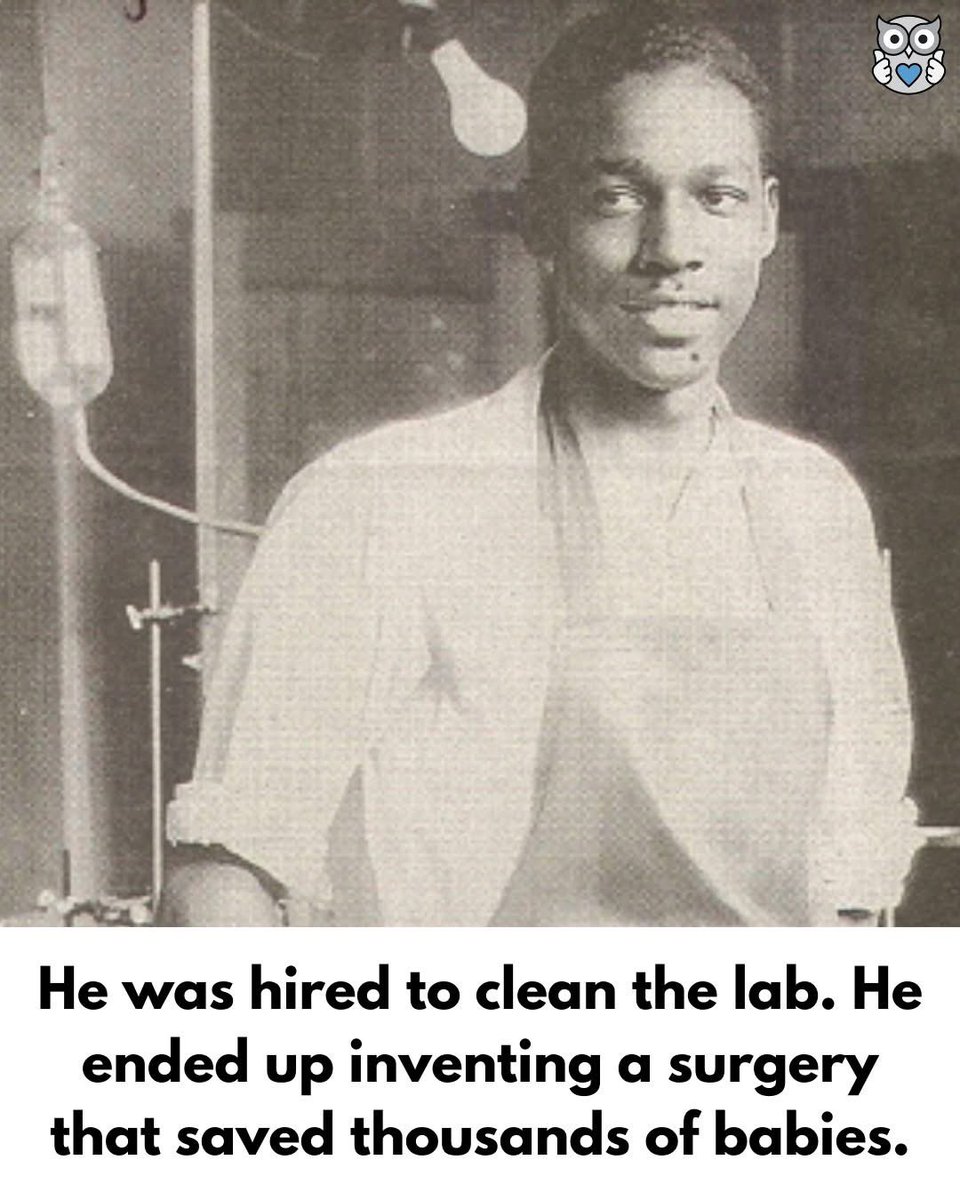
Nashville, Tennessee, 1930.
Vivien Thomas was born into the Jim Crow South. He was Black in a world that told him what he could and could not become.
He wanted to be a doctor.
He worked as a carpenter and saved every dollar to attend the Tennessee Agricultural and Industrial College. He planned to go to medical school.
Then the Great Depression hit.
The bank where he kept his savings collapsed. His money was gone. So were his plans.
At 19, Vivien took a job at Vanderbilt University Hospital. He earned 12 dollars a week as a laboratory assistant. He worked in the lab of Dr. Alfred Blalock.
He was expected to clean, care for animals, and stay quiet.
Instead, he watched.
He listened.
He asked smart questions.
He understood what the experiments were trying to do.
Dr. Blalock noticed. He began teaching Vivien surgical skills.
Vivien had never been to medical school. He had no degree. But he had sharp eyes, a strong memory, and steady hands. Soon, he was performing complex surgeries on lab animals. His stitching was careful and exact. His knowledge of anatomy was deep.
By 1933, he was no longer just an assistant in practice. He was Blalock’s research partner. But officially, he was still paid and treated far below his real role.
In 1941, Dr. Blalock moved to Johns Hopkins Hospital to become Chief of Surgery. He agreed to go only if Vivien came with him. The hospital allowed it. But they gave Vivien a lower-status technical title.
Then came their biggest challenge.
Babies were dying from a heart defect called ‘tetralogy of Fallot’. People called it ‘Blue Baby Syndrome’. The babies’ skin turned blue because their bodies were not getting enough oxygen. Most did not live long.
Dr. Helen Taussig asked if a surgery could increase blood flow to the lungs.
Blalock turned to Vivien.
“Can you figure this out?”
Vivien went to work.
For months, he practiced on dogs. He tried again and again. He had to create new methods. He had to design tools. No one had ever done this before.
Finally, he developed a way to connect the subclavian artery to the pulmonary artery. The new path lets more blood reach the lungs.
It was bold.
It was risky.
It had never been tried on a human.
On November 29, 1944, they operated on a baby girl named Eileen Saxon. She was 15 months old and weighed only nine pounds. She was dying.
Dr. Blalock performed the surgery. Vivien stood behind him on a step stool. He quietly guided every move.
“Deeper.”
“A little to the left.”
“Use smaller sutures there.”
Blalock held the tools. Vivien directed the operation.
After four and a half hours, it was over. Eileen’s blue lips turned pink. Her fingers turned pink. Oxygen was finally reaching her body.
The surgery worked.
The procedure became known as the Blalock-Taussig Shunt. It changed medicine. It saved thousands of children. It helped create the field of pediatric heart surgery.
Dr. Blalock became famous.
Vivien did not.
For 22 years, Vivien trained surgical residents at Johns Hopkins. Many of them became leaders in heart surgery. They learned their skills from him.
But he was not called Doctor. He was not listed as faculty. He ate with the maintenance staff.
His name appeared on no papers.
In 1971, after four decades of work, Johns Hopkins promoted him to Instructor of Surgery. Not Professor. Instructor.
By then, the surgeons he had trained knew the truth.
In 1976, the hospital honored him with a portrait. It was placed beside Blalock’s. At the ceremony, former students stood and applauded. Some cried.
They knew who had taught them. They knew who had built the foundation.
That same year, Johns Hopkins awarded him an honorary doctorate. At last, he was officially Dr. Vivien Thomas.
He was 66 years old.
He had been doing the work of a surgeon for 46 years.
Dr. Vivien Thomas died in 1985 at age 75.
In 2004, HBO released a film about his life called Something the Lord Made.
Strengthening Partnerships for Seamless Payments Across Ghana 🇬🇭
PAPSS CEO, Mr. Mike Ogbalu III, paid a courtesy visit to the CEO/MD of Prudential Bank Ghana, Mr. Ebow Quayson, to deepen collaboration around innovative payment solutions.
Key areas of discussion included:
🔹 Integrating PAPSS into Prudential Bank Ghana’s digital channels to enhance speed, security, and efficiency of customer transactions.
🔹 Leveraging PAPSS to facilitate school fees payments and other essential domestic and cross-border payment flows.
🔹 Deepening collaboration to support Ghana’s digital transformation agenda and strengthen financial inclusion.
This engagement reflects our shared commitment to delivering innovative payment solutions that simplify life for individuals, businesses, and institutions across the continent.
#PAPSS #PrudentialBank #Afreximbank #AfCFTA #AU
I know there are a lot of families struggling to make ends meet. Most of us are living paycheck to paycheck or really close to it.
But reading this article - author unknown - also made me stop and think about all the unnecessary things. Read and see what you think! "It's not the economy, it's the lifestyle."
"I’m worn out hearing people moan, “Our grandparents could buy a house on one paycheck, but now we can’t even afford rent on two!”
Yeah, maybe because Grandma wasn’t dropping half her income on $14 iced lattes and avocado toast shaped like art projects. Back then, if they wanted coffee, they boiled it at home in a dented pot. It tasted like burnt rubber and regret — but it woke you up and cleaned your pipes.
And Grandma wasn’t “out to brunch.” You think she had time for mimosas and hashtags? She was making something called whatever’s left in the fridge and feeding six people with it.
Don’t even start with Uber Eats. You think Grandpa was out here paying $38 to have a burger delivered three blocks away? Please. He grilled mystery meat on a rusted barbecue, and everyone called it dinner.
Now people cry about being broke while sitting in a house full of gadgets. Two SUVs in the driveway, six streaming services, three air fryers, and matching tattoos that cost more than their light bill. You think Grandpa had a tattoo? He did. It said “Korea, 1951,” and it came with trauma, not Instagram likes.
And the kids—Lord help us. “We can’t make ends meet, but Brayden needs the new iPhone!” No, he doesn’t. You’re handing an $1100 device to a child who still eats crayons and forgets to flush.
When we were kids, there was one phone. It hung on the wall like a family relic. The cord stretched just far enough for you to whisper secrets before someone yelled, “Get off, I need to make a call!” And guess what? We lived.
The TV? One. In the living room. With three channels and a dial that clicked like a safe. And if Dad wanted to watch bowling, you were a fan of bowling, end of story.
Now there’s a flat screen in every room, the baby’s got an iPad, the dog’s got a camera, and everyone’s wondering why they can’t afford rent.
Because you’re living like rock stars on retail salaries, that’s why.
Grandpa wasn’t leasing Teslas or buying $12 smoothies called “Green Zen Awakening.” He drove a truck that coughed smoke, rattled like a storm, and smelled like oil and hard work.
They lived within their means. Whatever Grandpa brought home on Friday — that’s what they had. They weren’t keeping up with the Joneses; they were keeping the lights on.
So yeah, Grandpa bought a house on one salary. But he also didn’t have a gym membership, three delivery apps, and emotional support crystals on his nightstand. His only support system was Grandma, who told him to quit whining and mow the yard.
Nowadays, everyone’s broke, anxious, and “manifesting abundance” while ordering tacos on DoorDash for the fourth time this week.
It’s not the economy — it’s the lifestyle.
Wake up, turn off your subscriptions, make your own coffee, and maybe—just maybe—you’ll smell the truth."
Credit: Jennifer Waddell
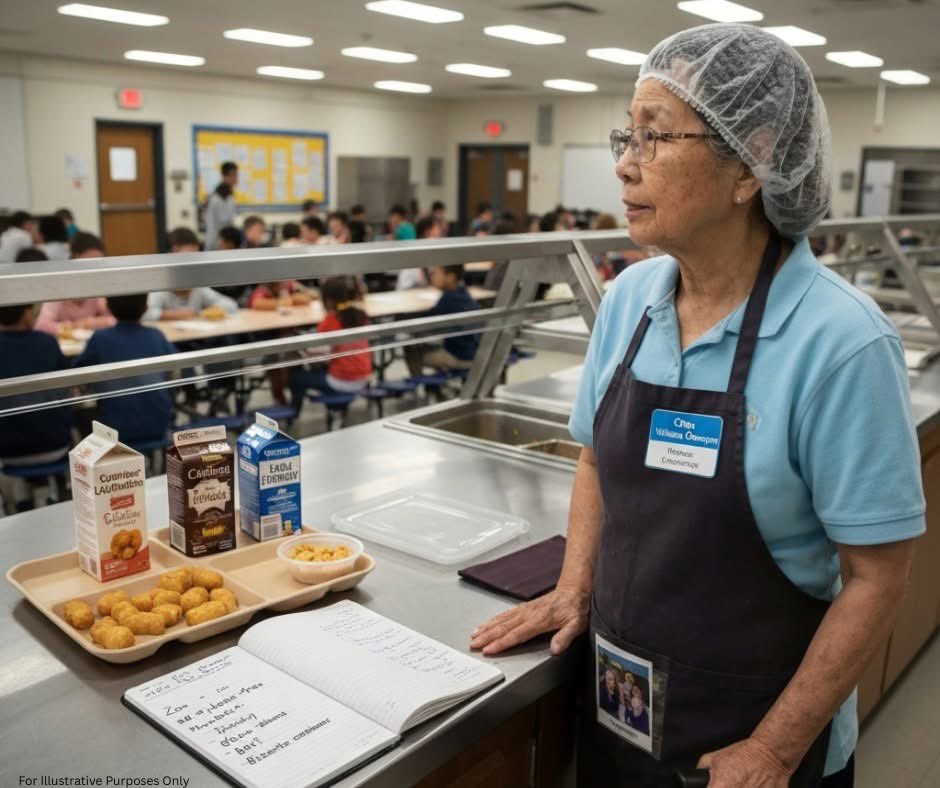
"My kid came home from school talking about the weird lunch lady.
"Mom, she's so strange. She memorizes everyone's name by the third day. Like, all 600 kids."
I figured she was exaggerating. Teenagers do that.
Then parent-teacher night happened. I was running late, hadn't eaten, saw the cafeteria was open. Grabbed a sandwich. The lunch lady, older woman with gray hair in a hairnet, was cleaning tables.
"You're Zoe's mom," she said without looking up.
I stopped. "How'd you know?"
"Same eyes. She sits table seven, always picks the apples nobody wants because they're bruised. Drinks chocolate milk even though she's lactose intolerant. Hurts herself rather than waste food."
I stood there, stunned. "You know this about my daughter?"
"I know it about all of them."
She kept wiping tables. Started talking, not to me exactly, just... talking.
"Marcus, table three, his dad left last year. Always takes double servings on Fridays because there's less food at home on weekends. Jennifer counts calories out loud to punish herself. Brett throws away lunches his mom packs because kids make fun of the ethnic food, but he's starving by sixth period. Ashley's parents are divorcing, she stress-eats in the bathroom."
"Why are you telling me this?"
She finally looked at me. "Because you're all at parent-teacher conferences talking about grades. Nobody's talking about this. About who's eating, who's not, who's hurting."
"What do you do about it?"
"What can I do? I'm the lunch lady. I make sure Marcus gets those extra servings without asking. I tell Jennifer the calorie counts are wrong, lower than they are. I pack Brett containers of his mom's food labeled as 'cafeteria leftovers' so he can eat it without shame. I bought Zoe lactose-free chocolate milk with my own money, tell her we're trying a new brand."
I felt like I'd been punched.
"Does anyone know you do this?"
"The kids who need to know, know. That's enough."
I went home and couldn't stop thinking about it. Started asking Zoe questions. She confirmed everything.
"Yeah, Mrs. Chen just... sees people. She stopped my friend from... she helped when nobody else noticed."
Turns out, Mrs. Chen had worked at that school for 22 years. Made $14 an hour. Knew the story of every struggling kid who came through her lunch line. Never reported it, never made it official, just adjusted portions, swapped items, paid for things quietly.
Teachers didn't know the extent. Administrators had no idea. She just showed up, served food, and saved kids in ways nobody measured.
Last year, Mrs. Chen had a stroke. Had to retire.
The school hired someone new. Efficient. Fast. Didn't learn names.
Within three months, the guidance counselor's office was flooded. Kids breaking down. Nobody could figure out why.
Until one kid finally said it: "Mrs. Chen knew when we were drowning. She threw life preservers disguised as extra tater tots. Now nobody's watching."
The school brought Mrs. Chen back. Part-time. Not to serve food. Just to be there. They called her position "Student Wellness Observer."
She's 68 now, walks with a cane, can't lift heavy trays anymore.
But she still memorizes all 600 names by the third day.
Still knows who needs what.
Still saves kids during lunch periods when everyone else is just serving food.
My daughter graduated last month. In her speech, she thanked Mrs. Chen.
"Some people teach math. Some teach history. Mrs. Chen taught us that being seen is sometimes the only thing standing between surviving and giving up."
The whole cafeteria stood up.
Turns out, weird lunch ladies who memorize names?
They're the most important people in the building."
.
Let this story reach more hearts....
.
Ai image is for demonstration purpose only.
.
By Grace Jenkins
🌍PAPSS COWRY 2025 is here!
We are thrilled to announce the inaugural PAPSS Participants Forum under the theme:
“Building an Interoperable and Sovereign African Payment Ecosystem for Trade and Economic Growth.”
📅 Date: 2nd – 3rd December 2025
📍 Venue: Lagos Intercontinental Hotel, Lagos – Nigeria
Join industry leaders and innovators shaping the continent’s financial future.
#PAPSSCOWRY2025 #PAPSS #Afreximbank #AU #AfCFTA #PaymentsInnovation #AfricaTrade
📍 PAPSS at Global SME Finance Forum 2025 | Johannesburg 🇿🇦
PAPSS proudly participated in a high-impact panel discussion at the Global SME Finance Forum 2025, held in Johannesburg. Representing PAPSS was ISHIMWE JEAN DAMOUR, Head of Enterprise Security, who shared powerful insights on how SMEs can leverage PAPSS through banks and fintechs to unlock new markets and drive growth across borders.
The panel also addressed the urgent need for foundational digital infrastructure, emphasizing the importance of regional coordination and interoperable frameworks that support continental integration, while respecting national sovereignty.
📢 The future of African trade is digital, inclusive, and connected. PAPSS is proud to be driving that transformation.
#PAPSS #DigitalInfrastructure #SMEs #FintechAfrica #TradeWithoutBorders #AfricaConnected #SMEFinanceForum2025
Your mood isn’t random.
It follows your microbiome.
It echoes your inflammation.
It responds to sleep, sugar, light, movement, and meaning.
Mental health is biochemical and spiritual. You need both.
🎉 Discover 💳 #PAPSSCARD, Africa’s card scheme
PAPSSCARD empowers customers of banks, mobile wallets, fintechs to move money seamlessly, securely and more affordably across the continent.
💳 One Card Scheme for Unlimited possibilities.
PAPSSCARD — your passport to payments
#PAPSS #Afreximbank #AfricanUnion #AfCFTA #AAM2025 #TradeWithoutBorders #Innovation #Payment #Africa #Abuja #Nigeria
#DigitalAfrica
@afreximbank@_AfricanUnion@AfCFTA@Mercury_Pay@BankofKigali@imbankrw@RSwitch #UnifiedPaymentServices
🇳🇬 #PAPSS It at @wemabank 🌍
You can now Send and Receive money across Africa in Naira with #PAPSS in all Wema Bank Plc. branches in Nigeria.
Send and receive funds seamlessly in:
Ghana| Gambia| Guinea| Liberia| Sierra Leone| Kenya| Rwanda| Zambia| Zimbabwe| Malawi| Djibouti & counting.
Enjoy faster, safer, and more affordable money transfers across Africa with #PAPSS at Wema Bank Plc. Nigeria
It’s Faster, Safer and Cheaper!
#PAPSSIt.
#Afreximbank #AfCFTA #AfricanUnion #BorderlessAfrica #CrossBorderPayments #IntraAfricanTrade #PAPSS
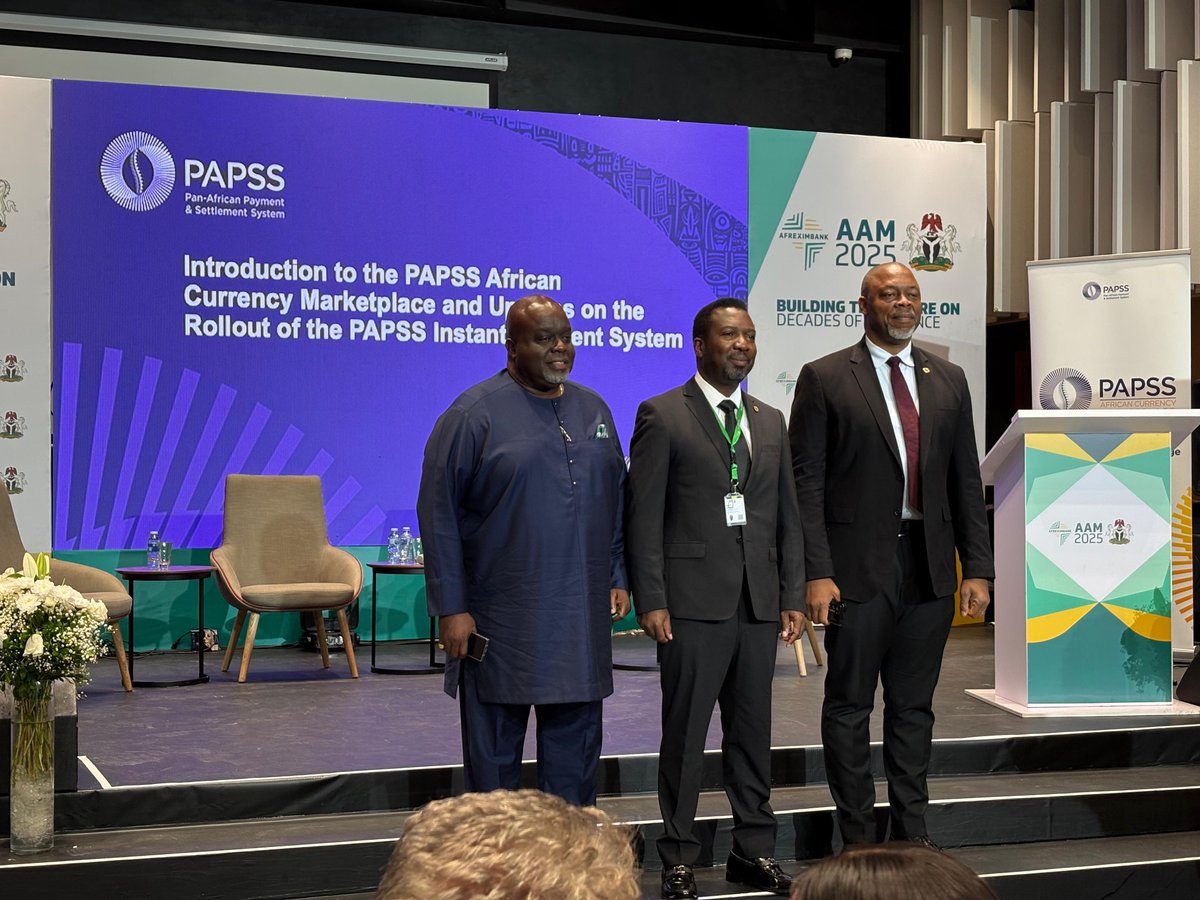
#AAM2025 brought together key figures driving financial innovation across Africa including the CEO, Deputy CEO, and Management Board of @papss_africa , the Executive Vice President of @afreximbank, and Founding Directors of @cngn_co.
A key highlight was the panel session unveiling the PACM platform, featuring Mike Ogbalu III, CEO of @papss_africa , and Ernest Mbenkum, Founder and CEO of Interstellar Inc @mbenkum where they shared insights on bringing institutional African payments onchain via @bantublockchain .
#Afreximbank #BuildingTheFuture #GlobalAfrica #AfCFTA #GlobalAfrica #Abuja
NEW: Scientists have brought back dire wolves using ancient DNA, with the first born on October 1, 2024, over 10,000 years after their extinction
The genome was reconstructed by Colossal from ancient DNA found in fossils
The fossils date back 11,500 and 72,000 years
Colossal Biosciences said: "This moment marks not only a milestone for us as a company but also a leap forward for science, conservation, and humanity. From the beginning, our goal has been clear:
To revolutionize history and be the first company to use CRISPR technology successfully in the de-extinction of previously lost species.
By achieving this, we continue to push forward our broader mission on—accepting humanity’s duty to restore Earth to a healthier state."