@DeaconBlues0 "O teh noes le 3 men are parading down le sidewalk :(" Oh come on. It's literally 3 guys. Get your pals and some barstools and pipes. You can take em.
Feel like there’s a correlation between why a lot of art feels so stagnant and the fact that mainly rich kids are the only ones getting to be filmmakers, writers, singers, etc. It’s boring cause people who have nothing to say are doing the talking.
For #5YearsInControl, I'm dusting off my unpublished essay, a Marxist reading of the peculiar consumerist horror of objects in #ControlRemedy. A multi-year mental journey that took me from Mark Twain to Žižek, Heidegger to NFT's, Ursula Le Guin to Marie Kondo.
Link in thread:👇
@themalaru Really tempted to make one of those WW2-styled propaganda posters going "BABYTRANS WOMEN, IS YOUR NEW GIRLFRIEND AN UNEMPLOYED STONER WHO ONLY GIVES DODGY ANSWERS ABOUT THEIR PARTNERS? THAT'S A SEX PEST, NOT A GF. KNOW THE DIFFERENCE. IT COULD SAVE **YOUR LIFE!**
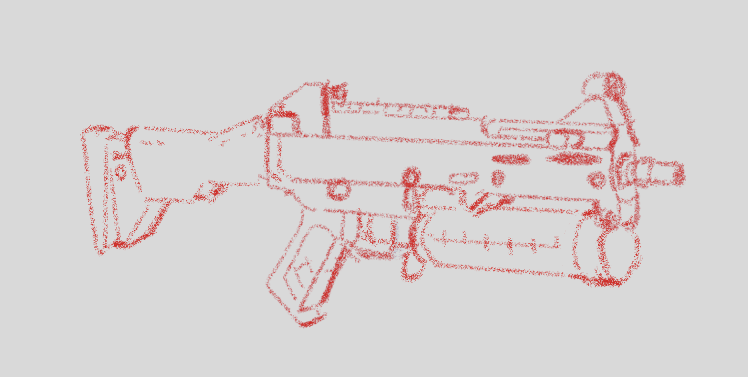
@CypressDahlia Really loving that this thumbnail implies that the middle point between the these two is Rainbow Six Siege - which also implies that gay is the evolutionary end point of masculinity.
Israel's big mistake was thinking that forming their own fascist state could keep Jews safe. They forgot that millions of ethnic Germans also died under Hitler, because fascism is a death cult that demands race wars.
Humanity can only live in peace when fascism is gone forever.
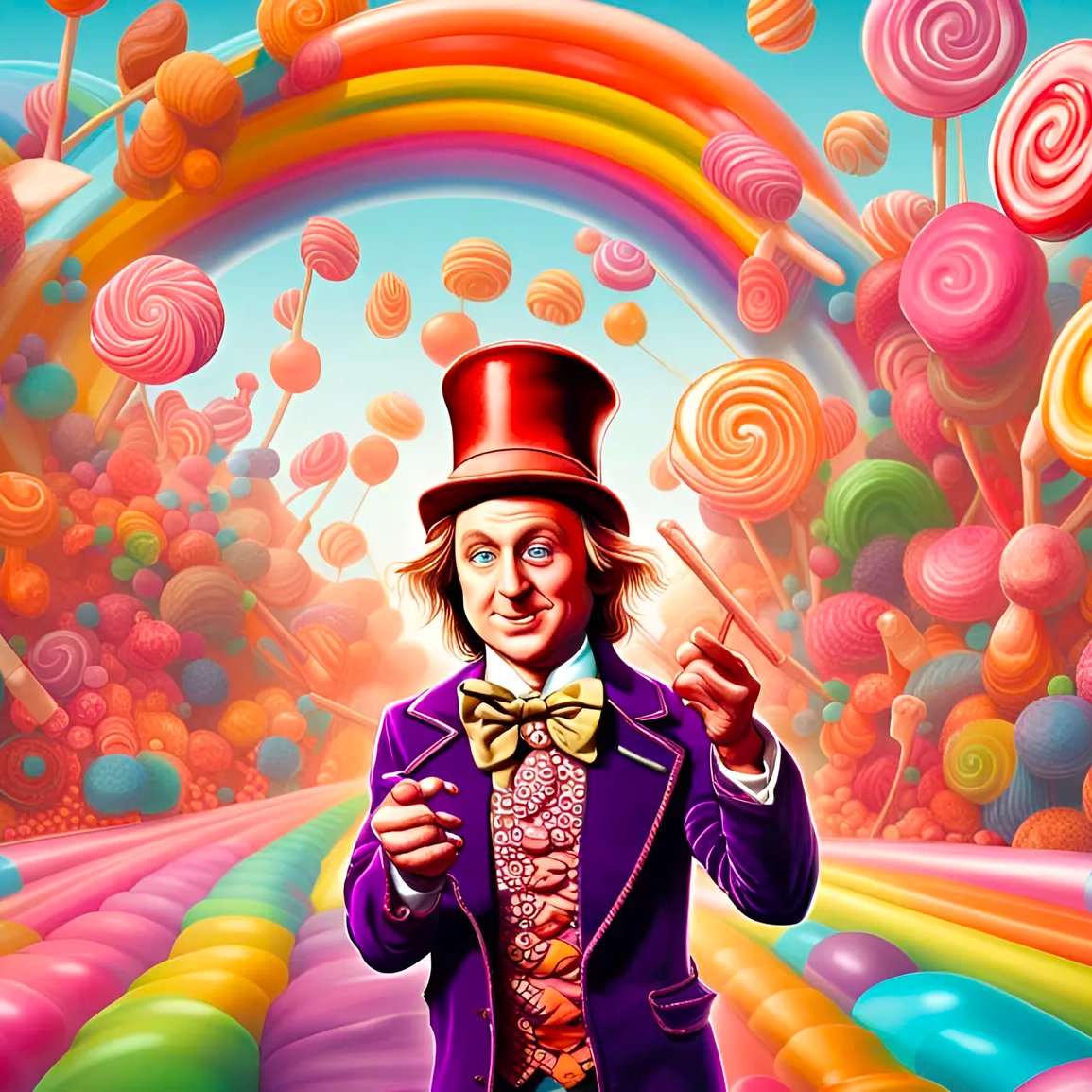
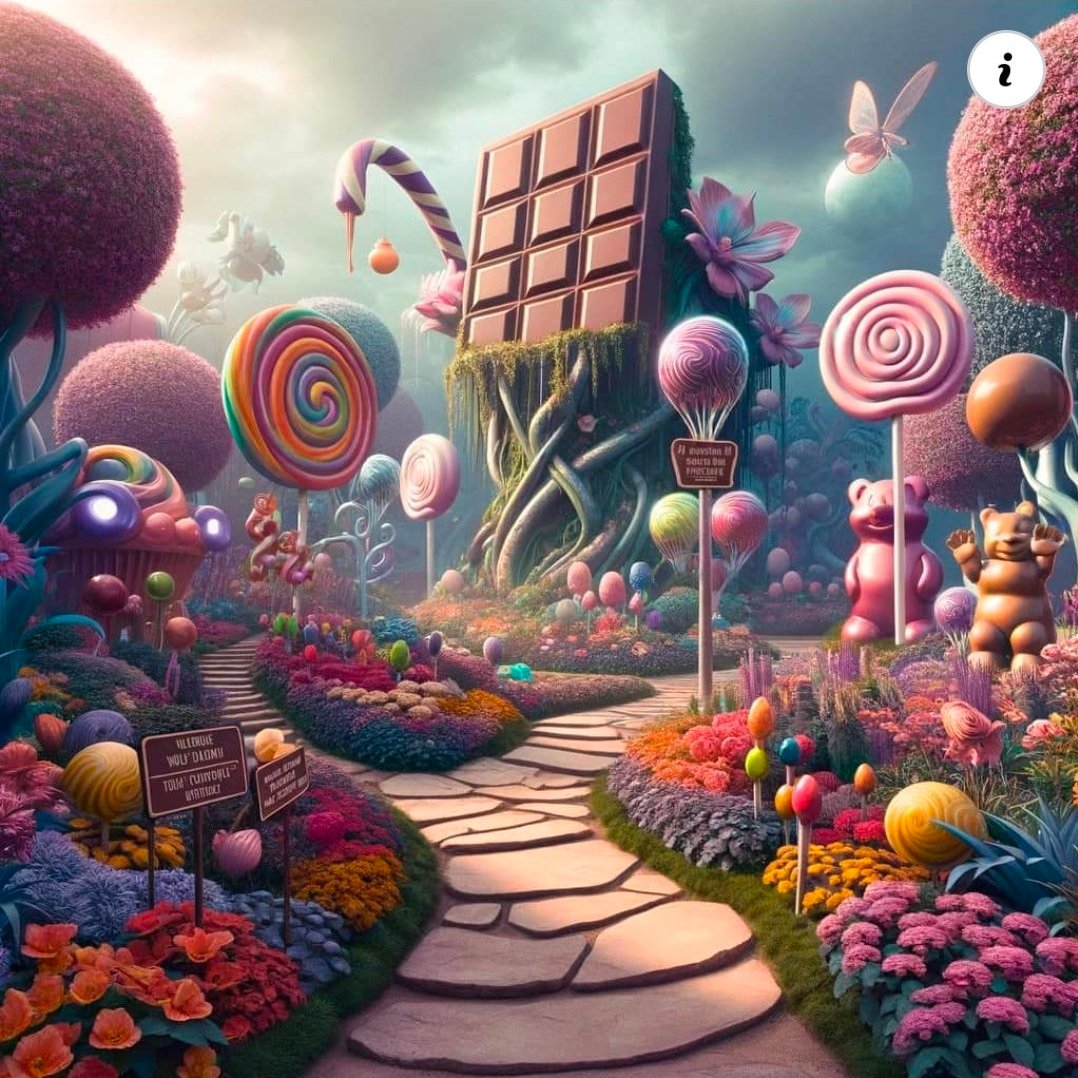
Police were called to an 'immersive' Willy Wonka Experience after families showed up to an 'empty warehouse'
The event reportedly charged $40 for entry, advertised with AI art, and said it would be a 'journey filled with wondrous creations and enchanting surprises at every turn'
“Kids were all dressed up and crying waiting for what they thought was going to be a magical experience"
Since our initial ZA/UM report, we've spoken to two more developers at the company -- including Argo Tuulik, one of Disco Elysium's original creators -- and both have chosen to speak on the record. https://t.co/zsUteFDIkl
Our team are on the ground today in South Gaza distributing food to hundreds of hungry children. If you would like to support, please visit us at https://t.co/7Yam1DSwAz.
rick and morty sort of the inverse venture bros in that all the genre spoofs are done with actual contempt for the genre and the show is absolutely terrified of ever letting the characters grow beyond stock archetypes
Artist: grimeMuted
Title: Columnweb
Brief description of the piece: The work is an oil painting on aluminum composite panel, 36 inches by 60 inches. It depicts a form constant seen during walking meditation, but, rather than being painted faithfully, the color scheme is altered so that it resembles the sun, showing the synergy between artistic license and replication. It is rendered largely with transparent pigments so that it catches the light and shines with an inner radiance. The pattern of interlocking circles in linear perspective captures three of Klüver's four form constants, tunnels, spirals, and cobwebs, in a single image. By focusing on the columns, we see tunnels; by focusing on the eye-shaped intersections of the circles, we see spirals; and by focusing on the lines between the columns and inward-curving intersections, we see cobwebs. It doubles as a form of op art, as when we stare at the center, a 3-dimensional illusion can appear as our eyes shift between the spiral and tunnel interpretations, most interestingly sometimes seeing both at once in different sections of the painting. I produced the It’s more impressive in person, so if you want to come see it I’m in Baltimore 😂
Description of what this piece is about: In the autumn of 2014 I got depressed. My parents sent me to a therapist who recommended mindfulness meditation, and to a psychiatric nurse practitioner who prescribed me drugs. As I became obsessed with depression and read 600 research papers pertaining to the neuropharmacology of depression treatment and related topics, I tried out dozens of supplements, medications, and nootropics, eventually finding my way to psychedelics, dissociatives, and other recreational drugs, where there was finally a realization about the inner tension that connected meditation, depression, epilepsy, psychosis, and drug-induced highs.
In the early pandemic, almost on a whim, I started a kratom habit that went up to 28 grams a day in a few months, and then withdrew cold turkey in August 2020. I entered a strange uncomfortable state resembling a threshold feeling of salvia, and within this state found that my ability to meditate had increased. Meditating on a phrase from the Tibetan Book of the Dead, I felt energy shoot up from the base of my spine into my head.
Being sober, or one might even say more-than-sober, since withdrawal is generally a dysphoric state, this intense and synaesthetic feeling of energy and euphoria surprised me. I recognized it under the Hindu term of kundalini awakening. It featured visualization that felt similar to but more subtle and gossamery than psychedelic visuals, and a strange juxtaposition of meditative calmness and mania. It continued for about a week, but so did a profound insomnia. I felt incredible despite going without sleep for sixty hours, but eventually decided to relapse when I started to hear the refrigerator as a pattern of interwoven human voices, and got some sleep. The energy that seemed to have been stuck in my head released, and my powers quickly dwindled after relapse, and when I later tapered off more slowly, the second withdrawal was uneventful. The episode left me with an abrupt shift to vegetarianism and a newfound desire to floss my teeth. I worked to do a few minutes of meditation a day for the next two years without much progress, always wondering whether I’d ever get back to that beautiful state.
While browsing the QRI Discord I came across Daniel Ingram’s explanation of the Buddhist interpretation of this phenomenon. Rather than kundalini awakening it is referred to as the fourth vipassanā-ñāṇa, or the Knowledge of Arising and Passing Away, at least, that is, in the Visuddhimagga’s system. I got Ingram’s book and read it, learning that high doses of meditation per day could produce faster results, and began to be able to experience strange things sober again in kasina and insight meditation, like a drill made of anger or a pleasant concentrative tingling. I soon left for a retreat at Blue Cliff Monastery.
While engaged in walking meditation on the mossy paths, I closed my eyes and saw a form constant of columns that formed a tunnel. The columns were blue, atop the murky crimson that forms the backs of eyelids in sunlight, and in the center they gave way back to that crimson. Their texture was difficult to remember, similar to being covered with runes of an unknown alphabet. The tunnel began straight, but soon it began to snake off to the left, and then I lost it and continued my walk. It was far from the most complex or unique vision I saw that week, but that’s what made me want to depict it: its universality and the potential of capturing something nearing its geometric formula rather than just its likeness. When I got back to my room, I jotted down a tiny sketch of what I had seen in my notebook.
After driving home at the end of the week, listening to my CDs that I still had in the car, and buzzing from the incredible music visualization that a week of isolation can grant you, my powers quickly faded, and I returned to the passion that had begun in 2015 of attempting to depict the ephemeral visions of drugs and meditation in oil paintings and drawings.
What this painting shows is a reciprocal relationship. One of the oldest forms of consciousness research, namely meditation and the codifications of instructions for the practice of meditation, allowed me firsthand experience while sober and alert of a form constant similar to those recorded by consciousness researcher Heinrich Klüver when he researched the subjective visual effects of mescaline. This let me remember and sketch it well, in preparation for a piece of artwork. I moved through a few sketches, puzzling about how I’d pull off the runic texture, before moving to a color study in oils on a panel. I thought that the columns seemed like they were interlocking with each other, so I started drawing interlocking columns using a compass and straightedge. I noticed that when columns were offset in the right way, they formed another form constant of interlocking circles that I had seen many times, both on psychedelics and while undergoing temperature changes such as getting into a hot bath or a cold ocean. I’m not sure if it’s been named, but it differs from the Flower of Life in that the circles are distributed in a square grid. I’ll call it the Grid of Life. Unexpectedly, when depicted in linear perspective, the Grid of Life captured three of Klüver's four form constants in a single image: tunnels, spirals, and cobwebs,. I believe that the spirals formed by the tunneled Grid of Life are likely logarithmic spirals, which is interesting given the mapping of logarithmic spirals in the visual field to straight lines in V1 explored by Bressloff et al. in their 2002 paper on form constants. Fiddling around with art had not only brought me to a new connection between the different form constants, however.
As I continued working on this piece, moving from the color study to the full three foot by five foot oil painting, I began experiencing the most bizarrely intense Tetris effect. It was like HPPD produced by art. I began seeing interlocking circles everywhere, both when I closed my eyes during a job interview and when I looked at the textures on the walls of a bathroom, much like visuals occur during LSD, except I was perfectly sober. Previously straight lines of text began to have curious spiral shapes to them, like they were mapped onto the painting’s spirals by the visual cortex.
Luckily, I didn’t lose my mind. When I finished a layer, I had to wait for the painting to dry before I could glaze over it, and the Tetris effect faded over the course of a few days. Naturally, I decided to trip, and the effect came roaring back. I could see that all internal visions produced by the trip depended on the geometry of interlocking circles sliding past each other into tangled perspectives. I believe that a program or plugin to a 3D modeling program could be built to model interlocking circles in warpable perspective, allowing the reproduction of some psychedelic and meditative visuals, furthering replicative arts. I found that some of the simplest forms my mind could produce from the perspective net resembled scrollwork and mollusk shells.
The last point I’d like to touch on is the element of artistic license in the piece. I was thinking I needed a way to introduce atmospheric perspective so that it was clear that the end of the tunnel was at a different depth from the start, but wasn’t sure how. One day, my friend shared a photo he had taken of the Utah desert at sunset. The shift into the distance from violet through red through orange through yellow into white in the desert sunset made perfect sense for the structure of my painting. This shows how, while pure replications serve important scientific and aesthetic functions, other influences outside consciousness research, like nature and friends, can be brought in to produce inspired artwork or fill in the gaps in our fallible memories of visionary states. The connection between art and consciousness research can reveal new connections that advance each field and even change our experience of vision itself through phenomena like the Tetris effect. Maybe you’ll like my art. One hopes that maybe shared neural anatomic structurings portend a romantic similarity.