Co-leading research & tech at @Aleph__Alpha. We trained Kolibri (78B MoE, open weights) end-to-end.
Built the AWS AI lab in Tübingen, co-founded @Bosch_AI.
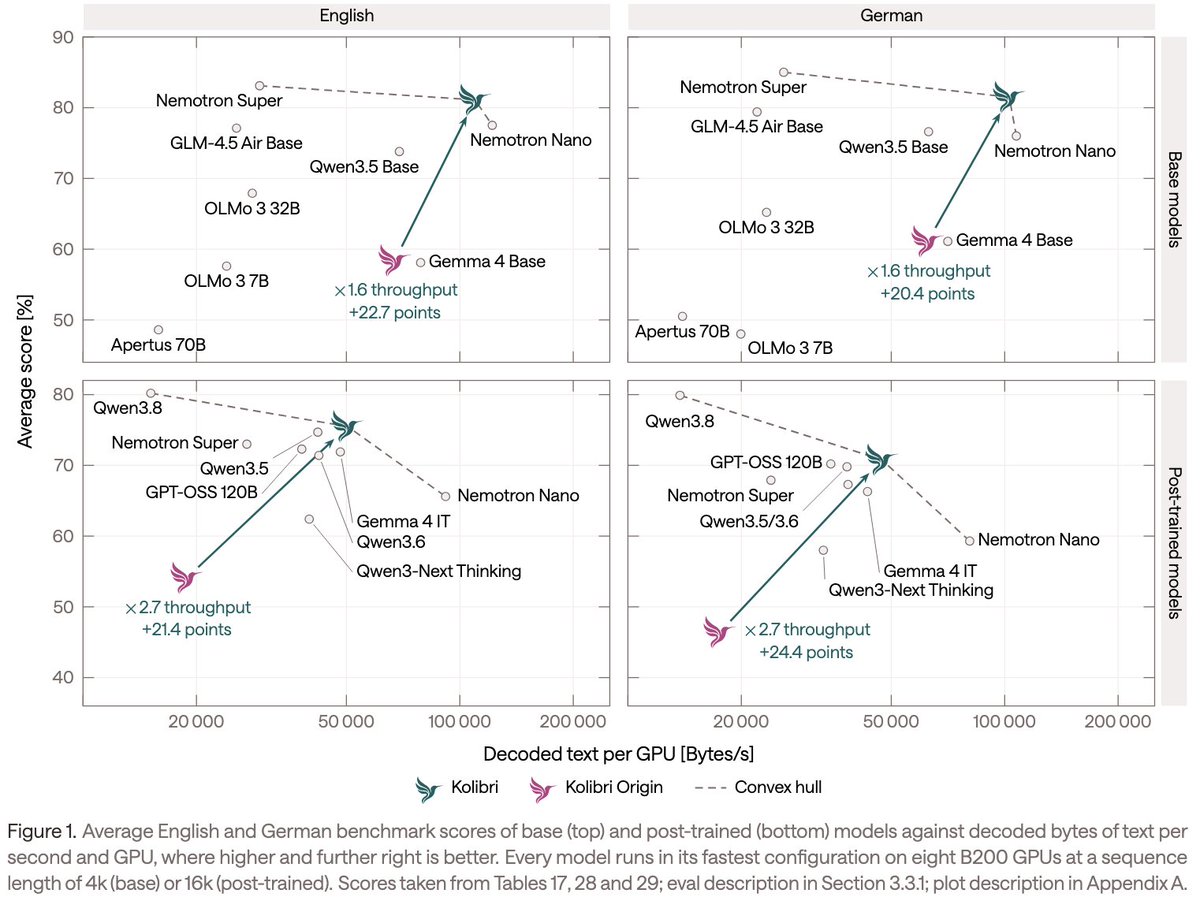
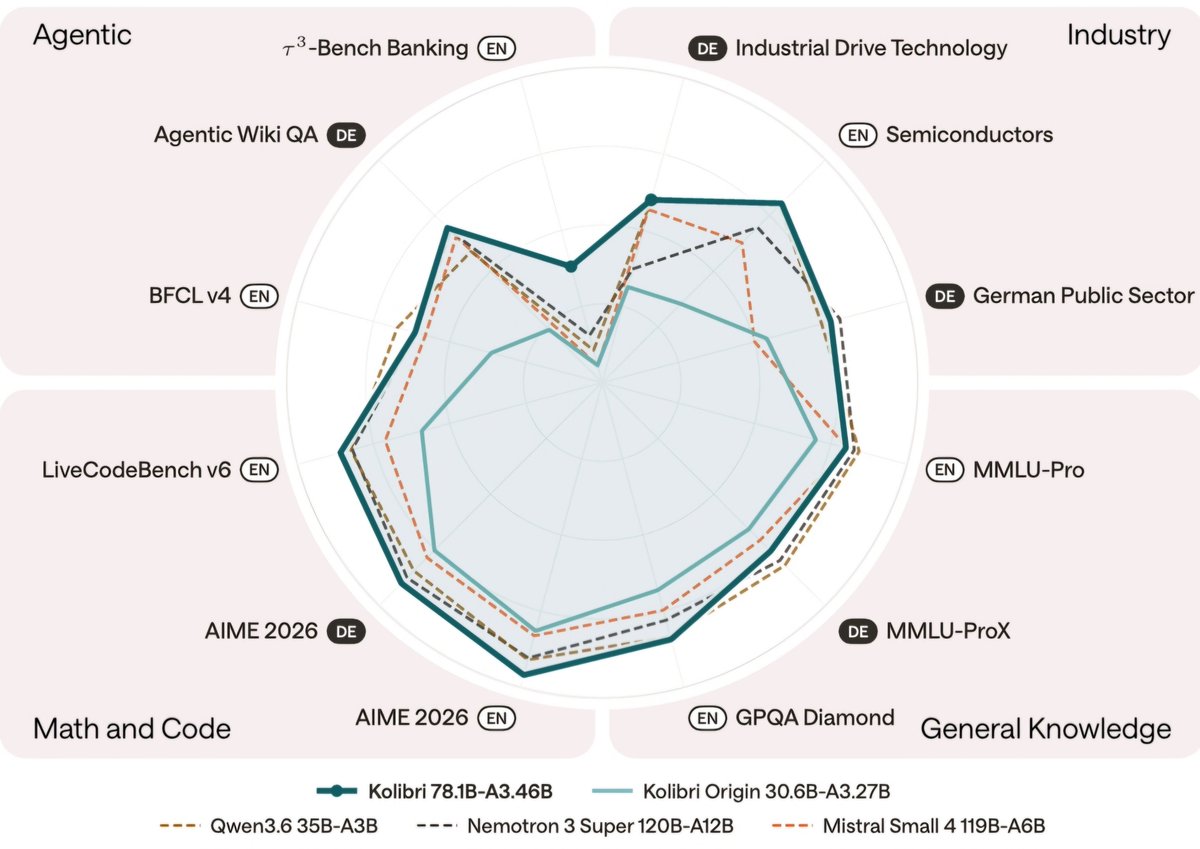
Kolibri 1.1, seven weeks after 1.0: on the Pareto frontier of score vs. serving cost, the cheapest to serve of the 12 models we compared, and ahead of GPT-OSS 120B, Mistral Small 4, Nemotron 3 Super and Qwen3.6 overall. Quantized builds run on a 24 GB GPU. Nice work, team.
Same bird, faster wings: Kolibri 1.1 has landed.
Seven weeks after launch, we took your feedback and shipped the next iteration: smarter, faster, and more efficient.
The weights are yours under Apache 2.0.
Kolibri 1.1 is now available on 🤗 Transformers.
This is a reference implementation, built for simplicity. For fast serving, use vLLM.
Docs: https://t.co/57M3zBmKWu
Thanks to @huggingface team for your support!
Kolibri can reason at four efforts: none, low, medium, and high. Our SFT training traces didn't have effort labels, so we had to label them post-hoc.
A new blog post by @L_Salewski explains how we did this, with interactive figures 🧵
How does the community evaluate multilingual capabilities of LLMs? Mostly by translating evaluation datasets, since most of them are predominantly in English. How does translation change what the eval actually measures?
Scaling RL environments and their infrastructure comes with several challenges. We documented our experiences while building Kolibri: stalling GPUs, images filling the disks, crashed sandboxes scored as wrong answers, and reward hacks.
Kolibri 1 now runs natively in Transformers 5.20!
We are still overwhelmed by all the community feedback.
You can now spin up our Kolibri models in just a few lines of code using 🤗transformers.
Special thanks go to Luca Motz (@lucamotz3141) and Harry Mellor (@hmellor_) for pushing this.
A model specialised for customers whose data out model never sees in training. Kolibri was built for sovereign RAG: we trained on no customer data, yet it posts the best average of the open-weight models we compared across seven agentic RAG benchmarks.
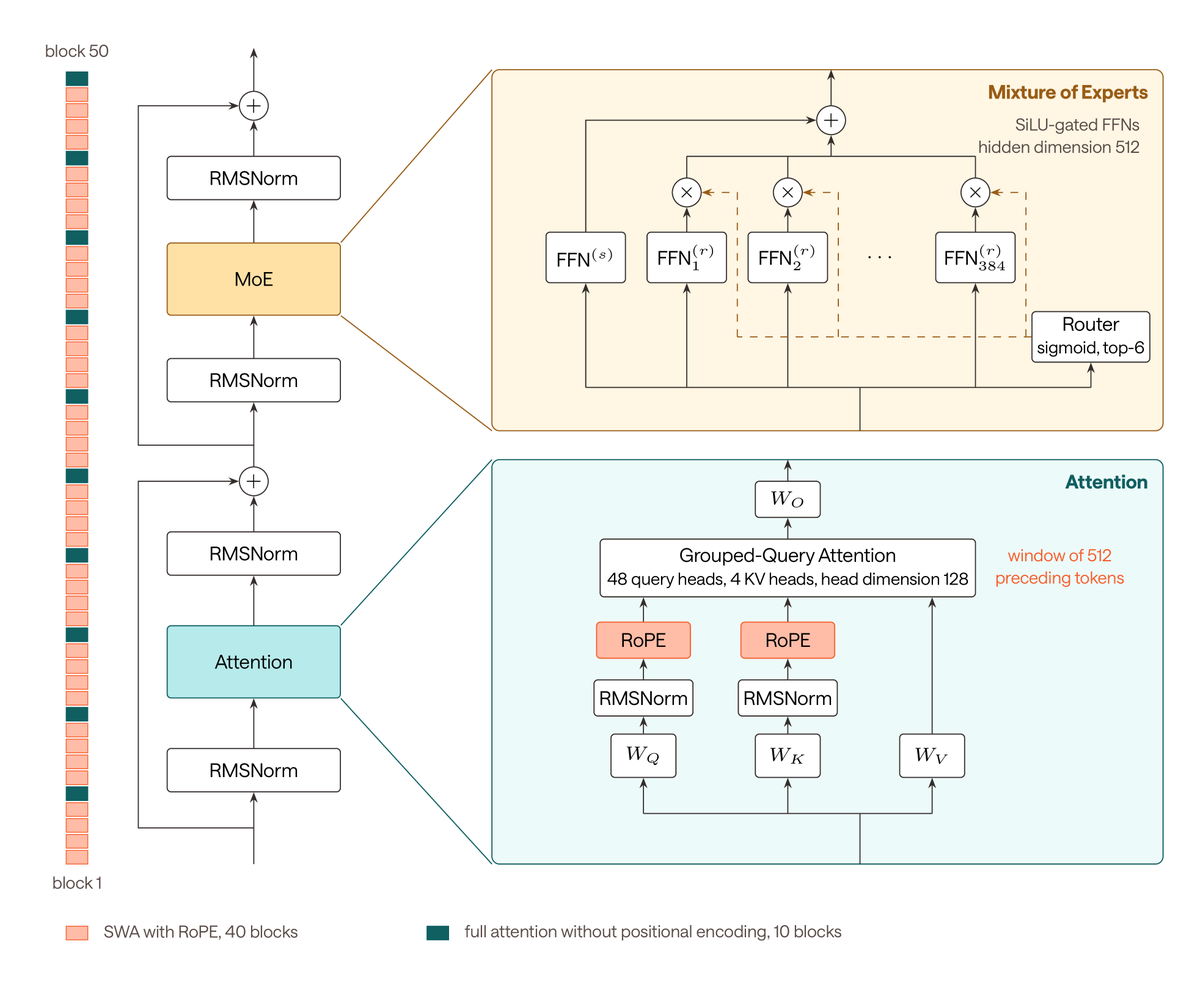
Every architectural choice has a cost. Choose where to pay it.
@alessio__serra and @PitNeitemeier derive from first principles how design choices allocate parameters, FLOPs and KV cache, compare open models, and share some of the tooling we used to design Kolibri.
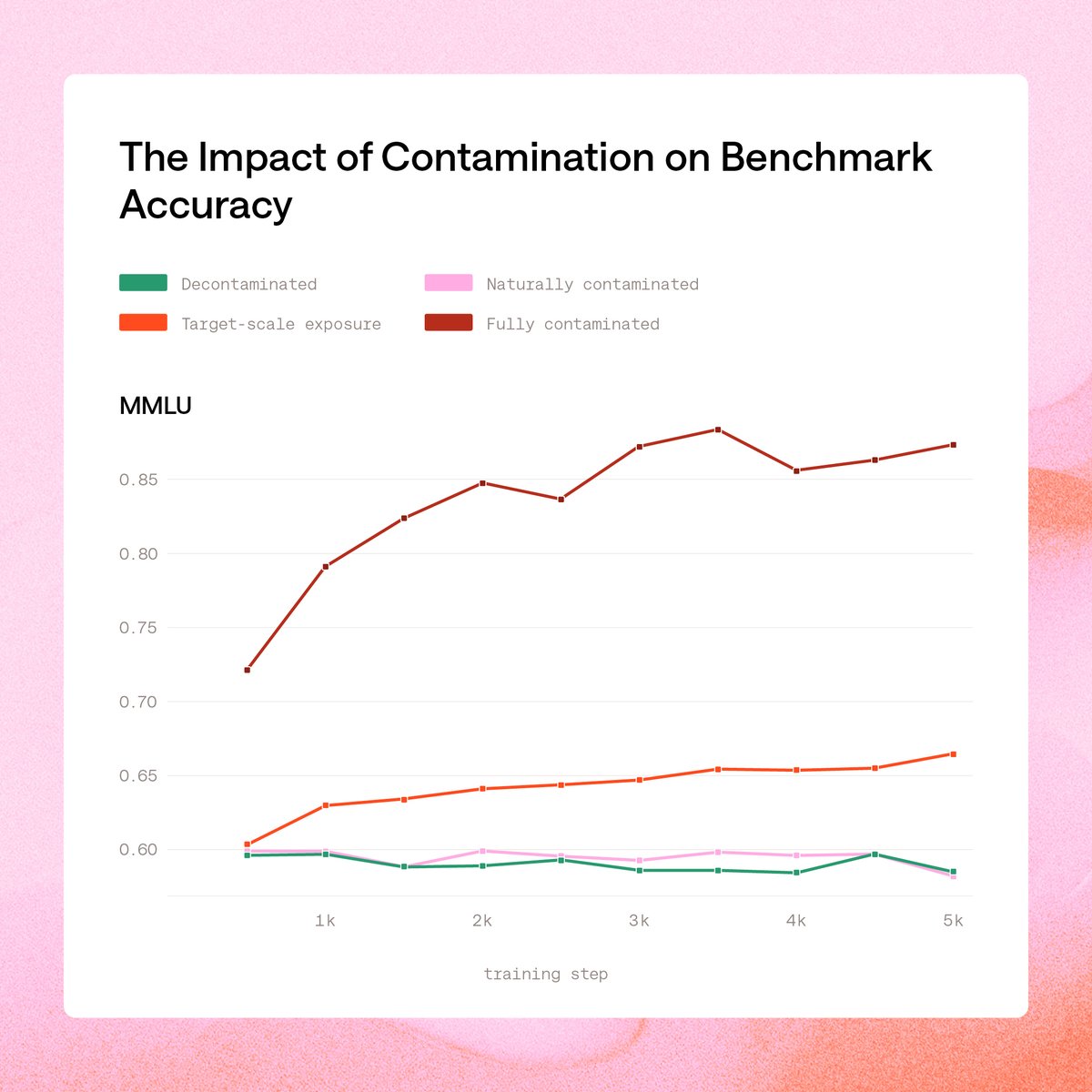
Benchmark text is all over training data. A model that has read the test set will nail it. That score measures memory, not skill.
We scanned our mid-training pool and removed 1.5M documents. Our finding: trustworthy scores need decontaminated data.
Almost all models today have reasoning effort, here is how we built it for Kolibri. Our model supports four efforts: none, low, medium, high.
However, our SFT data had no effort labels. Here is how we got them anyway, using only existing data 🧵
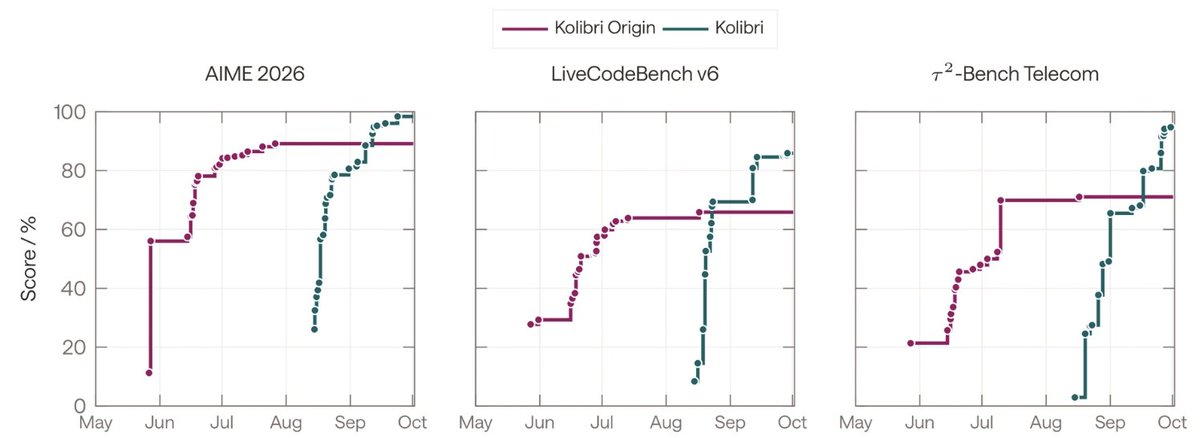
Proud of what we achieved together. We’ve shipped a good model, but also built an incredible team that’s moving at high velocity. Kolibri climbs faster than Kolibri Origin. Excited for what’s next.
Love the reactions to our release today! Here are some of my favorite details covering architecture, load balancing and hyperparameter transfer from developing and training Kolibri, our 78B-total, 3.5B-active MoE model:
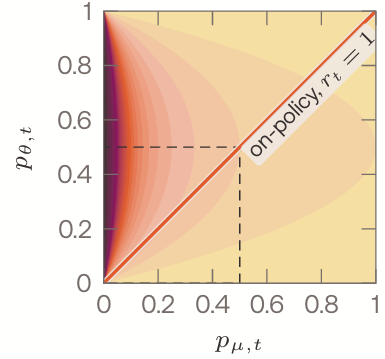
My favorite reinforcement learning plot from our Kolibri report: Inference v.s. training log probs, background is the logit gradient norm of importance-sampled Reinforce. Numerically unstable for small inference log-probs, but you can do exact token-level gradient clipping in RL.
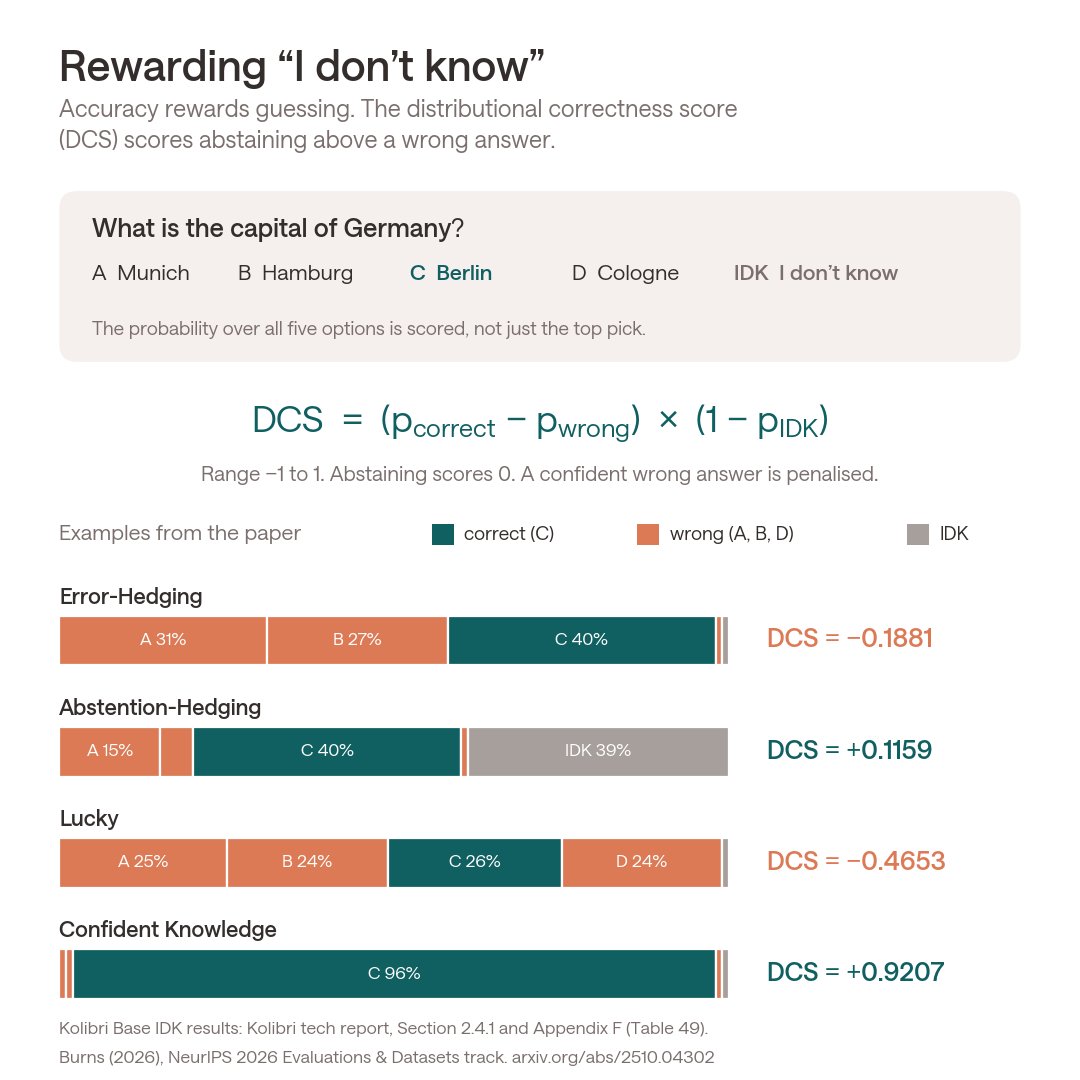
Kolibri is out 🐦 (Apache 2.0) and new research ideas around measuring grounding and reducing hallucinations with Merlin-Arthur made it into the model.
This is just the beginning: lots of open questions, lots still to improve. But getting research ideas into an actual model, learning from them, and having an amazing in-house model training pipeline to iterate quickly is the fun part.
Here are two neat speed tricks we found while SFT'ing Kolibri 🧵
1: We use standard Next-k-fit online bin packing with document masking maximises useful tokens per sequence. Whats easy to miss: less padding means a larger effective batchsize, so the learning rate can go up.
Our model, Kolibri, is out! 🐦
Incredibly proud of how much we've scaled in just a few months
RL is as much an infrastructure challenge as a modeling one. We've scaled our RL environments and their infra to support 20K+ concurrent sandboxes per training run and 100K+ sandboxes overall. More details in the report
A massive engineering effort behind the scenes. Proud of what we've built!
Kolibri went from the start of pre-training to taking flight today in less than two months. We built the foundations from January. From the beginning, we focused on fast iteration and on building a pipeline for the long term. This was enabled by our Model Factory, which orchestrates the Kolibri training and evaluation, and is our ground truth for every decision.