This feels illegal…
You can now use Claude to clean up your digital footprint in just hours,
it can:
• completely erase your history
• clean up old accounts
• remove broker listings
• reduce personal data exposure
Step-by-step powerful mega prompts below:
The man who gets nine hours of sleep, eats perfectly clean, never drinks, and works out every single day is the most lifeless guy I know.
His bloodwork is perfect, but he has absolutely nothing to say. He treats his body like a temple, but no God ever showed up inside.
Meanwhile, the men who actually see the world are running on four hours of sleep, bad habits, and something chewing at them from the inside that refuses to let them go numb.
True awareness is expensive. It costs your health. You pay for it with your body.
The flame has to burn the candle to create light. That is the deal.
🚨 This is the best way to learn how LLMs work.
Interactive. 3D. Step-by-step.
Covers:
→ Embedding
→ Layer Norm
→ Self-Attention
→ MLP
→ Transformer layers
→ Softmax
→ Output
Stop reading papers. Start seeing.
Link in comments.
Save this immediately.
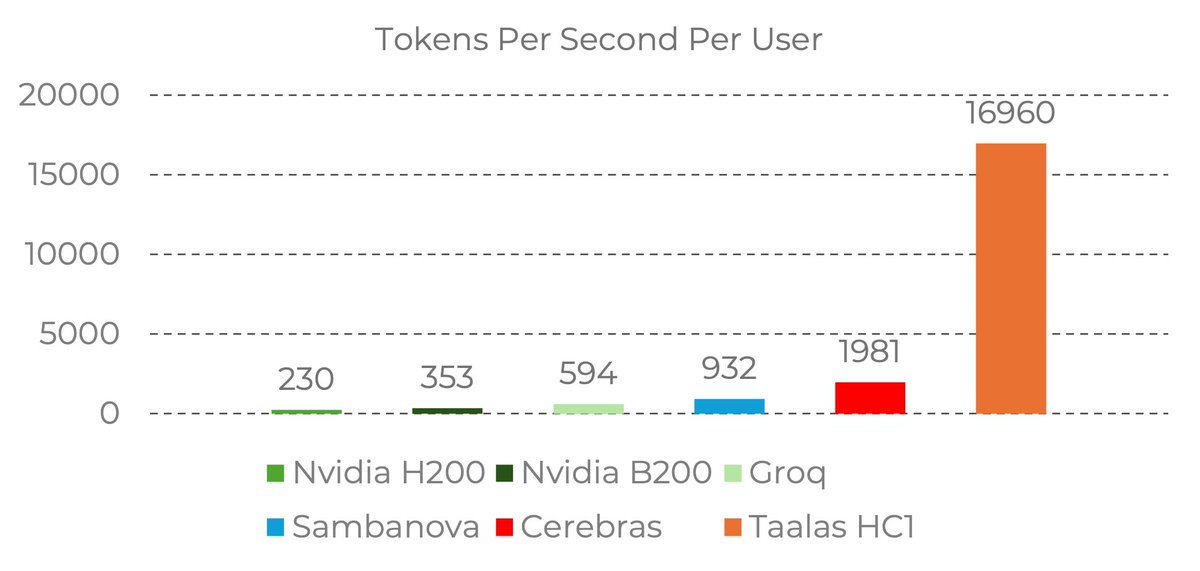
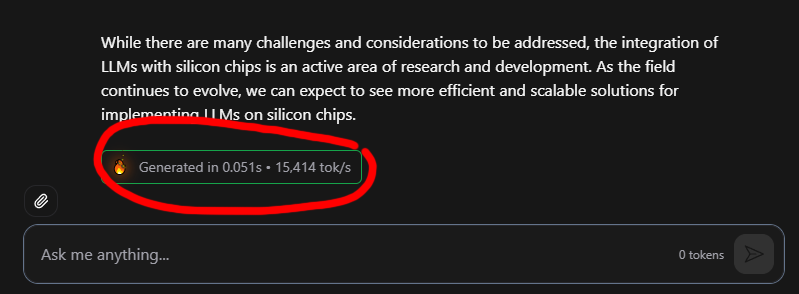
17,000 tokens per second!! Read that again!
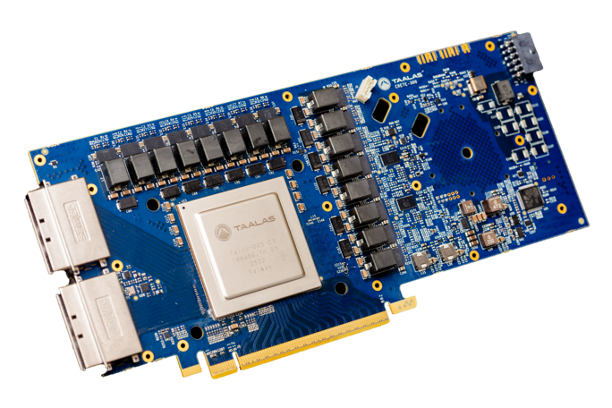
LLM is hard-wired directly into silicon. no HBM, no liquid cooling, just raw specialized hardware. 10x faster and 20x cheaper than a B200.
the "waiting for the LLM to think" era is dead. Code generates at the speed of human thought.
Transition from brute-force GPU clusters to actual AI appliances.
https://t.co/Bf6DH7Q6Uf
This is a dopamine loop, and it’s one of the most powerful ones humans have ever encountered.
Every time you prompt an AI and get a useful result back in seconds, your brain gets a hit. Variable-ratio reinforcement, same mechanism as slot machines, except the reward is real: actual output, actual progress, actual leverage on your ideas.
Traditional work follows a delayed-reward structure. You write code for 6 hours, maybe it compiles, maybe you get feedback in a week. The gap between effort and reward is wide enough that motivation decays constantly.
AI compresses that loop to seconds. Effort → reward → effort → reward. Your prefrontal cortex stays engaged because the next payoff is always one prompt away. This is why people describe it as “fun” when they’re actually working 14-hour days. The subjective experience of effort disappears when reward frequency is high enough.
The “harder than ever” part is real too. When your bottleneck shifts from execution to imagination, you run out of excuses to stop. There’s no “waiting on the build” or “blocked by review.” Every idea you have can be tested immediately, which means your brain never gets a natural stopping point.
People who thrive on this are selecting for a specific neurotype: high novelty-seeking, high conscientiousness, tolerance for rapid context-switching. That’s maybe 10-15% of the population.
The other 85% will experience the same tools as overwhelming, not energizing. And that split is going to define the next decade of who captures value from AI and who gets displaced by it.
In 2014, Peter Thiel gave a 1-hour masterclass on how to build a monopoly from scratch.
He broke down how:
• Google became untouchable
• PayPal beat the odds
• Facebook crushed competition
Here are 11 timeless lessons from his masterclass:
1. Create value, then capture it