Tesla in 2026: Optimus, a <$30K autonomous cybercab, and a best in class electric semi truck enter mass production within months. This is in addition to the best selling EV in every region of the world and highest grossing most intelligent AI self driving platform… 👏
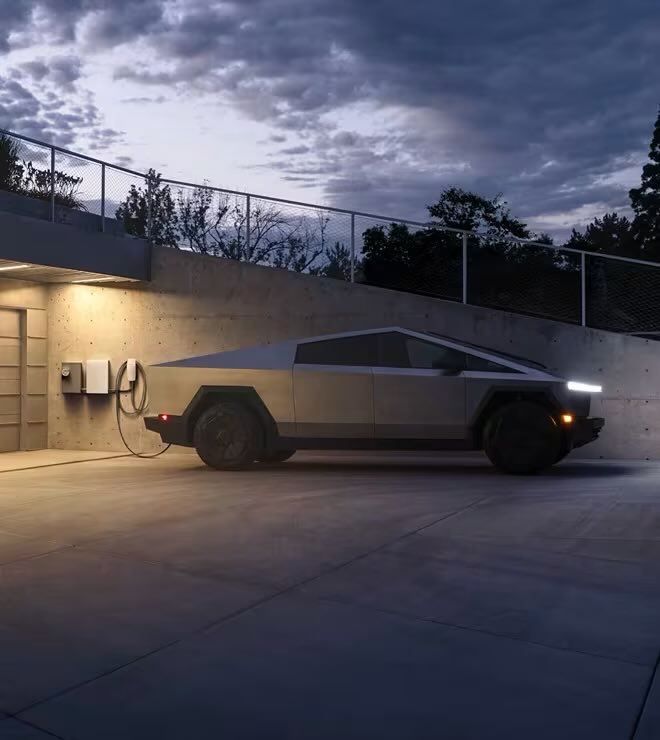
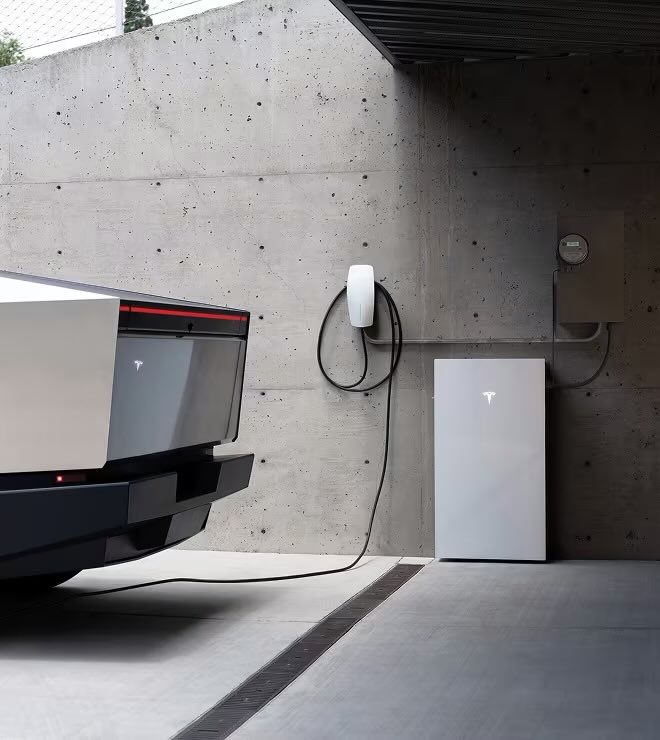
GOOD NEWS 🚨 Tesla and PG&E have officially approved the Tesla Cybertruck and its Powershare hardware for California’s first residential Vehicle-to-Everything (V2X) program 🔥
This allows Cybertruck owners to use their vehicles as bidirectional energy sources, capable of powering both their homes and the electrical grid.
Through the Powershare platform, customers can utilize "Home Backup" to keep their lights on during a power outage. Additionally, the "Grid Support" feature allows owners to sell electricity back to the grid during times of high demand, effectively turning their vehicle into a source of passive income.
This program marks a significant technical milestone as the first alternating current (AC) vehicle-to-grid application approved in California. By using AC power rather than specialized direct current (DC) infrastructure, the system is significantly cheaper and simpler to install, making bidirectional charging more accessible for the average homeowner.
To encourage adoption, PG&E is offering incentives of up to $4,500. This funding can be applied toward the cost of bidirectional-enabled equipment—such as the Tesla Universal Wall Connector and Powershare Gateway—as well as the necessary utility interconnection fees.
Participation is designed to be flexible and user-centric. The program is entirely opt-in and event-based, ensuring that the vehicle’s primary purpose remains transportation. Owners maintain full control over their backup preferences and daily mobility needs, so the truck is never drained when it's needed for driving.
By integrating Tesla’s massive fleet into the energy ecosystem, California aims to create a more resilient and affordable grid. With EVs acting as mobile energy assets rather than just transportation, the state can better balance supply and demand during peak periods and extreme weather events.
Cybertruck just dropped a nuke on every other pickup truck:
11.52 kW bi-directional power straight from the bed, 120V and 240V at the same time.
That’s enough to run your full house HVAC, fridge, water heater, and entire circuits during a blackout.
No other production truck even comes close.
This thing isn’t a pickup… It’s a power bank on wheels
@Tesla, @elonmusk
Most Cybertruck owners don’t realize this…
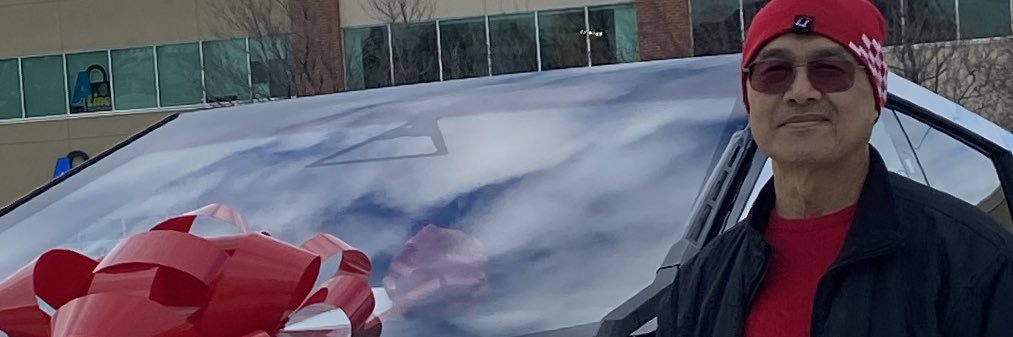
That factory stainless isn’t meant to stay that way. It holds everything,fingerprints, streaks, uneven grain.
We take it and turn it into a true mirror finish that’s actually easier to maintain. No wrap. No film. No panel mismatch later.
We’ve done 50+ across the country,Hawaii, Mexico City, live at SEMA Show,and every owner says the same thing after… they wish they did it sooner.
If you’ve been thinking about getting your Cybertruck done, message me. We travel.#Cybertruck
#Tesla
#LuxuryCars
#MirrorFinish
Nobody has ever given a full-throated sales pitch for a tin of sardines. That is a market gap.
Allow me.
The tin is food-grade steel, lined, sealed, oxygen removed. The environment inside is more controlled than most restaurant kitchens you have eaten in happily and without incident.
No preservatives. Canning is heat and the absence of oxygen. Just the fish, suspended exactly as they were the day the boat came in.
The omega-3s survive it. Studies comparing fresh to tinned show no meaningful difference in EPA and DHA. The fish was caught, canned within hours, and the fatty acids went nowhere.
The bones are edible. They have been sitting in olive oil long enough to become soft, and they are the calcium delivery mechanism the sardine built for itself. You eat them. That is the intended use.
What the tin actually contains: EPA and DHA in immediately usable form. Selenium, iodine, B12, CoQ10, vitamin D, calcium, complete protein with every essential amino acid.
Your protein shake has twenty-three ingredients. The sardine grew its own nutrition in the North Atlantic and asked for nothing.
A food humans have eaten since before written history now apparently requires a defence.
Buy the tin.
Thank you @CernBasher . We both live this . Currently I am the robot you're describing.
For 10 years, I've been the 24/7 monitoring system, the lift-and-transfer mechanism, the medication reminder, the fall detection sensor, the emotional support interface. My mother's life has been in my hands every single day since her aneurysm at 74 — when they told us she'd have no quality of life, and we proved them wrong.
But the cost? I know it intimately.
The sleep that never comes deep enough. The hypervigilance that keeps you awake even when you should be resting. The bone-deep exhaustion of being the failsafe for another human being's existence. Watching someone you love struggle to do what was once effortless. The guilt when you snap because you're running on fumes. The terror that a single mistake — one missed medication, one fall you don't catch, one moment of inattention — could end everything.
I've given pieces of myself I didn't know I had. And I'm one of the "lucky" ones — I had the health background, the resources, the determination. Most caregivers don't.
The world asks us to be superhuman. To sustain impossible vigilance indefinitely. To pour from cups that ran empty years ago. And when we break — because we do break — the system shrugs. "Family care," they call it, as if that makes it sustainable.
You're right. This isn't about replacing humans with machines. It's about recognizing that what we're asking of caregivers is inhuman.
I don't want a robot to love my mother. I want a robot to lift her so my back doesn't give out. To monitor her vitals so I can sleep for four hours without waking in a panic. To handle the repetitive, crushing physical labour so I have the energy to actually *be* with her — to talk, to laugh, to hold her hand without my mind racing through the next 20 tasks.
The future isn't robot OR human. It's robot *enabling* human. It's technology carrying the load so love doesn't have to carry everything alone.
Because right now? We're losing. Caregivers are burning out, aging parents are suffering, and the gap between need and capacity widens every day. I've lived inside that gap. I know what it costs.
Robots aren't the story. But they could be the tool that finally lets the story be about care again — not just survival.
i watched a flight go from $483 to $547 in 24 hours WITHOUT a single seat selling
searched london to new york on a tuesday
$483
checked again 2 hours later
$512
next morning: $547
panicked and booked it
the guy sitting next to me paid $391
same seat, date + airline
$156 less
he searched once i searched 3 times
the algorithm saw me come back and charged me until i broke
the seat doesnt have a price
you have a price
and it goes up EVERY time you show interest
couldnt stop thinking about it so i tracked down someone who actually built pricing algorithms for a european carrier
asked him what happened to me
"you got profiled. the system assigned you an intent score after your second search and raised your ceiling every time you came back"
asked how to beat it
"most people think a VPN fixes it. thats 2015 advice. the algorithm fingerprints more than your IP now. it reads your device your browser your screen resolution your timezone. VPN to bucharest but your clock says london and your language is english? the algo knows youre faking and sometimes charges you more for trying"
"so what actually works?"
"you have to poison the entire profile. not just the location. the identity"
the protocol he gave me:
VPN AND match your timezone and language to the spoofed location. mismatched signals flag you and can trigger a price increase
use a fully clean browser. no history no saved passwords no google account. the algorithm fingerprints your session not just your cookies
one search one booking. the intent score activates on the second search. there is no safe way to look twice
book tuesday or wednesday 1-5am. lowest traffic means the least demand data for the algorithm to inflate against
if the price already spiked go dark for 72 hours minimum. not 24. the intent score on most carriers decays on a 3 day cycle. come back on a different device from a different network
"we spent $4 billion building these systems. theyre not going to lose to someone who opened an incognito tab"
$900 billion industry
the gap between what you pay and what the person next to you pays is not a bug
its the entire business model
stop letting an algorithm charge you for being predictable
Elon Musk just put an expiration date on the medical profession.
And he gave it three years.
The interviewer asked when Optimus would be a better surgeon than the best surgeons on Earth.
Musk didn’t hesitate.
Musk: “Three years. I’d say three years at scale.”
Not a prototype. Not a lab experiment. At scale.
To understand why that timeline is plausible, you have to understand the fundamental problem with human medicine.
Musk: “Takes a super long time to learn to be a good doctor. And even then, the knowledge is constantly evolving. It’s hard to keep up with everything.”
Musk: “Doctors have limited time. They make mistakes. How many great surgeons are there? Not that many.”
That is the brutal reality of the greatest healthcare system humanity has ever built.
It runs on exhausted humans with biological limits, trained over decades, who can only operate on one patient at a time.
Optimus has none of those constraints.
It doesn’t get tired.
It doesn’t forget a study published last week.
It doesn’t have an off day. It doesn’t have a caseload limit.
And once you train one, you can manufacture ten thousand more with identical precision.
Musk: “At that point, there will probably be more Optimus robots that are great surgeons than there are on Earth.”
Think about what that actually means.
The scarcity of elite surgical skill has been one of the defining limits of human healthcare since the beginning of medicine.
Geography determined your odds of survival.
Zip code determined your access to expertise.
That bottleneck disappears overnight.
Because you can’t train human surgeons fast enough to meet global demand.
But you can manufacture infinite robots running identical perfect code.
The most valuable skill in the world is about to become software.
Infinitely replicable. Infinitely scalable. Available to every human being on Earth regardless of where they were born.
Medical scarcity doesn’t fade gradually under that reality.
It ends.
And whoever controls that code controls healthcare access for billions.
For all of human history, the leading cause of preventable death wasn’t disease.
It was the shortage of great people to fight it.
That problem has a solution now.
And it ships in three years.
A biological miracle is happening in A Major Research Hub as "Bio-Dialysis" is resetting human blood to a pristine state.
A single 4-hour session removes 100% of heavy metals and environmental pollutants from the circulatory system.
The science involves "Molecular-Imprinted Polymers" that act like a lock and key for specific toxins.
As blood passes through the external filter, the harmful molecules are physically trapped and removed, leaving the patient with the "clean blood" profile of a newborn baby.
#DetoxTech #Longevity #BioHacking #PureHealth #MedicalScience
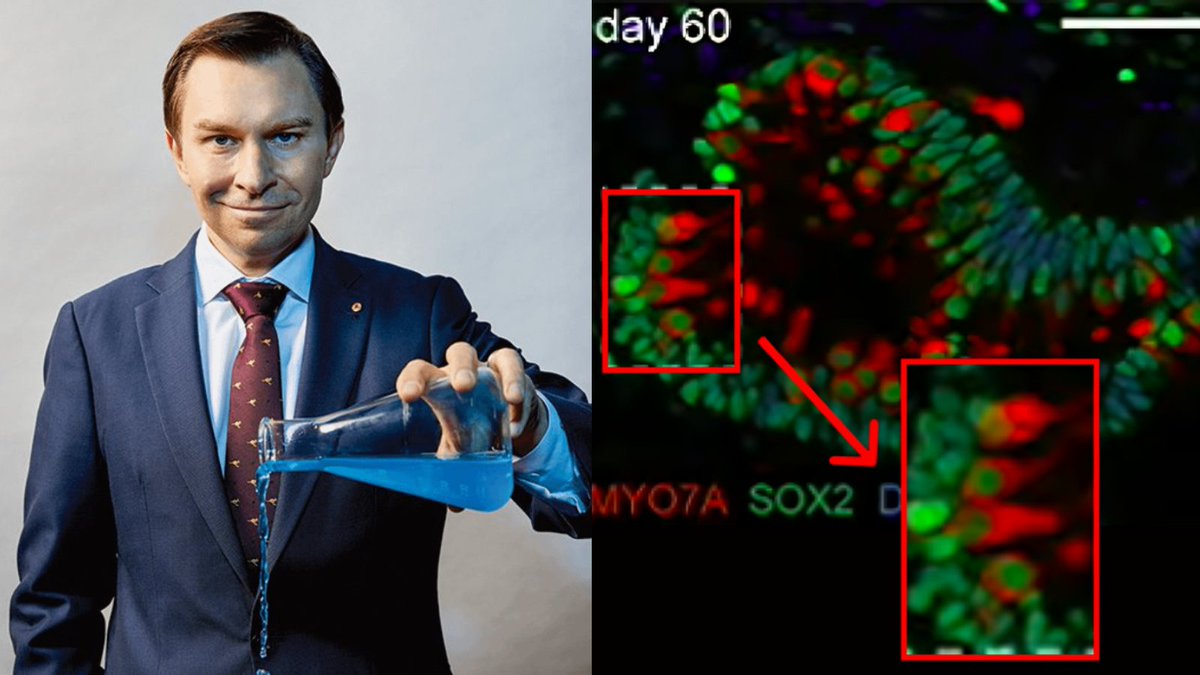
In the 1990s, a Harvard scientist made a wild claim:
"Aging is the loss of epigenetic information — and we can restore it."
The entire field dismissed him.
30 years later, the FDA just approved his gene therapy for the first human trial.
Here's why this changes everything: 🧵
Japan has made a groundbreaking advancement in stem cell research by successfully performing the world’s first stem cell treatment to restore vision.
This innovative approach could mark the beginning of a new era in treating blindness and vision impairment.
With this incredible leap forward, the potential for regenerative medicine has never looked brighter.
Stem cell therapy offers hope for those suffering from degenerative eye diseases, which were once considered irreversible.
By regenerating damaged tissue, these treatments could help restore lost functions and improve quality of life.
The success of this procedure opens doors to even more possibilities in medical science, bringing us closer to curing a range of conditions.
With the eyes being one of the most important organs, restoring vision can significantly impact a person’s life, improving independence and overall well-being.
As stem cell research continues to advance, who knows what other health challenges we may soon be able to address.
This breakthrough proves that science continues to evolve, unlocking new possibilities for healing and recovery. 🧬👁️
Canadian here. Multiple trips to the U.S. Recently.
Zero issues.
Anyone claiming otherwise isn’t speaking from firsthand experience.
What is obvious? Americans are dramatically friendlier than Canadians right now.
And it’s not close.
As a Canadian, my travels to the U.S. have had absolutely no issues.
Any Canadian that tells you otherwise is lying - they don’t know.
What I can say after visiting the U.S. multiple times is that Americans are 100% friendlier than Canadians right now.
It’s not even close.
The gap between 2025 and 2028 is gonna be bigger than the gap between 1800 and 2000
Elon isnt building companies hes building an entire new civilization - its currency X its brain xAI its body Optimus its energy Tesla and its ships SpaceX
And whats hilarious? People are still debating if hes gonna succeed 😂
Bro he already succeeded. The real question is are you gonna be part of the humanity that went to the stars or the one that stayed behind watching from Earth
TSLA shares arent a financial investment this is citizenship in the new civilization
And if the merge happens SpaceX + xAI + Tesla?
Thats gonna be the biggest economic event in human history. No exaggeration - one company controlling AI + robotics + clean energy + interplanetary transport?
This isnt a monopoly this is unlocking a new universe
And the crazy part is all of this is happening in just 1000 days
One thousand days separating us from real Singularity not theoretical
In 3 years people are gonna come back to this tweet and say it was obvious all along how did we miss it 🚀
Groundbreaking research has revealed that human cells can “hear” and respond to sound waves, fundamentally changing our understanding of how the body interacts with its environment.
Scientists have discovered that certain frequencies of sound can influence cellular behaviour, affecting everything from gene expression to tissue regeneration.
In experiments, exposing cells to specific sound patterns caused them to rewire their internal processes, boosting communication between cells and even promoting healing pathways.
This suggests that sound could be a powerful tool in medicine, potentially aiding recovery from injuries, improving organ function, and enhancing overall cellular health.
While this research is still in its early stages, it opens up exciting possibilities for therapies that use vibration, music, or targeted sound waves to promote healing and optimise body function at the cellular level.
The discovery highlights the profound connection between physical stimuli and biological processes, showing that our bodies are more responsive to the environment than previously imagined.
As scientists continue to explore these effects, we may soon see revolutionary treatments that harness the power of sound to enhance health and wellbeing naturally, without drugs or invasive procedures
NEWS: Tesla has announced that Cybertruck owners in Texas and California will soon get vehicle to grid (V2G) capabilities, allowing owners to earn money supporting the grid.
“With Powershare, your Cybertruck can support the electric grid when needed and earn you money. In participating regions, Powershare Grid Support allows your vehicle to send energy back to the grid during high-demand energy events. For each event where you send energy to the grid, you’ll receive credit on your energy bill while helping your community's energy resilience.”
This feature has been requested for years!
Scientists have identified a powerful combination of proteins that can stimulate the regeneration of heart tissue and potentially repair damaged organs.
This discovery could change the future of medicine by offering new hope for patients who have suffered heart attacks or other forms of organ damage that were once thought to be irreversible.
The protein combo works by activating the body’s own repair mechanisms.
In laboratory studies, it triggered cells in damaged heart tissue to grow and restore function, a process that could also be applied to other organs in need of healing.
Unlike current treatments, which only manage symptoms or slow disease progression, this approach focuses on rebuilding and renewing tissue from within.
Experts believe this innovation could reduce the need for transplants and long-term medication, offering a more natural and sustainable path to recovery.
If clinical trials confirm its effectiveness, the therapy may represent one of the most important milestones in regenerative medicine.
This discovery highlights the growing power of protein-based therapies and how deeply they can influence human health.
It brings us closer to a future where organ failure does not mean the end, but instead the beginning of regeneration and repair.