0 “financial” pressure*. More proof:
- This is why Tesla has not increased car production for 4 years (Since Elon hit all his compensation milestones)
- This is why XAI was bought by SpaceX instead of Tesla although it had of synergies with the AI efforts and Optimus.
- This is why Elon promotes his rocket launches and Grok, but not at all the cars.
- This is why he recruits the best talent outside for SpaceX and XAI
Elon is not happy about how little shares he has in Tesla and that’s a big problem for the Tesla investors and the Tesla mission.
difference is last time Tesla would go bankrupt otherwise. This time Elon has 0 pressure and actually incentive to delay it.
Thought experiment if you don’t understand the incentive:
- Are there serious talks about merging SpaceX and Tesla? Yes
- Does Elon care about his share in his companies? Yes
- Will Elon have more shares if Tesla is smaller in comparison to SpaceX in case of a merger? Yes
This is basic logic, but Omar called me a retard in Spaces when I mentioned this.
@stevenmarkryan $tsla because that's the one which will be bought for a premium. So simple math says: if price ratios stay the same, Tesla will give you more of the combined entity.
But the ratios will change in favor of Tesla. Whoever is buying SpaceX here is dumb.
Omar, Tesla was performing when it was Elon's favorite darling and he was trying to hit his compensation goals. But now it's SpaceX, because he owns a bigger percentage of that.
For instance, XAI would've been a perfect addition to Tesla for the robots, but he pulled AI (and probobaly the best engineers for it) out of Tesla and gave it to SpaceX.
I have over 100% of my net worth in Tesla because it's still gonna do great things. But the upside has been dampened since Elon wants it to be sold to his other company at the least possible valuation.
If there were no talks of merger, I would have no problem taking the risk of holding this stock, knowing multiX upside is coming. But now we have to worries about it being sold for a small premium to another company that Elon cares more about.
Tesla is not performing because Elon doesn't need/want it to perform. He doesn't want to sell his shares, he wants to buy all the shares. And we're gonna lose the upside that we've been waiting for for a decade, to a rocket company who's mission is so grand that all the capex in the world would not be enough. So the profits may not be coming, because a mission to Mars, is a childhood dream, not a profitable business.
@Tesla has sadly removed "sustainability" from the mission statement which many investors where behind.
Sustainable Energy -> Sustainable Abundance -> Amazing Abundance
Why is that? Does @elonmusk not care about earth as much anymore?
@teslayoda Yeah, I invested in Tesla to save earth. But now we're being forced into a company that is sacrificing earth for mars.
That's immoral and unprofitable.
Can you get your head out of Elon's a** and see that he's trying to do the obvious: Shrink Tesla before the SpaceX merger?
I've been following you since the first day you started. You are not as objective as you think. You bend reality to say Elon and tesla are great. It's been years that they are not. This is not the Tesla we invested in, in 2016.
@nymbusjp Robotaxi may be fine in the future. But only when it's part of SpaceX and all the profits are poured into an unprofitable mars mission instead of being used for earth or given to the $tsla shareholders.
Tesla has been my main investment for the past 12 years, but I can't stay silent about @elonmusk anymore.
- He is betraying $tsla shareholders and the world by "selling less electric cars", "slowing down self-driving" and "burning Tesla's cash on moonshots" to shrink @Tesla before the merger with @SpaceX so he owns a bigger piece.
- He has magically removed "sustainability" from the mission statement of Tesla which many where behind. Sustainable Energy -> Sustainable Abundance -> Amazing Abundance
- SpaceX plans to launch thousands of massive rockets into Space every year. This is an extremely dangerous experiment on our atmosphere. Where is SpaceX's climate impact report?
I also now believe he should not be trusted with trillions of dollars in power. He may be sacrificing our precious earth (and tesla investors) for his childhood dreams.
I feel stupid for defending him as a good human deep down and behind the chaos for all these years.
@farzyness@Tesla Because Elon doesn’t want the stock to go up before his new compensation plan.
Everything will turn around when we promise him $1T if he 10Xs the company to $10T.
The future of transport will reshape cities.
@urbanistvc previewed @swyftcities' reimagined gondolas: smart, automated, scalable
@YsalarY shared how @Tesla AVs will allow roads to flow like rivers as vehicles coordinate, reaction time nears zero, & safety nears certainty
Reclaimed parking and narrower lanes allow more trees, street life, bikes, & infill
EVs w/ fewer safety and driver functions optimize for interiors (luxury design collabs; new “machines for living in”?)
EV trucks & buses will optimize existing highway infra. This may further hurt rail’s political will problem
Deaths and injuries (41k & 2.3m in 2023) prevented. Cleaner air, quieter streets. Health and productivity increased
The tipping point will be insurance premiums, increasing gradually then suddenly till driving is prohibitively expensive, much like owning a horse became
Positive effects emerge (but w/ implications) on safety and the social contract as AV cameras capture urban surface areas
Aerials (@zipline, @jobyaviation) will further streamline flows of goods and people. Decentralized energy/utilities will drive dispersed demand
Supersonic is nigh (@boomsupersonic) and, bc Jevon’s paradox, will connect more people, ideas, & resources
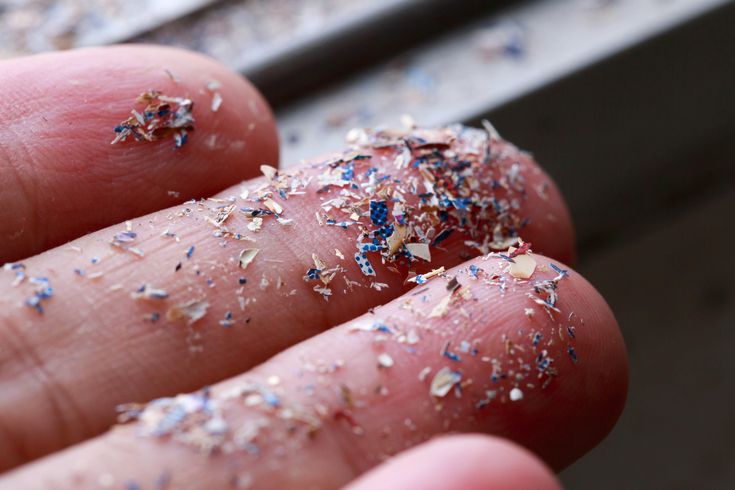
Microplastics are POISONING us—slowly, silently, and PERMANENTLY.
There are TRILLIONS of microplastics everywhere and they’re
the highest they’ve ever been in our bodies—brain, liver, lungs, everywhere.
But don't panic—there are solutions: 🧵
Grok disagrees (most of these negative impacts are already being seen):
The expected long-term negative impacts of President Javier Milei's policies in Argentina encompass several areas:
Sustained High Poverty Levels: The immediate spike in poverty due to austerity measures and economic contraction is likely to persist if these policies continue without substantial social safety nets. The long-term impact could be a deeply entrenched cycle of poverty, particularly if economic recovery does not generate inclusive growth that benefits the lower and middle-income segments.
Increased Inequality: The reduction in social services, education, and public sector jobs might widen the gap between the rich and the poor. Policies like tax cuts for the wealthy and the privatization of public resources could disproportionately benefit the elite, further exacerbating income inequality.
Degradation of Public Services: Long-term cuts in funding for education, healthcare, and public infrastructure could lead to a decline in the quality of these services. Over time, this could result in a less educated workforce, poorer public health outcomes, and crumbling infrastructure, all of which are detrimental to long-term national development.
Economic Volatility: The aggressive deregulation and privatization, combined with the initial economic shock from currency devaluation and subsidy cuts, might lead to increased economic volatility. If not managed carefully, Argentina could face repeated cycles of boom and bust, deterring stable foreign investment and domestic business confidence.
Social and Political Instability: Continued social unrest and public dissatisfaction could lead to long-term political instability. The polarization of society, driven by the harshness of economic reforms, might result in frequent protests, strikes, and a general lack of trust in government, which could undermine governance and policy implementation over time.
Environmental Degradation: Policies aimed at boosting sectors like mining and energy without stringent environmental regulations could lead to long-term ecological damage. This includes potential water scarcity, loss of biodiversity, and health issues for communities near industrial sites, which could have irreversible effects on the environment.
Loss of Human Capital: The reduction in educational funding and job opportunities might encourage a brain drain, where skilled professionals and academics leave the country for better opportunities elsewhere. This loss of human capital could hinder innovation and economic development in the long run.
Strained International Relations: Milei's foreign policy shifts, including distancing from major trade partners like China, could lead to economic isolation or at least reduce the benefits from global trade networks, impacting long-term economic growth.
Public Health: Cuts to healthcare budgets could lead to poorer health outcomes, especially if preventive care and primary health services are reduced, leading to higher long-term health costs and decreased productivity.
These impacts are based on current policy directions and economic analyses, but they are speculative and depend on how policies evolve, how effectively they are implemented, and whether there are adjustments made in response to public feedback and economic performance.