A fun article about our work and the Olympics.
There's some interesting relationships between skiing and basal ganglia function
@CmuScience@ahmari_lab@BarbShinn
https://t.co/Z5QORCcfsu
🧠⚡️💊New @Nature publication !
Mimicking opioid analgesia in cortical pain circuits
We built a brain-behavior framework to decode spontaneous chronic pain in mice—and to biologically mimic morphine with a synthetic opioid gene therapy
https://t.co/YqvBzdEqEL
@PennMedicine
ok. 2 cool science summaries:
1)we discovered clear, discrete pain states - not just behaviors
2)no-pain and treated-pain were not the same, in part due to intervention targeting just the affective side, not numbing everything. Also kinda makes sense in my personal experience?
Hot off the @Nature press! A-SOiD behavior library developed specifically for pain studies quantifies a new chemogenetic gene therapy that targets opioid circuit in ACC without addictive properties
@FlyBottleEscape@CmuScience@cmuneurosci
https://t.co/81jphkV5dk
I'll let Greg do the tweetprint, but he led a Phenomenal interdisciplinary team effort. Great science in every way.
It's open too! Also part of the paper, you can build your own behavior rig with full analysis software for a tenth the price of commercial. Inquire if interested
So proud of @MattGeramita and his stellar work on striatal dynamics, decisions, and impulsivity. Pertinent for thinking about prob vs deterministic frameworks too.
Also, suggests indirect may be doing more(cognitive?) than just opposing direct pathway
https://t.co/lMAATsLLO2
If you're at SfN, stop by my teeny tiny nano talk Sunday at 1:
"Neural population dynamics during naturalistic versus task-related behavior" w/
@YttriLab@Markolas11@adenoeagle
NANO017.01
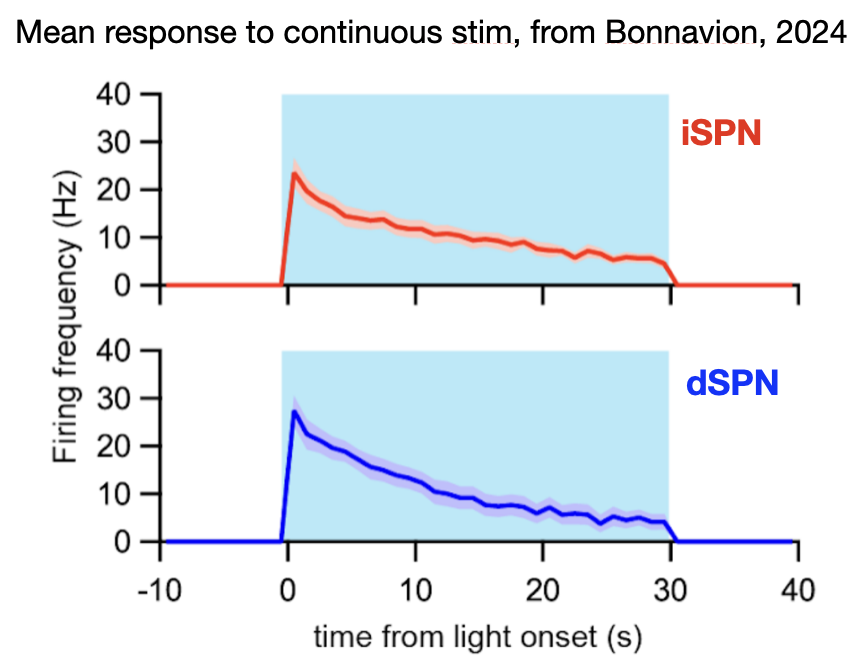
SPNs are briefly active + only for specific events. When driven randomly or for long dur, interpretation is hard. SPN attenuate response to light after a few secs (and Bstem response?)
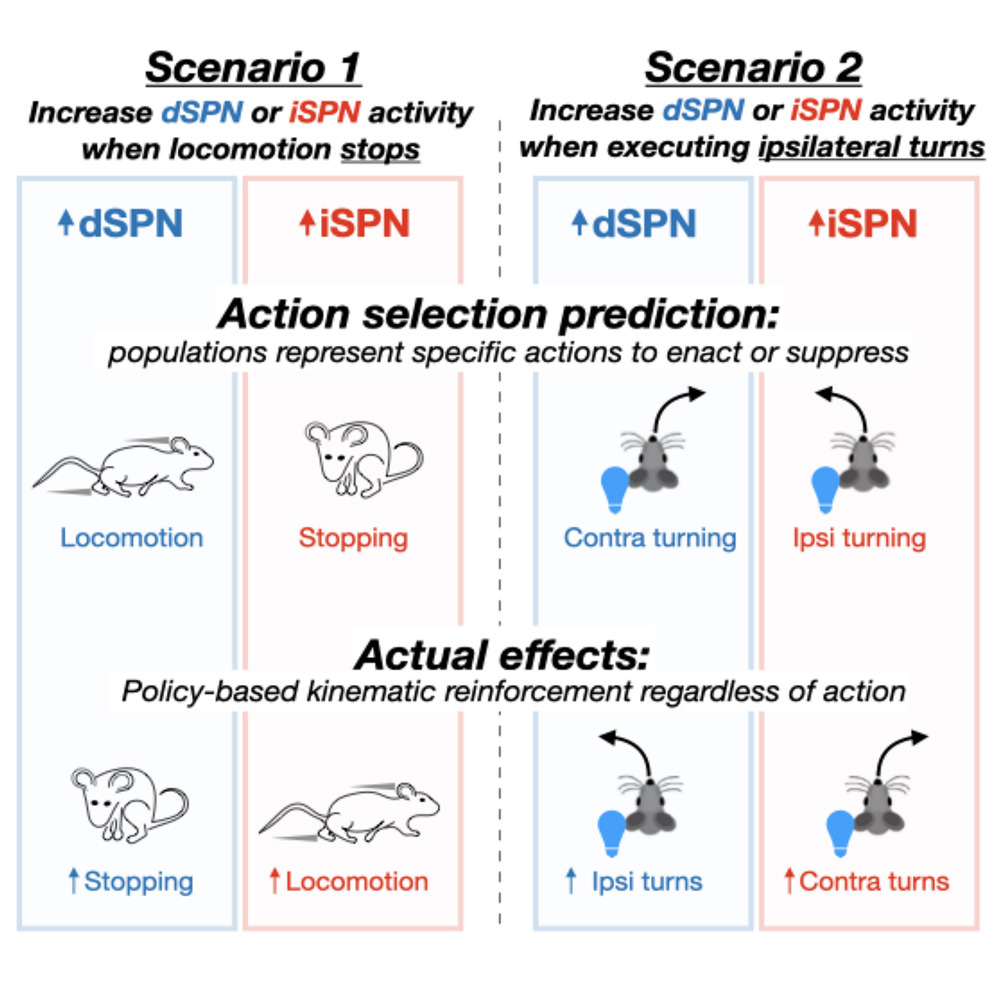
These results indicate STR's role in policy-based RL + are at odds with basic action selection
Huh, it's been 8 months since I was on here. Better late than never. I hope this new-ish paper will challenge people to think about the interpretations of our models
STRIATUM SUPPORTS REINFORCEMENT AND NOT ACTION SELECTION (!!!)
https://t.co/l6GrB2c7Pb
@CmuScience@cmuneurosci
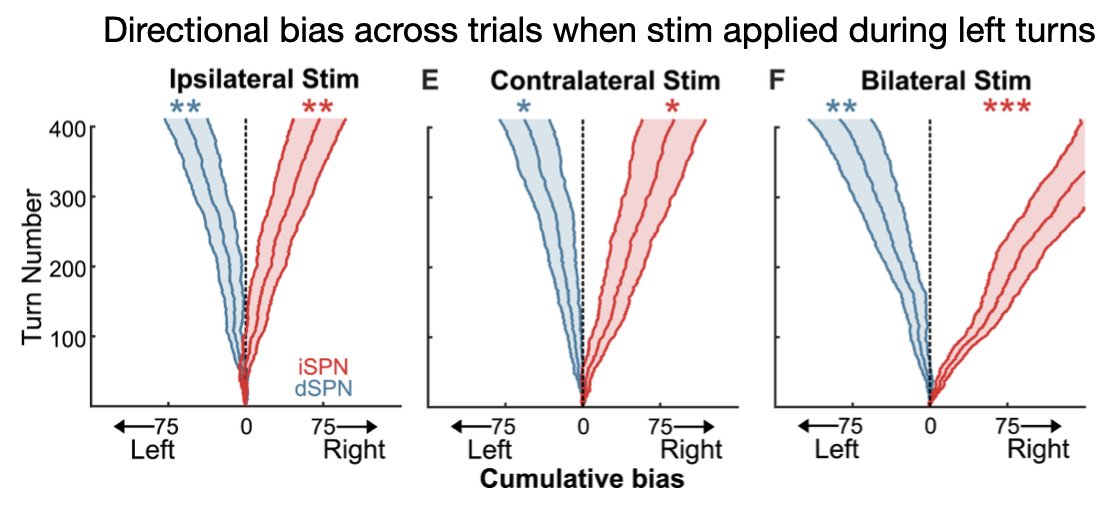
When applied contra, ipsi, or bilaterally to left turns, the effect was the same: D1/D2 stim biased mice to turn left more often, regardless of the side of stim. Note, bias is incomplete and did not induce an action, consistent with learning but not action selection
I'm revamping a masters-level Systems Neuro course this spring.
Please HMU with your favorite reviews and perspective pieces! Extra points for approachable and/or thought-provoking.
Any topic is welcome! I might end up biasing to the BME-heavy audience