I'm reposting for the Kenyans who claimed that they didn't understand what Wangeci Gitau was saying about Macron's friend borrowing from kompa music.
Oh, and see my latest video on why Kenyans are clueless about the politics of the arts. https://t.co/DOo61002Ch
That's how they took a gay actor, and made him act as a gangster rapper, in order to influence the black community into become more violent.
And it worked 😓
The report is here.
Find out how the CIA and the U.S State Department are involved in funding Afrobeats, using it for political subversion, and causing gentrification in the process, to the point that local fans can no longer afford to book their musical artists in Africa.
My latest report for @Spearhead_Af.
An American photographer filmed a wolf begging for food from a grizzly. The gray wolf saw the meat and in an instant turned into a playful puppy begging for a piece.
A local fundi allegedly lured an online troll with a fake job after the two clashed online. The man showed up expecting work and walked into a trap.
A reminder: you never really know who you're dealing with online.
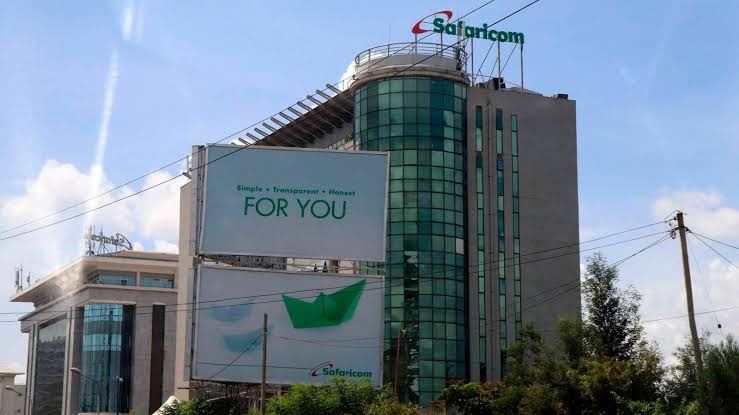
🚨 In one of the most consequential rulings in Kenya's history, the High Court has declared the government's Sh204 billion sale of its Safaricom shares unconstitutional, null and void, and ordered the shares returned to the State. This is a landmark on how public assets may, and may not, be sold. Here is what it means.
On 15 September 2026, a three-judge bench, Justices Francis Gikonyo, Roselyne Aburili and Tabitha Ouya, held that the government's partial divestiture of its 15% stake in Safaricom to Vodafone/Vodacom was undertaken in breach of the Constitution and multiple laws, and was therefore automatically invalid, requiring no order to set it aside. The shares, if already transferred, must be restored to the government on behalf of the people. The court declined to suspend its judgment, directing the respondents to make a formal stay application instead.
The grounds are wide-ranging, and each is instructive.
✅ Public participation. The decision to sell was a public-policy decision requiring meaningful, informed public participation under Articles 10 and 118. Neither the Cabinet nor Parliament provided it, and, crucially, the government concealed material information, including the identity of the buyer. The court held that withholding key information turns public participation into a cosmetic exercise rather than genuine engagement.
✅ Parliamentary approval is not a cure. Strikingly, the court held that approval by the National Assembly could not sanitise a process tainted by concealment and the absence of participation. A vote in Parliament does not launder an unconstitutional process.
✅ Public-finance and procurement law. The transaction did not comply with Section 87A of the Public Finance Management Act, and the transaction advisers were procured contrary to Article 227 and the Public Procurement and Asset Disposal Act. The court also quashed Sessional Paper No. 3 of 2025, on which the divestiture rested.
✅ Competition and capital-markets law. The deal would have handed a single foreign entity 55% control of Safaricom, offending the Capital Markets Act, the Takeovers and Mergers Regulations and the Competition Act.
✅ Intergenerational equity. The court found the sale offended the principles of intergenerational and intragenerational equity and sustainable development under Articles 10 and 201, recognising Safaricom as a strategic national asset, not merely a commercial holding.
The overarching principle is the one that recurs across Kenyan public law: the need to raise revenue cannot override the Constitution. However pressing the fiscal goal, and this sale was tied to funding the National Infrastructure Fund, the State must sell public assets transparently, competitively, and with genuine public participation, or not at all.
👉 Follow @Lexken_EMSLaw for practical legal insights on public finance, constitutional law and privatisation.
I'm watching Okoth Obado live sentencing and Sharon's mum is asking for a non-custodial sentence that he's asked for forgiveness
Poverty is really dehumanizing i wonder how much they were paid
I don't know much about how and why tech start ups collapse but its usually so clear that their overheads are ridiculously high. A little funding and suddenly they are hiring alot of staff and paying them like C Suite executives.