Algorithm 2.0: EASO Pharmacological Framework for Obesity Management
✔️ Helps clinicians match pharmacological obesity management to an individual’s health needs, moving beyond weight loss alone to consider complications, mechanisms & treatment goals.
https://t.co/289FP5r93D
What happens 10 years after hernia repair?
A new perspective calls for longer follow-up, standardized recurrence grading and a shift toward viewing ventral hernia as a chronic disease: https://t.co/TW28dUxexf #hernia#surgery
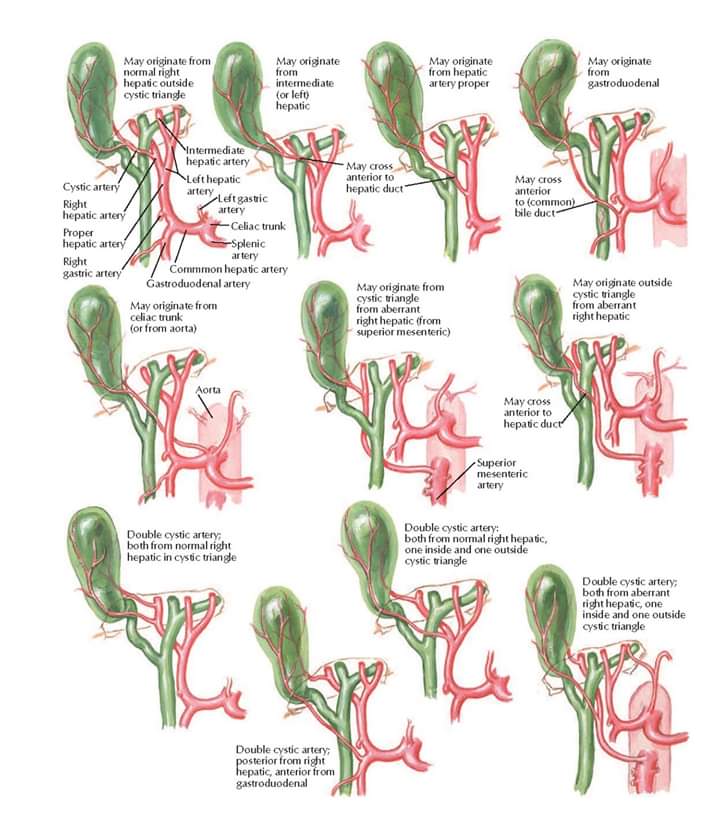
🏆Grand Prize
We are pleased to announce that this entry has been selected as the Grand Prize winner of the 2nd Endoscopic Surgery Illustration Contest.
Congratulations!
#JSES@IFSES_WCES@SAGES_Updates@EAES_eu@ELSA_surgeons
During implementation of robot-assisted pancreatoduodenectomy in a high-volume center, increasing experience was associated with shorter operative time, fewer complications, shorter hospital stay, and hospital costs comparable to open surgery. https://t.co/K5mzIn9Bym
🩺 Hernia repair isn’t always routine.
New insights from #ACSCC25 explore how judgment, technique, and patient-specific strategy shape outcomes in complex hernia care: https://t.co/gGRKW7Ptux #surgery#hernia
🩸 Peptic ulcer bleeding, updated for 2026:
✅ ESGE keeps early endoscopy ≤24 h ⏱️ after resuscitation 💧 and expands endoscopic options 🔬including OTS clips for high-risk ulcers.
📚https://t.co/dMdXwo5jpI
#GITwitter#Endoscopy#MedEd#MedTwitter@ESGE_news@ASGEendoscopy
One of the most important questions in “refractory GERD”:
Is it actually GERD?
Excellent pearls from @kia_leila on the pseudo-GERD trap:
🔹 Reflux hypersensitivity ≠ functional heartburn
🔹 Rumination can often be diagnosed from the history
🔹 Postprandial HRIM can confirm the physiology
🔹 Treatment may be behavioral—not another escalation of acid suppression
Phenotype first. Treat the mechanism.
#Foregut2026 #GITwitter #GERD
Gallbladder polyp management isn’t just size-based. European vs SRU guidelines differ on size, morphology, risk & follow-up. Some polyps may be malignant, surgical planning matters.
Do you use European, SRU, or individualized approach?
When consider extended cholecystectomy?
Editor’s Choice: Endoscopic diagnosis and management of peptic ulcer bleeding: ESGE Guideline – Update 2026
Find the article at: https://t.co/QbwPJsbyx0
Ian M. Gralnek et al.
@ESGE_news
Obesity treatment is expected to shift gradually from a one-size-fits-all approach towards more personalised medicine, in which the obesity phenotype and presence of related conditions will determine the treatment strategy https://t.co/IFPyEU8bKn
#obesity#GLP-1 receptor agonists
Efficacy and safety of once-weekly semaglutide 2·4 mg in Chinese adults with #overweight or #obesity (STEP 12): a randomised, double-blind, placebo-controlled, multicentre, phase 3b trial https://t.co/BtnwWNr0KX
#STEP 12
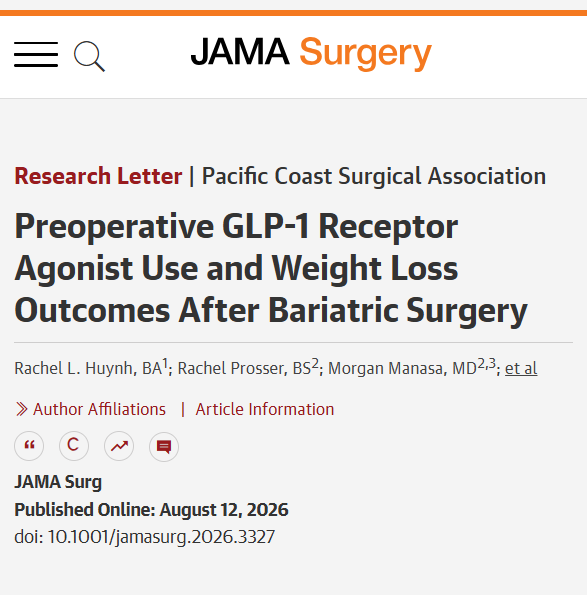
Preoperative #GLP1 receptor agonist use was not associated with greater 12-month weight loss after #BariatricSurgery, and postoperative outcomes were similar to those of patients not taking these medications.
https://t.co/wh7lV95Rgk
New—Efficacy and safety of once-weekly semaglutide 2·4 mg in Chinese adults with #overweight or #obesity (STEP 12): a randomised, double-blind, placebo-controlled, multicentre, phase 3b trial https://t.co/BtnwWNr0KX
#STEP 12
💬 Editorial by JAMA Executive Managing Editor Annette Flanagin, RN, MA, @JAMAplusAI Editor in Chief, Roy Perlis, MD, MSc, JAMA and JAMA Network Editor in Chief Kirsten Bibbins-Domingo, PhD, MD, MAS:
Updated JAMA Network guidance on use of #AI in medical publication permits some uses by authors with disclosure, including manuscript preparation, translation, literature search, and research reporting, while reaffirming that authors are responsible for the accuracy and integrity of all submitted content.
The guidance does not permit use of #AI to draft Opinion manuscripts, Letters to the Editor, or online Comments.
🔗 Read the editorial: https://t.co/ouKcQpXZo2