A photograph of Malcolm X's mother, Louise Norton Little (1897-1989).
Louise Little was a brilliant woman, speaking multiple languages, and for years, along with her husband Earl Little, a dedicated activist of Marcus Garvey's Pan-African Movement (Universal Negro Improvement Association and African Communities League).
Louise Norton Little (1897-1989) was a Grenadian-born American activist and the mother of Malcolm X. Here are some key facts about her life.
- Born in Grenada to a former slave from Nigeria and a Scotsman
- Raised by her grandparents in Grenada
- Immigrated to Canada in 1917 and joined the UNIA (Universal Negro Improvement Association)
- Met her husband Earl Little at a UNIA meeting in Montreal and married in 1919
- Had eight children with Earl, including Malcolm X
- Was a Garveyite activist who taught her children about black pride and self-reliance
- Was committed to a mental institution for 24 years and released in 1963 with the help of her children
- Lived with her family in Grand Rapids, Michigan, until her death in 1989 at the age of 91 or 95
"Sometimes a fruit falls from a tree and rolls so far away from its roots that it's no longer of the tree. The hard fall, and long journey, bruises the fruit so much that it totally changes it. Its the same way for some of our people. This is why some cant be awakened regardless
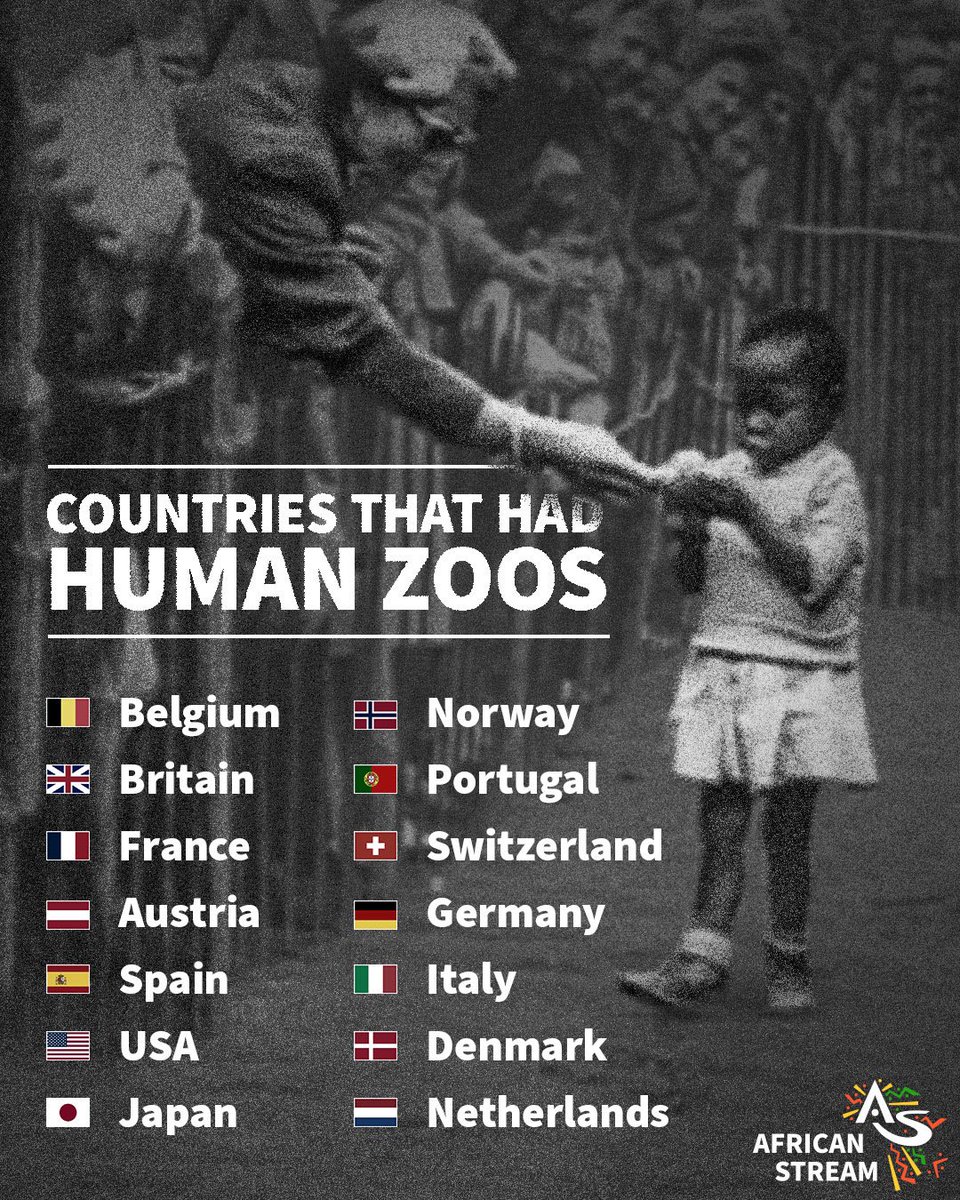
Human zoos in the West were a feature of colonialism. They fed a fascination for exotic lands and a grotesque pseudo-science that focussed on the physiology of so-called ‘savages’. Africans were exhibited in primitive settings for the enjoyment of spectators at trade fairs and travelling shows, helping legitimise the domination of ‘lesser’ beings by supposedly ‘superior’ Western civilisations.
One famous ‘exhibit’ was Saartjie Baartman, who was also known as Sarah Bartmann. She was a South African woman who attracted crowds due to a genetic condition (steatopygia), resulting in a highly protruded posterior. She was shipped to London in 1810 and spent most of her life on display. In 2002, her remains were repatriated and buried in South Africa. Another infamous exhibition was unveiled at the 1958 World Expo in Brussels, Belgium. It featured Congolese people in their mocked-up ‘village’ at the venue.
Awareness of the foul, dehumanising practice is slowly being raised. A Paris exhibition in 2011 called “Inventing the Savage” showed how human zoos laid the foundations for racism against Africans. It was the brainchild of the former French footballer, Liliane Thuram, whose Caribbean family suffered under slavery. Though human zoos do not exist anymore, the effects of colonisation and exploitation of coloured people persist to this day. That’s why we’ll keep posting about them.
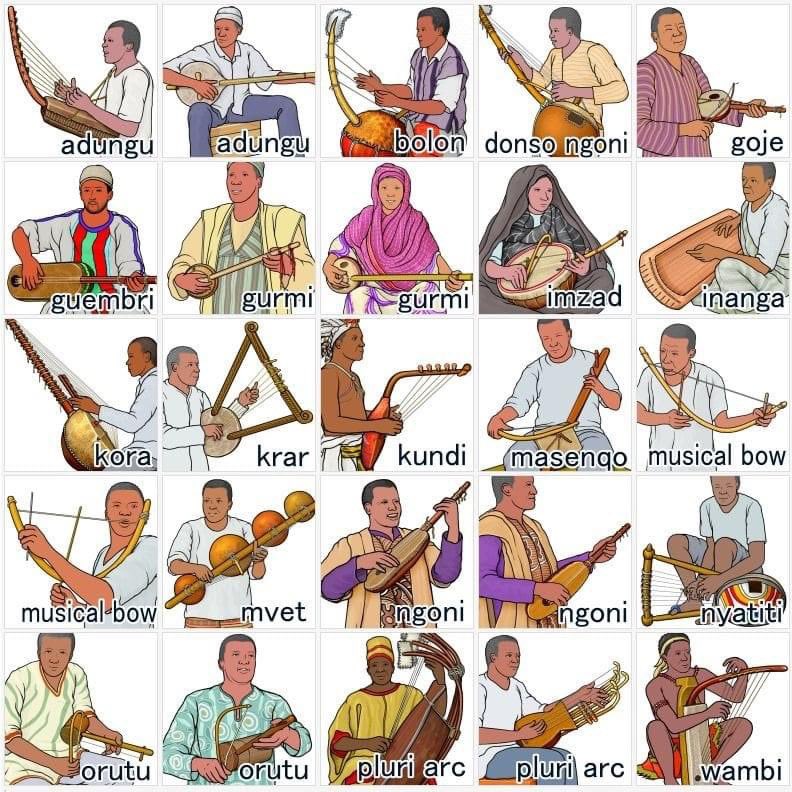
AFRICAN STRINGED INSTRUMENTS
The richness of African musical styles is matched only by the continent’s enormous variety of musical instruments. While most instruments in Africa serve roles that go beyond simple entertainment, stringed instruments in particular have long played a role in maintaining oral traditions, preserving genealogies, and accompanying religious and ritual ceremonies. Although there are hundreds of different types of stringed instruments across the continent, they can broadly be divided into into bowed (fiddles), plucked (harps, lutes, zithers, harp-lutes, harp-zithers) and beaten (musical bows, earth-bows) types.
The kora, the long-necked harp lute of the Mandinka people, is by far the most well known in the West, and since the 1970s its ethereal sound has conquered the global stage. The orutu is one of many bowed string instruments played across Africa. By far the most common is the goje or “Hausa Violin” and its many variations, a one or two stringed fiddle traditionally tied to pre-Islamic rituals in the Sahel and Sudan. Lutes are found in many different parts of Africa. Lyres are most typical of northeastern Africa, both as traditional instruments and in their updated, “modernized” versions. The krar (a five-or-six stringed bowl-shaped lyre tuned to the pentatonic scale) for example is still commonly played by traditional storytellers.
Zithers are another instrument with plucked strings but, unlike the lute, they have no neck. Different types of zither can be found in various parts of Africa, but are by far most common in Madagascar, where the valiha tube zither, constructed with 21 and 24 strings made by unwound bicycle brake cable tied through nails, running the length of a long bamboo pole, is considered a national instrument.
Many stringed instruments across Africa play specific social roles: some serve ritual or religious purposes, while others can only be played by people of a certain age, sex, or status. In the Luo community from Western Kenya for example only men are traditionally allowed to play the orutu, while among Moorish griots of Mauritania the ardine is only played by women. But music is living and breathing, sounds are constantly evolving and traditions are being challenged. In Kenya Labdi Ommes has taken up the orutu, combining it with electronic music and jazz, and exposing a whole new generation to this traditional instrument. And while some ancient string instruments have been lost, others are being “rediscovered” by younger generations, modernized and incorporated into different genres.
Citation
African musical instruments". Contemporary African Art #Africa
The fake Kenyan 🇰🇪 lawyer, Brian, who won 26 cases before he was arrested. After he was arrested and presented to court, he represented himself and won the case. He is now a free man
Your Comments on this...
The San people of the Kalahari Desert in Namibia 🇳🇦 communicate through a unique and ancient language characterized by its distinctive click consonants, reflecting their rich cultural heritage and deep connection to their land.
The first ever human language begin with the click sound. It’s popular among the Khoi, San and Pygmies of Africa and other ancient languages.
The latest linguistic work points to clicks as having deep roots, originating at the limits of linguistic analysis sometime earlier than 10,000 years ago, and genetic data suggest that click-speaking populations go back to a common ancestor perhaps 50,000 or more years ago. #Africa
🎥 bagatelle_kalahari