Since the death of Twitter this platform has never been the same, especially since Elon Musk is using it solely to propagate his own disgusting, devisive opinions.
Good Luck America with your new President elect.
I bid you all farewell.
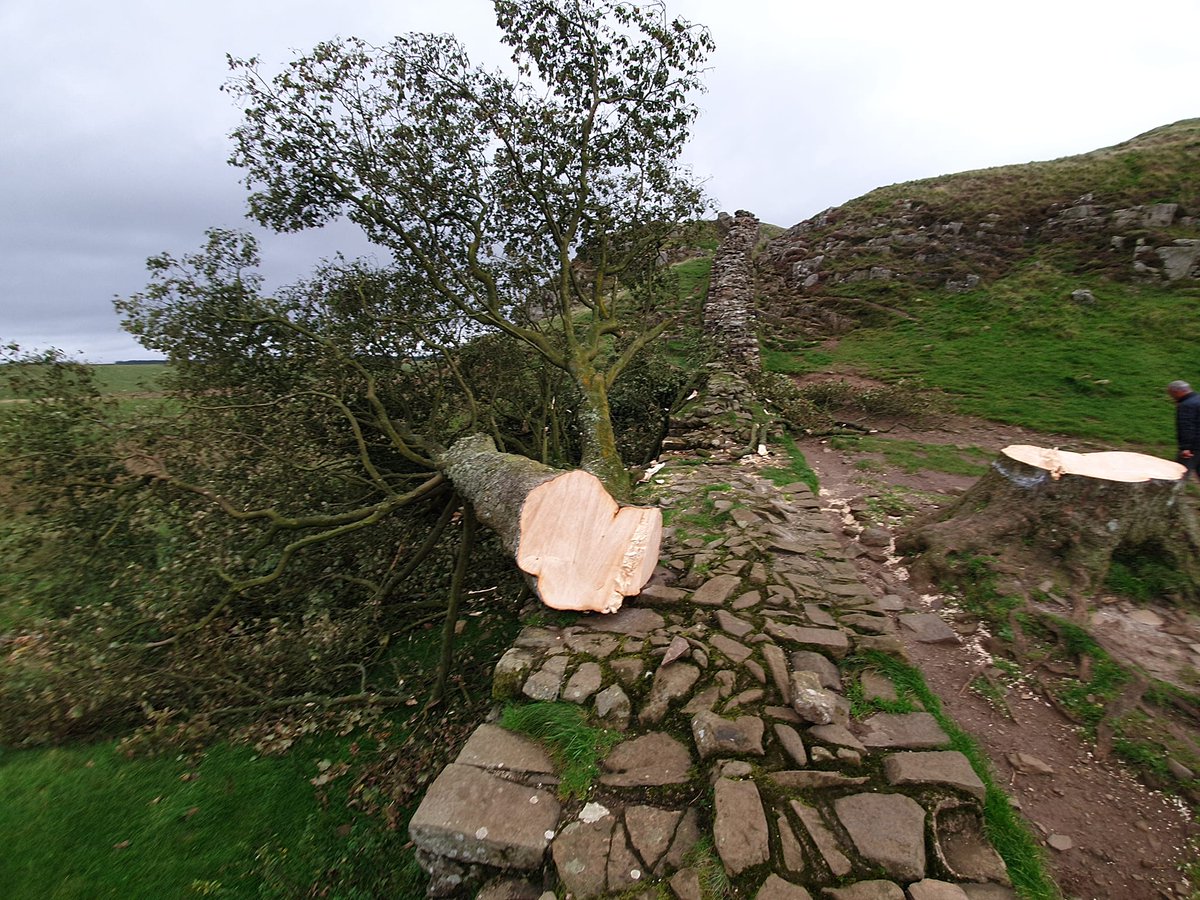
The iconic Sycamore Gap tree on Hadrian's Wall Path in Northumberland has been felled overnight.
We're waiting more information on this.
Pics - Amanda Marks, Author, Facebook.
We are shocked and desperately saddened to learn that the famous Sycamore Gap tree at Hadrian's Wall has been felled overnight, in what appears to be an act of vandalism.
We know just how much this iconic tree is loved locally, nationally and by everyone who has visited.
We are working with our partners to understand what has happened and what can be done.
The incident has also been reported to the police.
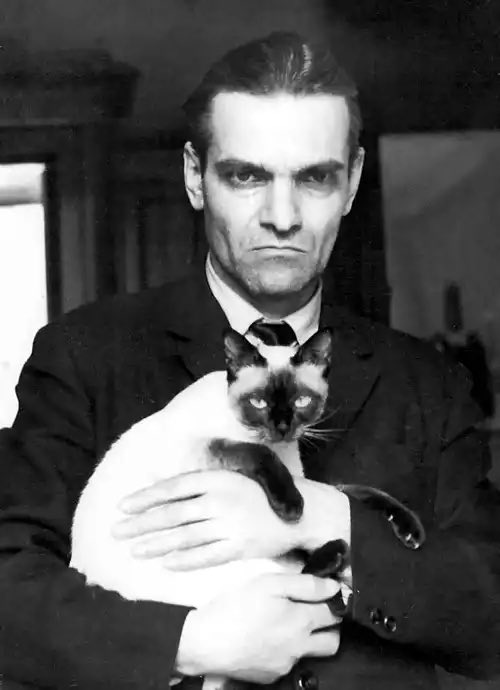
Yuri Knorozov was a Soviet linguist who deciphered the Mayan script in 1953. He had a habit of listing his Siamese cat Asya as a co-author to many of his works; however, his editors would always remove her. Knorozov would also use this photo with Asya as his official author photo and would get upset whenever his editors would crop her out.
Deciphering the Mayan script was extremely challenging because there was no Rosetta Stone to provide translations into other languages. The only clues that remained were from Mayan stelae (stone monuments) that were scattered throughout several different ruins.
Knorozov worked in isolation in the Soviet Union and was able to make major advancements without ever stepping foot in Central America. His breakthrough was rejecting the notion that the Maya glyphs were based on an alphabet but rather a syllabary (a set of written characters representing syllables).
When Knorozov published his work, he was attacked and dismissed by several prominent academics, most notably, J. Eric S. Thompson, a British scholar who believed that the Mayan script was anti-phonetic and based on ideographic principles. It also did not help that Knorozov published his research during the height of the Cold War when Western scholars were quick to dismiss the works of Soviet scholars as being tainted by Marxist ideology.
It took decades for Knorozov to finally receive the recognition he deserved. One of Knorozov's earliest supporters was an American Anthropology professor at Yale by the name of Michael D. Coe who would later go on to write, "Yuri Knorozov, a man who was far removed from the Western scientific establishment and who, prior to the late 1980s, never saw a Mayan ruin nor touched a real Mayan inscription, had nevertheless, against all odds, made possible the modern decipherment of Maya hieroglyphic writing."