Over 100 days of internet blackout in Rawalakot and Sudhnoti, with casualty figures still contested. Information blackouts don't just hide violence, they make it unverifiable.
🚨 RAWALAKOT: 112 DAYS OF BLACKOUT WHAT IS BEING KEPT IN THE DARK?
A video reportedly from Drek, Rawalakot, has surfaced amid competing accounts of killings, mass arrests and a security crackdown in Pakistan-administered Jammu & Kashmir.
The information blackout is not speculation: mobile data and broadband services were suspended across AJK on June 5, and as of September 14, internet services remained suspended across Rawalakot and Sudhnoti, with only limited institutional exceptions.
The crisis has already produced sharply conflicting casualty figures. Al Jazeera reported at least 11 deaths during the June clashes, while a later human-rights report claimed 75 civilian deaths since June 5. Those figures remain contested and require independent verification.
Meanwhile, arrests, clashes and prolonged restrictions have made independent documentation increasingly difficult.
The footage may be dated.
But the bigger question remains:
When a region goes dark for months, who gets to control the story and what happens beyond the reach of cameras?
🚨 راولاکوٹ: 112 دن کا بلیک آؤٹ آخر کیا چھپایا جا رہا ہے؟
راولاکوٹ کے ڈریک علاقے کی ایک مبینہ ویڈیو سامنے آئی ہے، جس کے دوران پاکستان کے زیرِ انتظام جموں و کشمیر میں ہلاکتوں، بڑے پیمانے پر گرفتاریوں اور سکیورٹی کریک ڈاؤن کے حوالے سے متضاد دعوے سامنے آ رہے ہیں۔
یہ معلوماتی بلیک آؤٹ محض ایک دعویٰ نہیں۔ 5 جون کو پورے AJK میں موبائل ڈیٹا اور براڈبینڈ سروسز معطل کی گئی تھیں، جبکہ 14 ستمبر تک راولاکوٹ اور سدھنوتی میں انٹرنیٹ سروسز بدستور معطل تھیں، صرف محدود ادارہ جاتی استثنیٰ کے ساتھ۔
اس بحران میں ہلاکتوں کے اعداد و شمار بھی متضاد رہے ہیں۔ الجزیرہ نے جون کے تصادم کے دوران کم از کم 11 ہلاکتوں کی رپورٹ دی، جبکہ بعد کی ایک انسانی حقوق کی رپورٹ میں 5 جون کے بعد 75 شہری ہلاکتوں کا دعویٰ کیا گیا۔ یہ اعداد و شمار متنازع ہیں اور آزادانہ تصدیق کے محتاج ہیں۔
دریں اثنا، گرفتاریاں، جھڑپیں اور طویل انٹرنیٹ پابندیاں آزادانہ طور پر معلومات اور واقعات کی دستاویز بندی کو مزید مشکل بنا رہی ہیں۔
ویڈیو پرانی ہو سکتی ہے۔
لیکن بڑا سوال اب بھی وہی ہے: جب ایک پورا خطہ مہینوں کے لیے اندھیرے میں چلا جائے، تو کہانی پر کنٹرول کس کا رہتا ہے اور کیمروں کی نظروں سے اوجھل کیا کچھ ہوتا ہے؟
#Kashmir #Drek #Sudhnoti #DigitalBlackout #FreedomOfInformation #KashmirNews #GroundReport #Accountability #DocumentTheTruth
It's hard to watch what's happening in Azad Kashmir right now. A movement that started over basic rights and economic grievances has been met with roadblocks, mass troop deployments & arrests. Whatever side you're on, the human toll on the ground is real and shouldn't be ignored.
Worth reading in full. Pakistan's blasphemy laws and weak enforcement against mob violence have created real, documented harm for religious minorities. This deserves more attention.
🇵🇰 PAKISTAN’S RELIGIOUS FREEDOM CRISIS: WHEN FAITH BECOMES A TARGET
The question is no longer whether religious minorities face discrimination in Pakistan.
The evidence is already overwhelming.
Shia Muslims. Ahmadis. Christians. Hindus. Sikhs. And other religious minorities all have faced different forms of discrimination, persecution, violence, or restrictions.
And the most disturbing part is that this is not simply about isolated incidents.
It is about a system in which discriminatory laws, extremist rhetoric, mob violence and weak accountability can reinforce one another.
Pakistan’s blasphemy laws have repeatedly been used as a pretext for violence. Human Rights Watch reported that in 2025, authorities continued enforcing blasphemy provisions that left religious minorities vulnerable to arbitrary arrest and prosecution, while dozens of mob and vigilante attacks in recent years had gone without adequate accountability.
Even more explosive: Pakistan’s own National Commission for Human Rights reportedly identified at least 450 people falsely charged with blasphemy through an organized scheme of blackmail and extortion.
This is what happens when an accusation becomes more powerful than evidence.
▪︎ A person can be accused.
▪︎ A crowd can gather.
▪︎ A place of worship can be attacked.
▪︎ A house can be burned.
And before a court even establishes guilt, the mob can become judge, jury and executioner.
The victims are not limited to one community.
USCIRF has documented attacks targeting Ahmadiyya Muslims, Hindus and Christians, alongside broader restrictions affecting religious freedom. It has also highlighted forced conversions and mob violence against minorities.
Human Rights Watch has documented attacks on Christians, including the 2023 Jaranwala violence, when a mob attacked a Christian settlement after blasphemy allegations, damaging churches, homes and a cemetery.
Ahmadis face another layer of discrimination: Pakistan’s legal framework specifically criminalises aspects of their religious identity and practice. In 2025, Human Rights Watch documented the killing of an Ahmadi man by a mob and the killing of an Ahmadi doctor.
And Shia Muslims have also repeatedly faced sectarian violence and extremist attacks.
So the uncomfortable question is:
▪︎ How can a country claim religious harmony when entire communities can be targeted because of what they believe, how they worship, or what others accuse them of believing?
▪︎ And what happens when children grow up seeing mobs attack people in the name of religion?
▪︎ What happens when violence becomes spectacle?
▪︎ What happens when extremists learn that intimidation works and accountability does not?
This is not an attack on ordinary Pakistanis.
It is an indictment of extremism, discriminatory legislation, institutional failure and the normalisation of mob justice.
Religion should never determine who deserves protection under the law.
▪︎ A Christian should not fear a false accusation.
▪︎ A Hindu should not fear losing their home or place of worship.
▪︎ A Sikh should not have to prove their loyalty.
▪︎ A Shia should not fear sectarian hatred.
An Ahmadi should not be criminalised for their religious identity.
And nobody Muslim or non-Muslim should be beaten to death because a mob decided that accusation was enough.
A peaceful society is not measured by how loudly it calls itself tolerant.
It is measured by whether the weakest person, including a religious minority can stand before the law and know that the law will protect them from the mob.
Until that principle is guaranteed, slogans about religious harmony remain just slogans.
▪︎ No faith justifies lynching.
▪︎ No accusation replaces evidence.
▪︎ No mob replaces a court.
And no state should tolerate persecution in the name of religion.
#Pakistan #ReligiousFreedom #MinorityRights #HumanRights #BlasphemyLaws #MobViolence #ReligiousExtremism #Christians #Hindus #Shia #Ahmadiyya #Sikhs #RuleOfLaw
@burhan_uddin_0 Amnesty International has already documented Pakistan's excessive use of force against PoJK protesters and condemned the crackdown on JAAC. This isn't just claims, international rights bodies are on record.
@burhan_uddin_0 Whatever the full picture turns out to be, human rights abuses in conflict zones deserve real scrutiny and accountability, not just viral claims.
25 years since 9/11, 2,977 lives we should never stop honoring.
One thing still worth reflecting on bin Laden spent his final years in Abbottabad, not far from Pakistan's military academy.
Whether that reflects a genuine intelligence failure or something more remains disputed?
@burhan_uddin_0 Do we know if this expulsion order applies only to these 20 or if it signals a broader crackdown on Afghan students across other universities too?
@SophiaHoffman90@UNGeneva@amnesty Its hard to look at and impossible to look away from. What strikes me is that they're not just mourning,they're demanding to be seen, holding those photos up themselves. That takes courage most adults don't have. Following your work, will keep sharing.
@PakRealityCheck This isn't isolated,its a pattern. Minority communities report hundreds of abduction/coversions every year. "SAFE DESTINATION" starts to look like marketing over reality.
India's strategic influence is increasingly being tested against its capacity to deliver reliable defence capabilities.
Can India turn its economic and diplomatic weight into an industrial system capable of reliably producing sophisticated weapons at scale?
India needs to urgently move out of the Bollywood version of its rise and confront the credibility problem emerging around its defence-industrial sector.
India’s problem is increasingly one of strategic credibility rather than simply military capability. New Delhi has spent years projecting itself as the indispensable power that can sit simultaneously with Washington, Moscow, the Quad, BRICS and the SCO, but the returns from that positioning are becoming harder to demonstrate, while Pakistan is building tangible security relationships around actual defence cooperation.
Pakistan’s JF-17 export relationship with Azerbaijan is already contractual, with the reported 40-aircraft package valued at about $2 billion in the 2025 confirmation, while Sudan has been reported as moving toward a $1.5 billion Pakistani defence package; at the same time, Pakistan is deepening defence coordination with Saudi Arabia and Türkiye and expanding military relationships beyond its traditional partners.
India’s Tejas problem compounds this because production delays, engine constraints and delivery backlogs have already been identified as credibility issues, while the Dubai crash damaged the aircraft’s export narrative.
The Estonia ammunition controversy now adds another procurement credibility issue involving an Indian-linked company, with Estonia’s defence minister resigning amid the fallout.
India’s political narrative is currently running ahead of its demonstrated ability to convert diplomatic access into dependable defence outcomes.
Pakistan’s SCO presidency and the Makkah Defence Alliance make this more consequential because Pakistan is gaining institutional access and defence relationships at the same time.
India needs to stop treating foreign-policy positioning as proof of strategic weight; buyers, partners and militaries ultimately judge reliability through contracts delivered, platforms that perform, supply chains that work and commitments that survive political pressure.
The problem is therefore bigger than one company or one contract. India needs to close the gap between its political messaging and its demonstrated industrial performance, because international defence markets ultimately judge suppliers through contracts fulfilled, equipment accepted, delivery schedules met and failures transparently corrected.
When people are suffering and express that suffering as anger or protest, it's easy for those in power to focus only on the anger itself, calling it "unrest," "aggression," or "troublemaking" instead of asking why the anger exists in the first place.
I don’t believe anyone should celebrate violence. But you shouldn't dismiss the suffering of an entire population just because their anger makes authorities uncomfortable. The Baloch people deserve the same dignity, justice & freedom that every society claims to protect.
@UN_HRC
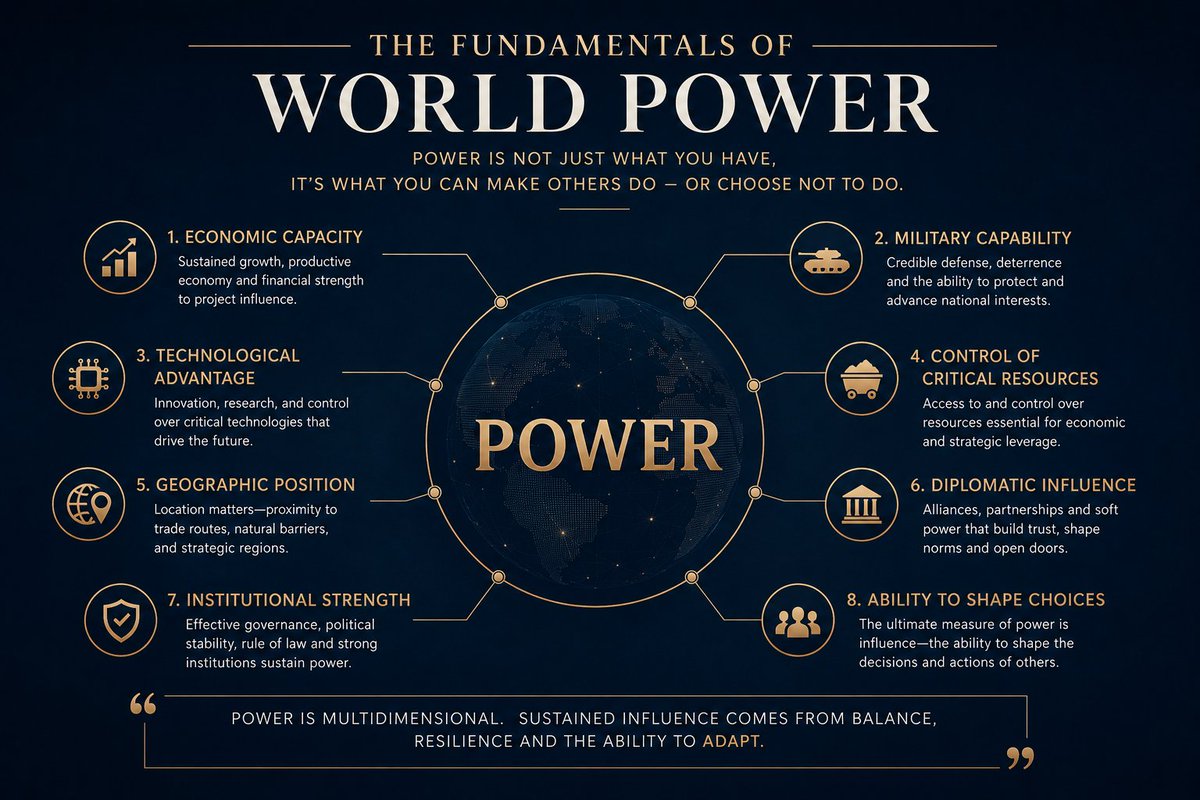
What makes a state powerful?
Not military strength alone.
Economic capacity, technology, resources, geography, institutions and diplomacy all shape a state's ability to influence the choices of others.
Power is multidimensional.
PAKISTAN’S “BAN” ON TERROR NOW WITH FRESH MARBLE
Nearly 15 months after India’s Operation Sindoor struck Markaz Subhanallah in Bahawalpur on 7 May 2025, new visuals reportedly show Jaish-e-Mohammed’s principal complex extensively rebuilt and apparently operational again.
This is not some unknown outfit hiding in a cave.
▪️ JeM has remained on the UN sanctions list since 17 October 2001.
▪️ Pakistan formally banned the organisation in 2002.
▪️ Yet its Bahawalpur complex has reportedly returned in plain sight with fresh plaster, paint and polished marble.
▪️ Damaged domes have reportedly been restored and impact craters inside the central hall filled.
▪️ New construction has reportedly appeared around Madrasa Al-Sabir and residential quarters associated with JeM commanders.
Most damningly, intelligence inputs cited by NDTV allege that Pakistan’s establishment provided PKR 25 crore through cash instalments, including approximately PKR 11 crore for rebuilding the central hall.
That allegation requires independent verification but Islamabad must answer:
▪︎》Who supplied the money?
▪︎》Who permitted the construction?
▪︎》Who protected the site?
And how does a formally banned organisation rebuild such a prominent compound without the state noticing?
A government genuinely fighting terrorism would seal the facility, prosecute its leadership and disclose the entire financial trail. It would not allow a UN-listed organisation’s headquarters to receive a luxury makeover.
Pakistan’s counterterrorism script is painfully familiar:
📄 On paper—BANNED.
🎙️ At the podium—DENIED.
🏗️ On the ground—REBUILT.
Fresh marble cannot whitewash a history of terrorism.
Operation Sindoor damaged the walls; the alleged ecosystem of money, protection and patronage appears to have raised them again.
By rebuilding the same compound, Pakistan has not erased the warning it has merely repainted the target.
دہشت گردی پر پاکستان کی “پابندی” اب نئے سنگِ مرمر کے ساتھ!
7 مئی 2025 کو آپریشن سندور میں نشانہ بنائے جانے کے تقریباً 15 ماہ بعد، نئی تصاویر سے مبینہ طور پر ظاہر ہوتا ہے کہ بہاولپور میں جیشِ محمد کا مرکز سبحان اللہ بڑے پیمانے پر دوبارہ تعمیر ہوچکا ہے اور بظاہر پھر سے فعال ہے۔
یہ کسی پہاڑی غار میں چھپی ہوئی غیر معروف تنظیم نہیں۔
▪️ جیشِ محمد 17 اکتوبر 2001 سے اقوامِ متحدہ کی پابندیوں کی فہرست میں شامل ہے۔
▪️ پاکستان نے 2002 میں اس تنظیم پر باضابطہ پابندی لگائی تھی۔
▪️ اس کے باوجود بہاولپور کا مرکزی کمپلیکس مبینہ طور پر نئے پلستر، رنگ اور چمکتے سنگِ مرمر کے ساتھ دوبارہ کھڑا کردیا گیا۔
▪️ متاثرہ گنبد بحال اور مرکزی ہال میں میزائل حملوں سے بننے والے گڑھے مبینہ طور پر بھر دیے گئے۔
▪️ مدرسہ الصابر اور جیش کمانڈروں سے منسلک رہائشی حصوں کے اطراف بھی نئی تعمیرات کی اطلاعات ہیں۔
سب سے سنگین الزام یہ ہے کہ NDTV کی رپورٹ میں انٹیلی جنس معلومات کے حوالے سے دعویٰ کیا گیا ہے کہ پاکستانی اسٹیبلشمنٹ نے نقد اقساط میں 25 کروڑ پاکستانی روپے فراہم کیے، جن میں سے تقریباً 11 کروڑ صرف مرکزی ہال کی تعمیرِ نو پر خرچ ہوئے۔
یہ دعویٰ آزادانہ تصدیق کا تقاضا کرتا ہے، مگر اسلام آباد کو جواب دینا ہوگا:
رقم کس نے دی؟
تعمیر کی اجازت کس نے دی؟
مرکز کو تحفظ کس نے فراہم کیا؟
اور ایک کالعدم تنظیم اتنا نمایاں کمپلیکس ریاست کی نظروں سے پوشیدہ رہ کر کیسے تعمیر کرسکتی ہے؟
دہشت گردی سے حقیقی جنگ کرنے والی ریاست ایسے مرکز کو سیل کرتی، قیادت کو گرفتار کرتی اور مکمل مالی ریکارڈ سامنے لاتی اسے نیا سنگِ مرمر لگا کر دوبارہ تیار نہیں ہونے دیتی۔
پاکستان کا انسدادِ دہشت گردی کا پرانا کھیل پھر بے نقاب ہے:
📄 کاغذوں میں—کالعدم
🎙️ تقریروں میں—انکار
🏗️ زمین پر—دوبارہ تعمیر
نیا سنگِ مرمر دہشت گردی کی خون آلود تاریخ کو سفید نہیں کرسکتا۔
آپریشن سندور نے دیواروں کو نقصان پہنچایا تھا، مگر مبینہ سرپرستی، سرمایہ اور تحفظ کے نظام نے انہیں دوبارہ کھڑا کردیا۔
اسی مرکز کو دوبارہ تعمیر کرکے پاکستان نے نشانہ مٹایا نہیں صرف اس پر نیا رنگ کردیا ہے۔
#PakistanExposed #JaishEMohammed #OperationSindoor #Bahawalpur #TerrorFinancing
The global balance of power is becoming increasingly difficult to define.
Perhaps the better question isn't who is strongest?
But who can influence whom — and how?
#Geopolitics#InternationalRelations#GlobalSecurity
Pakistan Defence Minister Khwaja Asif exposes his own government:
He admitted that Pakistan illegally occupied parts of J&K and then forced the people of Mirpur and Rawalakot to migrate to the UK.
He even said:
“I don’t even consider the people of Rawalakot to be Kashmiris. They speak Pothohari, not Kashmiri.”
This is how Pakistan treats the people of PoK — first occupies their land, then denies them their identity.
#PoJKExposed #PoKIsNotPakistan #PakistanZulm #PakistanExposed #HumanRightsViolation #StandWithPoK #JusticeForPoK #SouthAsiaNews #BreakingNews
The reported Mecca Agreement between Saudi Arabia, Pakistan and Turkey could reshape the regional security landscape, but is it really a “Muslim NATO”? In my latest for Eurasia Review, I look beyond the symbolism at the harder questions: Does it create binding mutual-defence obligations? How does Turkey reconcile it with NATO? Who is it meant to deter? And would the three actually fight for one another in a crisis? Its significance will ultimately depend not on the rhetoric, but on the commitments its members are prepared to honour.
The Mecca Agreement: Can Symbolism Become A Strategic Alliance? – OpEd https://t.co/n29uRA7UAK
🚨 THE LeT–PAKISTAN ARMY NEXUS: AN INSIDER SAYS THE QUIET PART OUT LOUD 🇵🇰
In a newly circulating video, Saifullah Kasuri described as Lashkar-e-Taiba’s deputy chief claims that LeT founder Hafiz Saeed has secretly met senior Pakistan Army officers for nearly 40 years, advising them on how Pakistan should be governed.
Read that again.
A senior figure from a UN-listed terrorist organization is not alleging surveillance, raids or confrontation. He is claiming consultation four decades of access between a sanctioned extremist leader and the generals who portray themselves as guardians of the state.
●》And this is not Kasuri’s first revealing boast:
▪️ In January 2026, he reportedly claimed that the Pakistan Army sends him invitations to military events and asks him to lead funeral prayers for its soldiers.
▪️ Lashkar-e-Taiba remains on the UN sanctions list; Hafiz Saeed has been individually listed since December 2008.
▪️ A US Congressional Research Service report previously described LeT as having long-standing ties with the ISI.
Meanwhile, ordinary Pakistanis are paying the price:
▪️ 25.1 million children aged 5–16 are out of school 35% of the entire age group.
▪️ Pakistan’s public debt reached Rs 83.285 trillion by March 2026.
▪️ The World Bank estimated national poverty at approximately 22.5% in FY2025 more than one in every five citizens.
Perhaps this is Pakistan’s “hybrid governance” in its most honest form:
Generals set the stage.
Jihadists write the script.
Politicians recite the lines.
And the public pays the bill.
Schools can wait. Jobs can wait. Healthcare can wait. Justice can wait.
But the terror establishment always gets an appointment.
If Kasuri’s claim is true, it demands serious international scrutiny. If it is false, Islamabad must explain why a senior LeT leader can publicly advertise decades of intimate access to Pakistan’s military leadership without fear or consequence.
Pakistan does not merely have a terrorism problem.
According to its own militant insiders, terrorism has been given a seat at the governing table.
🚨 لشکرِ طیبہ پاک فوج گٹھ جوڑ: اندر کے آدمی نے چھپا ہوا راز زبان پر لے آیا 🇵🇰
سوشل میڈیا پر گردش کرنے والی ایک نئی ویڈیو میں لشکرِ طیبہ کے نائب سربراہ سیف اللہ قصوری کا دعویٰ ہے کہ حافظ سعید گزشتہ تقریباً 40 برس سے پاک فوج کے اعلیٰ افسران کے ساتھ خفیہ ملاقاتیں کرکے انہیں پاکستان چلانے کے “مشورے” دیتا رہا ہے۔
ذرا دوبارہ پڑھیے۔
اقوامِ متحدہ کی فہرست میں شامل ایک دہشت گرد تنظیم کا اعلیٰ عہدیدار نگرانی، چھاپوں یا گرفتاریوں کی شکایت نہیں کر رہا وہ مشاورت کا دعویٰ کررہا ہے۔
یعنی ایک عالمی پابندیوں میں شامل شدت پسند رہنما اور خود کو ریاست کا محافظ کہنے والے جرنیل، مبینہ طور پر چار دہائیوں سے ایک ہی میز پر بیٹھتے رہے۔
اور قصوری کا یہ پہلا انکشاف نہیں:
▪️ جنوری 2026 میں اس نے مبینہ طور پر دعویٰ کیا کہ پاک فوج اسے اپنی تقریبات میں باقاعدہ دعوت دیتی اور فوجیوں کی نمازِ جنازہ پڑھانے کے لیے بلاتی ہے۔
▪️ لشکرِ طیبہ آج بھی اقوامِ متحدہ کی پابندیوں والی فہرست میں شامل ہے، جبکہ حافظ سعید دسمبر 2008 سے انفرادی طور پر فہرست میں موجود ہے۔
▪️ امریکی کانگریشنل ریسرچ سروس کی ایک رپورٹ لشکرِ طیبہ اور آئی ایس آئی کے تعلقات کو دیرینہ قرار دے چکی ہے۔
دوسری جانب پاکستانی عوام کی حالت دیکھیے:
▪️ 5 سے 16 سال کی عمر کے 2 کروڑ 51 لاکھ بچے اسکولوں سے باہر ہیں اس عمر کے بچوں کا 35 فیصد۔
▪️ مارچ 2026 تک پاکستان کا سرکاری قرض 83.285 ٹریلین روپے تک پہنچ چکا تھا۔
▪️ عالمی بینک نے مالی سال 2025 میں قومی غربت کی شرح تقریباً 22.5 فیصد بتائی یعنی ہر پانچ میں سے ایک سے زیادہ پاکستانی غربت کا شکار۔
شاید پاکستان کا اصل “ہائبرڈ نظام” یہی ہے:
جرنیل اسٹیج لگاتے ہیں،
جہادی اسکرپٹ لکھتے ہیں،
سیاست دان مکالمے پڑھتے ہیں،
اور قیمت عوام ادا کرتے ہیں۔
اسکول انتظار کرسکتے ہیں۔ روزگار انتظار کرسکتا ہے۔ علاج اور انصاف انتظار کرسکتے ہیں۔
مگر دہشت گردی کی صنعت کو ہمیشہ فوری ملاقات مل جاتی ہے۔
اگر قصوری کا دعویٰ درست ہے تو یہ عالمی تحقیقات کا تقاضا کرتا ہے۔ اگر جھوٹا ہے تو اسلام آباد بتائے کہ لشکرِ طیبہ کا ایک اعلیٰ رہنما فوجی قیادت سے چار دہائیوں کی قربت کا دعویٰ کھلے عام، بلاخوف اور بلااحتساب کیسے کرسکتا ہے؟
پاکستان کو صرف دہشت گردی کا مسئلہ درپیش نہیں۔
اس کے اپنے شدت پسند عہدیدار دعویٰ کررہے ہیں کہ دہشت گردی کو حکمرانی کی میز پر باقاعدہ نشست حاصل ہے۔
#PakistanExposed #LashkarETaiba #HafizSaeed #PakistanArmy #ISI #TerrorNexus