@farzanaalispark This is deeply sad and heartbreaking, and it deserves the strongest condemnation. It is a consequence of the Pakistani state and ruling elites’ involvement in the US-led imperialist war and the colonisation of Afghanistan.
افغانستان کے یہ خواتین طالبات برسوں سے پاکستان میں میڈیکل کی تعلیم حاصل کر رہی ہیں تو انہیں چند گھنٹوں میں ہاسٹل خالی کرنے پر مجبور کرنا ناانصافی ہے۔ حکومتوں کے اختلافات اپنی جگہ، مگر طالب علموں کے مستقبل کو سیاست کی بھینٹ نہیں چڑھانا چاہیے۔ انہیں اپنی تعلیم اور ڈگری مکمل کرنے کا پورا موقع دیا جائے
https://t.co/3EZVUolH6L marks the 25th year since the September 11, 2001, terrorist attacks. Those attacks were utilised to advance long-standing plans that had already been prepared and were awaiting a suitable pretext, which 9/11 provided—a tragedy that transformed global politics and was used to justify wars whose consequences are still being felt.
All of this happened under the watch of the US security apparatus, facilitated Al Qaeda operatives’ entry into the country and their attendance at flight-training schools. The founder of Al Qaeda, Osama bin Laden, a Saudi multimillionaire, had previously received US support through the CIA as part of its efforts to build an anti-Soviet paramilitary force in Afghanistan and Pakistan and to provoke the Soviet Union into intervening in Afghanistan following the 1979 Soviet invasion. The goal, in the words of Zbigniew Brzezinski, National Security Advisor to Democratic President Jimmy Carter, was to give the USSR “its Vietnam.”
The September 11 attacks were subsequently invoked by the Bush administration as the basis for invading Afghanistan, where Osama bin Laden had established his main base. This barbarous attack was launched against one of the world’s poorest country, already shattered by decades of war, poverty, displacement, and civil conflict. However, a 20-year colonial occupation and war ultimately resulted in a debacle that ended with the return of the Taliban to power in 2021.
The human cost was catastrophic. Hundreds of thousands of people died directly and indirectly as a consequence of the war, while generations of Afghans were left to live with destruction, displacement, poverty, and trauma. Thousands of American and allied military personnel also lost their lives.
Pakistan, too, paid an enormous price. The war spilled across the border, particularly into Khyber Pakhtunkhwa and the former tribal areas, bringing terrorism, military operations, displacement, economic devastation, and the loss of thousands of Pakistani lives. Its consequences did not remain confined to the border regions; they reverberated throughout the country.
Did twenty years of military intervention bring peace to Afghanistan? Did the “War on Terror” eliminate terrorism? Did it strengthen democracy and human rights—or did it also provide justification for authoritarianism, repression, militarisation, and the erosion of civil liberties?
For millions of people across Afghanistan and Pakistan, the answer is painfully clear: the promised peace never arrived. Instead, the region was drawn further into inter-imperialist rivalries and wars.
American imperialism is playing an increasingly aggressive role in a third world war that is accelerating rapidly and threatens the very survival of humanity. Thirty-five years of uninterrupted US wars of aggression have metastasised into a world war with interlocking fronts: from the war in Ukraine and the confrontation with Russia, to Trump’s war of extermination against Iran, aimed at reorganising the Middle East, and to the advanced preparations for war with China in the Asia-Pacific.
Youth, workers, and intellectuals must draw lessons from this quarter-century of wars, as well as from the First and Second World Wars: imperialism, which is the highest stage of capitalism, can provide humanity with nothing but hunger, unemployment, death, and destruction. At the same time, it creates the conditions for an international class struggle —what is needed is the conscious intervention of the working class in the struggle for the revolutionary overthrow of capitalism through an international socialist programme—the reorganisation of economic life to meet human needs rather than private profit.
It is totally unfair and unacceptable. The government’s actions and policies appear to be driven by revenge and the promotion of racial discrimination. Such actions are deeply concerning and must be strongly condemned by students, intellectuals, workers, and all those who stand for justice, equality, and human rights.
It is totally unfair and unacceptable. The government’s actions and policies appear to be driven by revenge and the promotion of racial discrimination. Such actions are deeply concerning and must be strongly condemned by students, intellectuals, workers, and all those who stand for justice, equality, and human rights.
Freedom for Bogdan Syrotiuk!
On August 10, Bogdan Syrotiuk, a 27-year-old Ukrainian socialist and outspoken opponent of the US-NATO war against Russia, was sentenced to 15 years in prison. A district court in the Mykolaiv region also ordered the confiscation of his property and electronic devices and the destruction of the socialist books, leaflets, and programmatic documents seized from him.
I strongly condemn the prosecution and imprisonment of Bogdan Syrotiuk on charges of “high treason.” These charges are, in my view, politically motivated and represent a grave attack on freedom of speech and political expression.
Bogdan’s real “crime” is that he spoke out against war, fascism, and nationalism. He called on Ukrainian and Russian workers to reject the divisions imposed upon them and to unite against the war. For taking this principled anti-war position, he has been subjected to a harsh sentence designed to intimidate and silence those who oppose the war.
This is nothing less than a political prosecution. No government should have the right to imprison a socialist for expressing opposition to war or for advocating international working-class solidarity. The suppression of anti-war voices cannot be justified in the name of national security, patriotism, or any other pretext.
I condemn this attack on Bogdan Syrotiuk and demand his immediate and unconditional release.
I call upon workers, socialists, trade unionists, human-rights defenders, and all opponents of war and political repression to raise their voices in his defense and demand his freedom.
Freedom for Bogdan Syrotiuk! Defend the right to oppose war! Defend freedom of speech and political expression! Workers of Ukraine and Russia—unite against war!
Freedom for Bogdan Syrotiuk!
On August 10, Bogdan Syrotiuk, a 27-year-old Ukrainian socialist and outspoken opponent of the US-NATO war against Russia, was sentenced to 15 years in prison. A district court in the Mykolaiv region also ordered the confiscation of his property and electronic devices and the destruction of the socialist books, leaflets, and programmatic documents seized from him.
I strongly condemn the prosecution and imprisonment of Bogdan Syrotiuk on charges of “high treason.” These charges are, in my view, politically motivated and represent a grave attack on freedom of speech and political expression.
Bogdan’s real “crime” is that he spoke out against war, fascism, and nationalism. He called on Ukrainian and Russian workers to reject the divisions imposed upon them and to unite against the war. For taking this principled anti-war position, he has been subjected to a harsh sentence designed to intimidate and silence those who oppose the war.
This is nothing less than a political prosecution. No government should have the right to imprison a socialist for expressing opposition to war or for advocating international working-class solidarity. The suppression of anti-war voices cannot be justified in the name of national security, patriotism, or any other pretext.
I condemn this attack on Bogdan Syrotiuk and demand his immediate and unconditional release.
I call upon workers, socialists, trade unionists, human-rights defenders, and all opponents of war and political repression to raise their voices in his defense and demand his freedom.
Freedom for Bogdan Syrotiuk! Defend the right to oppose war! Defend freedom of speech and political expression! Workers of Ukraine and Russia—unite against war!
I stand with Razia Sultan, the brave daughter whose powerful message to her father was clear: he must continue the struggle until his last breath. Death cannot silence a just struggle; instead, the sacrifice of those who stand for justice gives the movement greater strength and determination.
I appeal to all workers to strongly condemn Modi’s repressive methods and raise their voices against injustice. We demand a free, fair, and transparent trial, and we call for justice, dignity, and the fundamental rights of all those facing repression.
The tragic loss of 14 infants in a fire at the Mother and Child Health Ward of Islamabad’s PIMS Hospital, in the heart of the federal capital, is a man-made tragedy—the product of the very “rotten capitalist system” that, again and again, manifests its death agony through its failure to move society forward. This incident has also brought to light the highly risky conditions prevailing at health facilities across the country and exposed the callous attitude of the ruling class towards the masses, who themselves prefer to seek treatment abroad. The ruling class has become too frightened of the masses to rule openly through its own parliament.
Among the many other vital gaps in contingency planning for dealing with such emergencies, the most revealing was that the ward was routinely kept locked to prevent the “theft of newborns,” as acknowledged by hospital officials. The fact that such a basic safety measure was compromised in the name of preventing newborn theft brings to light the horrific character of the system as a whole.
Around 300,000 newborn deaths occur each year in the country, while around 44 percent of children under the age of five suffer from stunting, representing approximately 12 million children. Inquiries and commissions follow each disaster, but the vicious cycle continues again and again: fires break out in factories, incidents occur in coal mines, and floods, terrorism, and other catastrophes devastate communities. Such tragedies have increasingly become routine.
It is reminiscent of the story of the Dutch boy plugging a leak in a dike.
The fact that so many incidents and disasters have occurred—and will continue to occur—is an indictment of the capitalist system. All capitalist governments are subordinated to the material interests of financial elites and the further exploitation of society, which consequently leads to misery and drives down the living standards of the masses, already manifested in the form of staggering inequality in society.
The real question posed to workers, youth, and the downtrodden masses is: Barbarism or Socialism? The objective conditions for socialism have matured internationally; what is needed is the conscious intervention of the working class in the struggle for the revolutionary overthrow of capitalism through an international socialist programme—the reorganisation of economic life to meet human needs rather than private profit.
August 26 marks the 20th anniversary of Nawab Akbar Bugti’s death. Bugti had long been a component of Pakistan’s political establishment; however, relations between him and the establishment deteriorated following the rape of Dr. Shazia Khalid, allegedly by a military officer, in Dera Bugti. This incident became a catalyst for the growing conflict, alongside broader disputes over provincial autonomy and other political issues.
All democratic and working-class organisations must condemn this barbaric crime, which has fuelled further hatred and strengthened the grip of the establishment over Balochistan, which has been subjected to extensive military control. They must demand that all those responsible—including the state machinery and those who enabled or covered up the crime—be held accountable and sentenced in accordance with the law. However, given the state of the judiciary and its apparent subordination to the establishment, such accountability seems like a remote prospect.
Pakistan’s Balochistan province represents some 44 percent of the country’s territory, but with a population of around 15 million, it accounts for little more than 6 percent of Pakistan’s total population. The province is rich in mineral resources, including copper and gold, as well as natural gas, and borders both Afghanistan and Iran.
The Baloch separatist groups invoke a tradition of nationalist insurgency against the reactionary Pakistani bourgeoisie and its state. Over the past three-quarters of a century, tens of thousands of people, including countless civilians, have been killed in clashes between bourgeois-nationalist separatist insurgents and security forces during a series of insurgencies.
However, the Baloch separatist movement, despite its militant garb and the self-sacrifice of many of its youthful adherents, represents a reactionary blind alley.
It is based on an exclusivist and chauvinist programme that has targeted Punjabi workers and other “non-Baloch” people in murderous attacks.
For years, Baloch separatists have sought to win the backing of Washington and its allies—most importantly India, Pakistan’s strategic rival—by presenting themselves and acting as an anti -China proxy.
This takes place under conditions in which the United States and its imperialist allies have initiated a global struggle for the repartition of the world. The US-NATO-instigated war against Russia over Ukraine, the Israeli genocide against Palestinians in Gaza, the US-Israeli war against Iran, and the US military-strategic offensive against China are all fronts in this broader imperialist conflict.
Prime Minister Shehbaz Sharif called on Friday for a “grand dialogue” to address Balochistan’s long-running conflict, saying that people involved in the insurgency who are willing to abandon violence should be welcomed back into the national mainstream.
But this is a joke and a totally fraudulent proposition. When the Baloch Yakjehti Committee, Mahrang Baloch, and others remain behind bars, while the vital question of missing persons is not even being meaningfully addressed, such statements sound like the same rhetoric we have heard before—such as the Aghaz-e-Haqooq-e-Balochistan Package and the Pur Aman Balochistan Package. Neither initiative has meaningfully materialised; instead, such programmes have only further filled the pockets of the kleptocratic elite.
The democratic and social rights of the Baloch masses, including the Pashtoons of the province, as well as those of all workers and toilers of South Asia—including genuine equality among its myriad peoples irrespective of religion or ethnicity and freedom from imperialist oppression—can and will only be won through a working-class-led socialist revolution.Such a struggle must be conducted in opposition to all factions of the bourgeoisie and against the subcontinent’s reactionary, communal-based nation-state system.
ایک جانب جرمنی امریکی سامراج سے کئیں آگے روس کو تقسیم کرنے کے لئیے یوکرین کی پروکسی جنگ کو مسلح کر رہا ہے اور دوسری جانب غزہ اور فلسطین میں قتل عام کے ساتھ ایران کی جنگ میں امریک اور اسرائیل کی حمایت کر رہا ہے۔ یہ کیا عجیب نہیں ہے کہ وہ اس خطے میں امن کی بات کرنے جمعیت علما سے اپنے سفیر کو بہج رہا ہے؟۔
Pakistan, Saudi Arabia, and Turkey signed a trilateral military pact, the “Mecca Joint Defence Agreement,” on 7 August 2026. Similar in concept to Article 5 of NATO’s collective defence
principle, the agreement commits that an attack on one member will be treated as an attack on all three.
The agreement was signed in Mecca amid a U.S.-Israel war against Iran and its regional allies in Iraq, Lebanon, and Yemen, as well as the ongoing genocide in Palestine. It also came during the blockage of the Strait of Hormuz, restrictions on Saudi oil shipments through the Bab el-Mandeb Strait, and an escalating regional conflict that was developing into a broader cross-border war, since the U.S. imperialists and the fascist Zionist Israeli state recklessly attacked Iran on 28 February 2026.
The initial Iranian reaction came from MP Ebrahim Rezaei, who warned Riyadh that the pact alone would not secure regional peace. Saudi officials, however, insisted that it is not a military alliance or axis but rather a step toward developing “sustainable, self-reliant capabilities.”
The alliances themselves were not accidental diplomatic arrangements. They were the political expression of deeper economic and strategic rivalries. As Rosa Luxemburg demonstrated in the Junius Pamphlet, the Franco-Russian alliance was a direct consequence of Bismarck’s annexation of Alsace-Lorraine in 1871, which Marx himself had warned would lead inexorably to a German-Russian war. The alliance blocs that crystallized by 1914 were the product of decades of imperialist competition.
The First World War is the textbook case. The assassination of Archduke Franz Ferdinand in Sarajevo in June 1914 was a Balkan crisis—a regional conflict between Austria-Hungary and Serbia. But it detonated a chain reaction through pre-existing alliance blocs: Austria-Hungary was backed by Germany; Serbia was backed by Russia, which was allied with France, which was tied to Britain. Within weeks, a Balkan shooting had become a general European war, and soon a world war.
The Ukrainian attack on an Iranian cargo ship in the Caspian Sea last week marks a new stage in the fusion of the NATO war against Russia with the U.S.-Israeli war against Iran. It confirms David North’s May Day 2026 warning: “World war is not a future threat but a presently unfolding reality. The U.S.-NATO war against Russia in Ukraine, and the war drive against China, are not separate war fronts. They are being consciously connected.”
This means that regional conflicts are never truly isolated. They are local expressions of a global contradiction. What appears as a separate, contained conflict is in reality one node in a worldwide system of imperialist rivalry.
The United States and the NATO powers of Europe have set into motion a chain of events that is leading toward World War III, which will plunge the world into barbarism.
Given the unfolding situation, it is necessary to develop an anti-war movement among the working class and youth in Asia and internationally, based on an international socialist program and perspective.
Pakistan, Saudi Arabia, and Turkey signed a trilateral military pact, the “Mecca Joint Defence Agreement,” on 7 August 2026. Similar in concept to Article 5 of NATO’s collective defence
principle, the agreement commits that an attack on one member will be treated as an attack on all three.
The agreement was signed in Mecca amid a U.S.-Israel war against Iran and its regional allies in Iraq, Lebanon, and Yemen, as well as the ongoing genocide in Palestine. It also came during the blockage of the Strait of Hormuz, restrictions on Saudi oil shipments through the Bab el-Mandeb Strait, and an escalating regional conflict that was developing into a broader cross-border war, since the U.S. imperialists and the fascist Zionist Israeli state recklessly attacked Iran on 28 February 2026.
The initial Iranian reaction came from MP Ebrahim Rezaei, who warned Riyadh that the pact alone would not secure regional peace. Saudi officials, however, insisted that it is not a military alliance or axis but rather a step toward developing “sustainable, self-reliant capabilities.”
The alliances themselves were not accidental diplomatic arrangements. They were the political expression of deeper economic and strategic rivalries. As Rosa Luxemburg demonstrated in the Junius Pamphlet, the Franco-Russian alliance was a direct consequence of Bismarck’s annexation of Alsace-Lorraine in 1871, which Marx himself had warned would lead inexorably to a German-Russian war. The alliance blocs that crystallized by 1914 were the product of decades of imperialist competition.
The First World War is the textbook case. The assassination of Archduke Franz Ferdinand in Sarajevo in June 1914 was a Balkan crisis—a regional conflict between Austria-Hungary and Serbia. But it detonated a chain reaction through pre-existing alliance blocs: Austria-Hungary was backed by Germany; Serbia was backed by Russia, which was allied with France, which was tied to Britain. Within weeks, a Balkan shooting had become a general European war, and soon a world war.
The Ukrainian attack on an Iranian cargo ship in the Caspian Sea last week marks a new stage in the fusion of the NATO war against Russia with the U.S.-Israeli war against Iran. It confirms David North’s May Day 2026 warning: “World war is not a future threat but a presently unfolding reality. The U.S.-NATO war against Russia in Ukraine, and the war drive against China, are not separate war fronts. They are being consciously connected.”
This means that regional conflicts are never truly isolated. They are local expressions of a global contradiction. What appears as a separate, contained conflict is in reality one node in a worldwide system of imperialist rivalry.
The United States and the NATO powers of Europe have set into motion a chain of events that is leading toward World War III, which will plunge the world into barbarism.
Given the unfolding situation, it is necessary to develop an anti-war movement among the working class and youth in Asia and internationally, based on an international socialist program and perspective.
I strongly condemn the brutality carried out by the Rangers in the so-called AJK on behalf of the Pakistani state, in collaboration with the Kashmiris elites of the colonial bourgeois class.
This situation requires a genuine socialist program based on the political independence of the working class from all factions of the ruling class, including the Indian bourgeoisie. Such a program must fight for the expropriation of finance capital and private property, and for the reorganization of economic life to meet human needs rather than private profit.
The essential question is the development of a conscious political direction: the building of revolutionary leadership within the working class in Kashmir, across the subcontinent, and internationally.
A stern warning to the working class, including the peasantry and youth: we have entered into World War III.
They must assimilate the lessons of the Spanish Civil War, as similar conditions are unfolding across South Asia. The struggle must be based on an international socialist perspective and program.
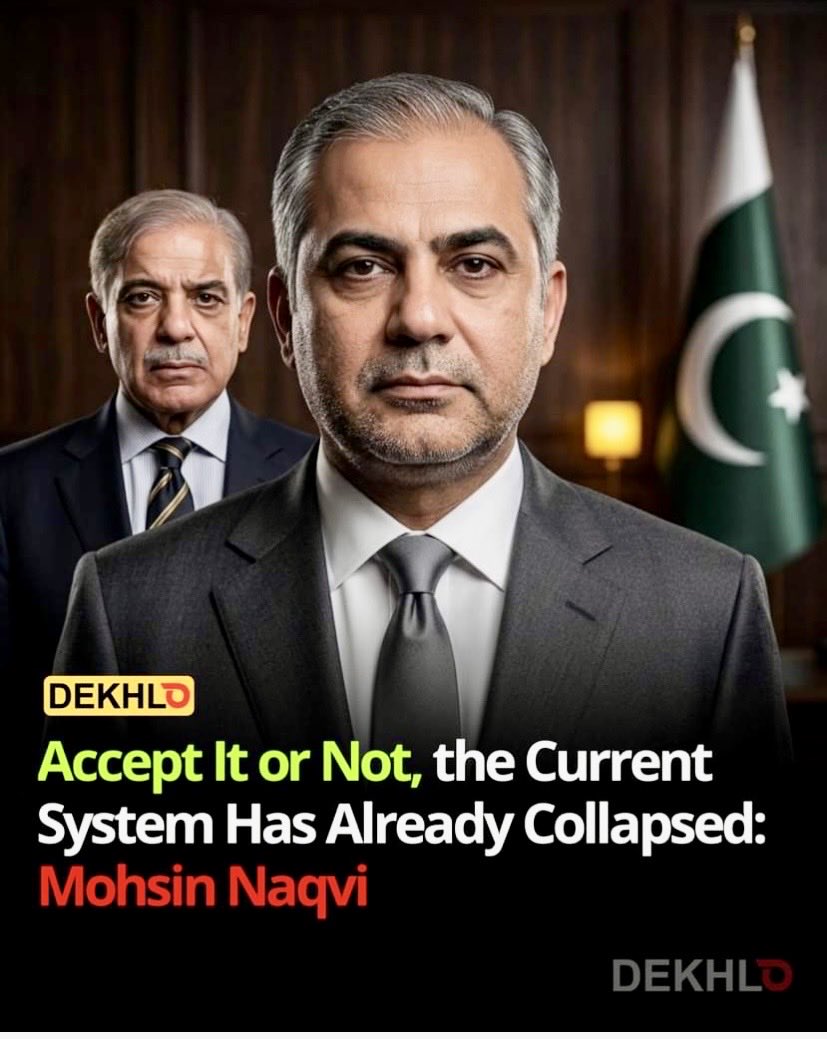
What was once said by a single SHO in Balochistan—that he could handle the situation—is now being echoed and accepted at the highest levels. The Interior Minister’s recent statement on a Geo programme, acknowledging that the entire structure of the state has collapsed, raises serious questions about the country’s condition, suggesting that it is in a state of disorder and turmoil and is lurching towards civil war—and that they, along with all representatives of the ruling classes, are paving the way for further dictatorship and repression.
This process is now being openly implemented in Balochistan and Khyber Pakhtunkhwa, while the democratic rights and demands of so-called AJK are also being crushed.
An independent working-class movement of the oppressed masses must be built, free from any faction of the ruling class, to lead peasants and youth in the struggle to overthrow this capitalist system. Under this system, the masses of this region and across the globe are left with nothing but hunger, unemployment, massacres, perpetual war, and forced migration.
A stern warning to the working class, including the peasantry and youth: we have entered into World War III.
They must assimilate the lessons of the Spanish Civil War, as similar conditions are unfolding across South Asia. The struggle must be based on an international socialist perspective and program.
What was once said by a single SHO in Balochistan—that he could handle the situation—is now being echoed and accepted at the highest levels. The Interior Minister’s recent statement on a Geo programme, acknowledging that the entire structure of the state has collapsed, raises serious questions about the country’s condition, suggesting that it is in a state of disorder and turmoil and is lurching towards civil war—and that they, along with all representatives of the ruling classes, are paving the way for further dictatorship and repression.
This process is now being openly implemented in Balochistan and Khyber Pakhtunkhwa, while the democratic rights and demands of so-called AJK are also being crushed.
An independent working-class movement of the oppressed masses must be built, free from any faction of the ruling class, to lead peasants and youth in the struggle to overthrow this capitalist system. Under this system, the masses of this region and across the globe are left with nothing but hunger, unemployment, massacres, perpetual war, and forced migration.
Khadim Jan, “we are lacking a deep connection with our history.”
The “Aryan” invaders who destroyed the Indus Civilization around 1500 BC were originally nomadic herders who lived on milk and meat and were led by warrior chieftains. They had no use for the ancient cities, which they ransacked and then abandoned. Nor did they have any use for the written word or the script used by the old civilization.
A significant feature of the Indian student protest movement is that it has united students across the communal divides that have been incited by the BJP and the Indian ruling class as a whole.
According to a State of Working India report issued by Azim Premji University’s Centre for Sustainable Employment in March, unemployment among university and college graduates under the age of 25 currently stands at nearly 40 percent, and 11 millions of India’s 63 million degree-holders aged 20-29 are jobless.
The India’s Narendra Modi-led, far-right government’s principal fear is that the student protests will become a catalyst for an eruption of working class opposition. The student agitation unfolding only a weeks after an uprising of tens of thousands of brutally exploited workers in the industrial townships of Noida and Manesar on the outskirts of Delhi , just a dozen kilometers from the Jantar Mantar protest site. These protests were savagely repressed, with hundreds of workers, many of whom remain in jail, arrested.
Respected, Uzama Khan, I appreciate your efforts to break the silence and awaken a society that has long been immersed in myths and unquestioned beliefs. Such efforts can become the beginning of an intellectual renaissance.
Darwin spent many years studying evolution and showed that some species became extinct while others emerged and evolved over time. Change is a fundamental law of nature—indeed, “change is the eternal reality.”
In contrast to Hegel, who viewed history as unfolding through a dialectical process, Karl Marx argued that history advances to a higher stage through dialectical development driven by material conditions. What we need today is a dialectical understanding of the material world, along with a critical examination of our thoughts, beliefs, religions, and states, rather than accepting them as fixed, absolute, or beyond question.