Follow the Change Radio News Online channel on WhatsApp: https://t.co/MoltBM7BY5
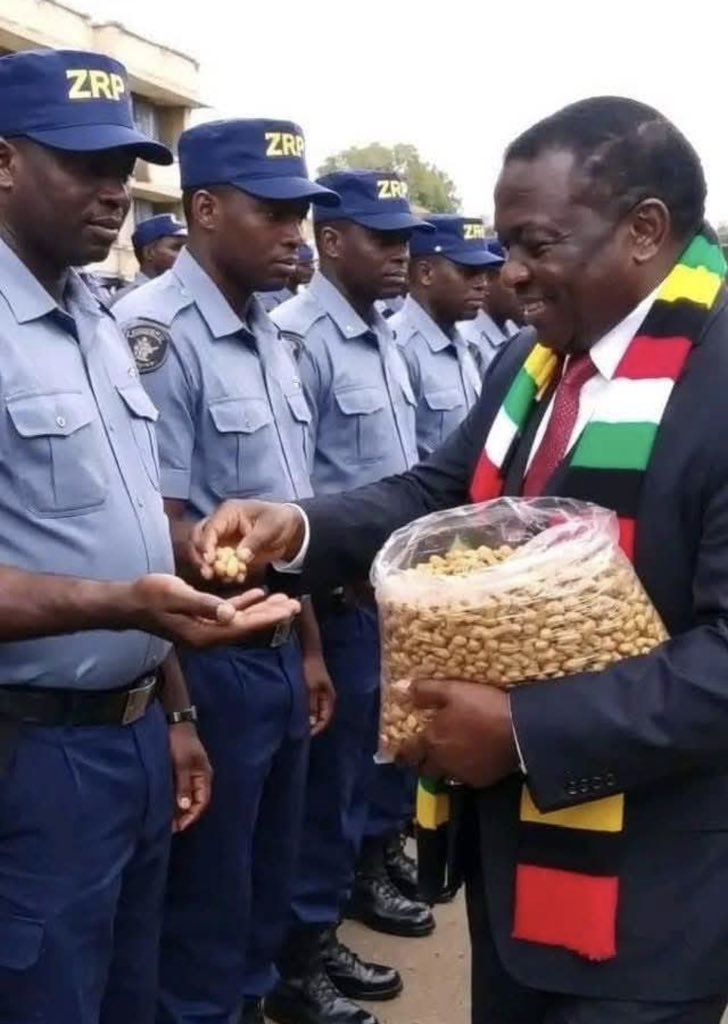
Tune in to Change Radio WhatsApp channel @630am this morning for another insightful conversation. Change Radio host Mambo Joni talks to Dr Ranga regarding the state of our hospitals. Is there hope, and what should be done to keep that hope alive? Mambo Joni covered a range of issues, including Mr Mnangagwa's visit to Parirenyatwa, Gomo hospital and Natpharm. What will it take to resuscitate our hospitals? Who is Dr Ranga's favorite musician and song? Be the first to hear this and other responses at 630am. Barely 2 hours away. Remember to drop a like and share widely with family and friends. Caring is sharing. Thank you greatly!
Change Health
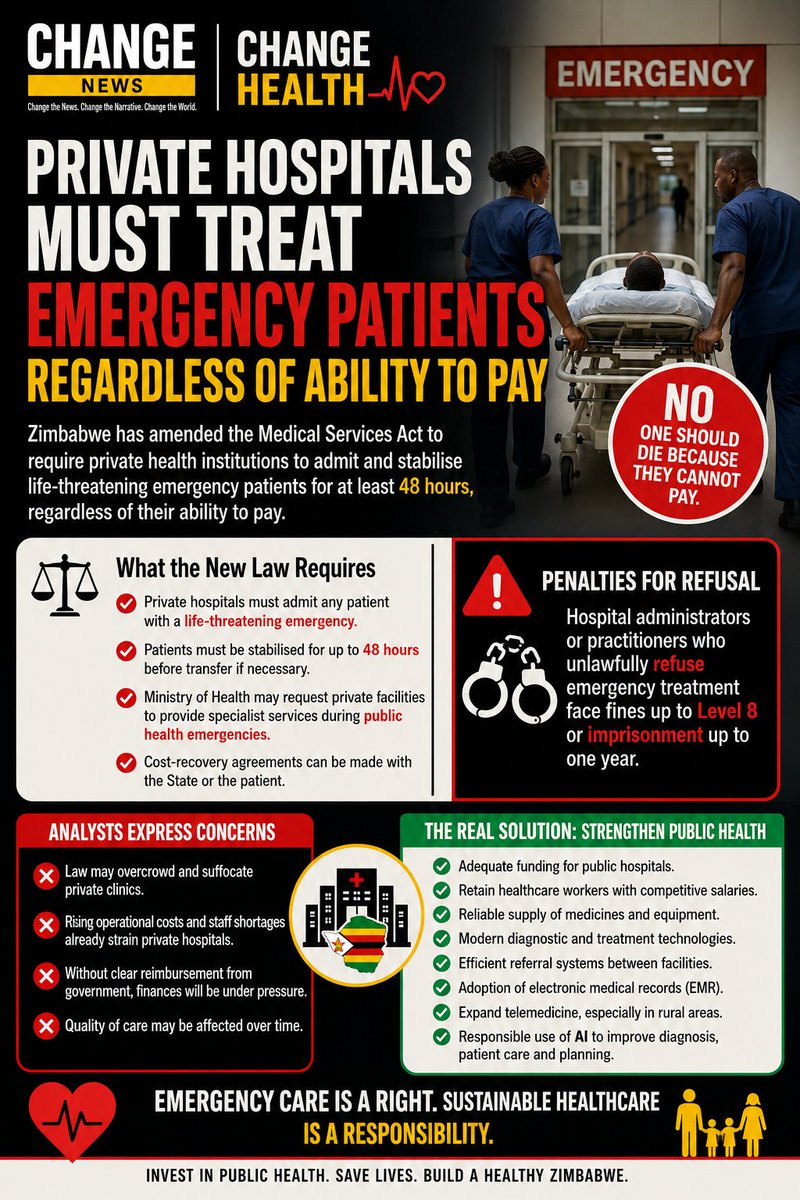
Private Hospitals Required to Treat Emergency Patients Regardless of Ability to Pay
By Change News
Follow the Change News channel on WhatsApp: https://t.co/pBQyUaQP6t
Zimbabwe has gazetted amendments to the Medical Services Act...
THE SAD IMAGES of desperate immigrants, coming out of South Africa, particularly during this cold weather, are deeply distressing.
ZANU-PF bears primary responsibility for the political crisis and economic collapse that has forced millions of our citizens to seek livelihoods beyond our borders.
In 2008, the late President Nelson Mandela described Zimbabwe as “the tragic failure of leadership.” Those words remain painfully true and relevant today.
Today, South Africa is paying a heavy price for years of turning a blind eye to disputed elections, supporting rigged electoral processes that lack credibility, and tolerating poor governance in Zimbabwe. We must collectively fix the Zimbabwe problem. A return to citizens and majority rule is urgent!
Regional peace and stability depend on accountability, democratic governance, and respect for the will of the people.
We stand in solidarity with and support every innocent African affected by events in South Africa.
@GovernmentZA@CyrilRamaphosa@daniel_chapo24@NamPresidency@duma_boko@HHichilema@APMutharika@MatekaneSam@SuluhuSamia@SADC_News
A LEGACY OF SERVICE..
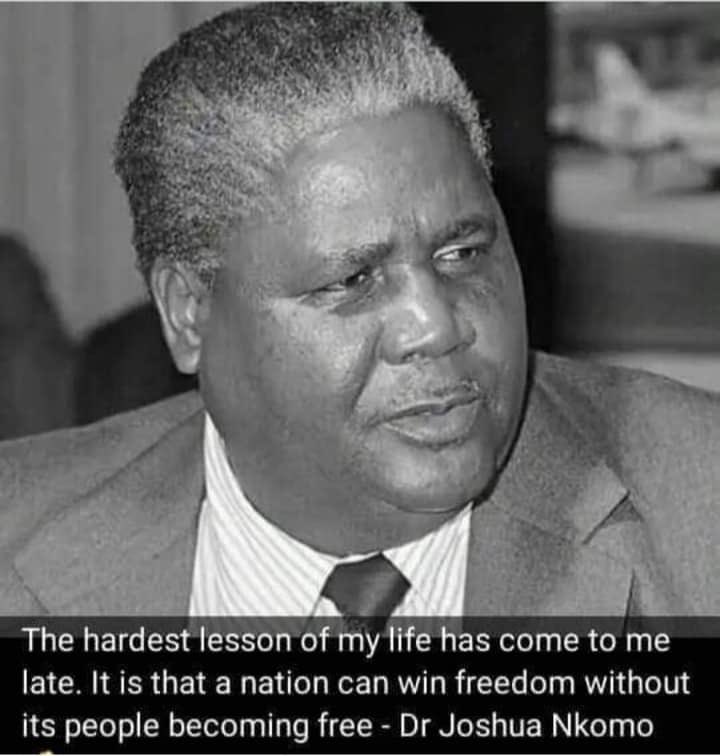
Dr. Joshua Mqabuko Nkomo never sought to extend his mandate by hook or by crook. He remains a true example of selfless, principled leadership.
Despite enduring years of demonization, vilification, and mistreatment at the hands of some of his fellow comrades, he did not pursue revenge. Instead, he chose reconciliation and nation-building.
Rest well, Qhawe leMaQhawe. Your legacy continues to inspire generations.
There are no projects for Mnangagwa to complete except for his family’s enrichment. This is vulgar! This is criminal! @nickmangwana your boss and his family are stripping our country down to the bone and they must go!
To @zanupf_patriots don’t be as stupid sheep obediently bleating your support for a President who is screwing the whole nation! There’s nothing for @ZANUPF_Official to gain from Mnangagwa’s prolonged stay. Save your party, and your country. Say #NotoCAB3
In an Ebola outbreak, the virus itself isn’t the only killer. When communities fear that health facilities or services are disrupted, deeper challenges arise. In the 2014–2016 Ebola outbreak, more people died from malaria because the health system shut down than from Ebola itself. That's what's at stake. The goal isn't just stopping Ebola—it’s also keeping health systems from collapsing around it.
🟡 CHANGE HEALTH NEWS DESK
🇿🇼 Is Zimbabwe Ready For Ebola?
With Dr Simbiso Ranga
`Follow Change News WhatsApp Channel ` https://t.co/nNhvPB73MR
Reports of an Ebola outbreak in the Democratic Republic of Congo (DRC) are raising concern across the region, with multiple deaths already reported. The World Health Organisation (WHO) continues to classify Ebola Virus Disease (EVD) as one of the world’s most dangerous infectious diseases because of its high fatality rate and potential to spread rapidly if not contained early.
For Zimbabwe, the outbreak is not a distant issue. The DRC is part of the SADC and Great Lakes regional network, with constant movement of people across borders through trade, travel, transport routes, and migration. Zimbabwean health authorities therefore cannot afford complacency.
⚠️ What Is Ebola?
Ebola is a severe viral hemorrhagic fever caused by the Ebola virus. It spreads through direct contact with:
Blood
Vomit
Sweat
Saliva
Urine
Stool
Bodies of infected persons
Contaminated surfaces or medical equipment
Symptoms may include:
High fever
Severe weakness
Headache
Muscle pain
Vomiting
Diarrhea
Bleeding in severe cases
Ebola can kill quickly if not identified and managed early.
🇿🇼 Is Zimbabwe Prepared?
Zimbabwe has some experience dealing with infectious disease outbreaks, including cholera and COVID-19. However, Ebola presents unique challenges.
Areas of concern include:
Limited infection control infrastructure in some hospitals
Shortages of protective equipment
Weak border surveillance systems
Overcrowded health facilities
Limited isolation centers in some provinces
Public mistrust and misinformation
Health experts say preparedness must begin before cases arrive — not after.
🛑 What Zimbabwe Should Be Doing Now
1️⃣ Strengthen Border Screening
Authorities should increase health surveillance at:
Airports
Bus stations
Border posts
Travelers from affected areas should be monitored carefully.
2️⃣ Train Health Workers
Doctors, nurses, and clinic staff must be trained to:
Identify Ebola symptoms early
Use protective equipment correctly
Isolate suspected patients safely
3️⃣ Improve Public Awareness
Citizens should receive accurate information about:
Symptoms
Prevention
Reporting procedures
Panic and misinformation can worsen outbreaks.
4️⃣ Prepare Isolation Facilities
Hospitals must identify and equip designated Ebola isolation units before any outbreak occurs.
5️⃣ Regional Cooperation
Zimbabwe should work closely with:
WHO
Africa CDC
SADC partners
DRC health authorities
Disease outbreaks do not respect borders.
🚨 What Should Happen If A Case Is Identified?
If a suspected Ebola case is discovered:
✅ Immediate isolation of the patient
✅ Rapid laboratory testing
✅ Contact tracing of everyone exposed
✅ Protective equipment for all health workers
✅ Temporary movement restrictions where necessary
✅ Clear public communication to avoid panic
Communities also play a critical role. Citizens should avoid:
Touching bodies of infected persons
Handling bodily fluids without protection
Spreading unverified rumors on social media
🇿🇼 A Public Health Wake-Up Call
The Ebola outbreak in the DRC should serve as a warning to Zimbabwe and the region. Prevention, preparedness, and rapid response are far cheaper and safer than trying to contain a widespread outbreak after it escalates.
Public health experts say strong healthcare systems are part of national security. Zimbabweans are therefore asking whether enough investment is being made in disease surveillance, hospitals, laboratories, and frontline healthcare workers.
The question remains:
Is Zimbabwe truly ready for Ebola?
By Dr Simbiso Ranga
Change Health News Desk
🟡 Change the News. Change the Narrative. Change the World.
🟡 CHANGE HEALTH
🇿🇼 South Africa Says It Is Ready For Ebola. How About Zimbabwe?
`Follow Change News WhatsApp Channel ` https://t.co/nNhvPB73MR
South African President Cyril Ramaphosa says Africa has the expertise, institutions, and leadership to mount a strong response to the Ebola outbreak currently affecting parts of the Democratic Republic of Congo (DRC).
The statement comes amid growing regional concern over the spread of Ebola, one of the world’s deadliest infectious diseases.
While South Africa projects confidence in its preparedness systems, Zimbabweans are asking an important question:
Is Zimbabwe truly ready for Ebola?
Zimbabwe shares major transport and migration corridors with countries across Southern and Central Africa. Daily movement of traders, truck drivers, migrants, and travelers means disease surveillance can no longer be treated casually.
Health experts say preparedness is not simply about reacting after cases appear. It requires:
Strong border screening
Functional isolation centers
Protective equipment for health workers
Public awareness campaigns
Laboratory capacity
Rapid response teams
Zimbabwe’s healthcare system continues to face challenges including:
Limited resources
Staff shortages
Equipment gaps
Overcrowded hospitals
Public health specialists warn that infectious disease outbreaks expose weaknesses in national healthcare systems very quickly.
🚨 What Should Zimbabwe Be Doing Now?
✅ Increase surveillance at border posts
✅ Train frontline health workers
✅ Stock protective equipment
✅ Prepare isolation facilities
✅ Educate communities about symptoms and prevention
✅ Strengthen cooperation with WHO, Africa CDC, and neighboring countries
⚠️ Symptoms of Ebola Include:
High fever
Severe weakness
Vomiting
Diarrhea
Muscle pain
Bleeding in severe cases
The virus spreads through direct contact with bodily fluids of infected persons or contaminated materials.
Health authorities say early detection and rapid isolation remain critical in stopping outbreaks before they spread widely.
As regional governments raise alert levels, Zimbabweans are increasingly demanding stronger investment in public health infrastructure and disease preparedness.
Because when deadly outbreaks emerge, preparedness can mean the difference between containment and catastrophe.
🟡 Change Health News Desk
Change the News. Change the Narrative. Change the World.
🟡 CHANGE HEALTH NEWS DESK
🇿🇼 Is Zimbabwe Ready For Ebola?
With Dr Simbiso Ranga
`Follow Change News WhatsApp Channel ` https://t.co/pBQyUaQP6t
Reports of an Ebola outbreak
By Dr Simbiso Ranga
Change Health News Desk
🟡 Change the News. Change the Narrative. Change the World.
Parliament has been adjourned to 2 June.
Do not be distracted. Keep your eyes on the ball.
Across civic, legal, church and political actors, a common position is steadily consolidating — anchored in constitutionalism and the defence of our democratic order.
Let us strengthen that unity through discipline, maturity, sobriety and coordination.
#DefendTheConstitution
🟡 CHANGE BREAKING NEWS
President Nelson Chamisa Rejects Daily News Story, Calls It “Editorial Fiction”
`Follow Change News WhatsApp Channel ` https://t.co/GOPLvncRMe
President Nelson Chamisa has publicly rejected a Daily News front-page article titled “This engineered pact is hopeless,” saying the publication misrepresented his comments and manufactured a false political narrative.
In a strongly worded response posted on social media, President Chamisa accused the newspaper of publishing what he described as “editorial fiction” intended to damage his image and distort his position regarding ongoing opposition coalition discussions.
The Daily News headline had suggested that President Chamisa dismissed efforts to build a new opposition alliance, allegedly describing the proposed coalition as hopeless and lacking legitimacy.
However, President Chamisa says the article did not accurately reflect his views.
---
“Ignore The Mischief”
Responding directly to the publication, President Chamisa wrote:
> “IGNORE THE MISCHIEF... I have noted with deep concern the Daily News front-page story titled, ‘This engineered pact is hopeless,’ which appears to allege that I have dismissed the efforts of others to advance the struggle for a better Zimbabwe.”
President Chamisa said the report was misleading and violated basic principles of responsible journalism.
> “Regrettably, the story is misleading, is a work of editorial fiction, and is intended to inflict injury.”
He added:
> “It is a fundamental principle of journalism that reporters should report the news, not manufacture it.”
---
Public Trust And Media Ethics
President Chamisa also warned that compromised editorial standards could damage public confidence in journalism and democratic freedoms.
> “When editorial standards are compromised in this way, public trust and our freedoms are put at risk.”
The statement has triggered widespread discussion online, with Zimbabweans debating:
media ethics,
political communication,
opposition unity,
and the future direction of Zimbabwe’s democratic movement.
---
“A Plan Is Coming”
Despite rejecting the article, President Chamisa reaffirmed his commitment to Zimbabweans and hinted at an upcoming political roadmap.
> “I remain fully committed to representing the interests of the citizens of Zimbabwe and to advancing the struggle for a better country.”
He further revealed:
> “In due course, I will be rolling out a plan aimed at achieving that goal.”
The announcement immediately fueled speculation across social media, with many supporters asking whether President Chamisa is preparing:
a new political movement,
a national citizen mobilisation strategy,
or a broader democratic reform agenda.
---
Citizens Watching Closely
Zimbabwe’s political atmosphere continues to intensify amid:
economic hardship,
constitutional debates,
governance concerns,
rising citizen activism,
and growing online political engagement.
Increasingly, Zimbabweans are expressing themselves through:
X Spaces,
TikTok Lives,
WhatsApp discussions,
Facebook forums,
and citizen-led digital activism.
President Chamisa’s latest comments are likely to further energize national political conversations as many citizens continue searching for direction, leadership, and solutions to Zimbabwe’s ongoing challenges.
---
The Bigger Political Question
The controversy also highlights growing tensions between:
political actors,
media institutions,
and competing narratives shaping Zimbabwe’s future.
At the center of the debate is a larger national question:
Who controls the political narrative — citizens, political elites, or the media?
For now, President Chamisa says his focus remains unchanged.
> “The citizens shall govern.”
By Change News Political Desk
🟡 CHANGE — NOTABLE REGIONAL DEVELOPMENTS
🇿🇦 Ramaphosa Says He “Will Respectfully Not Resign”
`Follow Change News WhatsApp Channel ` https://t.co/GOPLvncRMe
South African President Cyril Ramaphosa says he will “respectfully not resign” despite growing political pressure and increasing calls from critics demanding that he step down.
Ramaphosa made the remarks during an overnight address to the nation as debate intensifies around governance, accountability, and political leadership in South Africa.
The statement is already generating strong reactions across: 🇿🇦 South Africa
🇿🇼 Zimbabwe
🌍 The wider SADC region
Supporters argue Ramaphosa must remain focused on stability, economic recovery, and governance reforms.
Critics, however, say: ⚖️ Accountability matters
📉 Citizens are frustrated with economic pressures
🏛️ Public trust in institutions is under strain
🗳️ Leadership credibility is increasingly being questioned
The developments come amid broader regional discussions about:
Governance and constitutionalism
Economic hardship
Political legitimacy
Regional diplomacy and accountability
Many analysts say South Africa’s political direction matters deeply for the entire SADC region given the country’s economic and political influence.
🗣️ The region continues to watch closely.
#ChangeGlobal
#SouthAfrica
#Ramaphosa
#RegionalDevelopments
#SADC
#ChangeNews
#WeTheCitizens 🇿🇦 🇿🇼
🟡 CHANGE SADC REGIONAL MIGRATION
🇿🇦 Ramaphosa Says Xenophobia Does Not Represent South Africa
`Follow Change News WhatsApp Channel ` https://t.co/GOPLvncRMe
South African President Cyril Ramaphosa says recent xenophobic violence and criminal attacks against foreign nationals do not represent the values of South Africa or the official policy of his government.
The statement comes amid growing concern across the SADC region following attacks targeting migrants and foreign-owned businesses in parts of South Africa.
For many Zimbabweans living and working in South Africa, the key question now is: ❓ Will the words translate into real protection and security on the ground?
Millions of Zimbabweans continue contributing to the South African economy as: 👩🏽⚕️ Healthcare workers
🏗️ Construction workers
👨🏽💼 Professionals
🚚 Transport operators
🛒 Small business owners
👷🏽 Essential workers
At the same time, many South Africans say governance failures, unemployment, and economic inequality — not migrants — are the deeper causes of frustration and instability.
President Nelson Chamisa has repeatedly called for: 🤝 Peaceful coexistence in SADC
🌍 Regional solidarity
⚖️ Respect for human dignity
🕊️ Unity among African people
Analysts say migration pressures across Southern Africa are closely linked to: 📉 Economic collapse
💼 Lack of jobs
⚡ Governance failures
📈 Rising inequality
Many citizens across the region are increasingly arguing that long-term stability will only come when governments create functioning economies capable of keeping their citizens hopeful at home.
🗣️ We, The Citizens, are watching.
#ChangeSADC
#SouthAfrica
#Zimbabwe
#Migration
#Xenophobia
#SADC
#WeTheCitizens 🇿🇼 🇿🇦
🟡 CHANGE NEWS ANALYSIS
🇿🇼 Why Are Zimbabweans Saying No?
The Country Is Moving In The Wrong Direction
`Follow Change News WhatsApp Channel ` https://t.co/GOPLvncRMe
A recent Change News survey paints a troubling picture about public sentiment in Zimbabwe.
More than 90% of respondents reportedly said the country is moving in the wrong direction.
For many Zimbabweans, that perception explains the growing resistance to Constitutional Amendment Bill No. 3 — commonly known as CAB3.
The argument from citizens is increasingly straightforward: 🗣️ If the country is already struggling after 46 years under the same governing party, why extend political control further?
Across communities, online spaces, and the diaspora, Zimbabweans continue pointing to the same issues: 📉 Economic collapse
💰 Currency instability
🍞 Rising food prices
⛽ Fuel increases
💡 Electricity shortages
🚰 Water challenges
💊 Hospitals without medicines
💼 High unemployment
For many citizens, the Constitution debate is happening against the backdrop of everyday survival.
People are asking:
Why focus on extending political power instead of fixing the economy?
Why constitutional amendments when hospitals are struggling?
Why political survival when young people cannot find jobs?
The frustration is no longer isolated. It is becoming national.
Many Zimbabweans say they want a citizen-centered government focused on: ✔️ Economic recovery
✔️ Stable currency management
✔️ Job creation
✔️ Functional infrastructure
✔️ Rule of law
✔️ Accountability and governance reform
President Nelson Chamisa says he is prepared and ready to lead Zimbabwe out of what supporters describe as an economic ditch.
His message appears to resonate with citizens who increasingly believe the country needs a new direction and a government focused on ordinary people rather than political preservation.
For many Zimbabweans, the growing “Zimbabwe Says No” campaign is therefore about more than CAB3 alone.
It is about a deeper national question: ⚖️ What kind of future does Zimbabwe deserve?
And increasingly, citizens are answering:
🗣️ “Drop CAB3. Fix the country first.”
🇿🇼 We, The Citizens.
#ChangeNewsAnalysis
#ZimbabweSaysNo
#DropCAB3
#WeTheCitizens
#Zimbabwe
#Economy
#Governance
🟡 CHANGE BREAKING NEWS
Trevor Ncube Writes Open Letter To Ramaphosa After Zimbabwe Visit Fallout
`Follow Change News WhatsApp Channel ` https://t.co/GOPLvncRMe
Alpha Media Holdings Chairperson Trevor Ncube has written a strongly worded open letter to South African President Cyril Ramaphosa following his controversial private visit to Zimbabwe and meeting with President Emmerson Mnangagwa.
In the letter, Ncube argues that the visit came at a sensitive moment as Zimbabwe debates Constitutional Amendment Bill No. 3, which critics say could weaken democratic safeguards and concentrate more power in the executive.
Ncube expressed concern over the symbolism of the meeting and the individuals reportedly present, arguing that the visit risked being interpreted as regional endorsement of controversial constitutional changes.
He also called on South Africa and SADC leadership to engage more broadly with: ⚖️ Civil society
⛪ Churches
🏛️ Opposition parties
💼 Business leaders
📜 Legal professionals
👥 Ordinary citizens
One of the strongest messages in the letter was directed personally to President Ramaphosa:
🗣️ “Help us help ourselves — or stay out of our affairs.”
Ncube argued that Zimbabweans must ultimately resolve their own political and economic crisis through democratic processes, national dialogue, and institutional reform.
The letter has generated significant debate online across Zimbabwe and South Africa, with many citizens discussing:
SADC’s role in Zimbabwe
Constitutional reform
Regional diplomacy
Governance and accountability
Economic migration into South Africa
The controversy continues to place regional politics and Zimbabwe’s constitutional debate firmly in the spotlight.
#ChangeNews
#BreakingNews
#TrevorNcube
#Ramaphosa
#Zimbabwe
#SouthAfrica
#SADC
#WeTheCitizens 🇿🇼 🇿🇦
We only have a few days left to make submissions to the Clerk of Parliament on #CAB3! I’ll be going to Parliament this week to submit my physical letter. 📄 If you want to join me, post a screenshot of your signed letter in the comments below ✍️👇 Or send me a DM. 📥 Or send it via email on [email protected]. 📧 Then contact your MP to let them know your views & find out their position on the Bill. Let’s defend our Constitution together. #NoToCAB3 #ZimSaysNo
🟡 CHANGE NEWS ANALYSIS
🇿🇼 Why Are Zimbabweans Saying No?
The Country Is Moving In The Wrong Direction
`Follow Change News WhatsApp Channel ` https://t.co/nNhvPB73MR
A recent Change News survey paints a troubling picture about public sentiment in Zimbabwe.
More than 90% of respondents reportedly said the country is moving in the wrong direction.
For many Zimbabweans, that perception explains the growing resistance to Constitutional Amendment Bill No. 3 — commonly known as CAB3.
The argument from citizens is increasingly straightforward: 🗣️ If the country is already struggling after 46 years under the same governing party, why extend political control further?
Across communities, online spaces, and the diaspora, Zimbabweans continue pointing to the same issues: 📉 Economic collapse
💰 Currency instability
🍞 Rising food prices
⛽ Fuel increases
💡 Electricity shortages
🚰 Water challenges
💊 Hospitals without medicines
💼 High unemployment
For many citizens, the Constitution debate is happening against the backdrop of everyday survival.
People are asking:
Why focus on extending political power instead of fixing the economy?
Why constitutional amendments when hospitals are struggling?
Why political survival when young people cannot find jobs?
The frustration is no longer isolated. It is becoming national.
Many Zimbabweans say they want a citizen-centered government focused on: ✔️ Economic recovery
✔️ Stable currency management
✔️ Job creation
✔️ Functional infrastructure
✔️ Rule of law
✔️ Accountability and governance reform
President Nelson Chamisa says he is prepared and ready to lead Zimbabwe out of what supporters describe as an economic ditch.
His message appears to resonate with citizens who increasingly believe the country needs a new direction and a government focused on ordinary people rather than political preservation.
For many Zimbabweans, the growing “Zimbabwe Says No” campaign is therefore about more than CAB3 alone.
It is about a deeper national question: ⚖️ What kind of future does Zimbabwe deserve?
And increasingly, citizens are answering:
🗣️ “Drop CAB3. Fix the country first.”
🇿🇼 We, The Citizens.
#ChangeNewsAnalysis
#ZimbabweSaysNo
#DropCAB3
#WeTheCitizens
#Zimbabwe
#Economy
#Governance
CHANGE HEALTH NEWS DESK
Hantavirus Outbreak Raises Global Health Concerns — What It Could Mean for Zimbabwe
`Follow Change News WhatsApp Channel ` https://t.co/pBQyUaQP6t
Read on Change WhatsApp Channel
— Change Health News Desk 🇿🇼
#WeTheCitizens#ChangeHealth#Hantavirus