Complete identity crisis at LFC... Resulting to Long throws, corners and low block .... Everything slot criticised.
Unfortunately the managers time is up, not because of results but because he lost his identity, his way...
· Mauritius is considering legal action against the UK over delays in the Chagos Islands agreement. This could turn a diplomatic negotiation into a major geopolitical dispute in the Indian Ocean.
· The deal signed in 2025 was supposed to settle a decades-long dispute. Under the agreement, the UK would transfer sovereignty of the Chagos Islands to Mauritius and Britain and the US would continue operating the military base on Diego Garcia under a long-term lease.
· For Mauritius, the agreement is not only symbolic. It also has major financial implications. Under the proposed treaty, the UK would pay around £170 million per year, potentially totaling £35 billion over a century. For a small island economy, this is a significant strategic resource.
· But the ratification process in the UK has stalled, creating frustration in Port-Louis. Mauritian officials say there is “no visibility” on when the treaty will finally be approved by the British Parliament. Now the government is consulting international law firms.
· Why the delay? Because the Chagos deal is not just a bilateral issue. It sits at the intersection of three strategic actors: the UK, the US and Mauritius. And Diego Garcia is one of the most important military bases in the world.
· The situation became even more complicated after criticism from Donald Trump, who accused the UK government of limiting US military operations from Diego Garcia during recent strikes against Iran. This turned the Chagos deal into a domestic political issue in the US and the UK.
· There is also another player entering the scene: the Maldives. Malé has signaled it may challenge the agreement legally, claiming that it has competing territorial rights over the archipelago. If that happens, the dispute could move to international courts again.
· Mauritius already won a major legal victory in 2019 at the International Court of Justice, which ruled that the UK should end its administration of the islands. That ruling strengthened Mauritius’ position under international law. But enforcement has always depended on political negotiations.
· So the key question now is simple: If the treaty collapses or continues to stall, will Mauritius return to international courts to force the issue? For small states, international law is often their main geopolitical leverage.
· What happens next will determine the future of one of the most strategically important territories in the Indian Ocean. The Chagos issue is no longer just a colonial legacy dispute. It is now tied to great-power strategy, military access, and global security.
The sinking of an Iranian warship by a U.S. submarine near Sri Lanka may mark a turning point for the strategic balance in the Indian Ocean. Here’s why:
· On 4 March 2026, a U.S. submarine torpedoed the Iranian frigate IRIS Dena roughly 40 nautical miles south of Sri Lanka, killing dozens of sailors. This is the first time in decadesa submarine has sunk a surface warship in active conflict.
· Until now, the confrontation between the U.S. and Iran had largely been confined to the Persian Gulf and the wider Middle East. This strike effectively extends the conflict into the Indian Ocean.
· The waters around Sri Lanka sit close to one of the busiest sea lanes on Earth. Roughly two-thirds of global oil shipments and a huge share of Asia–Europe trade pass through the wider Indian Ocean maritime corridor. Any militarisation of this zone raises serious risks for global shipping.
· There is also a great-power dimension. The Indian Ocean is already crowded with strategic actors: United States, India, China, France and Iran. This incident shows the region is no longer just a transit route — it is becoming an active theatre of military competition.
· Worth noting: the Iranian warship had reportedly just taken part in a naval exercise in India before being struck while returning home. That means the incident occurred inside what India considers its strategic backyard. Expect Delhi to watch this closely.
· Strategically, the message from Washington is clear:
The U.S. Navy can strike Iranian forces far beyond the Gulf, anywhere across the wider Indo-Pacific maritime space. This demonstrates global reach and submarine dominance.
· But the escalation risk is real. If the conflict continues expanding geographically, the Indian Ocean — long considered relatively stable — could become the next major maritime flashpoint.
· The torpedoing of the IRIS Dena may be remembered as the moment when the U.S.–Iran conflict officially entered the Indian Ocean theatre. And that could reshape the region’s strategic landscape.
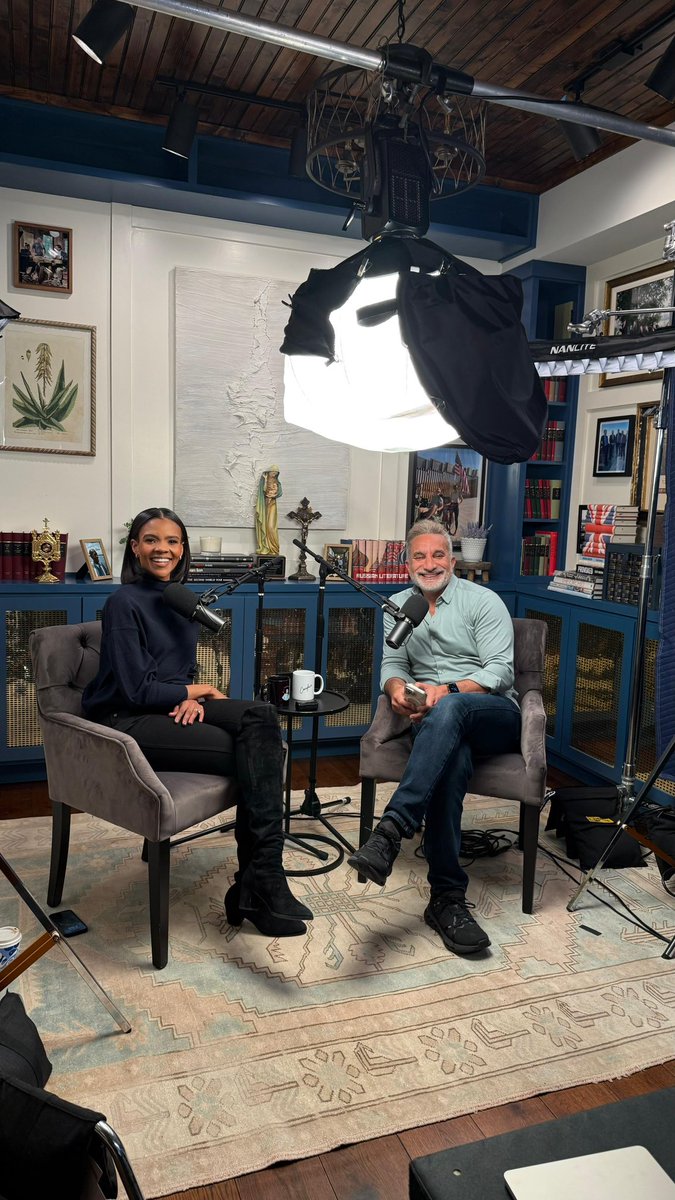
I was a guest on Candace Owens’ podcast, and honestly, the experience opened my eyes.
Despite her strong stance against the Zionist lobby and Israel, Candace is often criticized for past views that were hostile toward Arabs and Muslims. She’s also classified as right-wing, with positions that have sparked controversy among the left and many Black Americans, especially over her disagreements with Black Lives Matter.
This raises a question we often avoid:
Do we engage with people we strongly disagree with politically when we still stand on the same side against the terrifying level of Zionist control over U.S. institutions?
Many avoid crossing political lines to protect ideological purity, and I respect that. But while Zionists engage both the right and the left—and turn them against each other—we isolate ourselves and miss chances to reach audiences we never speak to.
Off camera, Candace is kind, funny, and disarmingly honest. We disagreed on many things, but found real common ground on critical issues affecting the U.S. and the Middle East. She spoke openly about her past views, how indoctrination works, and how her thinking—especially on Palestine, Israel, and Arabs and Muslims—has changed.
I deeply respect people who are humble and brave enough to question their own biases. That’s not weakness—that’s growth.
The episode covers my stance on Charlie Kirk, Zionist influence on U.S. decision-making, and more. It reached one million views in under 24 hours, despite being nearly two hours long—something we rarely see since platforms began burying voices like ours.
We’re working on an Arabic translation now. Please share it so it reaches as many people as possible.
@RealCandaceO
Link to episode : https://t.co/7Aa3eQJGg6