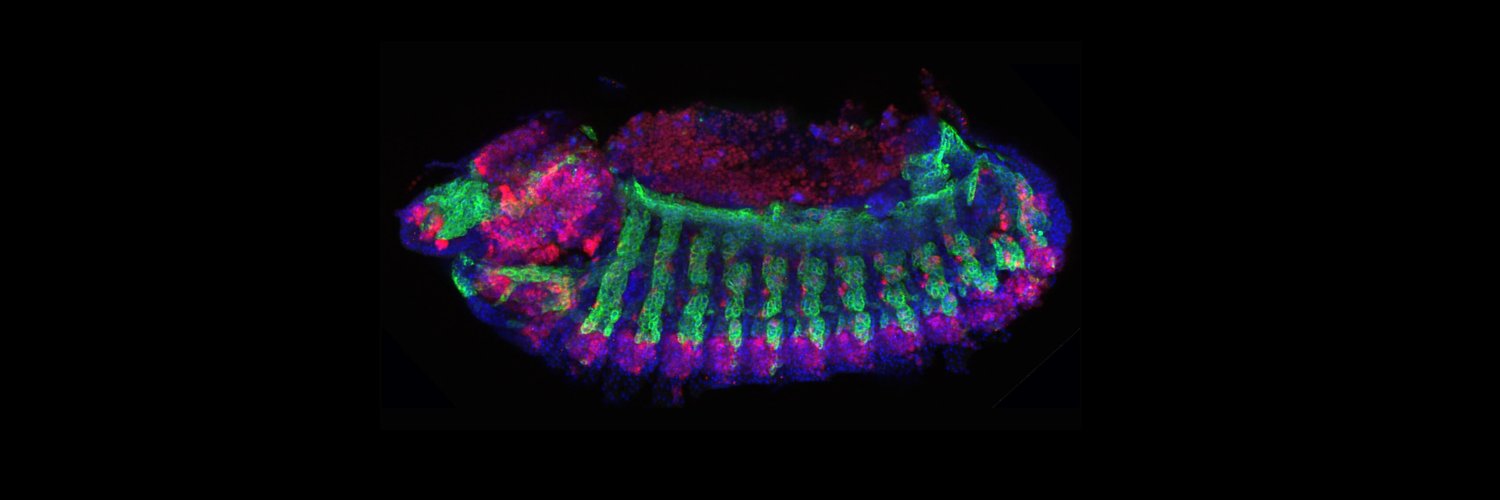
NEW #Research published @NatureComms: Scientists in the @ZeitlingerLab developed PISA, a new #AI interpretation method that lets researchers see, at high resolution, what AI models learn from DNA sequences. Using that insight, the team discovered they could better control what the models learn next.
By separating the biology they wanted to study from bias introduced by the experiment, the researchers were able to train a more focused model and uncover patterns in DNA they didn’t see before.
That clearer view led to a surprising biological insight with implications for understanding gene regulation and, potentially, genetic disease: the way #DNA is wrapped around nucleosomes may help predict how it is organized in 3D inside the nucleus.
Hear Investigator @JuliaZeitlinger, Ph.D., explain how PISA could become a broadly useful tool for scientists to help bridge the gap between powerful AI models and the biological mechanisms researchers want to understand.
🔗https://t.co/W7lsmhSCgX
Happy to have contributed to this work! Amazing to see cis-regulatory motif maps across so many cell types readily available. Get a bird’s eye view of the cis-regulatory code or dive in deep into specific details, I highly recommend it!
We’re launching AlphaGenome Atlas: an AI-powered searchable database mapping the predicted impact of all 9 billion possible single-letter DNA changes.
Here’s how it could help researchers better understand our biology 🧵
Excited to release AlphaGenome Atlas 🧬 We used AlphaGenome to predict the regulatory impact of all 9B possible SNVs in the human genome. We collaborated with amazing scientists to analyze and apply it, and developed a portal to browse the genome using this new lens 🔬
🌐 Portal: https://t.co/Hq3ZLGXB7M
📖 Blog: https://t.co/cF4TsZkhwj
📄 Preprint: https://t.co/aIhrGELqr8
🧵 1/6
Excited to release AlphaGenome Atlas 🧬 We used AlphaGenome to predict the regulatory impact of all 9B possible SNVs in the human genome. We collaborated with amazing scientists to analyze and apply it, and developed a portal to browse the genome using this new lens 🔬
🌐 Portal: https://t.co/Hq3ZLGXB7M
📖 Blog: https://t.co/cF4TsZkhwj
📄 Preprint: https://t.co/aIhrGELqr8
🧵 1/6
(10/10) PISA is, at its core, a way to ask how one stretch of DNA affects a biological signal in its surrounding region. If you want to try it out, our complete software suite is available here: https://t.co/WXd0SJgWN0
The new updates for Charles McAnany’s preprint “Positional Interpretation of Cis-Regulatory Code and Nucleosome Organization with Deep Learning Models” (https://t.co/vVz1jk6sOG) are up!
We introduce PISA, a tool to visualize the cis-regulatory code. See a recap below:
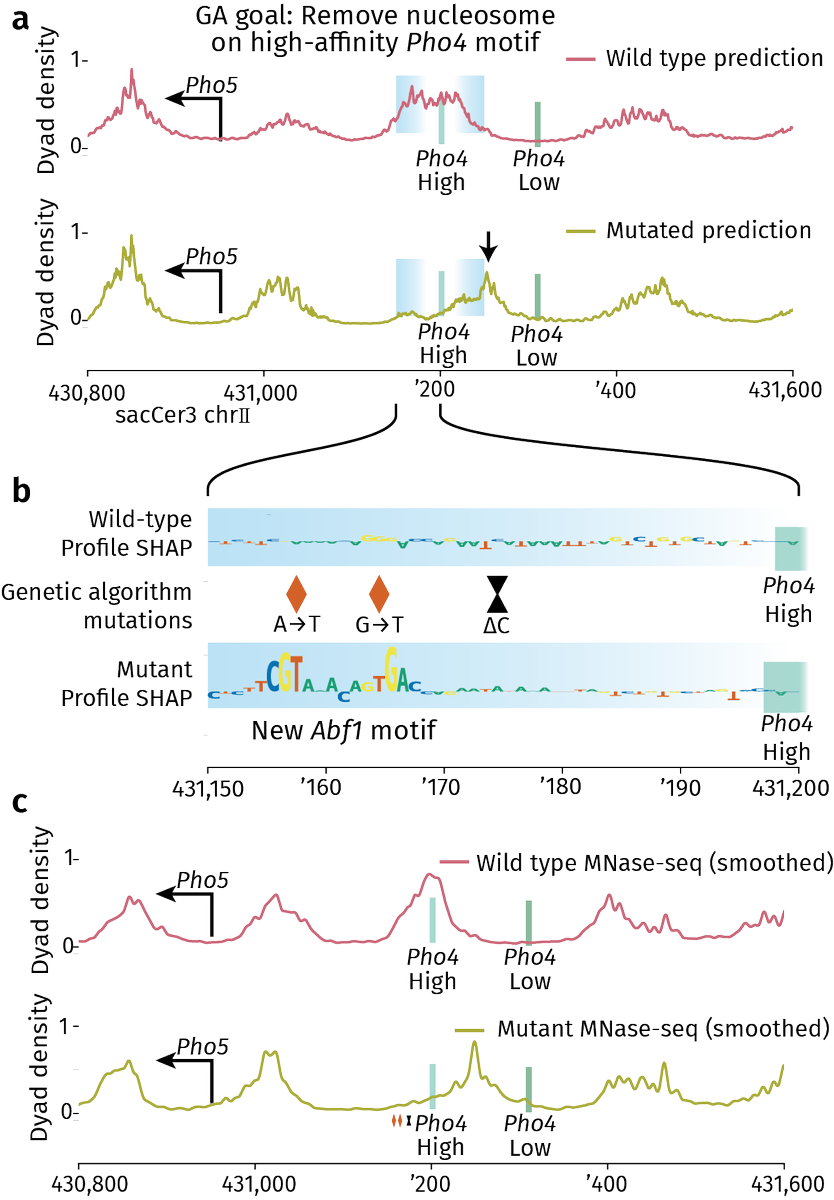
(9/10) Our BPReveal package provides tools to engineer sequences with desired properties. For example, we designed mutations to alter a nucleosome’s presence in vivo, and our design was corroborated experimentally.
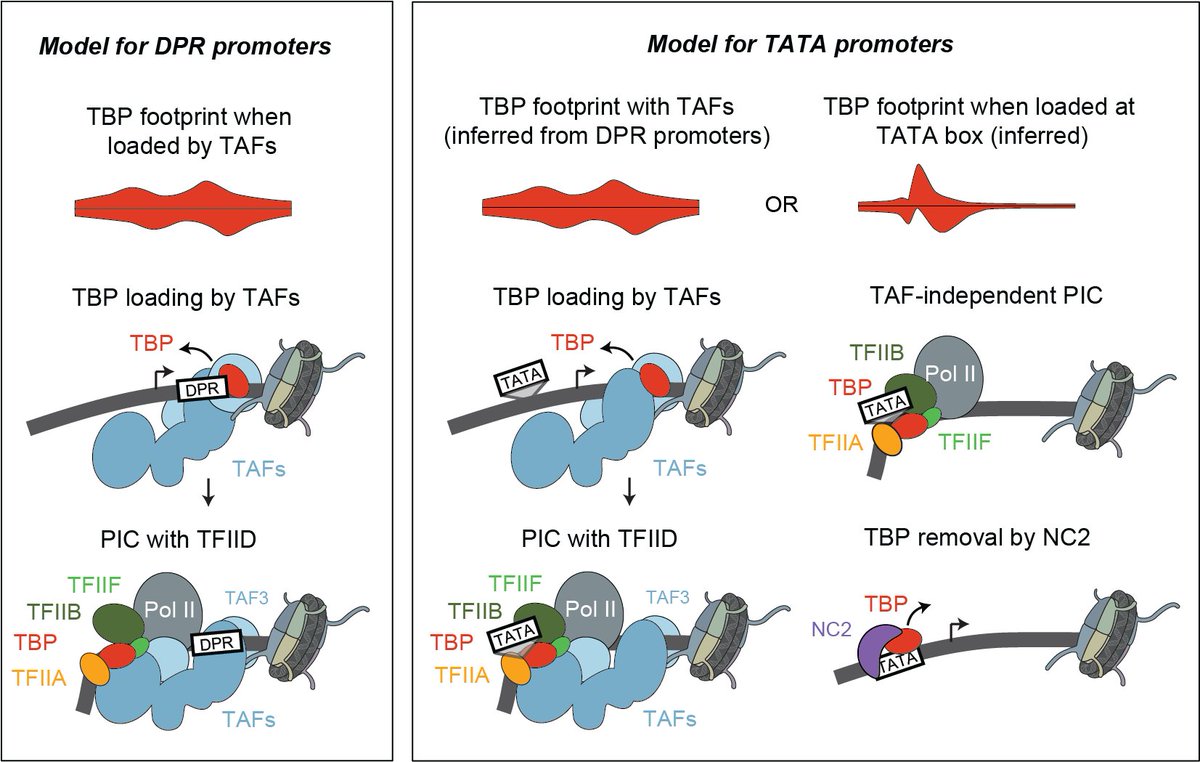
(7/7) Our Model: All promoters use TFIID to load TBP, but TATA promoters additionally allow direct TBP binding to the TATA box. Such dual initiation likely enables faster TBP re-loading and larger transcriptional bursts at TATA promoters.
For more details, check out our work!
The @ZeitlingerLab is excited to release @Sergiogma91’s preprint “High-resolution binding data of TFIID and cofactors show promoter-specific differences in vivo” (https://t.co/yj8tcnRe4s).
TLDR; TFIID behaves differently based on promoter type. More below:
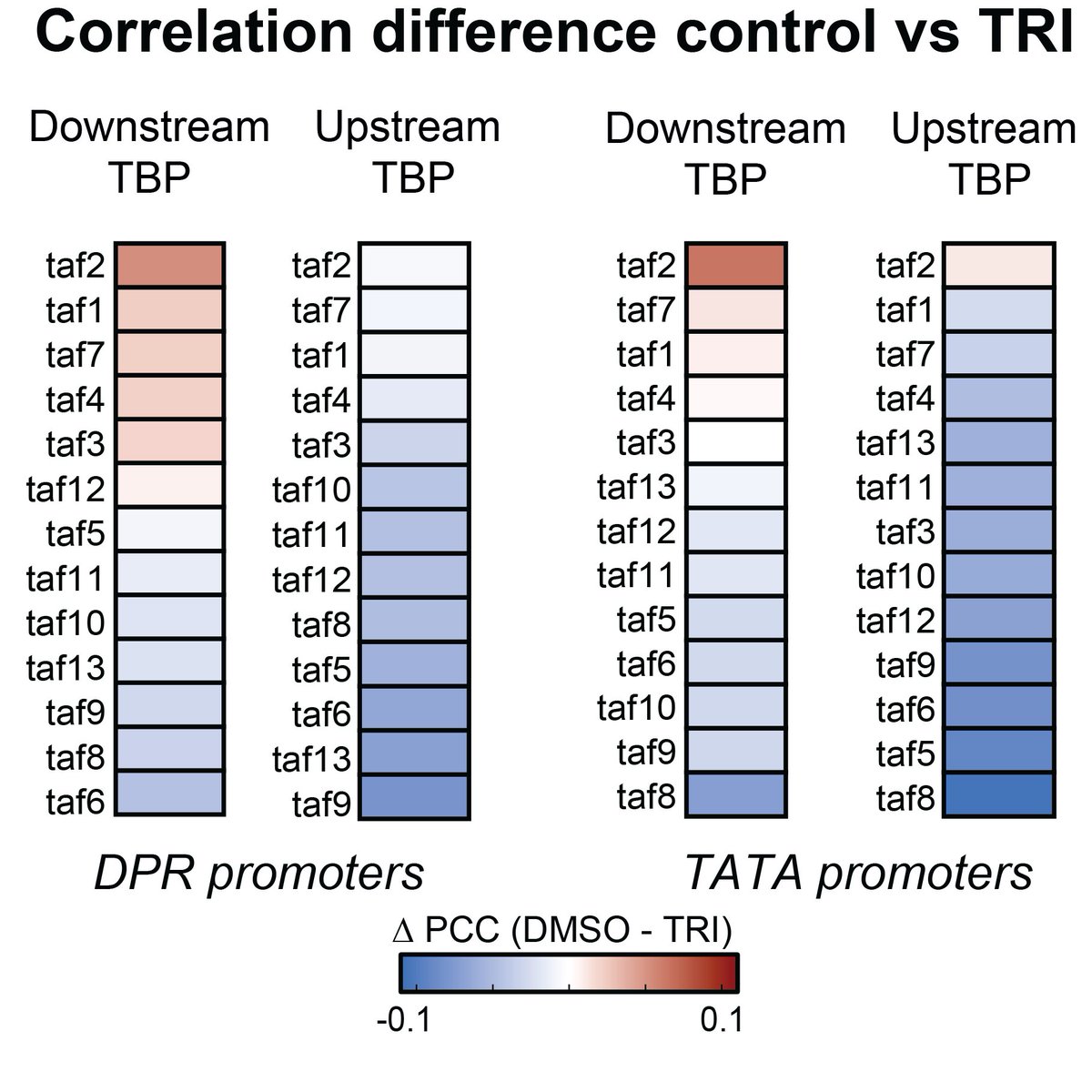
(6/7) DPR promoters, which contain downstream sequences favorable for TFIID binding, show the highest levels of downstream TBP. Downstream TBP shows the strongest correlation with TAF2, TAF1 and TAF7, consistent with this being the promoter loading state of TFIID.