JUST IN: The Zenith EVM Testnet is live and open to the public.
For the first time, 31800+ Ethereum developers can deploy standard Solidity applications that compose atomically with @CantonNetwork - the institutional blockchain where DTCC, JPMorgan, Goldman Sachs, and Visa process $9T+ in monthly settlement volume.
Point your existing tools at the Zenith RPC endpoint and deploy. Your contracts don't change, your tooling doesn't change, and every transaction is finalized through Canton's consensus with deterministic finality in seconds. The external_call() primitive enables atomic composability with Canton-native Daml workflows directly, and the Linked Transactions explorer shows you the full lifecycle of every transaction across both environments in one place.
Zenith is already contributing to two of the most significant tokenization initiatives running on Canton: @The_DTCC 's DTC Digital Assets Solutions Industry Working Group bringing $114 trillion in U.S. securities on-chain, and @progmat_en's Tokenized JGB working group targeting Japan's $1.6 trillion JGB repo market alongside MUFG, Mizuho, and BlackRock Japan.
This is the first public venue where Ethereum's programmability and Canton's institutional rails meet.
Get started: https://t.co/Uw1qopgIgF
Explore: https://t.co/JOKTd82ShO
Full announcement: https://t.co/cWxsQi1ur2
To test atomic cross-environment workflows with the Zenith Gateway, reach out to us directly: [email protected]
Zth.
Today, tokenized Treasuries are used as collateral in on-chain lending markets, and tokenized money market funds are accepted as margin on trading venues. These workflows already exist across different chains, but what the industry has been missing is a way to run them directly against the regulated assets and settlement infrastructure on @CantonNetwork.
DeFi has already demonstrated what's possible with lending, automated liquidity, derivatives, and exchanges. TradFi brings institutional capital, regulated assets, and established market infrastructure, alongside requirements for privacy, permissions, and settlement.
Zenith brings these capabilities together by introducing Ethereum-compatible execution to Canton.
> With Zenith EVM, developers can deploy Solidity applications using familiar Ethereum tooling and build workflows that interact atomically with Canton-native assets.
> Through Zenith Stack, institutions can explore customized execution environments designed around their operational and participation requirements.
The opportunity is to bring established DeFi application models closer to institutional assets on Canton, enabling workflows such as collateralized lending, programmable liquidity, and atomic settlement between securities and payments.
Our public EVM Testnet is live. Explore what you can build: https://t.co/jJDGj9cGi9
Zth.
Canton has spent a decade becoming the infrastructure global finance actually chooses. What it has needed is a native entry point for the developer ecosystem that built most of on-chain finance over the same period.
@ShaulKfir, Co-founder and Head of Strategic Initiatives at @digitalasset, on what the Zenith EVM Testnet means for @CantonNetwork: "This is another key step toward enabling Solidity developers to deploy applications that leverage Canton's interoperable, institutional-grade infrastructure. Combined with broader growth across the network, this will help accelerate Canton's utility flywheel."
Canton's own Polyglot Whitepaper identified this gap, Zenith built the answer.
The Testnet is already live, get started: https://t.co/Uw1qopgIgF
Zth.
Privacy in institutional blockchain is a spectrum, and the right point on that spectrum depends entirely on what you are building and who you are building it for.
At @blockworksDAS Asia, Zenith Co-Founder and CBO @HeslinKim joined the Balancing Privacy vs Transparency in Onchain Finance panel to discuss how different institutional requirements shape blockchain infrastructure.
Zenith Stack is designed to support multiple deployment environments, each with its own approach to access and information disclosure.
Public permissionless environments can support open participation. Permissioned environments can enforce KYC, KYB and AML requirements before granting access. Private deployments can keep an institution's internal activity confidential, while multi-party and consortium environments can enable selective disclosure of transaction details, counterparties and order flow.
This flexibility is particularly important for financial institutions, where privacy requirements differ across assets, participants and business workflows.
@CantonNetwork's Daml architecture provides the foundation for granular privacy and selective disclosure, while Zenith extends the ecosystem with Ethereum-compatible execution and configurable deployment environments.
The goal is to give institutions control over how they participate onchain, without forcing every use case into the same privacy model.
Zth.
September brought important milestones for Zenith as @CantonNetwork prepares for the next phase of institutional tokenization.
We joined DTC’s Digital Assets Solutions Industry Working Group alongside 100+ firms, including BlackRock, J.P. Morgan, Goldman Sachs, Citi and Nasdaq, contributing our perspective on Ethereum-compatible execution and interoperability as @The_DTCC prepares to bring tokenized securities into production.
Later that month, we opened the Zenith EVM Testnet to the public, with Kaiko deploying its institutional-grade oracle just two days later.
The connection between these developments is important. Institutional assets are becoming available on Canton, while Zenith is building the execution environment that allows Solidity applications to interact atomically with Canton-native assets and workflows.
Good to see @Cashen_cc covering both milestones in its September recap.
More on our participation in the DTC Working Group:
https://t.co/wejmP3Vyul
Zth.
September was the month @CantonNetwork started taking its final shape.
The credit layer is live. The retail layer is coming online. The DTCC layer arrives this month. Six Super Validators cleared @CantonFdn review.
Full recap: https://t.co/NFHhTzpltT
@MSBIntel@CantonNetwork October is the month DTCC’s Tokenization Service goes live on Canton, and Zenith is part of the working group that got it here.
Joined in September alongside BlackRock, JPMorgan, Goldman Sachs, Citi, Nasdaq, and NYSE. Contributing as the EVM and SVM extension for Canton 🫡
@CantonNetwork September really started locking the shape of the network. Proud to have joined the DTCC working group on the execution side as part of that.
Zth. 🔥
ICYMI: The Zenith EVM Testnet is live and open to the public.
What makes Zenith different from every other EVM environment is what happens underneath. Every transaction routes through Canton’s consensus directly, meaning a single transaction can carry both a Canton-native leg and an EVM leg, with both committing simultaneously or neither committing at all. No exposure window, no bridge. Atomic composability with Canton-native assets and workflows built into the protocol.
For the first time, DeFi primitives and institutional finance run on the same rails. A lending protocol deployed on Zenith composes atomically with tokenized Treasuries on @CantonNetwork. A collateral management system built in Solidity settles natively alongside the workflows DTCC is bringing to production this month.
If you are an Ethereum developer and haven’t deployed yet, the institutional layer is being built around you. Now is the time to start: https://t.co/Uw1qophg6d
Zth.
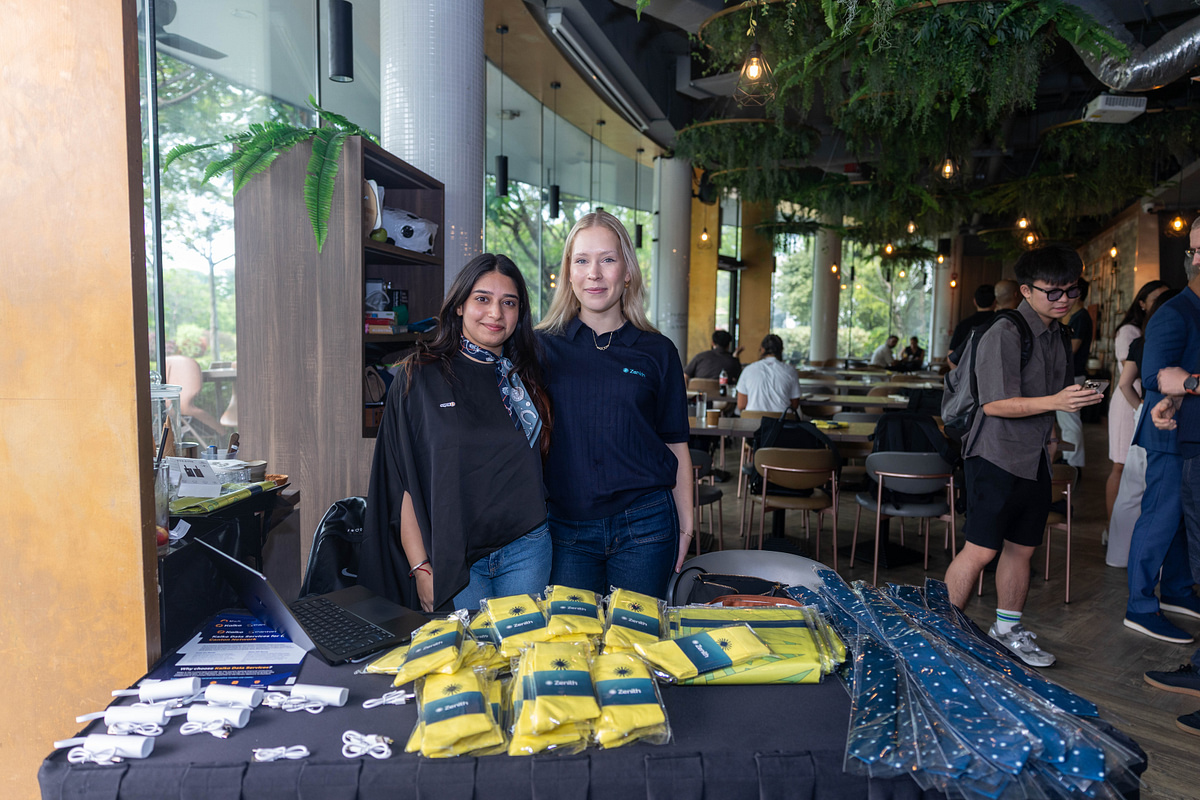
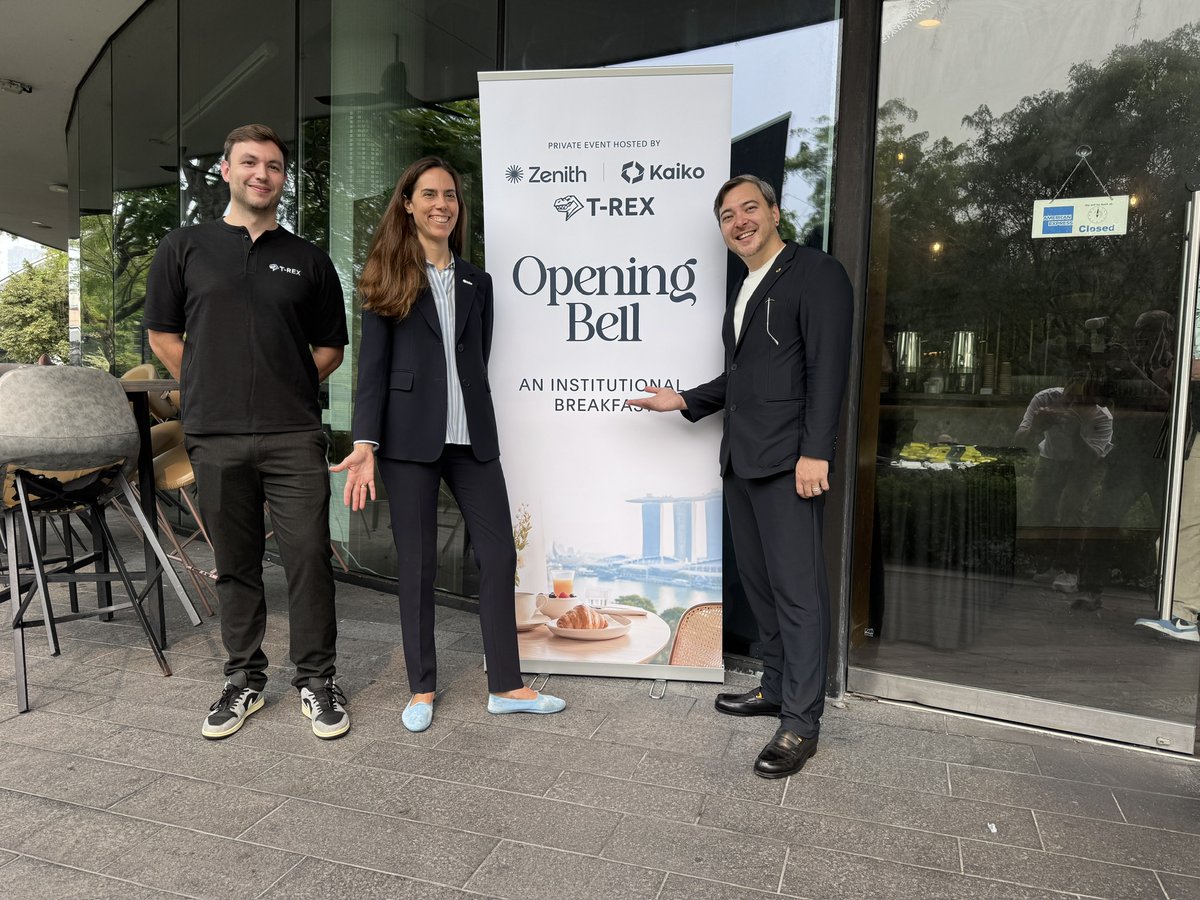
This is what the start of @token2049 week looked like 🇸🇬
The Opening Bell brought together institutions and builders who are actually shipping. Conversations about where institutional digital assets are actually heading, and a growing sense that the infrastructure questions are being answered one by one. DTCC's Tokenization Service goes live this month. external_call() comes to Canton Mainnet with the 3.6 upgrade, Zenith Mainnet follows.
Zenith EVM Testnet is live today, the first public venue where Ethereum developers can build on @CantonNetwork's institutional rails.
Start here: https://t.co/Uw1qopgIgF
Zth.
Most privacy solutions in blockchain have one thing in common: they throw composability out. Almost everything built around privacy considers it an afterthought, and that's precisely the design flaw Zenith was built to avoid.
@HeslinKim made that case on the Privacy vs. Transparency panel at DAS Asia 2026 yesterday alongside @wesarn_real from Digital Asset, @keoneHD from Monad, @LowBeta from Grayscale, moderated by @robbiek__
The panel covered the full landscape of privacy approaches, but the Zenith-specific moments are especially the ones worth going back to.
> (8:39) Threading the needle between Ethereum and Canton: connecting DeFi's mature ecosystem to Canton's institutional infrastructure natively
> (23:02) What Zenith actually built: the first non-EVM L1 with atomic EVM settlement, co-architected with Digital Asset's CPO Bernard Elsner
> (24:27) Deployment to Canton's Global Synchronizer: deterministic EVM state settlement in Solidity, targeting November
> (29:39) Zenith as a stack: public permissionless, private permission isolated, and private multi-party, customers choose their privacy tier
> (31:39) The shielded/unshielded workflow: move assets from open DeFi into Canton's selective disclosure layer for institutional compliance, then back out
Check the full panel below.
Zth.
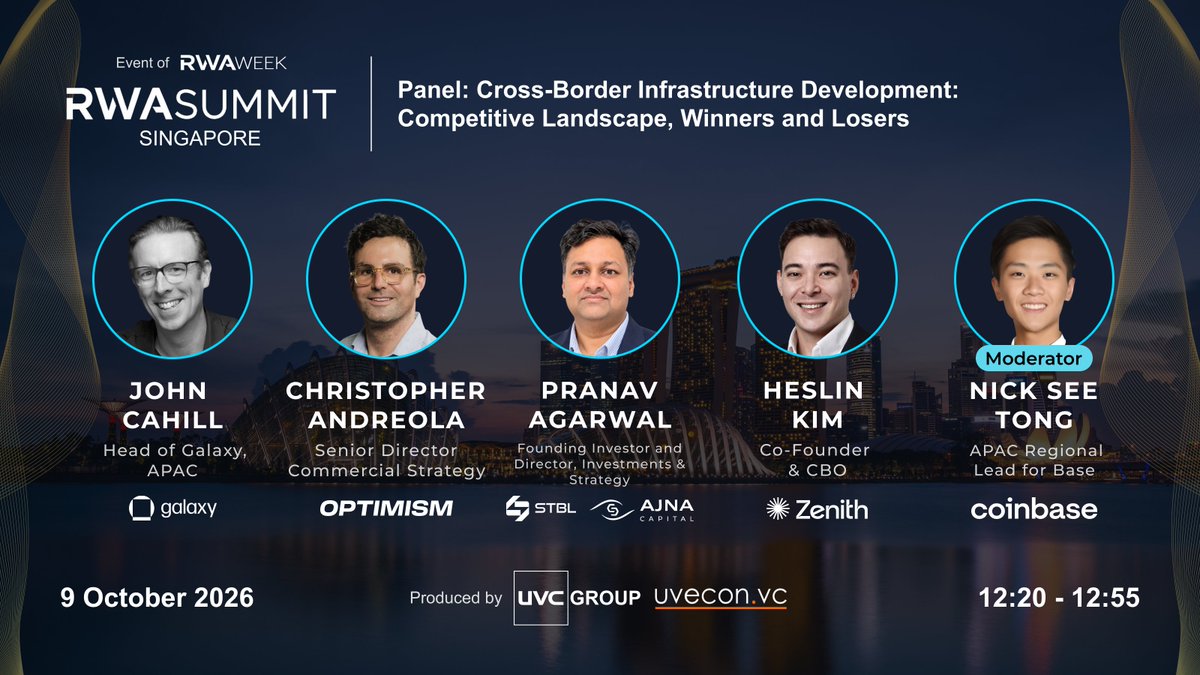
Tomorrow at @rwasummitglobal in Singapore, @HeslinKim joins @galaxyhq, @Optimism, and @base on the Cross-Border Infrastructure panel, discussing what actually differentiates the winners in cross-border RWA rails from everyone else.
The competitive dynamics question is one Zenith approaches from a specific vantage point. The institutional settlement layer already exists: $9T+ monthly on @CantonNetwork, with @The_DTCC tokenizing U.S. Treasuries on it this month. What Zenith adds is the EVM execution environment that connects Ethereum's developer ecosystem to that infrastructure natively, without rewrites or bridges. That's a different category from the L2 conversation happening elsewhere in the market.
Marina One, October 9. Register: https://t.co/B1QuY5efS1
Zth.
Panel Announcement: Cross-Border Infrastructure Development: Competitive Landscape, Winners and Losers at @rwasummitglobal SINGAPORE 🇸🇬
Featured Speakers:
• John Cahill - Head of Galaxy, APAC at @galaxyhq
• Christopher Andreola - Senior Director Commercial Strategy at @Optimism
• Pranav Agarwal - Founding Investor at @stbl_official & Director, Investments & Strategy at @Ajna_VC
• Heslin Kim - Co-Founder & CBO at @ZenithFdn
• Moderator: Nick See Tong - APAC Regional Lead for @base at @coinbase
They will explore:
• Evaluating L2 ecosystems and cross-border infrastructure models for institutional adoption
• The competitive dynamics driving liquidity, interoperability, and developer traction globally
• Identifying structural advantage: what will differentiate market winners in cross-border RWA rails
Details:
• When: 9 October 2026 | 09:00 - 18:00 SGT
• Where: Marina One, 5 Straits View (5-min walk from Marina Bay Sands)
👉 Register now to hear insights from our speakers: https://t.co/lof4x0hFjS
✍️ @rwasummitglobal Strategic Partners: @LynxcapDeFi | @dydxfoundation | @investax | @IxsFinance | @TheoriqAI | https://t.co/mnDbgbwEND | @pharos_network
🤝 @tokenisedglobal VIP Summit Co-host: @TRMLabs
🙌 THE DEALFLOW Co-host: https://t.co/qCBFDaWjI9
• Powered By: @UveconVC | @rwaweek series production •
Deploying Solidity on @CantonNetwork is the visible part of Zenith. Running the infrastructure underneath it is another story.
Zenith is building an Ethereum-compatible execution environment where Solidity applications can compose atomically with Canton-native assets and workflows. For developers, the experience is intentionally familiar: standard EVM tooling, contracts and interfaces.
Behind that execution environment, Zenith also participates directly in Canton as a Tier-1 Super Validator. Our Canton validator node runs on @catalyx_suite Blockchain Manager, while @IntellectEU hosts and operates our Super Validator weight, supporting monitoring, upgrades, key management and 24/7 operations.
As Zenith moves from public Testnet toward Mainnet, both sides of that stack matter: a familiar environment for builders, backed by infrastructure designed for the operational requirements of institutional markets.
Worth reading if you want to understand what running institutional-grade Canton infrastructure actually looks like: https://t.co/XSACfqghNz
Zth.
We are proud to run the Canton infrastructure under @ZenithFdn 🤝
Zenith is the native EVM execution layer for @CantonNetwork. Solidity teams bring the contracts they already have, unmodified, and they interact atomically with the infrastructure where regulated assets settle.
Its Canton validator node runs on CatalyX Blockchain Manager, and the @IntellectEU team hosts and operates its Super Validator weight around the clock.
"CatalyX by IntellectEU is fundamental for Zenith's institutional-grade products. Our infrastructure is supported by giants in the space."
- @HeslinKim, Co-Founder and CBO
Thank you for building with us!
Full case study in 🧵
Zenith Tier-1 Super Validator weight on @CantonNetwork runs on CatalyX Blockchain Manager, hosted and operated by IntellectEU around the clock.
Good infrastructure is what lets everything else work. Grateful to the @catalyx_suite and @IntellectEU team for being that layer for Zenith 👏
Bringing together the people building the next generation of institutional digital asset infrastructure, from tokenization to settlement.
Proud to open the week alongside @trex_network and @KaikoData.
Zth.
Good morning, Singapore.
Opening Bell is open. A room of institutional, RWA and settlement people, seated and talking tokenization before Token2049 kicks off.
Hosted by us with @ZenithFdn and @KaikoData. 📷