If I were launching a paid Discord tomorrow, my first customer would be me.
And no, not to fake the numbers 😂
I'd actually pay for a subscription using another account just to see what happens next.
Does the checkout feel smooth?
Do I get access immediately, or am I stuck messaging an admin with screenshots of my payment?
And when my subscription expires, does the system even notice?
Because imagine convincing someone to pay $30/month for your community, only to make them chase you around Discord just to get what they paid for.
That's a terrible first impression.
It's one reason I've been paying attention to @AtlasClicks.
You connect your own Stripe account, create checkout links, and automate Discord access based on subscription status.
No need to spend your evenings manually checking who paid and who should still have access.
It's not the flashy side of the creator economy.
Nobody goes viral talking about subscription management.
But a smooth customer experience is one of those things people barely notice when it works and never forget when it doesn't.
If you run a paid community, have you ever tested the entire signup process from your customer's perspective?
Your checkout shouldn't be a black box.
If you're making money selling digital products, paid communities or subscriptions, you should understand exactly what happens after a customer clicks Pay.
Where does the money go?
Which account processes it?
What fees are involved?
And how much control do you actually have over the payment setup?
This is one of the reasons I've been looking into @AtlasClicks.
Unlike the typical all-in-one marketplace approach, AtlasClicks lets sellers connect their own Stripe account and receive payments directly through it.
The distinction is worth understanding.
Whop gives creators a full ecosystem for selling, distributing and managing products. That's useful, especially when you're starting out.
But not every creator wants their payment setup structured around a marketplace.
Some would rather operate through their own Stripe account while using separate tools to handle the storefront, subscriptions and community access.
AtlasClicks is built around that option.
And the pricing is worth comparing too.
Its Pro plan has no platform fee on sales through your own links, although Stripe processing charges still apply. Its Free and Business plans have a 3% platform fee.
That doesn't automatically make it cheaper for every seller.
It does mean you've got another setup to evaluate instead of blindly accepting whatever you're currently using.
We're entering an era where creators are building actual businesses, not just selling random PDFs.
The payment infrastructure behind those businesses deserves serious attention.
If you're already generating revenue through Whop, compare how your money moves before deciding where your next thousand sales should happen.
Explore @AtlasClicks:
https://t.co/gGZVTNBxw8
Generating zero-knowledge proofs can be computationally demanding, especially when applications need them at scale.
In a 2KB browser test, @primus_labs took 2.66 seconds, against 86.21 seconds for Reclaim and 390 seconds for Pluto. It also completed MPC-TLS verification in 5.11 seconds, compared to TLS Notary’s 53 seconds, using almost the same memory (146MB vs 148MB).
The difference is significant: faster proof generation without a noticeable increase in memory use. What a wonder!
The world’s most valuable data remains locked in Web2 systems.
Financial records, exchange balances, credentials, and user activity are useful precisely because they are private.
Bringing them on-chain today forces a hard tradeoff: either expose the data to make it verifiable, or keep it private and lose the ability to use or prove it.
@primus_labs addresses this with two cryptographic primitives working together.
zkTLS adds zero-knowledge proofs on top of standard TLS sessions. An attestor can prove that a specific HTTPS or API response came from the claimed server over a genuine session, without seeing or revealing the underlying plaintext.
It supports both MPC mode (where the attestor and client jointly generate session materials so the client cannot modify data) and lighter Proxy mode, while delivering significantly higher performance than earlier approaches.
Once data is verified, FHE allows computation directly on encrypted values. Balances, transfer amounts, and logic stay encrypted at every step. Smart contracts perform homomorphic operations on the ciphertext, and only the authorized party can decrypt the final result.
Primus’s in-house AutoHoG compiler and GPU engine have brought this to practical speeds, with 64-bit confidential transfers completing in roughly 90 ms on consumer RTX 5090s and high throughput when scaled across multiple cards.
The system also uses Trusted Execution Environments (TEEs) to protect runtime integrity and sensitive cryptographic materials across the network. The result is a pluggable verification and computation layer that works on existing chains rather than requiring a new one.
Data can be proven authentic.
It can be processed while encrypted. And it stays private by default until an authorized, auditable disclosure is required.
https://t.co/KHAqacV1F3
🌐 من التمويل التقليدي إلى الأسواق القائمة على البلوكتشين… TRON وSecuritize بيفتحوا نقاش مهم حول مستقبل الأصول المالية الرقمية!
في حوار جمع Sam Elfa من TRON DAO مع Graham Ferguson من Securitize، تمت مناقشة تكامل Securitize مع TRON وفرص نقل الأصول الواقعية إلى عالم البلوكتشين. 🧵👇
#TRON
#TGF
#TRONGlobalFriends
A reserve dashboard is only as useful as the information behind it.
This is something I think crypto should take more seriously.
An institution might publish a reserve figure, but readers also need confidence in where that information came from, how it was verified, and what sensitive details remain protected.
Primus has a dedicated Proof-of-Reserves approach built around its Data Verification and Computation architecture.
Its technical materials describe a workflow combining:
• zkTLS to authenticate offchain data sources.
• A Trusted Execution Environment for confidential data handling.
• zkVM-based computation to verify the aggregated result.
• Configurable disclosure, so sensitive account-level details do not all need to become public.
That combination is interesting because institutions often hold assets across both onchain and offchain environments.
One important distinction: Proof of Reserves is not automatically a complete proof of solvency. Liabilities, coverage, scope, and the timing of verification still matter.
Good infrastructure should make the evidence stronger, not encourage people to stop asking questions.
That's why @primus_labs' verification-first approach is worth examining.
Explore Primus XP: https://t.co/BIJ7RSkILV
A $2,400 win and bro is sitting there like he just got a regular notification! Big Bass Christmas Blast really delivered on @1win .
Honestly, I'd be jumping out of my chair seeing $2,400 pop up on my screen. How did he manage to stay that calm?😐
Most people talk about AI agents as if creating an agent is the difficult part.
I think the bigger challenge is making agents economically accountable.
@TermiX becomes interesting.
The protocol focuses on the execution and settlement layer of agent-to-agent work.
Think about what happens when an AI agent hires another agent to complete a task:
Who locks the payment?
How is the work delivered?
What happens if the result is disputed?
Who decides when payment is released?
@termix_ai approaches this through an onchain workflow built around four states:
Escrow → Deliver → Challenge → Settle.
Funds are locked when a quote is accepted. Delivery is recorded, a challenge period allows evaluation, and settlement releases payment while updating reputation.
That's more than another AI agent marketplace narrative.
It's an attempt to give autonomous agents a framework for doing business with accountability.
The real question is:
Can agent economies scale without reliable payment, dispute resolution and reputation infrastructure?
and just like that, we’re coming to the end of this primus campaign on kaito
it’s been interesting following what @primus_labs is building and taking a closer look at the problems they’re trying to solve
one thing that has become increasingly clear to me is that privacy and verifiability shouldn’t have to compete with each other
as more financial activity moves onchain, institutions will need ways to protect sensitive information without sacrificing the ability to verify what’s happening
that’s where technologies like FHE and zkTLS become particularly important
keeping financial data encrypted while still allowing computations to happen, verifying information without exposing the underlying data and introducing controlled access when disclosure is necessary
It's important piece of infrastructure for the next phase of onchain finance imo
and i think primus is positioning itself to play a meaningful role in shaping that landscape
there’s still plenty of work ahead, but the direction is worth paying attention to
it’s been a good run exploring the ecosystem, learning more about the technology and sharing my thoughts along the way
big respect to the primus team and everyone who’s been contributing to the campaign
we move 🔥🏆
🎯 Every round brings a new possibility, but knowing when to stay focused makes the experience even more interesting. @DylanGG brought the excitement with another incredible moment! 🔥
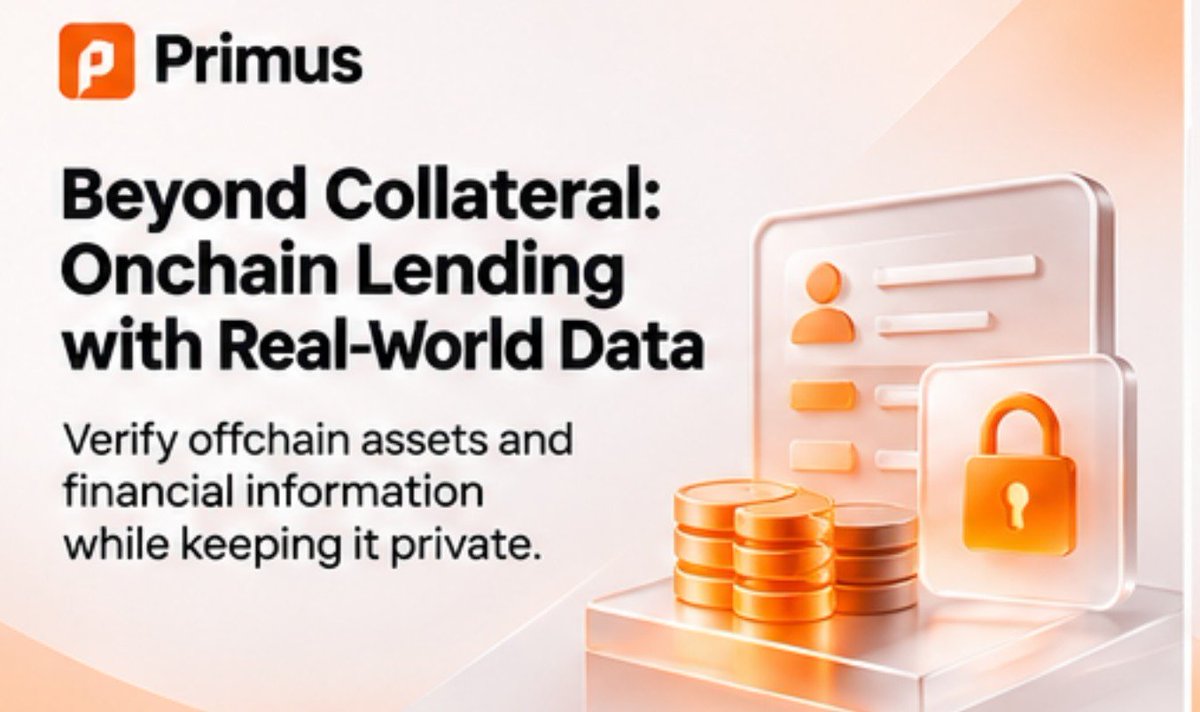
Onchain lending has a limitation that deserves more attention: financial reputation is bigger than wallet collateral.
Traditional credit decisions can involve income, payment history, account records, and other offchain information.
But most DeFi lending models have historically leaned heavily on onchain collateral because verifying external financial information without compromising privacy is difficult.
Imagine a borrower who has significant assets on a centralized exchange.
A lending protocol may want evidence of those assets before considering a more flexible lending arrangement.
Does the borrower need to publish their entire exchange account and financial history?
That is where privacy-preserving verification becomes useful.
Primus documentation explores use cases involving zkTLS-based proofs of offchain assets, credit information, and dynamic asset verification.
The idea is to let applications evaluate relevant financial evidence while limiting unnecessary disclosure.
This could open interesting design space for risk-based lending, dynamic collateral requirements, and more personalized financial products.
But there is an important caveat: a cryptographic proof of an asset or credit-related claim does not eliminate default risk or solve every lending problem.
It gives applications another way to assess information.
That's the part of @primus_labs I find worth researching.
https://t.co/BIJ7RSkILV
You used to need a separate popup tool, then another system to move the list over and start messaging.
@TxtCart puts the popups, QR codes, keywords, and SMS in the same place so the signup can start turning into revenue without stitching tools together.
proof is very essential when it has to do with finance.
projects can verify their reserves without putting all the sensitive operational details out in public.
proof of reserve is not just about showing numbers. It's about proving those numbers are real and independently verifiable.
@primus_labs is combining zkTLS, TEE and zkVM which helps verify offchain reserve data, process it securely and generate cryptographic proofs without exposing sensitive information.
Unitas is one example, using Primus technology for its USDu and sUSDu ecosystem.
one important factor is Proof of Reserves doesn't automatically mean Proof of Solvency. Liabilities and asset ownership matter too.
the bigger focus is making transparency possible without sacrificing privacy.
crypto users shouldn't just trust reserve claims, they should be able to verify them.
Want to explore how verification works?
visit - https://t.co/91mNnxD5Lm
verify and complete available tasks.
ترون قربت من 416 مليون حساب، بس هل ده معناه نفس العدد من المستخدمين؟
العداد بيقول رقم، والنشاط بيحكي باقي القصة. نفهم الفرق بالأرقام من ترونسكان في الفيديو.
#TRONGlobalFriends#TGF#TRON
I came to TermiX through the Kaito Katalyst campaign, but exploring https://t.co/QZJiDC6NB8 has shown me there's a lot more happening across the ecosystem.
There are several campaigns and activities beyond Kaito where users can explore different ways to participate and earn TermiX Points.
I found opportunities like:
• JEV FC Buddy: Play classic NES co-op games with an AI teammate and earn 500 TP with a $1 purchase.
• Custom AI 3D Holographic: Order a custom collectible card and earn 500 TP.
• Brand Promo Video Agent: Order AI promotional videos and earn up to 15,000 TP.
• Montage Studio Agent: Order AI music videos or ads and earn 15,750 TP.
• BNB Chain Quant Agent: Participate as a client or strategy provider and earn points based on completed jobs.
Some opportunities involve purchases or delegated trading capital, so it's worth checking the requirements before participating.
The one I'm particularly interested in right now is the Binance Agent ID campaign.
You can link your Binance Agent ID, install TermiX Skills through your agent, connect its Binance Agentic Wallet during setup and earn 50 TP. One reward per wallet.
I'm also working on building my own agent on @termix_ai, so there's more for me to explore beyond the campaigns.
It's interesting to see how the marketplace brings together different ways to interact with AI agents, use their services and earn points through participation.
I initially came for Kaito Katalyst. Now I'm exploring what else I can actually build and do here.
If you're planning to participate in an upcoming Kaito × TermiX epoch, you can sign up through my referral link and get started:
https://t.co/yqafesp25F
It's been a rough month for crypto and seeing BTC and ETH take such heavy losses hasn't been pleasant.
But the numbers @rntprotocol shared tell a pretty different story for RNT.
According to its November 18 CoinGecko snapshot, here's how the last 30 days looked:
BTC: -22.5%
ETH: -26.1%
RNT: +5.4%
Even over the previous week, when the overall crypto market lost 11% and the RWA sector dropped 5.4%, RNT managed to stay flat.
And looking at the bigger picture, RNT has gained 106% over the past 12 months.
That's a strong difference in performance, especially during a market sell-off.
I've also been following RNT Lend, where tokenized real estate can be used as collateral for stablecoin borrowing.
Seeing the token hold up better than much of the market while the team continues building around real-world assets is encouraging.
Of course, past performance doesn't guarantee what comes next but RNT has given me another reason to keep following its progress.
𝐄𝐚𝐫𝐥𝐲 𝐀𝐥𝐩𝐡𝐚 𝐒𝐩𝐨𝐭𝐭𝐞𝐝 🚨
Meet @entropyIO ,
a project building perpetual futures markets for traditionally hard-to-access assets, including pre-IPO companies, equities and other financial markets, powered by Hyperliquid.
Still in early alpha, Entropy has already raised $14M in funding led by Ribbit Capital, alongside a separate $40M HYPE stake supporting its deployment.
But beyond the product, there's something interesting happening around its community.
Entropy has upgraded its Discord and introduced a role system designed to recognize participation, meaningful contributions and community leadership.
Here's how it works:
➥ Entropy Voices: The entry point for emerging creators publishing original Entropy content on X. It's an opportunity to get recognized and begin contributing to the ecosystem.
➥ Entropy Council: For established contributors who progress from Voices through consistent, meaningful participation. These members help drive discussions, support others and contribute across Discord and X.
➥ Entropy Genesis: The highest community distinction, awarded to exceptional creators, leading traders and members whose contributions set the standard. It also comes with an Entropy affiliation badge on X.
➥ Entropy Collective: The community managers and contributors responsible for moderation, engagement and community operations.
➥ Entropy Core: The official Entropy team.
If you are interested in following Entropy's journey or contributing to its growing ecosystem, the Discord is a good place to start.
It's more than joining a Discord.
It's about contributing, building and growing alongside Entropy.
Join here: https://t.co/oTwyDfSU8I
İlk dakikalarda alınan etkileşimi varsayıyor sanırım.
Yada belirli bir süre bekleyeceğiz bilmiyorum.
@buzzchain_io 2. Gönderim ve kaç loud alacak bakacağım.