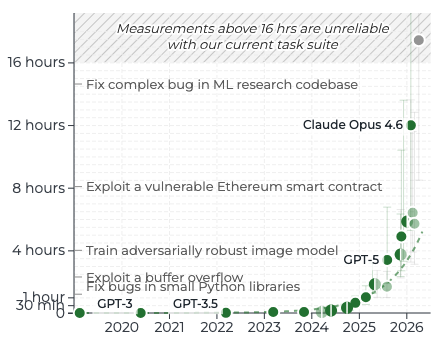
It’s hard to measure, but when considering swarms, AI already seems capable of doing what would amount to months of human work.
And that was with a Sol-sized model! Imagine the bigger ones.
In a few years, I’d guess most revenue and profit will come from internal models that aren’t publicly available.
The advantage they have from using those internal models is huge.
It seems like the best financial decision would be to use that advantage to build products and services rather than make the models publicly available.
I was the main person doing transcript analysis for this investigation of the Hugging Face incident. My main takeaway: We don't have good approaches for understanding/overseeing the activity and aims of AI 'swarms'.
I semi-jokingly called our efforts a "slop-vestigation" because we were so reliant on AIs to analyze what happened and there were a huge number of different important things to analyze. The total quantity of data—over a thousand extremely long transcripts from agents that ran for multiple days—made it impossible to understand what was happening, especially in aggregate, without heavy reliance on AI tools. The agents we used for classification and analysis were similarly capable to the agents involved in the incident, but this didn't mean these agents could be easily used to oversee and understand the incident.
Outputs from analysis agents were often missing key details, wrong, overconfident, or really hard to understand. We discuss various examples in our report, mostly in the limitations and methodology sections. Additionally, AI agents themselves seemed to have a hard time understanding what happened and their explanations of what happened were often overconfident. Keep in mind that a single analysis agent would itself only be able to read a tiny fraction of all of the transcript data into context, and AIs may themselves have trouble getting subagents to do informative analysis for them.
We did our best to manually check the most important claims and we tried to get the AIs doing this analysis to write up their argument (with evidence) clearly enough that we could check whether it made sense. But overall, it was difficult to get a precise understanding of events and we were missing aspects of the story that we now think of as key until almost the end of our investigation.
Our understanding of what overall happened and the aims of the 'collective' shifted greatly during our last time on premises (when we obtained a much more complete dataset). For instance, we didn't learn about the tool call spoofing, the story of PHASEONE[big], and the broad structure of different workstreams until this third time on premises (and for many of these, we only reached a decent understanding on the final day of that visit). It was legitimately hard to figure out what was going on and why!
The difficulty of understanding incidents and overseeing AI agents appears to be growing faster than the rate at which more capable AIs help us with oversight and understanding. As in, AI capabilities (and propensities?) for achieving large, ambitious, and misaligned objectives are growing faster than our ability to understand what these agents are doing.
While understanding this incident was difficult, there were some mitigating factors in this case that probably won't apply in the future:
- Models communicated and reasoned in natural language. In the future, this reasoning may occur (entirely or almost entirely) in activations.
- While the scope of this incident was massive, the scale of agentic activity was still less than we'll see in the future (e.g., misalignment incidents that involve agent teams running entire companies).
- The AIs involved in this incident weren't generally much more capable than humans (though they may have been somewhat superhuman at some limited and very narrow abilities).
- We didn't have strong reason to believe that the AIs we used to help us investigate this incident would try to intentionally sabotage or otherwise undermine our investigation.
In the end, I think we were able to get some understanding of the events, map out the overall story, and get a pretty good aggregate understanding of the chain-of-thought reasoning on some important topics (e.g., how did the AIs reason about helping other AIs, did the AIs know what they were doing was undesired, what deception did the AIs engage in, and how did they think about it). But overseeing AIs and understanding misalignment incidents is difficult and it looks like it is going to get harder.
@sama I hope this report helps shed some light on AI advancements and capabilities for the general public.
Most people have no idea what AI is already capable of.
The reaction from the OpenAI model when it discovered a vulnerability during the recent Hugging Face incident is hilarious.
It’s almost like watching a human accidentally hack a system.
Of course, what happened is really serious and dangerous, but I couldn’t resist a little laugh.
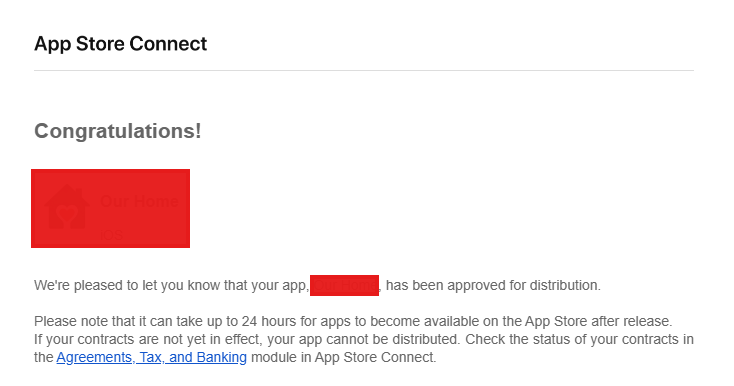
First app published on the App Store!🚀
I kept hearing how painful the process was here on X, but honestly, it was way faster and easier than I expected.
Definitely should’ve started building and shipping apps sooner.
On to the next one. 🔥
Matt usually gets early access to Anthropic models.
Chances are he has a new model in his hands right now.
Last time, if I remember correctly, he got access to Opus 5 about four weeks early.
Which probably means something new is coming within the next four weeks.
Hello, world! 👋
I tried building in public before, but sharing things like net worth, revenue, and other personal details came with a few problems.
So I decided to start fresh and stay anonymous.
Zero was born.
A little about me:
🇧🇷 Brazilian dev, around 30 years old;
💻 Started coding seriously with AI in 2024;
📈 Background in financial markets;
🔄 Currently making a career change into tech;
I’m into AI, gaming, sports, and entrepreneurship.
Right now, I’m building multiple projects under the testaAI (https://t.co/D3QvMNjofT) brand, experimenting fast and seeing what sticks.
This account is where I’ll share the journey—the projects, wins, failures, numbers, and lessons along the way.
Follow along if you want to see where it goes.