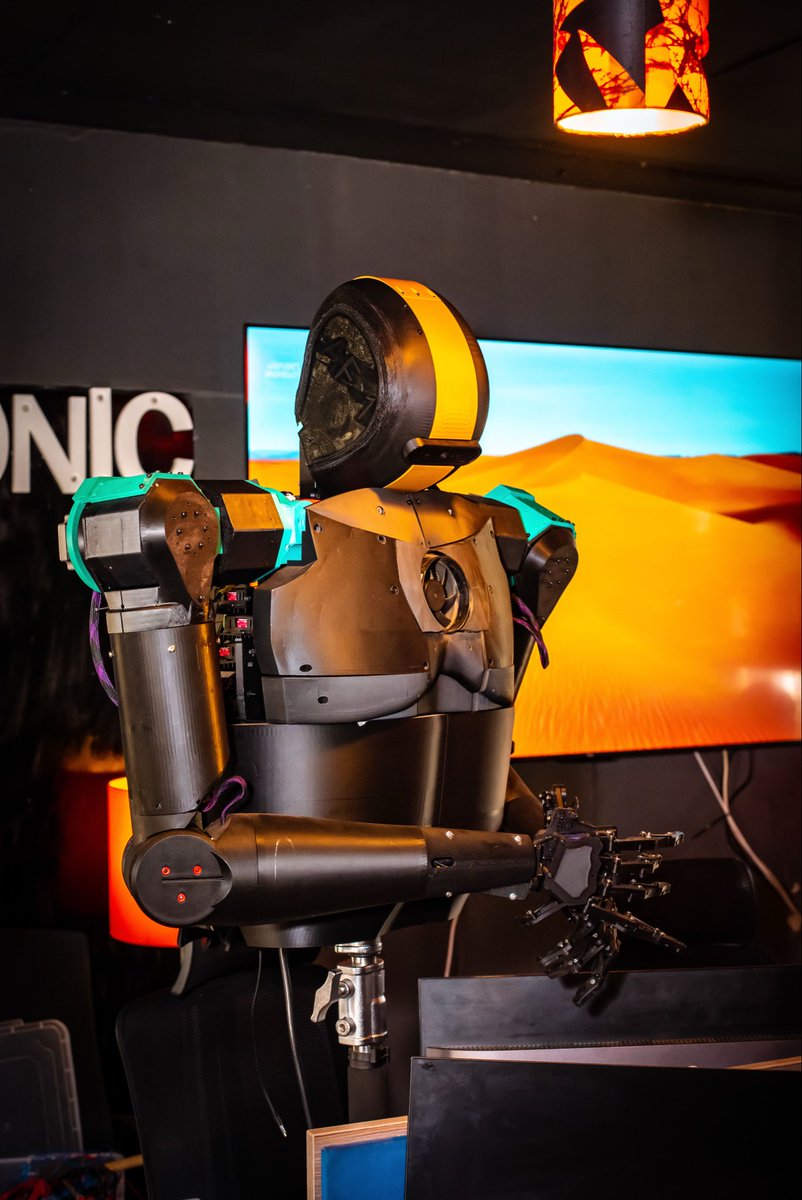
Zerobionic has won the Innovation Showcase at the Africa Sustainable Futures Awards, presented at the @FinancialTimes Africa Summit in #London alongside the @WorldBankGroup Multilateral Investment Guarantee Agency.
Africa's first signing humanoid platform.
At 21, Maxwell Opondo is building robots to help deaf students in Kenya access science lessons that many classrooms struggle to make accessible. 🤖🇰🇪
His Nairobi-based startup, Zerobionic @Zero_bionic , has developed humanoid robots that translate teachers’ spoken words into sign language in real time, helping deaf and hard-of-hearing students follow STEM lessons.
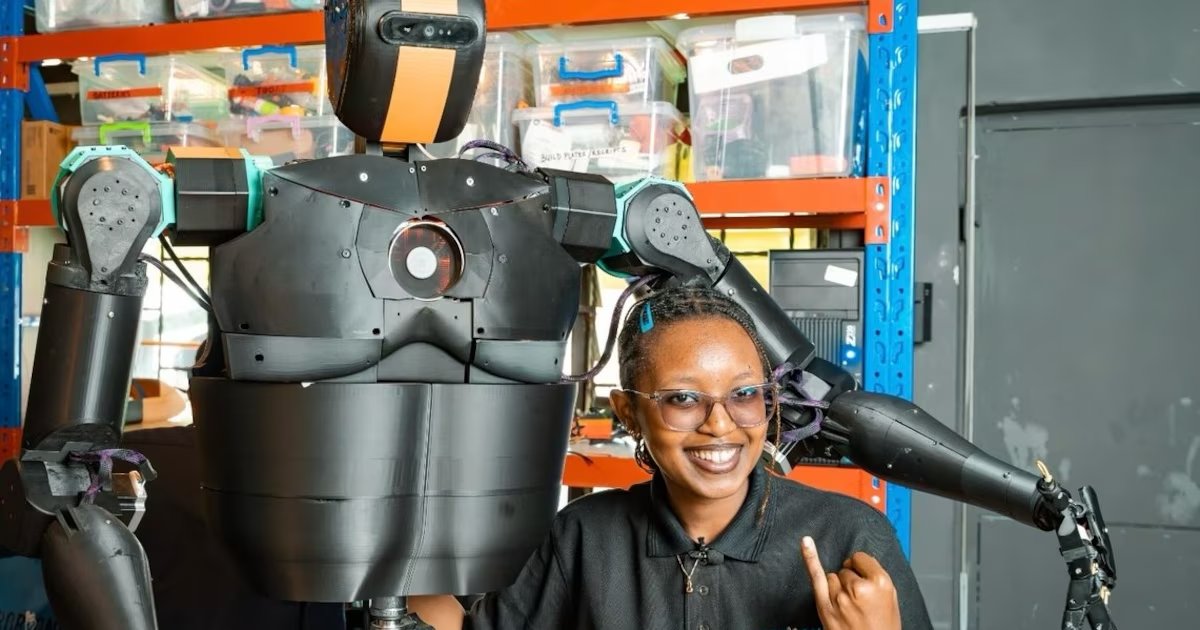
The robots are built using recycled plastic and 3D-printed parts, making affordability part of the mission. Already piloted in schools across Machakos and Garissa counties, they have achieved a reported 92% translation accuracy.
But Maxwell’s journey goes beyond building robots. From winning a national science competition while still in secondary school to earning international recognition for his innovation, the Strathmore University computer science student is working to make education more inclusive through technology.
In 2026, Zerobionic was selected as Kenya’s sole representative in Qualcomm’s Make in Africa Mentorship Program, chosen from over 1,200 applicants across 45 countries.
#RefinedNG #AfricanInnovation #TechForGood #Accessibility #AfricanYouth #Kenya
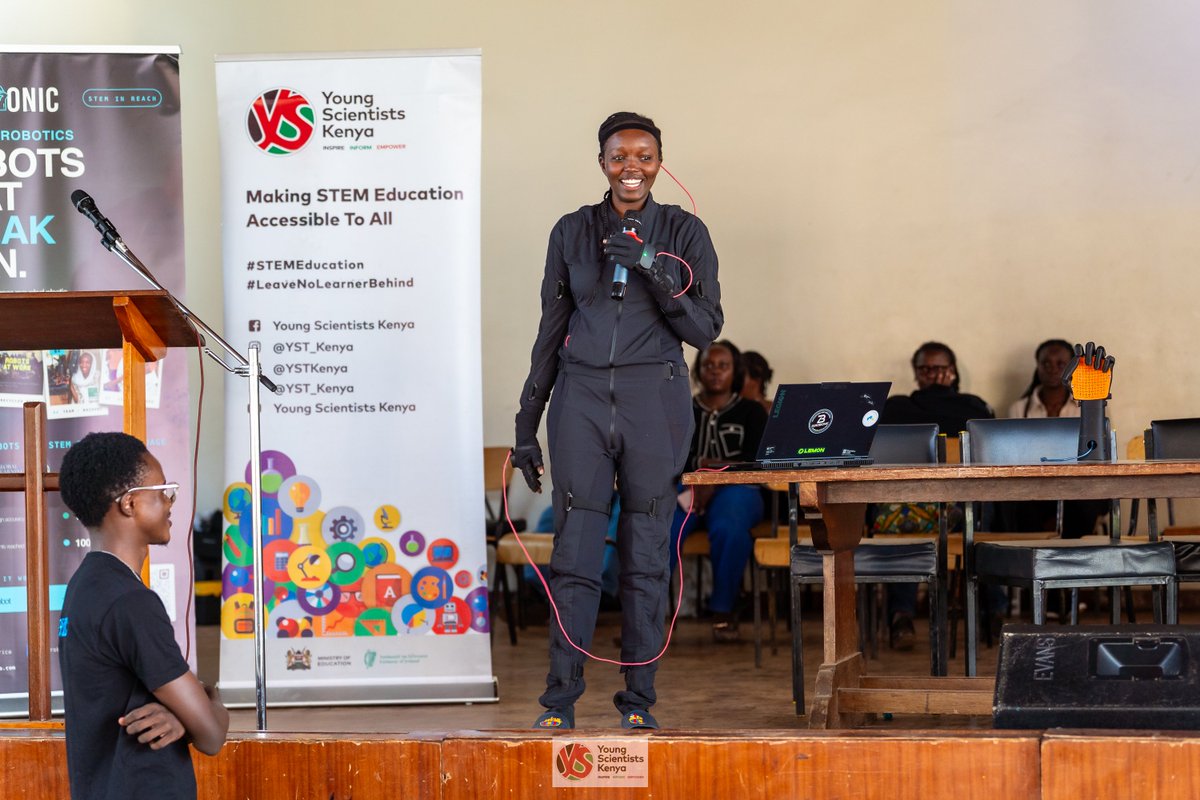
This International Week of the Deaf, we’re opening up conversations around creating inclusive spaces for deaf people. In our mission to ensure that #STEMEducation is accessible to all, we have had deaf students participate in our school outreaches and at the National Exhibition.
Kenyan startup ZeroBionic built a $350 robotic hand that translates a teacher's voice into sign language in real time.
92% accuracy. Already in 78 schools. Founded by 22-year-old Norah Kimathi.
300,000 deaf children in Kenya just got a new chance. 🇰🇪✨
#Kenya#EdTech
What if a robot could help make science classrooms accessible to every student?
Kenyan startup ZeroBionic is using robotic arms made from recycled plastic and locally trained sign-language data to help deaf and hard-of-hearing students participate in STEM education.
In conversation with Jamila Versi, 23-year-old founder Maxwell Opondo shares how an idea born from exclusion in the classroom is growing into an African innovation reaching students across the continent — while keeping accessibility at its core.
👉 Read the full interview and discover how ZeroBionic is reimagining inclusive education through technology: https://t.co/AoH36gpWjR
#NewAfrican #Africa #ZeroBionic #Innovation #Robotics #STEM #InclusiveEducation
A 22-year-old in Nairobi built robotic hands from recycled plastic that translate a teacher's voice into sign language 🤖🙌 Norah Kimathi founded ZeroBionic to reach 300,000 deaf children in Kenya with almost no access to education
https://t.co/RhYxbWRpWR
TIENE 22 AÑOS Y CREÓ MANOS ROBÓTICAS CON PLÁSTICO RECICLADO PARA AYUDAR A NIÑOS SORDOS EN KENIA
El sistema ideado en Nairobi convierte lo que dice el docente en gestos mecánicos y también lee la respuesta del alumno con una cámara, una función pensada para prescindir del intérprete presencial.
En un pequeño laboratorio de la Universidad Strathmore, en Nairobi Kenia, Norah Kimathi construye manos robóticas impresas en 3D con plástico reciclado que traducen en tiempo real la voz de los docentes a lengua de señas para niños sordos. La científica tiene 22 años y dirige ZeroBionic, la startup que fundó en 2023 con el objetivo de resolver uno de los problemas educativos más persistentes del país: más de 300.000 niños sordos o con hipoacusia que no pueden seguir las clases porque la mayoría de los maestros no saben enseñar.
Infobae 📎 https://t.co/Scc1ixADa2
Kenyan startup ZeroBionic has built a mechanical hand that can translate a teacher's voice into sign language in real time, allowing deaf children to learn alongside their hearing counterparts. https://t.co/MgeGLkeRhB
1/ Kenyan startup makes robotic hands that translate teacher’s voice into signs for deaf students. ZeroBionic was founded by 22-year-old Norah Kimathi.
https://t.co/KMkCBXJQzG
🇰🇪 Dans une école pour malentendants de Nairobi, capitale du Kenya, des élèves montrent leur excitation en signant devant un bras robotisé: conçu par une jeune start-up kényane, il reproduit la langue des signes et vise à révolutionner leur apprentissage ⤵️
Can a robot make culture more inclusive?
🇰🇪 Norah Kimathi is using sign-language robotics to make learning and storytelling more accessible to deaf communities.
Meet the #Creatives4Peace online challenge winner behind Zerobionic: https://t.co/EkzHUflugK
Meet our alumni and partners, Zerobionic Africa 🤖
They’re building AI-powered robotic systems made from recycled plastics that translate speech into sign language and sign language back into text, helping make education more accessible and inclusive for deaf learners.
#YSK2026
Zerobionic is the only Kenyan startup in Qualcomm’s 2026 cohort, they're scaling 3D-printed AI robotics that translate speech to sign language for classrooms
We are proud of @YSTKenya Alumni Maxwell Opondo, founder of Zerobionic. The startup develops humanoid robots that help students to access science and technology lessons, which teachers find difficult to deliver in sign language.
Well done Maxwell!👏
🔗https://t.co/H1kMAwkRc1
Championing for #STEM and #innovation in schools starts with guiding learners to identify challenges around them and equiping them with the necessary skills to address those challenges.
Happy World Youth Skills Day! 💙🌍