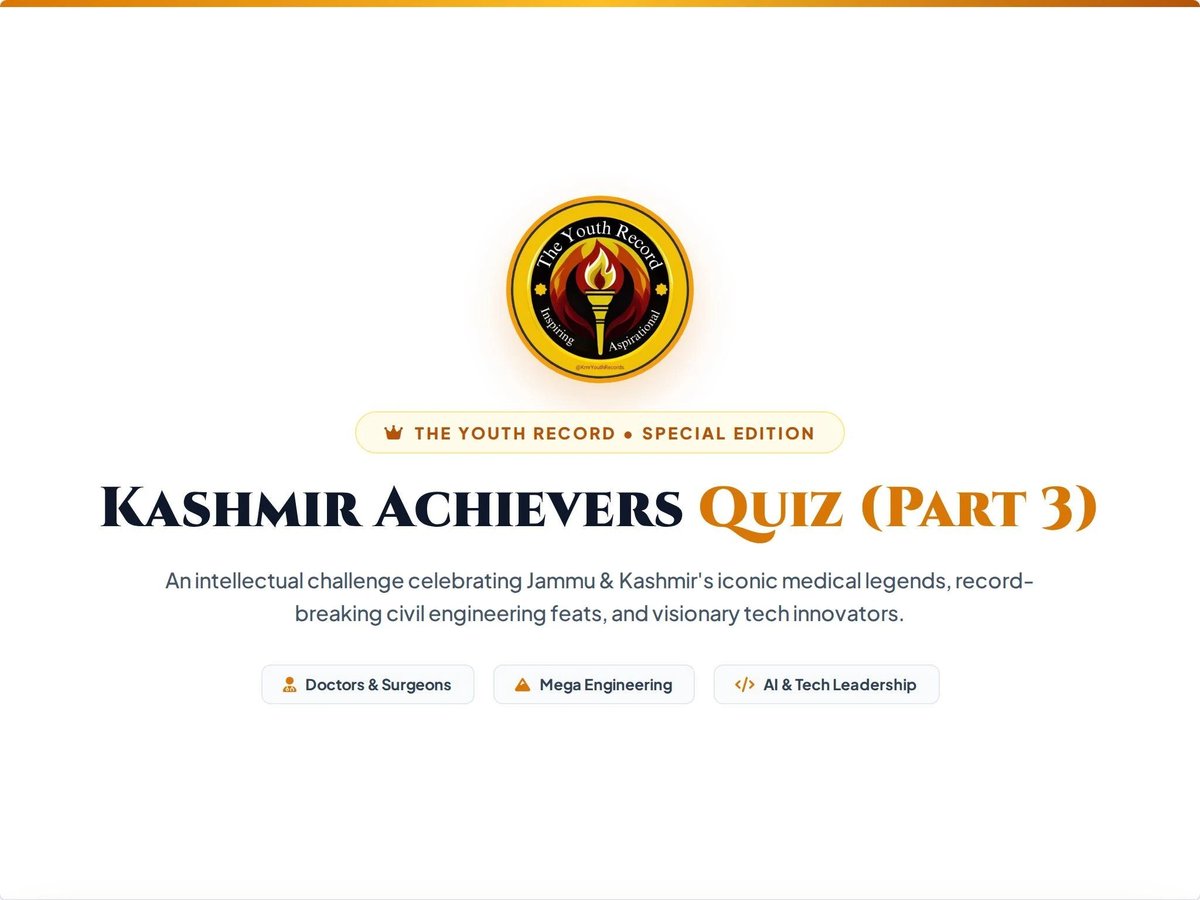
THE YOUTH RECORD | KASHMIR QUIZ – PART 3
From pioneering physicians and world-record engineering to healthcare and technology, Jammu & Kashmir has produced remarkable achievers.
Test your knowledge:
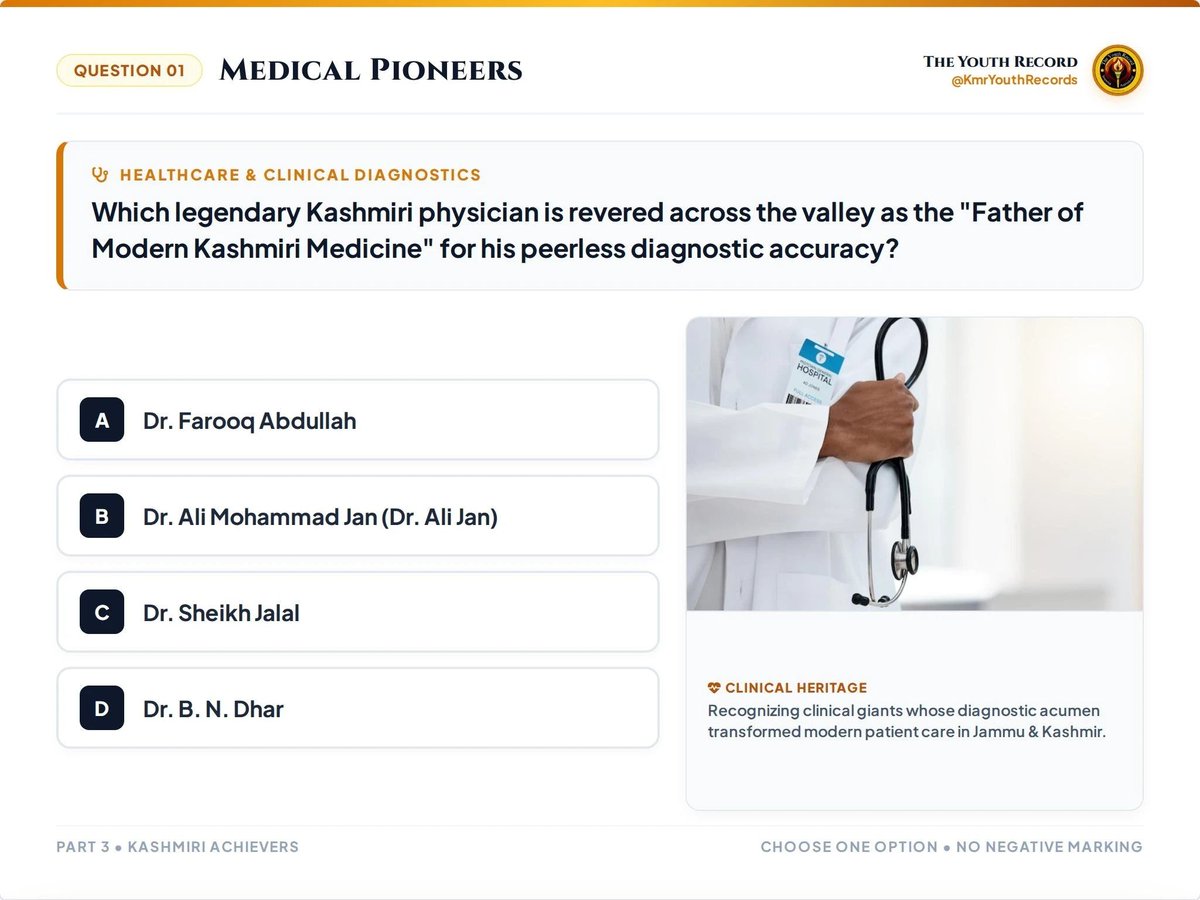
▪︎ Who is known as the Father of Modern Kashmiri Medicine?
▪︎ Which bridge is the world’s highest railway arch bridge?
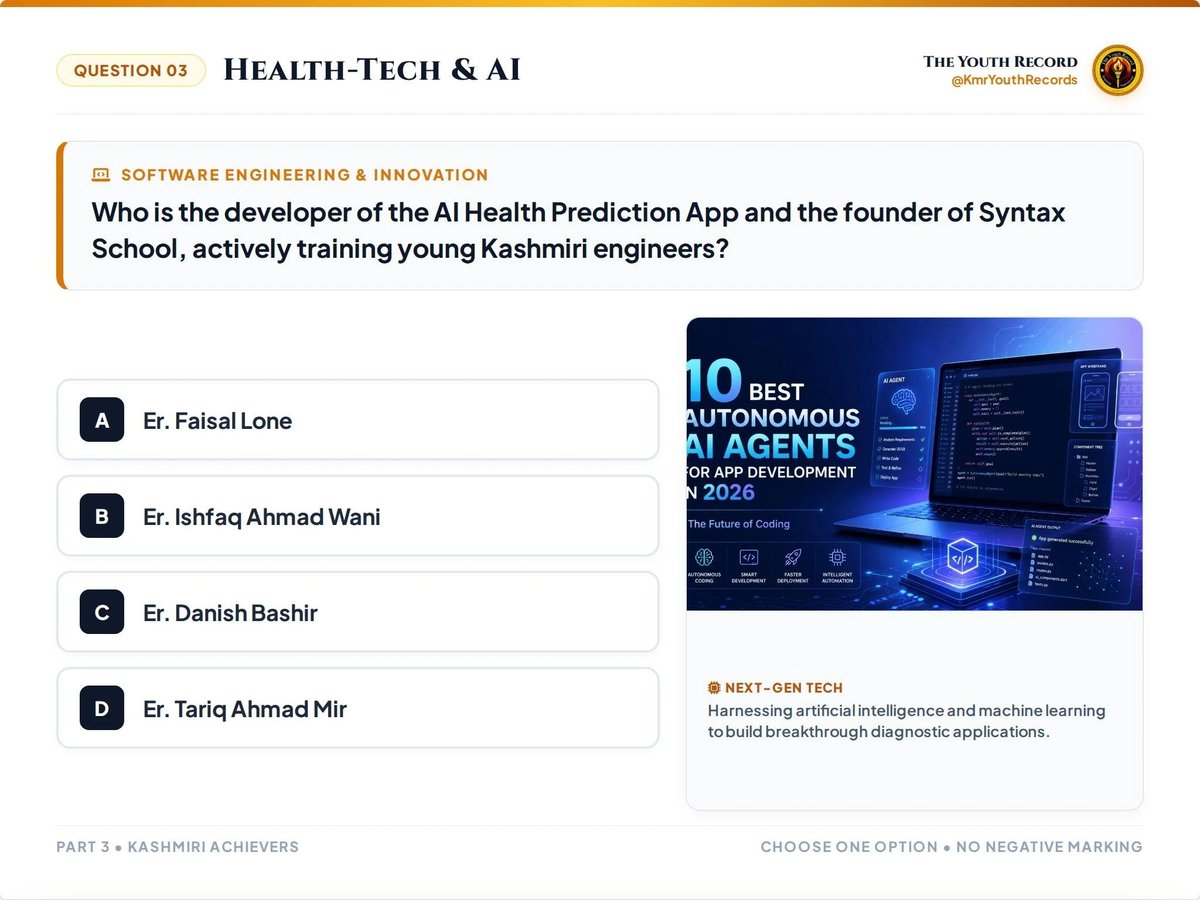
▪︎ Who developed an AI Health Prediction App and founded Syntax School?
▪︎ Which premier institute at Soura is Kashmir’s apex tertiary healthcare centre?
▪︎ Which national engineering institute at Hazratbal was formerly known as REC Srinagar?
Answers: Q1–?, Q2–?, Q3–?, Q4–?, Q5–?
#TheYouthRecord #KashmirQuiz #KashmirAchievers #KashmirInnovators #KashmirTalent
THE YOUTH RECORD | KASHMIR QUIZ – PART 3
From pioneering physicians and world-record engineering to healthcare and technology, Jammu & Kashmir has produced remarkable achievers.
Test your knowledge:
▪︎ Who is known as the Father of Modern Kashmiri Medicine?
▪︎ Which bridge is the world’s highest railway arch bridge?
▪︎ Who developed an AI Health Prediction App and founded Syntax School?
▪︎ Which premier institute at Soura is Kashmir’s apex tertiary healthcare centre?
▪︎ Which national engineering institute at Hazratbal was formerly known as REC Srinagar?
Answers: Q1–?, Q2–?, Q3–?, Q4–?, Q5–?
#TheYouthRecord #KashmirQuiz #KashmirAchievers #KashmirInnovators #KashmirTalent
Congratulations to Rehan Nabi, a young sporting talent from Shopian.
With representation in cricket at the district level and softball at both district and state levels, Rehan continues to build his sporting journey with dedication and determination.
Wishing him continued success and many more achievements ahead.
Shopian, Kashmir | KMR Youth Records
شوپیان سے تعلق رکھنے والے نوجوان کھلاڑی ریحان نبی کو دلی مبارکباد۔
ریحان نبی نے کرکٹ میں ضلعی سطح پر جبکہ سافٹ بال میں ضلعی اور ریاستی سطح پر نمائندگی کرکے اپنی صلاحیتوں کا مظاہرہ کیا ہے۔
ان کے روشن مستقبل اور مزید کامیابیوں کے لیے نیک خواہشات۔
شوپیان، کشمیر | KMR Youth Records
#RehanNabi #KMRYouthRecords #Shopian #Kashmir #Cricket #Softball #YoungAthlete #KashmirSports
Congratulations to Rehan Nabi, a young sporting talent from Shopian.
With representation in cricket at the district level and softball at both district and state levels, Rehan continues to build his sporting journey with dedication and determination.
Wishing him continued success and many more achievements ahead.
Shopian, Kashmir | KMR Youth Records
شوپیان سے تعلق رکھنے والے نوجوان کھلاڑی ریحان نبی کو دلی مبارکباد۔
ریحان نبی نے کرکٹ میں ضلعی سطح پر جبکہ سافٹ بال میں ضلعی اور ریاستی سطح پر نمائندگی کرکے اپنی صلاحیتوں کا مظاہرہ کیا ہے۔
ان کے روشن مستقبل اور مزید کامیابیوں کے لیے نیک خواہشات۔
شوپیان، کشمیر | KMR Youth Records
#RehanNabi #KMRYouthRecords #Shopian #Kashmir #Cricket #Softball #YoungAthlete #KashmirSports
🚨 RAWALAKOT: 112 DAYS OF BLACKOUT WHAT IS BEING KEPT IN THE DARK?
A video reportedly from Drek, Rawalakot, has surfaced amid competing accounts of killings, mass arrests and a security crackdown in Pakistan-administered Jammu & Kashmir.
The information blackout is not speculation: mobile data and broadband services were suspended across AJK on June 5, and as of September 14, internet services remained suspended across Rawalakot and Sudhnoti, with only limited institutional exceptions.
The crisis has already produced sharply conflicting casualty figures. Al Jazeera reported at least 11 deaths during the June clashes, while a later human-rights report claimed 75 civilian deaths since June 5. Those figures remain contested and require independent verification.
Meanwhile, arrests, clashes and prolonged restrictions have made independent documentation increasingly difficult.
The footage may be dated.
But the bigger question remains:
When a region goes dark for months, who gets to control the story and what happens beyond the reach of cameras?
🚨 راولاکوٹ: 112 دن کا بلیک آؤٹ آخر کیا چھپایا جا رہا ہے؟
راولاکوٹ کے ڈریک علاقے کی ایک مبینہ ویڈیو سامنے آئی ہے، جس کے دوران پاکستان کے زیرِ انتظام جموں و کشمیر میں ہلاکتوں، بڑے پیمانے پر گرفتاریوں اور سکیورٹی کریک ڈاؤن کے حوالے سے متضاد دعوے سامنے آ رہے ہیں۔
یہ معلوماتی بلیک آؤٹ محض ایک دعویٰ نہیں۔ 5 جون کو پورے AJK میں موبائل ڈیٹا اور براڈبینڈ سروسز معطل کی گئی تھیں، جبکہ 14 ستمبر تک راولاکوٹ اور سدھنوتی میں انٹرنیٹ سروسز بدستور معطل تھیں، صرف محدود ادارہ جاتی استثنیٰ کے ساتھ۔
اس بحران میں ہلاکتوں کے اعداد و شمار بھی متضاد رہے ہیں۔ الجزیرہ نے جون کے تصادم کے دوران کم از کم 11 ہلاکتوں کی رپورٹ دی، جبکہ بعد کی ایک انسانی حقوق کی رپورٹ میں 5 جون کے بعد 75 شہری ہلاکتوں کا دعویٰ کیا گیا۔ یہ اعداد و شمار متنازع ہیں اور آزادانہ تصدیق کے محتاج ہیں۔
دریں اثنا، گرفتاریاں، جھڑپیں اور طویل انٹرنیٹ پابندیاں آزادانہ طور پر معلومات اور واقعات کی دستاویز بندی کو مزید مشکل بنا رہی ہیں۔
ویڈیو پرانی ہو سکتی ہے۔
لیکن بڑا سوال اب بھی وہی ہے: جب ایک پورا خطہ مہینوں کے لیے اندھیرے میں چلا جائے، تو کہانی پر کنٹرول کس کا رہتا ہے اور کیمروں کی نظروں سے اوجھل کیا کچھ ہوتا ہے؟
#Kashmir #Drek #Sudhnoti #DigitalBlackout #FreedomOfInformation #KashmirNews #GroundReport #Accountability #DocumentTheTruth
🚨 RAWALAKOT: 112 DAYS OF BLACKOUT WHAT IS BEING KEPT IN THE DARK?
A video reportedly from Drek, Rawalakot, has surfaced amid competing accounts of killings, mass arrests and a security crackdown in Pakistan-administered Jammu & Kashmir.
The information blackout is not speculation: mobile data and broadband services were suspended across AJK on June 5, and as of September 14, internet services remained suspended across Rawalakot and Sudhnoti, with only limited institutional exceptions.
The crisis has already produced sharply conflicting casualty figures. Al Jazeera reported at least 11 deaths during the June clashes, while a later human-rights report claimed 75 civilian deaths since June 5. Those figures remain contested and require independent verification.
Meanwhile, arrests, clashes and prolonged restrictions have made independent documentation increasingly difficult.
The footage may be dated.
But the bigger question remains:
When a region goes dark for months, who gets to control the story and what happens beyond the reach of cameras?
🚨 راولاکوٹ: 112 دن کا بلیک آؤٹ آخر کیا چھپایا جا رہا ہے؟
راولاکوٹ کے ڈریک علاقے کی ایک مبینہ ویڈیو سامنے آئی ہے، جس کے دوران پاکستان کے زیرِ انتظام جموں و کشمیر میں ہلاکتوں، بڑے پیمانے پر گرفتاریوں اور سکیورٹی کریک ڈاؤن کے حوالے سے متضاد دعوے سامنے آ رہے ہیں۔
یہ معلوماتی بلیک آؤٹ محض ایک دعویٰ نہیں۔ 5 جون کو پورے AJK میں موبائل ڈیٹا اور براڈبینڈ سروسز معطل کی گئی تھیں، جبکہ 14 ستمبر تک راولاکوٹ اور سدھنوتی میں انٹرنیٹ سروسز بدستور معطل تھیں، صرف محدود ادارہ جاتی استثنیٰ کے ساتھ۔
اس بحران میں ہلاکتوں کے اعداد و شمار بھی متضاد رہے ہیں۔ الجزیرہ نے جون کے تصادم کے دوران کم از کم 11 ہلاکتوں کی رپورٹ دی، جبکہ بعد کی ایک انسانی حقوق کی رپورٹ میں 5 جون کے بعد 75 شہری ہلاکتوں کا دعویٰ کیا گیا۔ یہ اعداد و شمار متنازع ہیں اور آزادانہ تصدیق کے محتاج ہیں۔
دریں اثنا، گرفتاریاں، جھڑپیں اور طویل انٹرنیٹ پابندیاں آزادانہ طور پر معلومات اور واقعات کی دستاویز بندی کو مزید مشکل بنا رہی ہیں۔
ویڈیو پرانی ہو سکتی ہے۔
لیکن بڑا سوال اب بھی وہی ہے: جب ایک پورا خطہ مہینوں کے لیے اندھیرے میں چلا جائے، تو کہانی پر کنٹرول کس کا رہتا ہے اور کیمروں کی نظروں سے اوجھل کیا کچھ ہوتا ہے؟
#Kashmir #Drek #Sudhnoti #DigitalBlackout #FreedomOfInformation #KashmirNews #GroundReport #Accountability #DocumentTheTruth
HURRIYAT: WHEN POLITICAL MOBILISATION MET STREET UNREST
2010 exposed how political mobilisation could move from speeches and shutdown calls into sustained street confrontation.
Between June and September, Kashmir witnessed 53 shutdown days 49 called by the hardline Hurriyat faction, three jointly and one by the moderate faction.
Parliamentary records recorded 872 stone-pelting incidents in June–July, with 1,266 security personnel injured during those two months.
But Hurriyat was never one uniform organisation. Its wider ecosystem contained competing political and religious currents, including JKIM, JKLF and Jamaat-e-Islami.
The real question is not simply “Who protested?”
It is: Who called for what? Who organised the mobilisation? And how did political confrontation spill into prolonged street violence?
Political mobilisation, protest participation and militancy were not automatically synonymous.
But the record shows that the boundaries between political calls, mass mobilisation and street unrest became increasingly consequential in 2010.
History demands the whole chain not a simplified narrative.
حُریت: جب سیاسی متحرک کاری سڑکوں کی بدامنی سے جا ملی
2010 نے دکھایا کہ سیاسی اپیلیں کس طرح تقاریر اور ہڑتالوں سے نکل کر مسلسل سڑکوں کی کشیدگی میں تبدیل ہو سکتی ہیں۔
جون سے ستمبر کے درمیان کشمیر میں 53 دن ہڑتال رہی ان میں 49 ہڑتالیں حریت کے سخت گیر دھڑے نے کال کیں، جبکہ 3 مشترکہ اور ایک معتدل دھڑے کی جانب سے تھی۔
پارلیمانی ریکارڈ کے مطابق صرف جون اور جولائی میں پتھراؤ کے 872 واقعات درج ہوئے، جبکہ 1,266 سیکیورٹی اہلکار زخمی ہوئے۔
لیکن حریت کوئی ایک نظریاتی یا یکساں تنظیم نہیں تھی۔ اس کے وسیع سیاسی و مذہبی حلقے میں JKIM، JKLF، جماعتِ اسلامی سمیت مختلف دھڑے اور تنظیمیں شامل تھیں۔
اصل سوال صرف یہ نہیں کہ احتجاج کس نے کیا؟
سوال یہ ہے: کال کس نے دی؟ مطالبات کیا تھے؟ متحرک کاری کیسے ہوئی؟ اور سیاسی محاذ آرائی سڑکوں کی طویل بدامنی تک کیسے پہنچی؟
سیاسی سرگرمی، احتجاج میں شرکت اور عسکریت پسندی خود بخود ایک ہی چیز نہیں تھیں۔
لیکن 2010 کا ریکارڈ یہ ضرور دکھاتا ہے کہ سیاسی متحرک کاری، عوامی احتجاج اور سڑکوں پر تشدد کے درمیان تعلق کو نظرانداز کرکے اس دور کی مکمل تصویر نہیں سمجھی جا سکتی۔
تاریخ کو مکمل ریکارڈ کے ساتھ دیکھیں نہ کہ آسان اور یک طرفہ بیانیے کے ساتھ۔
#Hurriyat #Kashmir #KashmirHistory #2010Unrest #KashmirPolitics #PoliticalHistory #DocumentedHistory #KashmirConflict
HURRIYAT: WHEN POLITICAL MOBILISATION MET STREET UNREST
2010 exposed how political mobilisation could move from speeches and shutdown calls into sustained street confrontation.
Between June and September, Kashmir witnessed 53 shutdown days 49 called by the hardline Hurriyat faction, three jointly and one by the moderate faction.
Parliamentary records recorded 872 stone-pelting incidents in June–July, with 1,266 security personnel injured during those two months.
But Hurriyat was never one uniform organisation. Its wider ecosystem contained competing political and religious currents, including JKIM, JKLF and Jamaat-e-Islami.
The real question is not simply “Who protested?”
It is: Who called for what? Who organised the mobilisation? And how did political confrontation spill into prolonged street violence?
Political mobilisation, protest participation and militancy were not automatically synonymous.
But the record shows that the boundaries between political calls, mass mobilisation and street unrest became increasingly consequential in 2010.
History demands the whole chain not a simplified narrative.
حُریت: جب سیاسی متحرک کاری سڑکوں کی بدامنی سے جا ملی
2010 نے دکھایا کہ سیاسی اپیلیں کس طرح تقاریر اور ہڑتالوں سے نکل کر مسلسل سڑکوں کی کشیدگی میں تبدیل ہو سکتی ہیں۔
جون سے ستمبر کے درمیان کشمیر میں 53 دن ہڑتال رہی ان میں 49 ہڑتالیں حریت کے سخت گیر دھڑے نے کال کیں، جبکہ 3 مشترکہ اور ایک معتدل دھڑے کی جانب سے تھی۔
پارلیمانی ریکارڈ کے مطابق صرف جون اور جولائی میں پتھراؤ کے 872 واقعات درج ہوئے، جبکہ 1,266 سیکیورٹی اہلکار زخمی ہوئے۔
لیکن حریت کوئی ایک نظریاتی یا یکساں تنظیم نہیں تھی۔ اس کے وسیع سیاسی و مذہبی حلقے میں JKIM، JKLF، جماعتِ اسلامی سمیت مختلف دھڑے اور تنظیمیں شامل تھیں۔
اصل سوال صرف یہ نہیں کہ احتجاج کس نے کیا؟
سوال یہ ہے: کال کس نے دی؟ مطالبات کیا تھے؟ متحرک کاری کیسے ہوئی؟ اور سیاسی محاذ آرائی سڑکوں کی طویل بدامنی تک کیسے پہنچی؟
سیاسی سرگرمی، احتجاج میں شرکت اور عسکریت پسندی خود بخود ایک ہی چیز نہیں تھیں۔
لیکن 2010 کا ریکارڈ یہ ضرور دکھاتا ہے کہ سیاسی متحرک کاری، عوامی احتجاج اور سڑکوں پر تشدد کے درمیان تعلق کو نظرانداز کرکے اس دور کی مکمل تصویر نہیں سمجھی جا سکتی۔
تاریخ کو مکمل ریکارڈ کے ساتھ دیکھیں نہ کہ آسان اور یک طرفہ بیانیے کے ساتھ۔
#Hurriyat #Kashmir #KashmirHistory #2010Unrest #KashmirPolitics #PoliticalHistory #DocumentedHistory #KashmirConflict
🚨 PAKISTAN’S “WAR ON TERROR” BUT WHO PAYS THE PRICE?
Pakistan says it is fighting terrorism in Balochistan. And yes, the BLA has carried out deadly attacks on civilians and security forces. In August 2025 alone, coordinated BLA attacks killed at least 74 people, according to Human Rights Watch.
But Islamabad cannot demand sympathy for victims of terrorism while ignoring allegations of abuses committed in the name of security.
Amnesty says Pakistan’s own Commission of Inquiry recorded 125 new enforced-disappearance cases in just the first half of 2025, while Baloch activists and peaceful protesters have also faced arbitrary detention and alleged unlawful force.
And the contradiction doesn't stop in Balochistan.
●》AFGHANS: Pakistan has deported Afghan refugees under its repatriation policy, while its military has also carried out strikes inside Afghanistan. In the latest September 2026 strikes, Pakistan said it targeted militants; the UN and Afghan authorities reported civilian deaths.
●》MINORITIES: Human Rights Watch and Pakistan’s own Human Rights Commission have documented attacks, discrimination and blasphemy-related persecution affecting Ahmadis, Christians and Hindus.
So the question is simple:
If Pakistan says every civilian life matters, why does accountability become selective when the victims are Baloch, Afghan, Ahmadi, Christian or Hindu?
Fighting militants is one thing.
Silencing dissent, persecuting minorities and treating civilian suffering as collateral is another.
Islamabad cannot demand the world condemn terrorism while asking the world to look away from abuses committed under the banner of “security.”
The real test of a state is not how loudly it talks about terrorism but how consistently it protects human life.
🚨 پاکستان کی ’’دہشت گردی کے خلاف جنگ‘‘ مگر قیمت کون ادا کرتا ہے؟
پاکستان کا کہنا ہے کہ وہ بلوچستان میں دہشت گردی کے خلاف کارروائی کر رہا ہے۔ یہ بھی ایک حقیقت ہے کہ BLA نے شہریوں اور سکیورٹی اہلکاروں کے خلاف مہلک حملے کیے ہیں۔ ہیومن رائٹس واچ کے مطابق صرف اگست 2025 میں مربوط BLA حملوں میں کم از کم 74 افراد ہلاک ہوئے۔
لیکن اسلام آباد دہشت گردی کے متاثرین کے لیے ہمدردی کا مطالبہ کرتے ہوئے سکیورٹی کے نام پر ہونے والی مبینہ زیادتیوں سے آنکھیں نہیں چرا سکتا۔
ایمنسٹی انٹرنیشنل کے مطابق پاکستان کے اپنے کمیشن آف انکوائری نے 2025 کی پہلی ششماہی میں جبری گمشدگیوں کے 125 نئے کیسز ریکارڈ کیے۔ بلوچ کارکنوں اور پُرامن مظاہرین کو بھی مبینہ طور پر من مانی گرفتاریوں اور طاقت کے غیر قانونی استعمال کا سامنا کرنا پڑا۔
اور یہ تضاد صرف بلوچستان تک محدود نہیں۔
●》 افغان: پاکستان نے اپنی وطن واپسی کی پالیسی کے تحت افغان مہاجرین کو ملک بدر کیا، جبکہ پاکستانی فوج نے افغانستان کے اندر بھی کارروائیاں اور فضائی حملے کیے۔ ستمبر 2026 کے حالیہ حملوں میں پاکستان نے عسکریت پسندوں کو نشانہ بنانے کا دعویٰ کیا، جبکہ اقوامِ متحدہ اور افغان حکام نے شہری ہلاکتوں کی اطلاعات دیں۔
●》 اقلیتیں: ہیومن رائٹس واچ اور پاکستان کے اپنے ہیومن رائٹس کمیشن نے احمدیوں، عیسائیوں اور ہندوؤں کو درپیش حملوں، امتیازی سلوک اور توہینِ مذہب سے متعلق مقدمات و تشدد کے خطرات کو دستاویزی شکل دی ہے۔
تو سوال بہت سادہ ہے:
اگر پاکستان کے لیے ہر شہری کی جان قیمتی ہے، تو بلوچ، افغان، احمدی، عیسائی یا ہندو متاثرین کے معاملے میں جواب دہی کا معیار مختلف کیوں دکھائی دیتا ہے؟
دہشت گردوں کے خلاف کارروائی ایک الگ معاملہ ہے۔
مگر اختلافِ رائے کو دبانا، اقلیتوں کو نشانہ بنانا اور شہریوں کے دکھ کو ’’سکیورٹی‘‘ کے نام پر نظرانداز کرنا ایک الگ سوال ہے۔
اسلام آباد دنیا سے دہشت گردی کی مذمت کا مطالبہ نہیں کر سکتا اور ساتھ ہی سکیورٹی کے نام پر ہونے والی مبینہ انسانی حقوق کی خلاف ورزیوں پر دنیا سے خاموش رہنے کی توقع بھی نہیں رکھ سکتا۔
کسی ریاست کا اصل امتحان یہ نہیں کہ وہ دہشت گردی کے خلاف کتنی بلند آواز میں بولتی ہے بلکہ یہ ہے کہ وہ انسانی جان کی حفاظت کتنی مستقل مزاجی سے کرتی ہے۔
#Pakistan #Balochistan #Afghanistan #HumanRights #Minorities #EnforcedDisappearances #Accountability
🚨 PAKISTAN’S “WAR ON TERROR” BUT WHO PAYS THE PRICE?
Pakistan says it is fighting terrorism in Balochistan. And yes, the BLA has carried out deadly attacks on civilians and security forces. In August 2025 alone, coordinated BLA attacks killed at least 74 people, according to Human Rights Watch.
But Islamabad cannot demand sympathy for victims of terrorism while ignoring allegations of abuses committed in the name of security.
Amnesty says Pakistan’s own Commission of Inquiry recorded 125 new enforced-disappearance cases in just the first half of 2025, while Baloch activists and peaceful protesters have also faced arbitrary detention and alleged unlawful force.
And the contradiction doesn't stop in Balochistan.
●》AFGHANS: Pakistan has deported Afghan refugees under its repatriation policy, while its military has also carried out strikes inside Afghanistan. In the latest September 2026 strikes, Pakistan said it targeted militants; the UN and Afghan authorities reported civilian deaths.
●》MINORITIES: Human Rights Watch and Pakistan’s own Human Rights Commission have documented attacks, discrimination and blasphemy-related persecution affecting Ahmadis, Christians and Hindus.
So the question is simple:
If Pakistan says every civilian life matters, why does accountability become selective when the victims are Baloch, Afghan, Ahmadi, Christian or Hindu?
Fighting militants is one thing.
Silencing dissent, persecuting minorities and treating civilian suffering as collateral is another.
Islamabad cannot demand the world condemn terrorism while asking the world to look away from abuses committed under the banner of “security.”
The real test of a state is not how loudly it talks about terrorism but how consistently it protects human life.
🚨 پاکستان کی ’’دہشت گردی کے خلاف جنگ‘‘ مگر قیمت کون ادا کرتا ہے؟
پاکستان کا کہنا ہے کہ وہ بلوچستان میں دہشت گردی کے خلاف کارروائی کر رہا ہے۔ یہ بھی ایک حقیقت ہے کہ BLA نے شہریوں اور سکیورٹی اہلکاروں کے خلاف مہلک حملے کیے ہیں۔ ہیومن رائٹس واچ کے مطابق صرف اگست 2025 میں مربوط BLA حملوں میں کم از کم 74 افراد ہلاک ہوئے۔
لیکن اسلام آباد دہشت گردی کے متاثرین کے لیے ہمدردی کا مطالبہ کرتے ہوئے سکیورٹی کے نام پر ہونے والی مبینہ زیادتیوں سے آنکھیں نہیں چرا سکتا۔
ایمنسٹی انٹرنیشنل کے مطابق پاکستان کے اپنے کمیشن آف انکوائری نے 2025 کی پہلی ششماہی میں جبری گمشدگیوں کے 125 نئے کیسز ریکارڈ کیے۔ بلوچ کارکنوں اور پُرامن مظاہرین کو بھی مبینہ طور پر من مانی گرفتاریوں اور طاقت کے غیر قانونی استعمال کا سامنا کرنا پڑا۔
اور یہ تضاد صرف بلوچستان تک محدود نہیں۔
●》 افغان: پاکستان نے اپنی وطن واپسی کی پالیسی کے تحت افغان مہاجرین کو ملک بدر کیا، جبکہ پاکستانی فوج نے افغانستان کے اندر بھی کارروائیاں اور فضائی حملے کیے۔ ستمبر 2026 کے حالیہ حملوں میں پاکستان نے عسکریت پسندوں کو نشانہ بنانے کا دعویٰ کیا، جبکہ اقوامِ متحدہ اور افغان حکام نے شہری ہلاکتوں کی اطلاعات دیں۔
●》 اقلیتیں: ہیومن رائٹس واچ اور پاکستان کے اپنے ہیومن رائٹس کمیشن نے احمدیوں، عیسائیوں اور ہندوؤں کو درپیش حملوں، امتیازی سلوک اور توہینِ مذہب سے متعلق مقدمات و تشدد کے خطرات کو دستاویزی شکل دی ہے۔
تو سوال بہت سادہ ہے:
اگر پاکستان کے لیے ہر شہری کی جان قیمتی ہے، تو بلوچ، افغان، احمدی، عیسائی یا ہندو متاثرین کے معاملے میں جواب دہی کا معیار مختلف کیوں دکھائی دیتا ہے؟
دہشت گردوں کے خلاف کارروائی ایک الگ معاملہ ہے۔
مگر اختلافِ رائے کو دبانا، اقلیتوں کو نشانہ بنانا اور شہریوں کے دکھ کو ’’سکیورٹی‘‘ کے نام پر نظرانداز کرنا ایک الگ سوال ہے۔
اسلام آباد دنیا سے دہشت گردی کی مذمت کا مطالبہ نہیں کر سکتا اور ساتھ ہی سکیورٹی کے نام پر ہونے والی مبینہ انسانی حقوق کی خلاف ورزیوں پر دنیا سے خاموش رہنے کی توقع بھی نہیں رکھ سکتا۔
کسی ریاست کا اصل امتحان یہ نہیں کہ وہ دہشت گردی کے خلاف کتنی بلند آواز میں بولتی ہے بلکہ یہ ہے کہ وہ انسانی جان کی حفاظت کتنی مستقل مزاجی سے کرتی ہے۔
#Pakistan #Balochistan #Afghanistan #HumanRights #Minorities #EnforcedDisappearances #Accountability
She Cleared NEET — A Proud Moment for Her Parents
Her NEET success is more than an exam result. It is the reward for years of hard work, sacrifices, prayers and unwavering support from her family.
For her, it is the beginning of a new journey. For her parents, it is a dream finally coming true.
نیٹ میں کامیابی — والدین کے لیے فخر کا لمحہ
اس کی نیٹ میں کامیابی صرف ایک امتحان پاس کرنا نہیں، بلکہ برسوں کی محنت، قربانیوں، دعاؤں اور والدین کی بے لوث حمایت کا ثمر ہے۔
اس کے لیے یہ ایک نئے سفر کی شروعات ہے، جبکہ والدین کے لیے یہ ان کے ایک خواب کے پورا ہونے کا لمحہ ہے۔
#NEET #NEETSuccess #ProudParents #SuccessStory #DreamsComeTrue #Kashmir #KashmirStories #FamilyLove
She Cleared NEET — A Proud Moment for Her Parents
Her NEET success is more than an exam result. It is the reward for years of hard work, sacrifices, prayers and unwavering support from her family.
For her, it is the beginning of a new journey. For her parents, it is a dream finally coming true.
نیٹ میں کامیابی — والدین کے لیے فخر کا لمحہ
اس کی نیٹ میں کامیابی صرف ایک امتحان پاس کرنا نہیں، بلکہ برسوں کی محنت، قربانیوں، دعاؤں اور والدین کی بے لوث حمایت کا ثمر ہے۔
اس کے لیے یہ ایک نئے سفر کی شروعات ہے، جبکہ والدین کے لیے یہ ان کے ایک خواب کے پورا ہونے کا لمحہ ہے۔
#NEET #NEETSuccess #ProudParents #SuccessStory #DreamsComeTrue #Kashmir #KashmirStories #FamilyLove
The demographic record provides another measure of the upheaval. In the 1941 Census, Muslims constituted approximately 61% of Jammu Province's population, while the entire princely state was approximately 77% Muslim.
These numbers should not be used as propaganda.
They should be used to ask better historical questions:
▪︎ Who was killed?
▪︎ Who was displaced?
▪︎ Who crossed the border?
▪︎ Who remained?
▪︎ Which records were created at the time?
▪︎ Which figures can be independently verified?
▪︎ And which claims remain disputed?
1947 must not be remembered as the suffering of only one community.
Muslims of Jammu were among the victims of mass violence and displacement. Hindus and Sikhs were also victims of violence elsewhere in the former state and during the wider Partition upheaval. Civilians across communities paid the price of political collapse and communal conflict.
The answer to selective history is not another selective history.
Preserve the archives. Compare the sources. Name the victims. Acknowledge uncertainty where the evidence is disputed.
Because the history of Kashmir cannot be understood by remembering only the events that fit one narrative.
1947 deserves the whole record.
#Kashmir1947 #Jammu1947 #KashmirHistory #DocumentedHistory #PartitionHistory #Remember1947 #KashmirArchives #CivilianVictims #HistoricalRecords #HistoryMatters
The demographic record provides another measure of the upheaval. In the 1941 Census, Muslims constituted approximately 61% of Jammu Province's population, while the entire princely state was approximately 77% Muslim.
These numbers should not be used as propaganda.
They should be used to ask better historical questions:
▪︎ Who was killed?
▪︎ Who was displaced?
▪︎ Who crossed the border?
▪︎ Who remained?
▪︎ Which records were created at the time?
▪︎ Which figures can be independently verified?
▪︎ And which claims remain disputed?
1947 must not be remembered as the suffering of only one community.
Muslims of Jammu were among the victims of mass violence and displacement. Hindus and Sikhs were also victims of violence elsewhere in the former state and during the wider Partition upheaval. Civilians across communities paid the price of political collapse and communal conflict.
The answer to selective history is not another selective history.
Preserve the archives. Compare the sources. Name the victims. Acknowledge uncertainty where the evidence is disputed.
Because the history of Kashmir cannot be understood by remembering only the events that fit one narrative.
1947 deserves the whole record.
#Kashmir1947 #Jammu1947 #KashmirHistory #DocumentedHistory #PartitionHistory #Remember1947 #KashmirArchives #CivilianVictims #HistoricalRecords #HistoryMatters
GENEVA EXPOSES ISLAMABAD’S KASHMIR DOUBLE STANDARD
Pakistan repeatedly takes the Kashmir issue to international forums. But on 23 September in Geneva, protesters brought the spotlight back onto Pakistan-administered Jammu & Kashmir.
The United Kashmir People’s National Party (UKPNP) held a protest outside the UN headquarters at the Broken Chair, alleging political repression, restrictions on basic rights and the use of force against protesters.
At the centre of the demonstration was the 5 June firing on protesters in PoJK. According to the protesters, Pakistani security forces opened fire, killing several civilians and seriously injuring dozens.
The protesters demanded two things: an impartial investigation and accountability for those responsible for the alleged use of force.
And here is the uncomfortable contradiction:
Islamabad presents itself internationally as the defender of Kashmiri rights — yet protesters from Pakistan-administered Kashmir are standing outside the UN demanding answers about rights violations there.
If Pakistan wants the world to listen to its claims about Kashmir, perhaps it should also answer the questions being raised by Kashmiris under its own administration.
The Kashmir narrative may be repeated in every international forum. But Geneva has added another question to the record: who holds Pakistan accountable for what happens in Pakistan administered Kashmir?
جنیوا نے اسلام آباد کا کشمیر پر دوہرا معیار بے نقاب کر دیا
پاکستان بار بار عالمی فورمز پر کشمیر کا مسئلہ اٹھاتا ہے، لیکن 23 ستمبر کو جنیوا میں مظاہرین نے توجہ پاکستان کے زیرِ انتظام جموں و کشمیر کی صورتحال کی جانب مبذول کرائی۔
یونائیٹڈ کشمیر پیپلز نیشنل پارٹی (UKPNP) نے اقوامِ متحدہ کے جنیوا ہیڈکوارٹرز کے باہر Broken Chair کے مقام پر احتجاج کیا۔ مظاہرین نے سیاسی پابندیوں، بنیادی حقوق کی مبینہ خلاف ورزیوں اور احتجاج کرنے والوں کے خلاف طاقت کے استعمال پر سوالات اٹھائے۔
احتجاج کا اہم موضوع 5 جون کو مظاہرین پر فائرنگ کا واقعہ تھا۔ مظاہرین کے مطابق پاکستانی سکیورٹی فورسز کی فائرنگ سے متعدد شہری ہلاک اور درجنوں زخمی ہوئے۔
مظاہرین نے مطالبہ کیا کہ واقعے کی غیر جانب دارانہ تحقیقات کی جائیں اور مبینہ طاقت کے استعمال کے ذمہ داروں کا احتساب کیا جائے۔
یہی وہ تضاد ہے جس پر جنیوا میں سوال اٹھایا گیا:
اسلام آباد عالمی سطح پر کشمیری حقوق کا علمبردار بننے کا دعویٰ کرتا ہے، لیکن پاکستان کے زیرِ انتظام کشمیر کے مظاہرین خود اقوامِ متحدہ کے سامنے اپنے حقوق اور جواب دہی کا مطالبہ کر رہے ہیں۔
کشمیر پر عالمی بیانات دینا آسان ہے؛ لیکن اپنے زیرِ انتظام کشمیر میں اٹھنے والے سوالات کا جواب دینا بھی اتنا ہی ضروری ہے۔
جنیوا کا سوال واضح ہے: پاکستان کے زیرِ انتظام کشمیر میں مبینہ انسانی حقوق کی خلاف ورزیوں کا جواب دہ کون ہے؟
#Geneva #Kashmir #PoJK #Pakistan #HumanRights #UKPNP #UNHRC #Accountability #HumanRightsViolations #KashmirIssue
GENEVA EXPOSES ISLAMABAD’S KASHMIR DOUBLE STANDARD
Pakistan repeatedly takes the Kashmir issue to international forums. But on 23 September in Geneva, protesters brought the spotlight back onto Pakistan-administered Jammu & Kashmir.
The United Kashmir People’s National Party (UKPNP) held a protest outside the UN headquarters at the Broken Chair, alleging political repression, restrictions on basic rights and the use of force against protesters.
At the centre of the demonstration was the 5 June firing on protesters in PoJK. According to the protesters, Pakistani security forces opened fire, killing several civilians and seriously injuring dozens.
The protesters demanded two things: an impartial investigation and accountability for those responsible for the alleged use of force.
And here is the uncomfortable contradiction:
Islamabad presents itself internationally as the defender of Kashmiri rights — yet protesters from Pakistan-administered Kashmir are standing outside the UN demanding answers about rights violations there.
If Pakistan wants the world to listen to its claims about Kashmir, perhaps it should also answer the questions being raised by Kashmiris under its own administration.
The Kashmir narrative may be repeated in every international forum. But Geneva has added another question to the record: who holds Pakistan accountable for what happens in Pakistan administered Kashmir?
جنیوا نے اسلام آباد کا کشمیر پر دوہرا معیار بے نقاب کر دیا
پاکستان بار بار عالمی فورمز پر کشمیر کا مسئلہ اٹھاتا ہے، لیکن 23 ستمبر کو جنیوا میں مظاہرین نے توجہ پاکستان کے زیرِ انتظام جموں و کشمیر کی صورتحال کی جانب مبذول کرائی۔
یونائیٹڈ کشمیر پیپلز نیشنل پارٹی (UKPNP) نے اقوامِ متحدہ کے جنیوا ہیڈکوارٹرز کے باہر Broken Chair کے مقام پر احتجاج کیا۔ مظاہرین نے سیاسی پابندیوں، بنیادی حقوق کی مبینہ خلاف ورزیوں اور احتجاج کرنے والوں کے خلاف طاقت کے استعمال پر سوالات اٹھائے۔
احتجاج کا اہم موضوع 5 جون کو مظاہرین پر فائرنگ کا واقعہ تھا۔ مظاہرین کے مطابق پاکستانی سکیورٹی فورسز کی فائرنگ سے متعدد شہری ہلاک اور درجنوں زخمی ہوئے۔
مظاہرین نے مطالبہ کیا کہ واقعے کی غیر جانب دارانہ تحقیقات کی جائیں اور مبینہ طاقت کے استعمال کے ذمہ داروں کا احتساب کیا جائے۔
یہی وہ تضاد ہے جس پر جنیوا میں سوال اٹھایا گیا:
اسلام آباد عالمی سطح پر کشمیری حقوق کا علمبردار بننے کا دعویٰ کرتا ہے، لیکن پاکستان کے زیرِ انتظام کشمیر کے مظاہرین خود اقوامِ متحدہ کے سامنے اپنے حقوق اور جواب دہی کا مطالبہ کر رہے ہیں۔
کشمیر پر عالمی بیانات دینا آسان ہے؛ لیکن اپنے زیرِ انتظام کشمیر میں اٹھنے والے سوالات کا جواب دینا بھی اتنا ہی ضروری ہے۔
جنیوا کا سوال واضح ہے: پاکستان کے زیرِ انتظام کشمیر میں مبینہ انسانی حقوق کی خلاف ورزیوں کا جواب دہ کون ہے؟
#Geneva #Kashmir #PoJK #Pakistan #HumanRights #UKPNP #UNHRC #Accountability #HumanRightsViolations #KashmirIssue
OLD KASHMIR MEMORIES OF A DIFFERENT ERA
Old Kashmir was more than a landscape of mountains, lakes and traditional architecture. It was also a lived experience of neighbourhoods, bazaars, wooden houses, bridges, craftsmen, farmers, students and families going about their everyday lives.
These archival visuals offer a glimpse into that world: quieter streets, traditional clothing, old modes of transport, historic marketplaces and the rhythms of ordinary Kashmiri life.
For many Kashmiris, such images are not simply photographs from the past. They preserve memories of people, places and traditions that have changed with time. They remind us of the craftsmanship, architecture, language, food, customs and community life that shaped Kashmir across generations.
History is not only found in official documents or major political events. It also lives in the faces of ordinary people, the streets they walked, the shops they visited and the traditions they passed from one generation to another.
پرانا کشمیر ایک مختلف دور کی یادیں
پرانا کشمیر صرف پہاڑوں، جھیلوں اور روایتی عمارتوں کا نام نہیں تھا۔ یہ عام کشمیری زندگی کی ایک تصویر بھی تھا محلے، بازار، لکڑی کے گھر، پل، دستکار، کسان، طلبہ اور اپنے روزمرہ معمولات میں مصروف خاندان۔
یہ پرانی تصاویر اسی دنیا کی ایک جھلک پیش کرتی ہیں خاموش گلیاں، روایتی لباس، پرانے ذرائع آمدورفت، تاریخی بازار اور کشمیری زندگی کے وہ معمولات جو وقت کے ساتھ بدل گئے۔
بہت سے کشمیریوں کے لیے یہ تصاویر محض ماضی کی یادیں نہیں بلکہ لوگوں، مقامات اور روایات کا محفوظ عکس ہیں۔ ان میں کشمیر کی دستکاری، فنِ تعمیر، زبان، خوراک، ثقافت اور اجتماعی زندگی کی کئی جھلکیاں نظر آتی ہیں۔
تاریخ صرف بڑے سیاسی واقعات یا سرکاری دستاویزات میں نہیں ہوتی؛ تاریخ عام لوگوں کے چہروں، ان کی گزرگاہوں، بازاروں، گھروں اور نسل در نسل منتقل ہونے والی روایات میں بھی زندہ رہتی ہے۔
A Kashmir worth remembering not only for what happened there, but for the people and culture that made it home.
#OldKashmir #KashmirHistory #KashmirMemories #Kashmiri #Kashmir #VintageKashmir #KashmirArchives #KashmirHeritage #KashmirCulture #KashmiriCulture
OLD KASHMIR MEMORIES OF A DIFFERENT ERA
Old Kashmir was more than a landscape of mountains, lakes and traditional architecture. It was also a lived experience of neighbourhoods, bazaars, wooden houses, bridges, craftsmen, farmers, students and families going about their everyday lives.
These archival visuals offer a glimpse into that world: quieter streets, traditional clothing, old modes of transport, historic marketplaces and the rhythms of ordinary Kashmiri life.
For many Kashmiris, such images are not simply photographs from the past. They preserve memories of people, places and traditions that have changed with time. They remind us of the craftsmanship, architecture, language, food, customs and community life that shaped Kashmir across generations.
History is not only found in official documents or major political events. It also lives in the faces of ordinary people, the streets they walked, the shops they visited and the traditions they passed from one generation to another.
پرانا کشمیر ایک مختلف دور کی یادیں
پرانا کشمیر صرف پہاڑوں، جھیلوں اور روایتی عمارتوں کا نام نہیں تھا۔ یہ عام کشمیری زندگی کی ایک تصویر بھی تھا محلے، بازار، لکڑی کے گھر، پل، دستکار، کسان، طلبہ اور اپنے روزمرہ معمولات میں مصروف خاندان۔
یہ پرانی تصاویر اسی دنیا کی ایک جھلک پیش کرتی ہیں خاموش گلیاں، روایتی لباس، پرانے ذرائع آمدورفت، تاریخی بازار اور کشمیری زندگی کے وہ معمولات جو وقت کے ساتھ بدل گئے۔
بہت سے کشمیریوں کے لیے یہ تصاویر محض ماضی کی یادیں نہیں بلکہ لوگوں، مقامات اور روایات کا محفوظ عکس ہیں۔ ان میں کشمیر کی دستکاری، فنِ تعمیر، زبان، خوراک، ثقافت اور اجتماعی زندگی کی کئی جھلکیاں نظر آتی ہیں۔
تاریخ صرف بڑے سیاسی واقعات یا سرکاری دستاویزات میں نہیں ہوتی؛ تاریخ عام لوگوں کے چہروں، ان کی گزرگاہوں، بازاروں، گھروں اور نسل در نسل منتقل ہونے والی روایات میں بھی زندہ رہتی ہے۔
A Kashmir worth remembering not only for what happened there, but for the people and culture that made it home.
#OldKashmir #KashmirHistory #KashmirMemories #Kashmiri #Kashmir #VintageKashmir #KashmirArchives #KashmirHeritage #KashmirCulture #KashmiriCulture
Meet S. Sarosh A Young Innovator from Bandipora
From innovative ideas to practical solutions, S. Sarosh is working in the fields of science, technology and youth development.
- 11+ International Patents
- International Innovator Recognition from UNICEF*
- Lifetime Member, International Innovation Society
- State Coordinator, NGIP J&K
- Leader, SS Youth Organization
- Innovation projects covering smart agriculture, poultry management, railway safety, waste management and automation
A young innovator from Bandipora using ideas, technology and creativity to explore solutions for real-world challenges and inspire the next generation.
Achievements marked as stated in the submitted profile.
ایس سروش بانڈی پورہ کے نوجوان اختراع کار
جدید خیالات کو عملی حل میں تبدیل کرنے کی کوشش کے ساتھ، ایس سروش سائنس، ٹیکنالوجی اور نوجوانوں کی ترقی کے شعبوں میں سرگرم ہیں۔
- 11 سے زائد بین الاقوامی پیٹنٹس
- یونیسف کی جانب سے بین الاقوامی اختراع کار کی پذیرائی*
- انٹرنیشنل انوویشن سوسائٹی کے تاحیات رکن
- این جی آئی پی جے اینڈ کے کے اسٹیٹ کوآرڈینیٹر
- ایس ایس یوتھ آرگنائزیشن کے لیڈر
- اسمارٹ زراعت، پولٹری مینجمنٹ، ریلوے سیفٹی، ویسٹ مینجمنٹ اور آٹومیشن سے متعلق اختراعی منصوبوں پر کام
بانڈی پورہ کا یہ نوجوان اپنے خیالات، ٹیکنالوجی اور تخلیقی صلاحیتوں کے ذریعے حقیقی مسائل کے حل تلاش کرنے اور نئی نسل کو جدت کی جانب راغب کرنے کی کوشش کر رہا ہے۔
یہ کامیابیاں جمع کرائے گئے پروفائل میں بیان کردہ معلومات کے مطابق درج کی گئی ہیں۔
#KMRYouthRecords #Sarosh #YoungInnovator #Innovation #ScienceAndTechnology #Bandipora #KashmirYouth #YouthInnovation #JammuAndKashmir #FutureInnovators
Meet S. Sarosh A Young Innovator from Bandipora
From innovative ideas to practical solutions, S. Sarosh is working in the fields of science, technology and youth development.
- 11+ International Patents
- International Innovator Recognition from UNICEF*
- Lifetime Member, International Innovation Society
- State Coordinator, NGIP J&K
- Leader, SS Youth Organization
- Innovation projects covering smart agriculture, poultry management, railway safety, waste management and automation
A young innovator from Bandipora using ideas, technology and creativity to explore solutions for real-world challenges and inspire the next generation.
Achievements marked as stated in the submitted profile.
ایس سروش بانڈی پورہ کے نوجوان اختراع کار
جدید خیالات کو عملی حل میں تبدیل کرنے کی کوشش کے ساتھ، ایس سروش سائنس، ٹیکنالوجی اور نوجوانوں کی ترقی کے شعبوں میں سرگرم ہیں۔
- 11 سے زائد بین الاقوامی پیٹنٹس
- یونیسف کی جانب سے بین الاقوامی اختراع کار کی پذیرائی*
- انٹرنیشنل انوویشن سوسائٹی کے تاحیات رکن
- این جی آئی پی جے اینڈ کے کے اسٹیٹ کوآرڈینیٹر
- ایس ایس یوتھ آرگنائزیشن کے لیڈر
- اسمارٹ زراعت، پولٹری مینجمنٹ، ریلوے سیفٹی، ویسٹ مینجمنٹ اور آٹومیشن سے متعلق اختراعی منصوبوں پر کام
بانڈی پورہ کا یہ نوجوان اپنے خیالات، ٹیکنالوجی اور تخلیقی صلاحیتوں کے ذریعے حقیقی مسائل کے حل تلاش کرنے اور نئی نسل کو جدت کی جانب راغب کرنے کی کوشش کر رہا ہے۔
یہ کامیابیاں جمع کرائے گئے پروفائل میں بیان کردہ معلومات کے مطابق درج کی گئی ہیں۔
#KMRYouthRecords #Sarosh #YoungInnovator #Innovation #ScienceAndTechnology #Bandipora #KashmirYouth #YouthInnovation #JammuAndKashmir #FutureInnovators