With $NBIS officially joining the Nasdaq 100 next Monday and most people do not realize what that actually unlocks.
Here is the fun part. The Nasdaq-100 is the foundation for more than 200 investment products managing over $800 billion globally.
Every single passive fund and ETF that tracks the index is now mechanically required to buy NBIS shares. Not because they like the story. Not because they did the research. Because the rules force them to.
That is a wave of guaranteed, price insensitive buying hitting the stock regardless of what the market is doing on any given day.
A constant bid. Built into the structure of the market itself.
And $NBIS is not sneaking in the back door. Among the five companies being added, Nebius posted the highest year to date return of the entire group at 165%.
It is entering alongside CoreWeave, Rocket Lab, Astera Labs, and Teradyne, and it outperformed all of them this year.
The newest member of the index walked in as the best performer in its own class.
Now think about who it replaced. Charter Communications, Cognizant, Verisk, Zscaler, and Insmed are being removed. The index is literally swapping out legacy names for the AI infrastructure company growing revenue 684% year over year.
That is the entire market rotation happening in a single rebalance. Old economy out. The physical backbone of AI in.
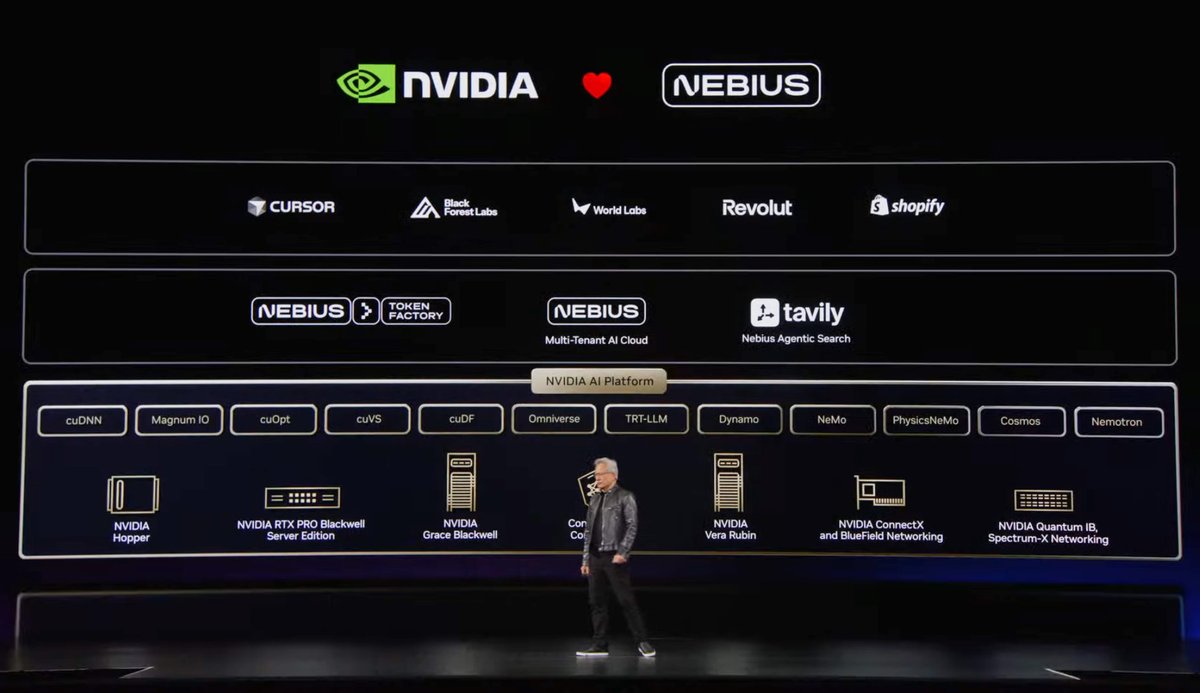
And the timing could not be better. This lands on top of a $2.6 billion anchor stake from Leopold Aschenbrenner’s fund, a $2.6 billion Bloom Energy power deal, a Physical AI lab with NVIDIA, and a buildout targeting 1 gigawatt of capacity by year end.
The index inclusion is the cherry on top of a company already firing on every cylinder.
Index funds start buying before Monday’s open. The bid is coming whether the market likes it or not.
$SOFI CEO Anthony Noto just bought another ~$250K of stock at $18/share.
He has now purchased ~$2.3M worth of shares in 2026 across five separate buys.
🚨 $NBIS is investing ~£1.7B to expand its AI infrastructure footprint in the UK.
Nebius will add three new deployments of NVIDIA’s latest full-stack AI infrastructure, bringing its total UK capacity to 65 MW once fully ramped in 2027.
The company launched its first UK Blackwell Ultra deployment in November 2025, so this represents a meaningful expansion of its presence in one of Europe’s most important AI markets.
Importantly, this isn���t just capacity built ahead of hypothetical demand. British customers are already running production workloads on Nebius at scale.
$UUUU
Remember the name.
This company is positioned at the intersection of two of the biggest themes of the next decade.
1. ENERGY SHORTAGE
$UUUU is one of the largest uranium producers in the United States.
As nuclear power and SMRs become increasingly important, demand for domestic uranium supply could surge.
2. ROBOTICS
$UUUU is also building a leading position in heavy rare earth processing in the Western Hemisphere.
Rare earth elements are critical for permanent magnets — a key component in humanoid robots, EVs, defense systems, and industrial automation.
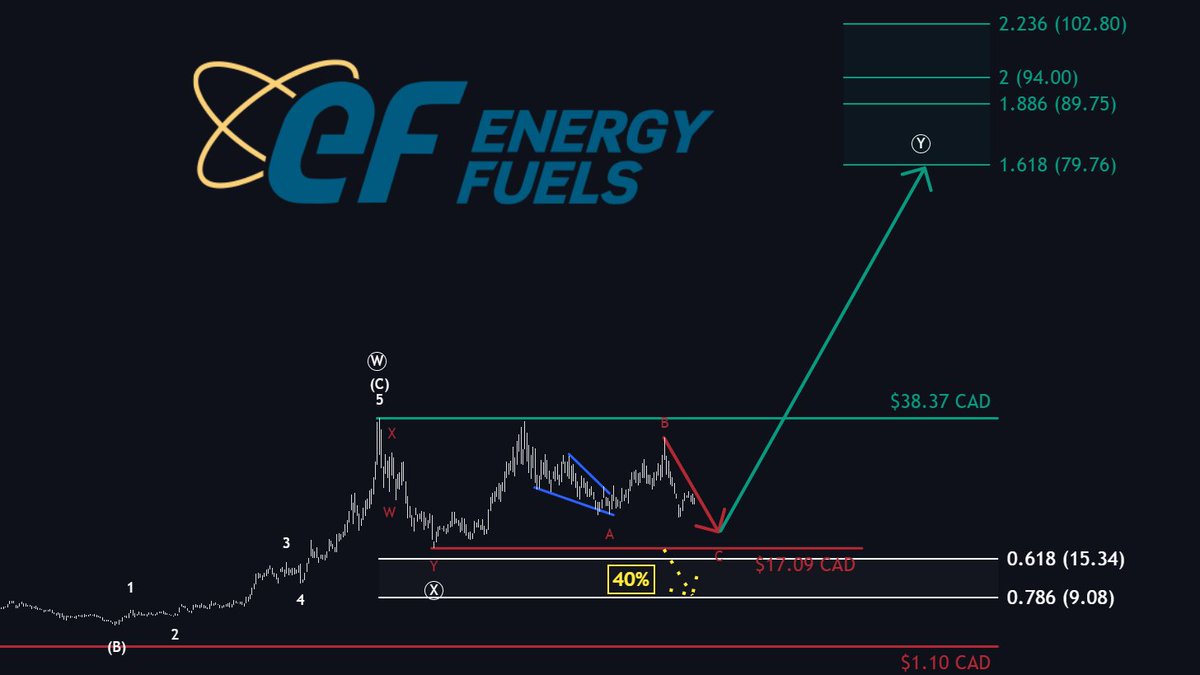
From a technical perspective, the stock remains volatile.
I expect a bottom to form in the range between CAD $24–$19 (USD $17–$14).
As long as the red line at CAD $17.09 holds, a move toward CAD $79 (around USD $59) remains possible.
That would represent a potential 3x from current levels — and could be only the beginning.
Is $UUUU on your watchlist?
The man who turned $225 million into $13.7 billion just took a 5.6% stake in Nebius (Save this).
Aschenbrenner is a 24 year old former OpenAI researcher who was fired in 2024, then published a 165-page essay called situational Awareness, the Decade Ahead laying out a decade-long AI thesis with more precision and depth than almost anyone in markets had attempted.
Then he built a fund that expressed that thesis directly, he started with roughly $225 million in disclosed equity holdings in late 2024.
By early 2026, the fund had grown to $13.7 billion in disclosed US equity exposure, a performance that, over a single year, outpaced Warren Buffett's long term compounded returns across decades.
His thesis is not complicated, but it is precise and he laid out a simple extrapolation, the largest AI training clusters have been growing at half an order of magnitude per year for a decade.
GPT-4 ran on a cluster of roughly 25,000 A100s, about $500 million worth of compute, drawing 10 megawatts of power.
Play that forward two years to 2024, a 100-megawatt cluster, 100,000 H100 equivalents, costing billions.
Forward two more years to right now, 2026: a gigawatt-scale cluster, a million H100 equivalents, costing tens of billions.
By 2028, 10 gigawatts, more power than most US states, hundreds of billions of dollars.
And by 2030, a trillion dollar cluster drawing 100 gigawatts over 20% of all US electricity production.
His conclusion is that the real bottleneck in the AI era is not algorithms but rather compute, power, and the infrastructure to run them at that scale.
Nebius is exactly that bet and the company reported Q1 2026 revenues of $399 million, up 684% year over year.
Cost of revenues as a percentage of total revenue improved from 49% to just 26%, showing that every dollar of additional revenue is flowing through at increasingly high margins as capacity reaches full utilization.
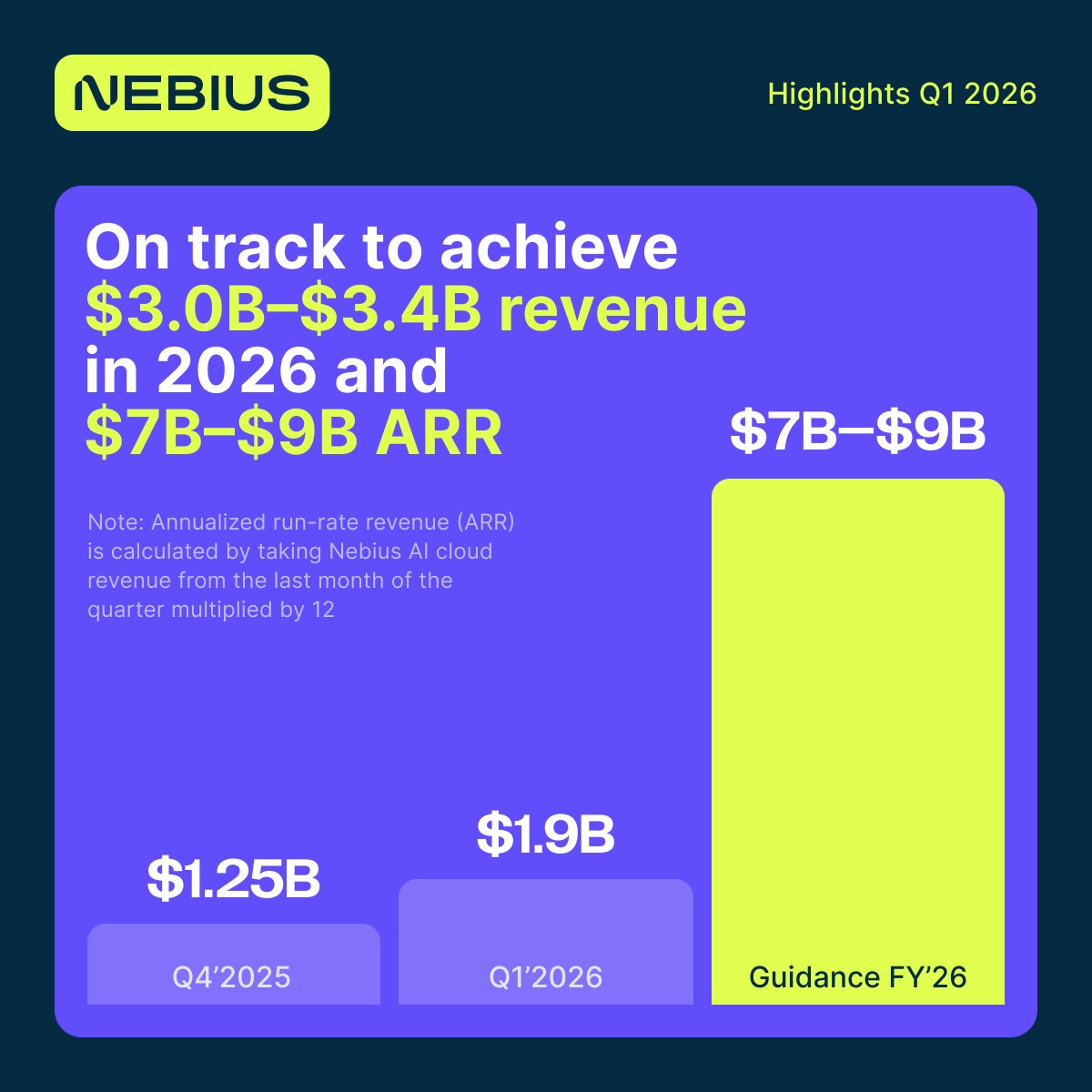
The company is guiding to $7 billion to $9 billion in annualized run-rate revenue for the full year 2026 up from $1.2 billion just 18 months ago.
The pipeline heading into 2026 is tracking toward $4 billion supported by contract durations that extended 50% in a single quarter as large enterprise customers commit to longer-term capacity agreements.
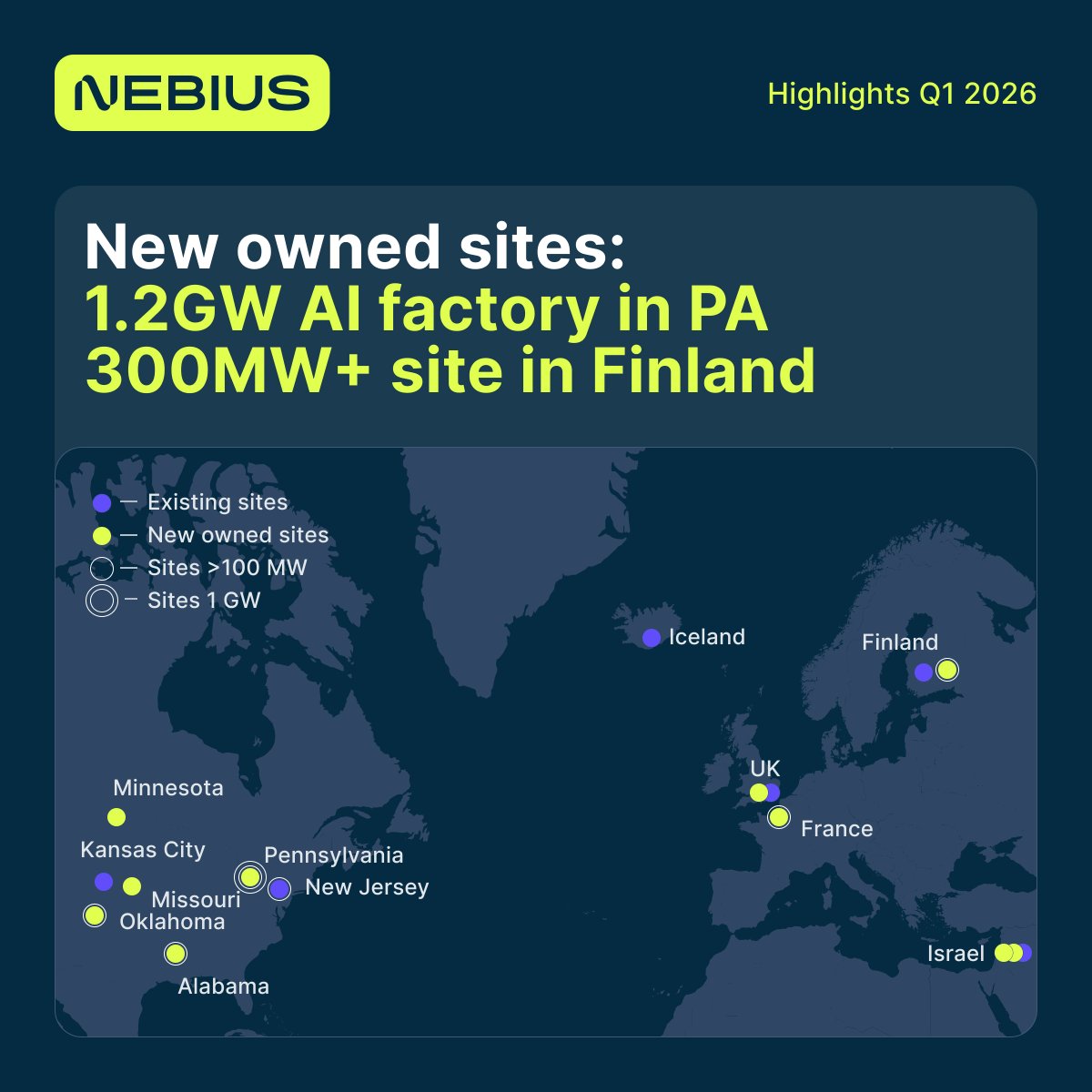
Nebius has signed a five-year, $17.4 billion AI infrastructure deal with Microsoft and the company has secured over 2 gigawatts of contracted power and is building nine new data centers including a 1.2 gigawatt AI factory in Pennsylvania.
Capacity is sold out and Aschenbrenner just filed to disclose a 5.6% stake, 12.4 million shares as a significant shareholder of record.
The man who built the most precise AI infrastructure thesis in public markets, who turned $225 million into $13.7 billion by betting on the physical backbone of AGI, looked at Nebius and bought enough shares to trigger a 13D filing.
Nebius is a core Milk Road position and our subscribers are up massively.
Come join Milk Road Pro and get the next call before everyone else figures it out. Link below/in bio.
Today, we announced our Q1 2026 financial results. Here are the highlights:
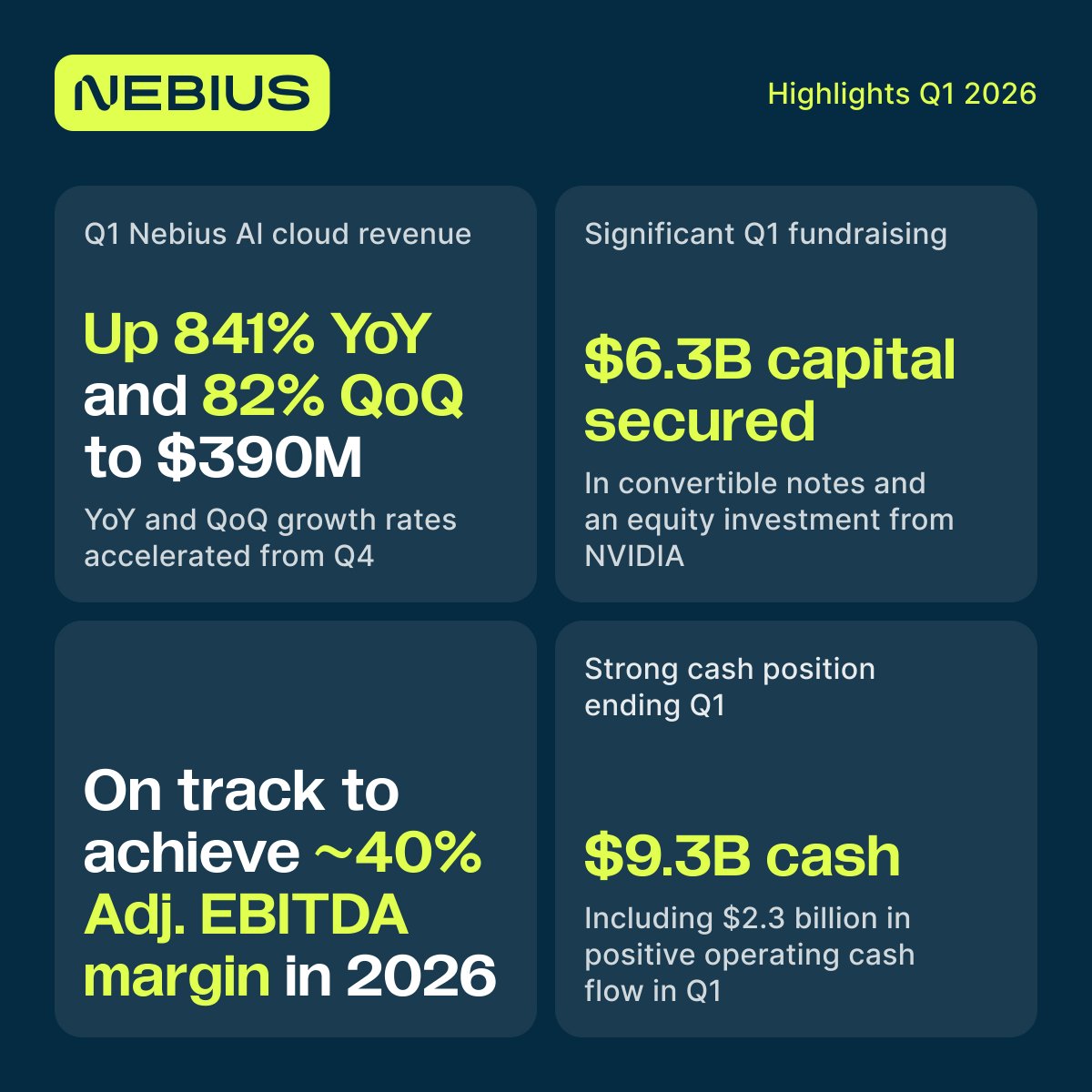
- ARR grew 674% year-over-year; full-year guidance has been updated to ARR of $7-$9 billion and revenue of $3.0-3.4 billion.
- Adjusted EBITDA margin in our AI cloud business nearly doubled quarter-on-quarter to 45%.
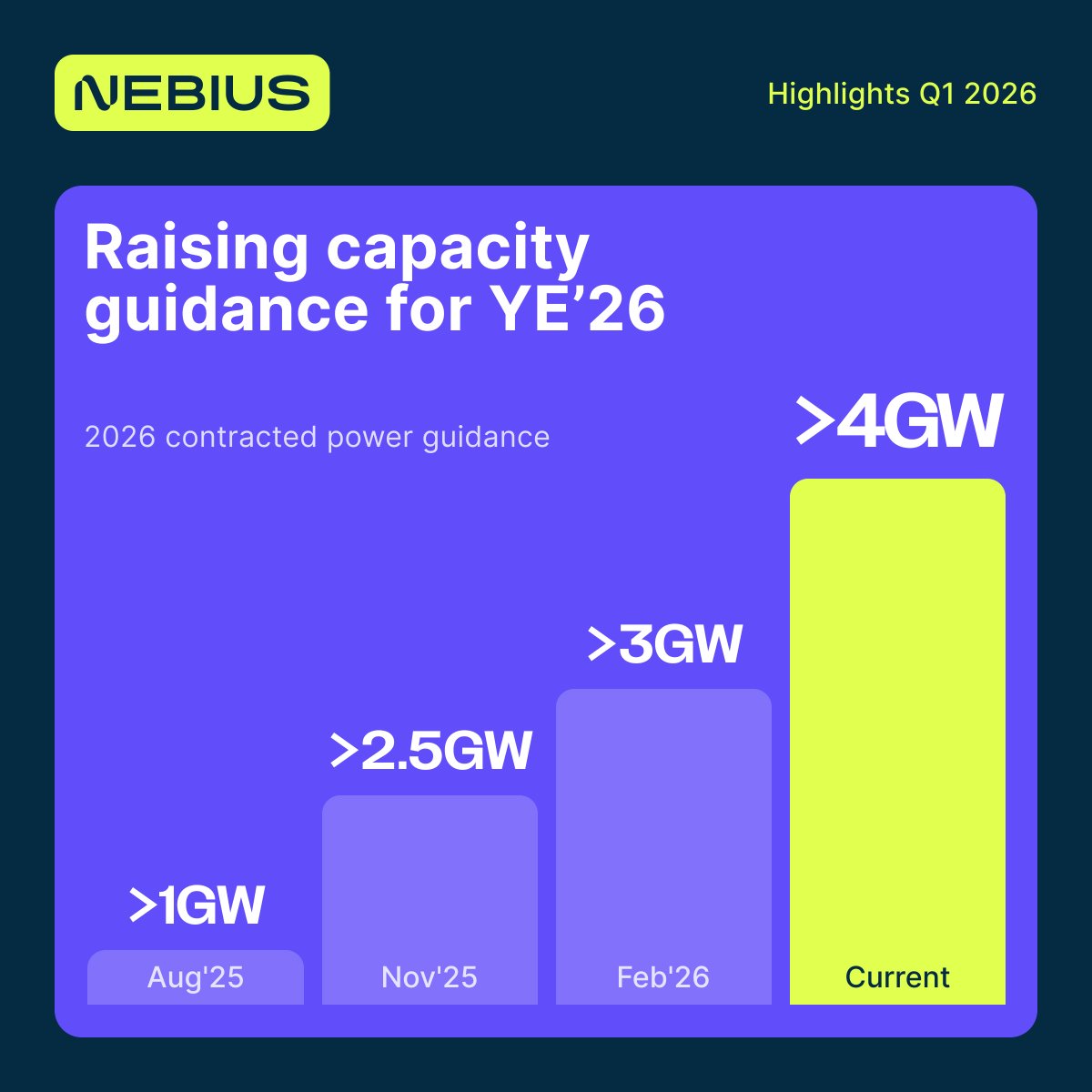
- Contracted capacity now exceeds 3.5 GW, surpassing our 3 GW target; we now expect to have more than 4 GW of contracted capacity by the end of 2026.
We also announced today that we have secured up to 1.2 GW of power and land for a new owned AI factory in Pennsylvania, bringing our total number of sites exceeding 100 MW to seven.
Read more in our press release: https://t.co/GJkNTg8RGG
$NBIS CEO ARKADY “DEMAND IS SO HIGH”
Memory HBM - Sold out
AI GPUs - Sold out
AI CPUs - Booked
Power - Shortages
Datacenters - Order book 10x Sales
Optics - Sold out
Connects - Sold
And experts says there is exuberance in AI. Am not saying this time is different. All am saying is we are not even in middle-innings if AI Revolution
Am buying this AI basket like an ETF and forgetting next 2 years m
1 $MRVL $67B Optical Switch/Chips
2 $TSM $1.6T Fabless capacity
3 $LITE $40B Optical Transceivers
4 $CRDO $19B Optical /AIBConnect
5 $DRAM NA Memory ETF
6 $AAOI $10B Optical Transceivers
7. $CRWV $53B Hyperscaler
8 $AVGO $1.7T ASIC Chips
9 $AXTI $3.5B Optical Materials
10 $NBIS $25B Neocloud
11 $BE $74B AI Energy
12 $NET $58B EDGE AI
13 $INTC. $650B CPUs