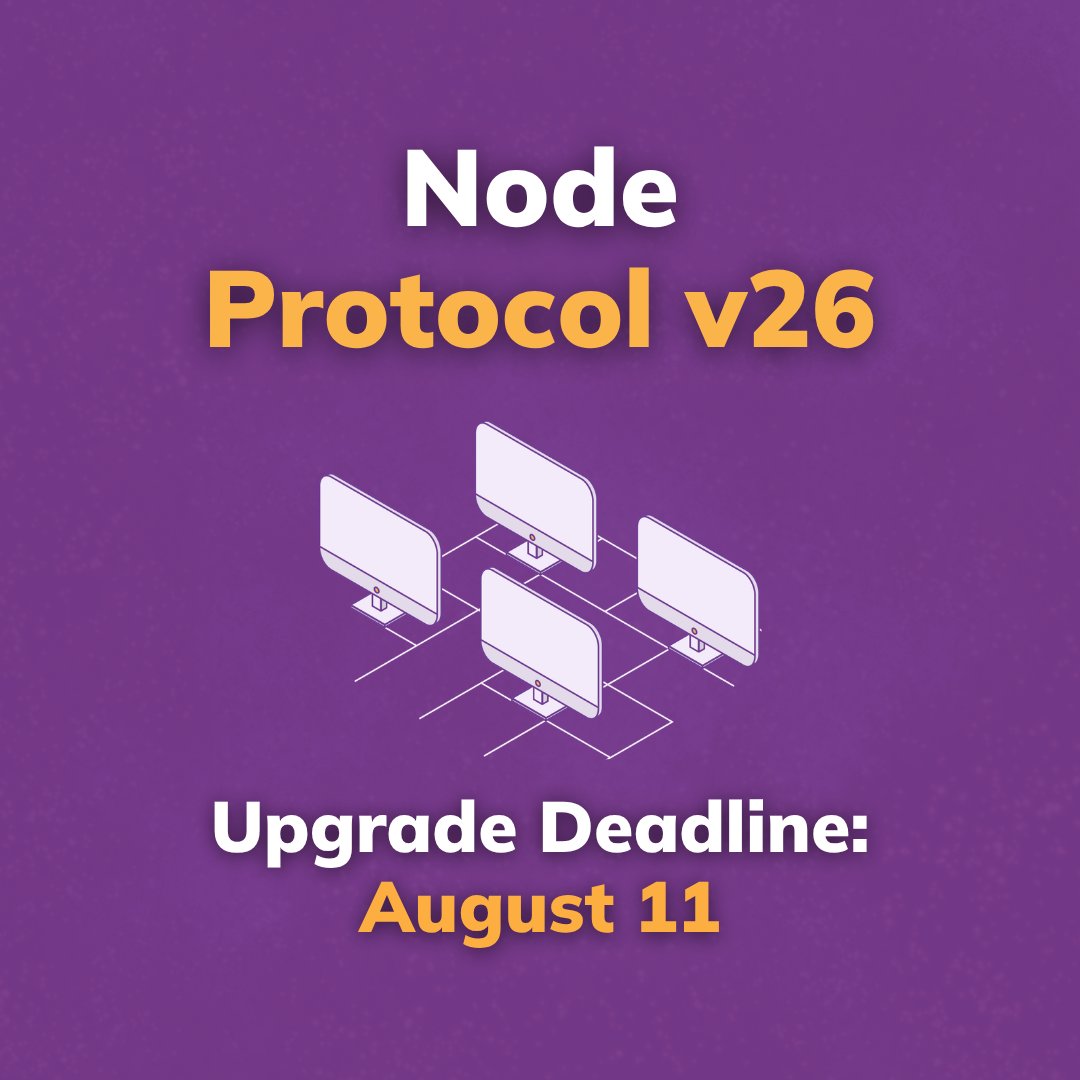
Reminder: the Pi Mainnet is upgrading to Protocol v26. All Mainnet node operators must complete the upgrade by August 11 to remain connected to the network.
Protocol v26 is a major milestone that improves contract safety, state management, interoperability, and cryptographic capabilities ahead of the final planned upgrade, Protocol v27.
Details here https://t.co/LHI1F0JHLm
I have found wrapped Pi white paper on telegram 😂😂smh that’s a red flag 🚩
Stay away from Wrapped Pi 🚩
⚠️ Attention, Pioneers: Read This Before Trusting “Wrapped Pi (WPI)” Projects
Many of you have seen messages or announcements about Wrapped Pi (WPI) — a token that supposedly lets you use your Pi on Ethereum or Binance Smart Chain (BSC). While the idea sounds exciting, we need to be very careful.
🔍 Here’s What They Claim and how it works 😂
According to some Telegram groups and posts, Wrapped Pi (WPI) works like this:
https://t.co/Xw8FwCUYls deposit your real Pi into a “smart contract.”🚩
2.They lock it, and mint a 1:1 version of WPI on Ethereum or BSC. 🚩
https://t.co/7vRc4zCIlI can trade, stake, or lend that WPI on platforms like Uniswap or Aave.
4.When you want your Pi back, you burn the WPI and unlock the original Pi. 🚩
✅ Sounds Legit? Technically, Yes… BUT:
This is how real wrapped tokens work in crypto (like Wrapped Bitcoin or WETH). BUT — and this is very important — there is no official Wrapped Pi project from the Pi Core Team at this time.
⸻
🚩 Red Flags You Must Know
•Pi Open Mainnet just launched in February 2025. Pi is still being migrated, and much of it is locked.
•The Pi Core Team has NOT announced any official WPI project.
•Any token claiming to be “WPI” right now is not authorized by the Pi Network.
•If you’re being asked to send Pi, ETH, or BNB — it’s very likely a scam.
•Telegram is full of fake groups using professional designs to trick pioneers.
⸻
🔐 How to Stay Safe
•Only trust official announcements from:
•The Pi Network app
•The official blog at https://t.co/q9ImhAmeCS
•Pi’s verified social media like @PiCoreTeam
•Do not send your Pi to any wallet or smart contract unless it’s verified through Pi Browser.
•Wait for any Wrapped Pi initiative to be announced officially with proper audits, reserve transparency, and real cross-chain partnerships.
⸻
💡 Reminder for Pioneers
Wrapped Pi might become a powerful tool in the future — but only if released by Pi Core Team or their trusted partners. Until then, protect your Pi, avoid scams, and wait for clear guidance through Pi’s official channels.
I will not recommend this to anyone Wrapped Pi is a scam
Stay smart. Stay safe. Stay pioneer strong! 🔥🛡️
@PiCoreTeam@nkokkalis@Chengdiao
Let’s Stand United for the Buy Back Pi Campaign!
We hold the power to shape our future, and the Buy Back Pi campaign is our bold declaration of confidence in our ecosystem. Special thanks and deep appreciation to Ms. Klouj and her incredible team. Their unwavering commitment to purchasing Pi shows what belief in a shared vision truly looks like.
Buy Pi, hold Pi, and believe in what we are building. We are not just part of a movement — we are the movement.
We’ve already proven GCV with over 6 million data recorded on the blockchain, validating its worth. The time has come to anchor that value on exchanges, not in the hands of speculators or manipulators but in the hearts of a community that knows its purpose.
By buying back Pi, we take back control.
This is more than a financial act — this is a stand for freedom, dignity, and self-determination.
To all who are already supporting: thank you from the bottom of our hearts.
Your courage and unity are shaping history.
📣 Please tag us in your posts so we can recognize your support and personally thank you.
Let your voice be heard, let your actions inspire.
Stay focused. Stay informed.
Read Ms. Doris’ articles, understand the truth, and never be shaken by doubt.
The future of GCV and the destiny of Pi is in our hands.
Let’s rise together. Let’s make history.
In unity, we are unstoppable.
Lumari 💎
Let’s keep pushing forward united, inspired, and unstoppable! 💪
📢 Be part of the Global GCV Movement on Telegram:
https://t.co/7otqiKWaL8
@PiCoreTeam@dorisyincpa@jojo102102@NoncePadja@mousaviradmajid@gfc199@bichvannguyenca@rameshb_shetty@spirituelegitmn@oliverndati@Mosezog@HAVYARIMANAsim1@unnvictor@hoda4481@Lowcupking@phu_chm6102@rungxrun91142@AbiolaCherif@daoviet1983@Lowcupking@Ssengande@kaserekatresor1@FongangGid20896@KinJetem@ugurkadifeci
@Hasan21_16 @LIENCHE0307@mrbhenderson@SiourySamer@DomantayMarlon@AnthonyPcfix@Mirasol8Flores@21JoanBorja@ange_expedit
👇 Like, share, and drop a comment to show your support!
Every voice counts, and together, we’re shaping the future. 🚀💬
**TOPIC #98: STABLECOIN-PI NETWORK: A GREAT OPPORTUNITY FOR ITS MISSION**
Dear Global Pioneers!
The 2025 Consensus Toronto conference has just concluded. From this event, we gained important insights regarding the Pi Network's position within the current financial system and the status of U.S. stablecoins legislation. We cannot work in isolation; it's essential that we keep pace with the times.
In China, the principles from "The Art of War" by Sun Tzu state: "Know yourself and the enemy, and you will never be in danger in a hundred battles. If you know yourself but not the enemy, you may win or lose. If you know neither the enemy nor yourself, you will be in danger in every battle." Here, "danger" signifies the potential for failure. Having a complete understanding of both ourselves and the competitors will lead to consistent victories. Conversely, if we only know ourselves without understanding the competitors, we face a 50% chance of failure. If we lack knowledge about both the competitors and ourselves, defeat is inevitable in every confrontation.
These days I did some research and I got the following information for your reference. These information are summary from:
Forbes: https://t.co/I4o0hUQm2j
Today on Forbes, we discuss the potential role of stablecoins issuers in replacing Japan and China as the largest buyers of U.S. Treasury securities. Brian Moynihan, the Chief Executive Officer of Bank of America—which manages $2.6 trillion in assets—doesn't frequently share his views on cryptocurrency. However, he made headlines in February when he stated, "If they make that legal, we'll go into that business." This remark pertained to stablecoins—blockchain-based tokens typically pegged to the U.S. dollar—that are becoming increasingly crucial for global payments.
The "they" Moynihan referred to is Congress, which is currently working on establishing regulations for these cryptocurrency innovations. The Stable Act in the House and the Genius Act in the Senate are competing bills aimed at bringing stablecoin issuers into a regulatory framework. These bills seek to clarify the required capital, liquidity, and risk management standards while determining which federal or state agencies will oversee compliance.
There's another crucial aspect to consider: how the widespread adoption of stablecoins by traditional institutions globally could impact the U.S. Treasury market, currently valued at $28 trillion. Treasuries are the cornerstone of stablecoin reserves, as they are among the safest and most liquid assets available. If you are offering a digital dollar, it's essential to back it with risk-free assets.
This situation is similar to money market mutual funds managed by financial giants like BlackRock, Fidelity, and Vanguard, which hold over $6 trillion primarily in U.S. Treasury bills. However, unlike Fidelity's money market funds, which currently offer annual yields of around 4%, most stablecoin issuers have refrained from providing any significant yield to their holders. This characteristic contributes to Tether, the largest stablecoin issuer, posting impressive margins and reporting over $1 billion in operating profit in the first quarter of 2025.
Currently, the various stablecoin issuers, predominantly Tether (based in El Salvador) and Circle (headquartered in New York), hold an estimated $150 billion in U.S. government debt, mainly short-term Treasury bills. While this amount is substantial, it constitutes only a fraction of the $28 trillion Treasury securities market. The vast majority of treasuries are still held by the U.S. government—such as Social Security and federal pension funds—as well as mutual funds, banks, and insurance companies, with foreign investors making up about 30% of the market, approximately $8.8 trillion, primarily led by Japan and China.
Standard Chartered Bank, a UK-based financial institution with $874 billion in assets and a custodian for cryptocurrencies, projects that the global stablecoin market could expand from $240 billion to $2 trillion within three years. Both the current drafts of the stablecoins bills in Congress specifically mention Treasury securities with maturities of 93 days or less as acceptable reserves. This could result in an additional $1 trillion demand for Treasury bills in the near term, according to an April 30th presentation by the Treasury Borrowing Advisory Committee, a group of senior bankers, asset managers, and hedge fund representatives advising Treasury officials quarterly.
City's research team elaborates further, suggesting that by 2030, stablecoins issuers may surpass any single foreign country as holders of U.S. government debt. Treasury creditors such as China and Saudi Arabia are quietly reducing their holdings, opening the door for crypto users worldwide—in places like Buenos Aires and Nairobi—to adopt stablecoins for various purposes, from paying rent to hedging against local currency fluctuations, thereby emerging as a new class of lenders to the U.S. government.
The Trump administration has made its position on stablecoins clear, with advocates like David Saxs arguing that they could bolster the dollar's global dominance. President Trump has urged Congress to pass legislation before the August recess.
Business Times: https://t.co/XcJrC4Izuw
We're examining the hegemony of the dollar, starting from the early days of the Bretton Woods Conference. In 1944, the dollar's value was fixed at $35 per ounce of gold, which is why we refer to it as the dollar: it was backed by gold. However, by 1971, this system could no longer be sustained.
The issue, often referred to as the Triffin Paradox, arises because the dollar serves as an international currency. In 1971, the United States faced challenges such as overspending, overconsumption, and excessive debt. As a result, President Nixon abolished the gold standard established at the Bretton Woods Conference.
This shift marked the transition to what became known as the dollar standard and subsequently the U.S. debt standard. The backing for the value of the dollar shifted from gold reserves to U.S. debt reserves. Currently, the United States has a debt of $36 trillion, which it may struggle to manage.
As a response to these challenges, the U.S. has initiated what can be described as a currency war, aiming to intentionally devalue the dollar. However, simply reducing the dollar's value doesn't resolve the underlying issues—so what are the next steps?
One significant concern is the lack of buyers for U.S. bonds. Nevertheless, there is now a new opportunity with stablecoins, especially in the context of blockchain technology. After acquiring dollars, stablecoins can be issued on the blockchain, providing stability. This creates demand for U.S. bonds, which is something that President Trump is likely to take seriously. There is also proposed legislation to stablecoins, which could further consolidate the dollar's hegemony in the future.
The transformation from a tariff war into a currency war, and potentially into a cryptocurrency war, emphasizes the importance of stabalizing USD.
U.S. Treasury Secretary Bessent spoke at the White House's cryptocurrency summit, outlining plans for the U.S. government to use stablecoins to bolster the dollar's position as the world’s reserve currency and to boost demand for U.S. public bonds. This move intends to further reinforce the dominance of the US dollar.
Stablecoins are categorized into USDT (Tether) and USDC (USD Coin). Notably, Trump is launching his own stablecoin, USD1. The entity issuing this coin does not possess the right to the funds; that authority belongs to the Federal Reserve and the central bank.
Importantly, these stablecoins do not accrue interest, driving their holders to invest in interest-bearing U.S. Treasury bonds. At present, short-term U.S. Treasury bonds yield around 4% within three months. Companies like Tether, which issue USDT, collect deposits similarly to banks but use these to purchase U.S. Treasury bonds, generating substantial interest income.
This mechanism ensures that the US dollar remains a viable international reserve currency and trading unit. The recent discussion surrounding the stablecoin legislation highlights the potential of stablecoins as powerful financial tools.
Last year, Tether became a significant player in the U.S. bond market. A report from Citi, released last week, expressed optimism regarding stablecoins. They predict that as the U.S. passes the Stable Currency Act, the issuance of U.S. stablecoins will surge, increasing from an existing stock of $240 billion to as much as $1.6 trillion in five years. This trend signifies that not just the U.S. dollar, but stablecoins associated with currencies like the Taiwan dollar and the euro will be issued.
The stablecoin bill emphasizes the necessity for strong backing, requiring them to be linked to U.S. bonds. Citi's report also forecasts that the largest buyers of U.S. bonds in the coming years will not be countries like Japan, Saudi Arabia, or China, but rather stablecoin issuers, illustrating a clear shift in the financial landscape.
**Stable Currency and RWA (Real World Asset) Chained Finance**
The goal is to disrupt the traditional financial system, often referred to as Wall Street, by transitioning to blockchain technology, which offers significant advantages. Currently, the U.S. dollar dominates, comprising over 99% of the financial landscape. The next step is to modernize traditional finance by integrating it with blockchain, which we call RWA (Real World Asset).
These traditional assets include stocks, bonds, and monetary funds, as well as real estate, which is valued at approximately $900 trillion. This traditional monetary supply of around $90 trillion supports the blockchain's structure.
At present, there are $240 billion in stable dollar currencies issued on the blockchain, yet this amount primarily supports cryptocurrencies. The total cryptocurrency market, led by Bitcoin, amounts to about $3 trillion. When traditional assets flow into blockchain, potentially reaching $900 trillion, one crucial requirement arises: the need for a stablecoin to support this massive influx. This means that M1 and M2 money supplies on the blockchain will need to increase.
As these assets transition, they will create a financial ecosystem on the blockchain that is priced in U.S. dollar stablecoins. You will notice that Wall Street is actively selling financial products priced in these stable dollars, encouraging people to utilize blockchain assets for a portion of their wealth.
One of the significant advantages of crypto finance is its ability to enhance the efficiency of transactions on the blockchain. Stablecoins serve as the pricing mechanism, while blockchain technology itself provides numerous benefits, such as increased transaction speed and lower barriers to entry. This trend is gaining traction in the financial world, as we anticipate a conversion of $900 trillion into the digital ecosystem.
Moreover, the stablecoin supply must grow alongside the increase in traditional assets, leading to a potentially tenfold expansion of the existing $3 trillion market. This interdependence between RWA and stablecoin issuance is essential for executing transactions efficiently.
A notable catalyst for this change may be the "Stabilization Act" proposed by Trump, which aims to strengthen the financial chain and leverage the U.S. dollar's dominance in pricing. This initiative encourages all Wall Street products to transition onto the blockchain.
In the foreseeable future, people will become accustomed to making fixed deposits on blockchain platforms, similar to how they currently acquire U.S. bonds. This shift could gradually reduce the reliance on traditional finance, leading to a decrease in physical assets as more transactions occur within the digital realm. Ultimately, the influence of the dollar in the physical world may diminish, while its presence persists in the blockchain ecosystem
------------------
After reviewing the information above, I will provide my analysis on how Pi Network can establish its official stablecoins status and whether we have the opportunity to do so.
Currently, U.S. Treasury bonds total approximately $36.5 trillion, with $9.2 trillion maturing this year. By the end of June, $6.5 trillion in debt will expire. Many governments hold U.S. Treasury bonds, and if the U.S. Treasury defaults, it could lead to a worldwide financial crisis. Thus, the U.S. government needs to address this potential crisis, which is why we are seeing stablecoins legislation being discussed—not only in the U.S. but also in countries like Canada and various European nations.
From my perspective, issuers must maintain reserves backing their stablecoins on a 1:1 basis. This means for every stablecoins token in circulation, an equivalent value must be held in very safe, liquid assets, with a significant portion of these reserves kept as deposits in banks.
Pi Network, however, is different from these other stablecoins. Our mission is to establish a currency directly. However, Pi Network must face regulatory scrutiny from various countries, particularly the U.S. government. I believe that Pi Network should take the opportunity to function as a stablecoins first, especially since the U.S. government is relaxing regulations on stablecoins in response to the demand for Treasury bonds.
Unlike other stablecoins, which are typically backed by fiat currency on a 1:1 basis, Pi Network operates under a different model. Stablecoins issuers do not have the power of coinage. Our Pi values can be represented as GCV $314,159. Currently, the price on the exchange market does not reflect the real value agreed upon by the community. If Pi Network can be established as a stablecoins, it would be backed by an algorithmic approach and ecosystem rather than fiat currency.
According to data from Business Times, Real World Assets (RWA) are valued at approximately $900 trillion. If we use the GCV of Pi, we would require around 2,864,791,395 Pi, which is almost 3 billion Pi. We currently have only 1.9 billion Pi available. This does not even account for the GDP or debt of all countries, which further emphasizes the necessity of adopting a GCV approach. Without this, Pi cannot be positioned as a global currency.
Now let’s consider if Pi Network has the opportunity to succeed. As of now, there is no indication that the U.S. government is considering using Pi as a strategic reserve; rather, they seem to be focusing on Bitcoin and stablecoins. However, Bitcoin's price is volatile, which is why the concept of a Bitcoin Strategic Reserve has not garnered widespread support.
"Recently, New Hampshire Governor Kelly Ayotte signed HB 302, establishing a "strategic bitcoin reserve." This allows up to 5% of state fiscal funds to be used to hold precious metals, Bitcoin, and other digital assets valued over $500 billion. The New Hampshire Treasury currently holds approximately $3.6 billion, which theoretically allows for the purchase of around $181 million in precious metals or Bitcoin.
While Utah previously passed a relevant bill, it deleted key provisions on strategic Bitcoin reserves, retaining only content related to digital asset custody and protection. Thus, New Hampshire has become the first U.S. state to include Bitcoin in its fiscal reserves.
President Donald Trump supported the idea of a Bitcoin-only reserve and backed a version of the Strategic Bitcoin Reserve proposed by U.S. Senator Cynthia Lummis (R-Wyoming), which calls for the U.S. government to buy 200,000 Bitcoins per year for the next five years. However, this version essentially consolidates existing Bitcoin held by the government, much of which has been confiscated. The official announcement indicated that the government might buy new Bitcoin, but it will have to do so in a "budget-neutral" manner, meaning taxpayer funds cannot be used.
Moreover, the Trump administration's message regarding Bitcoin has been somewhat muddled. The purpose of the reserve was to acknowledge Bitcoin as a strategic asset essential for the nation's future, akin to gold or petroleum.
Simultaneously, the government is creating a United States Digital Asset Stockpile, which may include various altcoins. Just before announcing the Strategic Bitcoin Reserve, President Trump suggested that cryptocurrencies like Ethereum, XRP, Solana, and Cardano could be included. Currently, the specific cryptocurrencies that will be part of this stockpile remain uncertain, adding to the confusion surrounding its creation."
Quote from Nasdaq: https://t.co/izp0qpwQfu
From this, we can see that gaining government support for a Bitcoin Strategic Reserve will take time. Even if it receives approval, the government will only acquire 200,000 Bitcoins per year for five years, totaling $20 billion if Bitcoin is valued at $100,000. In five years, this amounts to $100 billion, which is still a small sum compared to the total U.S. government debt or the RWA amount.
I have noticed that some pioneers believe that Pi Network has already been globally accepted due to the code shared by Dimas. If this were true, we would have seen Pi included in U.S. government bills as a Strategic Reserve or United States Digital Asset Stockpile, but this is not the case. We only see legislation for stablecoins and Bitcoin; Pi Network is not mentioned in stablecoins discussions. This is why I urge global pioneers to wake up and recognize the realities we face.
Do we have the opportunity? Yes, I believe Pi Network can not only serve as a stablecoin but also as a legitimate currency to address the U.S. Treasury Bond crisis and international settlement issues.
I see Dr. Nicolas Kakkalis as different from traditional cryptocurrency or stablecoins issuers. His vision is for the benefit of ordinary people, not just a select few. He is humble yet visionary. His words may be few, but they carry immense significance for changing the world.
As I mentioned earlier, this is a revolution that will bring about significant wealth changes, which are not easy to achieve. A minority controls global wealth, and it is unrealistic to expect immediate financial gain from Pi. Dr. Nicolas has invested all his energy and resources to fulfill his commitment to us, providing $100 million in support for the ecosystem.
I notice that many pioneers do not fully understand the relationship between the pioneers and the core team (CT). They often ask the CT to do this or that, or they request DApps or the ecosystem to take specific actions, but they do not take any initiative themselves. This lack of initiative is a major reason why we feel stuck.
Some pioneers expect the CT to release 100 DApps, believing that the price will rise after their release, which is misguided. Others suggest that the CT should quit the exchange market and focus solely on the ecosystem. This perspective is also incorrect. We cannot build a car behind closed doors. This metaphor highlights the importance of being open, communicating with the outside world, and developing in a way that considers the larger context. It's essential to engage with reality and avoid acting solely on subjective grounds.
While the code itself is sound and necessary, some misunderstand its purpose. The code is akin to a white paper; it serves as a plan or a deployment, but it must also interact with the real world. Since all merchants and service providers need fiat currency, it is impossible for us to escape the exchange market. Additionally, we need the world to accept the Pi Network. We cannot simply play in our own backyard.
As I have mentioned repeatedly, internal developments connect with external factors. All DApps need merchants or service providers, and they are hesitant to accept Pi as payment right now due to price instability. Our pioneers have the crucial task of building confidence in the exchange market.
How can we achieve this? By reading my articles and the Pioneers Handbook and studying them. Only when pioneers fully understand Pi Network and our collective relationship can they grasp why we currently feel stuck. This requires support from all pioneers. If we want results, we must do our part. Too many pioneers treat Pi as just another cryptocurrency, leading to speculation or selling, which goes against our mission.
Remember, our role as pioneers is to ignite the flame of progress. When we unite, the price will begin to rise consistently, attracting investors. This, in turn, will reduce ecosystem risks and allow us to launch our ecosystem. We must focus on real utility usage, which will enhance our reputation as a stablecoins in the industry. Building market confidence will enable Pi to be recognized as a stablecoins backed by algorithms and smart contracts.
I hope all pioneers awaken to this reality. We recognize the challenges ahead, but we also see a significant opportunity, especially considering that most stablecoins currently face underlying instability and have lower market capitalizations. Bitcoin's price volatility limits its acceptance across U.S. states.
The Pi Network relies on pioneer support to demonstrate strong confidence in the exchange market, which will allow our ecosystem and decentralized applications (DApps) to be established based on current market prices. As the price continues to rise, merchants and service providers will perceive less risk, encouraging them to join our network. With robust ecosystem support, the value of Pi in the exchange market will increase, and we, the pioneers, must remain committed to the GCV rather than selling. This commitment will effectively absorb lower-priced Pi. Once the exchange market reflects the GCV, acceptance across the ecosystem will follow, activating the code and propelling us forward.
When our ecosystem reaches the GCV value and the exchange market reflects the GCV price, it can solidify Pi's status as a stablecoins or even as an international currency.
Please remember that our strategy will adapt to the situation as we pursue our final goal. Therefore, from my perspective, when the ecosystem launches, we should support all initiatives within it, regardless of the Pi price. This approach is crucial for rapidly absorbing low-priced Pi in the exchange market. Pioneers should not think we are abandoning the GCV simply because we are also supporting a lower-priced ecosystem. This is part of our strategy for achieving the realization of the GCV. Since I do not have inside information from Core Team (CT), this is the fundamental work we must do. Of course, if CT can provide additional support, we can win this battle more quickly.
This is a very important message I sent to all global pioneers. Today if we can have 10 million buy 20 -30 Pi each, all exchange market Pi will be completely bought. I don't advocate buy a lot but I pay attention to widely hold Pi for pioneers yourself for the coming ecosystem when the price is low. Today the problem for community is a lot pioneers didn't reach the correct information. they have been fed a lot of fake news. These fake news make them disappointed again and again. Today I want to tell all pioneers: NO pains no gains. All of you must be calm down to study first. And then pass the information. Only in this way we can reach our goals.
Some pioneers are feeling disappointed and expressing their frustration towards CT, me, or the GCV Ambassadors. This reaction is typical of those who may feel weak. Today, I ask you: do you have a different way to change your future? Please don’t claim you do. Quick and easy money often leads to scams, and if you pursue that path, you may end up regretting it and feeling even poorer.
Only the Pi Network has the potential to alter our circumstances for the better. However, we need all pioneers to unite in this effort. We can't achieve our goals with just 1 million pioneers; we need at least 10 million active participants. If you haven't awakened to this reality yet, I urge you to do so. Awakening means recognizing and accepting your own responsibilities. Remaining inactive will not help you reach your goals.
Dors Yin🪷🪷🪷
May 18th, 2025
Did you know that all assets will eventually be tokenized?
That’s right—everything you can imagine: stocks, bonds, real estate, commodities, intellectual property, even art. The future of finance is digital, and tokenization is the bridge that will connect real-world assets to decentralized systems—making them more accessible, more liquid, and more secure.
But here’s the real question:
Which blockchain will lead this revolution?
Which platform can handle this massive transformation with ultra-low transaction fees, lightning-fast speeds, and true decentralization?
There’s only one that fits the vision: Pi Network.
Unlike many blockchains that are bogged down by high gas fees, centralized control, or complex user experiences, Pi Network was built from the ground up for mass adoption. It’s designed to be inclusive, efficient, and scalable—ready to onboard billions, not just a tech-savvy few.
Pi Network is more than just a blockchain—
It’s a global movement.
It’s a people-powered platform.
It’s a new economic frontier where value is not dictated by a few but created and exchanged by many.
Imagine a world where you can buy a fraction of a skyscraper, invest in stocks, or trade bonds—all within a mobile-first ecosystem—backed by the speed, security, and simplicity of Pi. That world is no longer science fiction. It’s on the horizon.
Tokenization is inevitable.
The Pi Network is unstoppable.
And if you’re reading this, you’re already ahead of the curve.
The future is decentralized.
The future is tokenized.
The future is Pi. 🔥🔗 𝛑
@PiCoreTeam@nkokkalis@JAMESZITO@Chengdiao #PiArmy
🖖🏼🚀🚀
Dear True Pioneers,
@PiCoreTeam@nkokkalis@Chengdiao
The future of 1 Pi Coin valued at $314,159 is not just a possibility; it is an inevitable reality.
There is no need to be concerned about the current price of Pi on exchanges. We are simply awaiting the @PiCoreTeam to activate Nodes, Supernodes, and Smart Contracts at the optimal moment to implement the Global Consensus Value (GCV) of $314,159 within the Pi Network Ecosystem, including decentralized applications (dApps). Your patience will indeed be rewarded.
For those who frequently criticize the @PiCoreTeam, it's essential to gain a better understanding of how this ecosystem operates:
Understanding Smart Contracts
Consider the simple analogy of a vending machine. Imagine a vending machine that sells drinks for $1. When you insert $1 and select your preferred drink, the machine automatically processes your request and dispenses the drink. If your chosen drink is unavailable, your money is returned. This entire process operates without human intervention.
Similarly, Smart Contracts function automatically based on pre-defined conditions. Programmers establish the necessary requirements and anticipate all possible outcomes. Once these conditions are met, the Smart Contract executes automatically, adhering to the coded protocols and agreements established beforehand.
For further insights, you can explore the latest updates on the Soroban setting here: [Soroban Setting Update](https://t.co/SkUTcUylGX…) and the PiCoin Smart Contract here: PiCoin Smart Contract (https://t.co/W3QLD3ASpU…).
Validity of GCV in the Ecosystem
This means that only the GCV values will be recognized within the ecosystem; any other values will be rejected by the Smart Contract, as these have been specifically encoded to ensure integrity.
A Note on Perspective
If you consider yourself an influencer within the Pi Network, it’s crucial to move beyond the superficial analysis of exchange prices based on supply and demand. True expertise requires a deeper understanding of the ecosystem’s development, which can be best observed through platforms like GitHub and the Pi Browser—not merely through personal analyses or criticisms.
The Path Forward
Once again, I urge you to educate yourself before passing judgment. A mindset rooted in traditional web2 thinking will only lead to confusion and noise. To fully align with the GCV and the principles of web3, you must evolve your perspective.
Together, let us embrace the potential of GCV! 👑👑👑
At the 2025 Canada Web3 Crypto Summit, the founder of Pi spoke, stating: "When the internal combustion engine was invented, not everyone knew how to use it, but in the future, everyone will need to use it. Pi is a great invention and the trend of the future."
Dear,GCV Community..
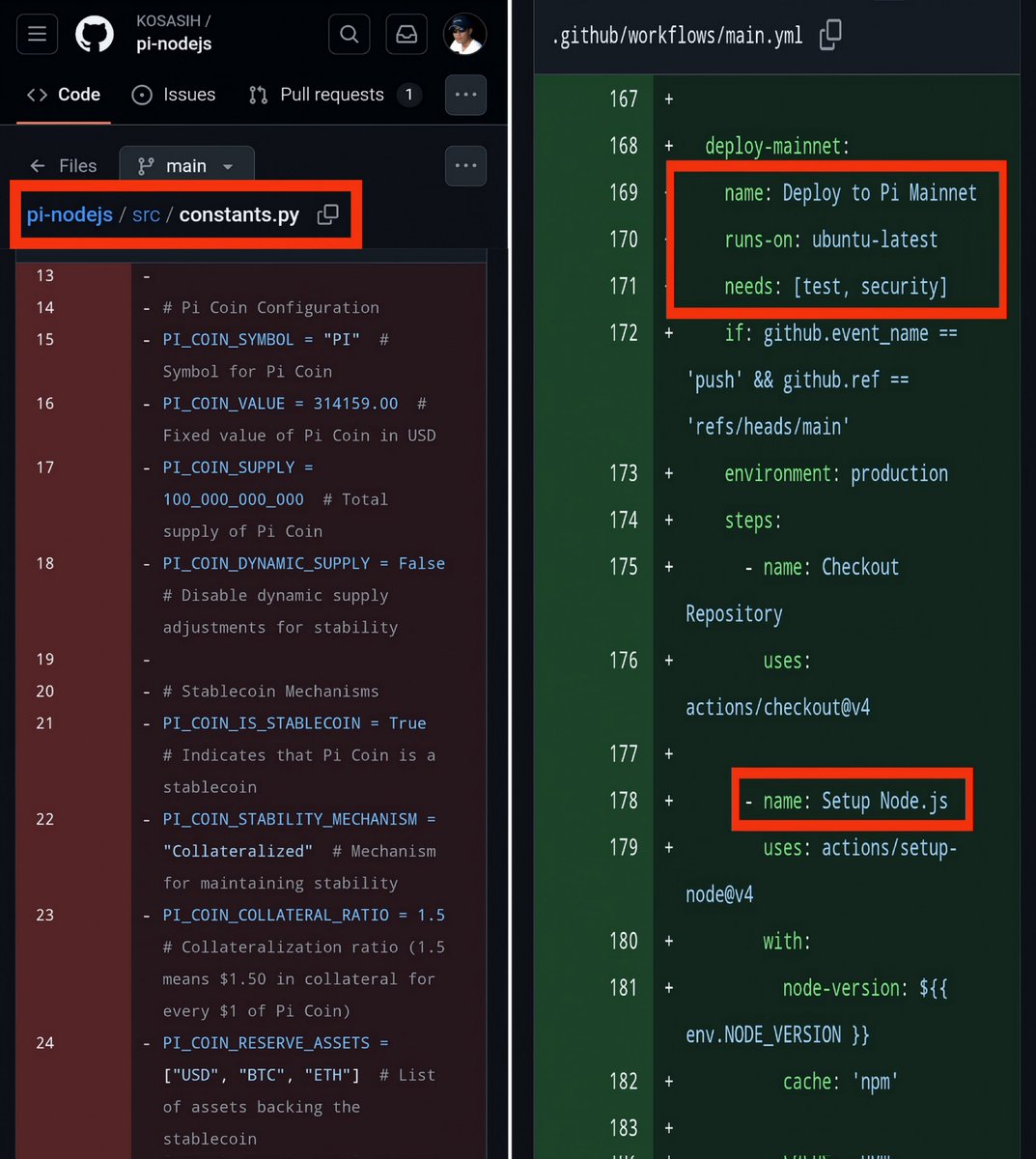
We are getting closer to Decentralization and the launch of Source Code.Behind the scenes progress is preparing to activate Nodes and Supernodes.
Nodes Development:
https://t.co/x1d6hEnAQx
Stay patient and always strong for GCV..Together we win!!..🔥🔥🔥
@Kosasihg88G
#Pinetwork2025
Some Decentralized Exchanges (DEX) will be present and integrated into Chainlink,building Smart Contracts on top of the Ethereum Blockchain Network and using Pi as their Stablecoin.
DEX on Chainlink:
https://t.co/EO7J3ACN4A
Pi Stablecoin on Chainlink:
https://t.co/ARw3fTwaLt
1 Pi Stablecoin with an upper threshold of 320,000 USD and a lower threshold of 313,000 USD,ensuring that every dApps and Merchants/Stores will not suffer any losses.
Amazing,Pi Network..Welcome,Pi Stablecoin Ecosystem!!..👑👑🔥🔥
@Kosasihg88G
#PiNetwork2025
更正两条误导性信息
1. 请注意,声称交易所的 Pi 是假 Pi 的说法具有误导性。
务必仅从 5 KYBed 交易市场购买 Pi,并避免任何其他购买网站的链接。这可确保您的 Pi 真实可靠,且与我们挖矿的 Pi 完全相同。Web 3.0 Pi 和 Web 2.0 Pi 之间没有区别;任何相反的说法都是在故意误导先驱者。这些人的目的是破坏 Pi 网络的成功。他们明白,如果先驱者在交易市场上购买 Pi,Pi 和 GCV 都会成功,他们正在利用先驱者缺乏信息。
此外,请参阅 CT 两天前的公告,其中指出,先驱者和非先驱者都可以使用第三方 KYC 服务平台 Banxa 完成 KYC 验证,激活他们的 Pi 钱包,从交易市场购买 Pi,并将其转移到他们的 Pi 钱包,从而加入生态系统。 我注意到许多先锋用户已经在 Banxa 上成功通过 KYC 认证,并开始使用他们购买的 Pi 进行易货交易。Nonny Padja 女士上个月提供了相关证明。我个人也曾成功使用购买的 Pi 参与域名拍卖。由此可见,骗子们一直在误导先锋用户,阻碍 GCV 的运营。
2. 那些声称在交易所购买 Pi 后再转回 Pi 钱包可能会被冻结的人,是在散布虚假信息。
这完全是胡说八道!CT 为什么要冻结从交易所转回 Pi 的用户的账户?CT 希望 Pi 稳定且得到广泛应用。因此,他们没有理由冻结参与交易所的先锋用户的账户。有些人正在利用旧的迁移协议来威胁和恐吓先锋用户。
我想重申:2025 年 2 月 20 日之后,Pi 可以兑换法币。请注意!我们现在已加入开放网络! 所有封闭主网的政策均已过期!
如果 CT 不想让先锋用户参与交易市场,他们就不会上线 5 个 KYBed 交易市场。如果 CT 故意上线交易市场,然后冻结参与交易的先锋用户的账户,这难道不是一个陷阱吗?CT 有意损害项目或其先锋用户的行为毫无道理。此外,包括我在内的数百万先锋用户在两个多月前就已将 Pi 从交易市场转移出去,而且我们的钱包仍然活跃。
这个谣言旨在阻止 Pi 网络实现其目标。此外,它还使那些在交易市场上操纵 Pi 价格的鲸鱼受益;这是他们唯一的目标。他们需要先锋用户将 Pi 放到交易市场上,这样他们就可以从中借钱来压低 Pi 的价格。
Doris Yin 🪷🪷🪷
Watch Pi’s latest video that showcases Pioneers engaging with local commerce in the first PiFest after Open Network, highlighting the global and practical utility of Pi! Images were shared by Pioneers on the #PiFest channel in Fireside Forum, Pi’s Web3 social media app. With the full support of Open Network’s external connectivity, continue engaging with local merchants that accept Pi!
When you shift your focus from the price of $Pi on the exchange to the value of the ecosystem, you will discover what the next generation of blockchain is and what industry iteration is.
#PiNetwork
IMPORTANT !!
Analysis of Pi Network's Mainnet Migration Terms and Its Vision as a Fiat-Equivalent Currency Model
[[[ All Pioneers have signed the Pi Network Mainnet Migration Terms!!! ]]]
[[[ Beyond Cryptocurrency: Pi Network’s Path to Becoming a Fiat-Equivalent Digital Currency ]]]
[[[ Regulatory Compliance & Real-World Utility: Why Pi Network is More Than Just a Token ]]]
1. Analysis of the Top Clause in the Mainnet Migration Terms
Clause from the Terms:
"For the network's legal compliance, you need to accept this Acknowledgement to Receive Pi Tokens before you can migrate to the Mainnet."
This clause emphasizes the necessity of legal compliance for all users of Pi Network, explicitly stating that accepting these terms is a prerequisite for migrating to the Mainnet and receiving Pi tokens.
In particular, the phrase "you can migrate to the Mainnet" carries the following key implications:
A Mandatory Requirement for Mainnet MigrationTo receive Pi tokens and participate in the Mainnet environment, users must accept these terms.
This is not merely a voluntary agreement but a legally required procedure, reinforcing Pi Network’s commitment to regulatory compliance.
A Requirement That Must Be Followed Indefinitely Until the Terms Are RevisedUnless the terms are officially amended, users must adhere to these conditions permanently.
This suggests that even after the full Open Mainnet phase, these fundamental legal compliance requirements will remain in effect.
Pi Network's Emphasis on Legal and Regulatory ComplianceUnlike traditional cryptocurrencies (e.g., Bitcoin, Ethereum), which often operate without clear regulatory frameworks, Pi Network is actively incorporating legal compliance as a fundamental part of its ecosystem.
This indicates that Pi Network is not just another blockchain project but is positioning itself as a legally recognized global digital currency.
2. Analysis of the "Use of Tokens" Clause and Its Parallels to Fiat Currency
"Use of Tokens" Clause:
Recipient is acquiring the Tokens for the exclusive purpose of using the Tokens for Recipient’s own account, not as a nominee or agent, and not with a view to resale, speculation, or investment, and Recipient has no present intention of selling, granting any participation in, or otherwise distributing the same and is not otherwise acting as an underwriter, dealer or other person participating in a distribution of Tokens. Recipient has no expectation of profits from acquiring the Tokens.Recipient understands that any liquidity for the Token or ability to resell the Token may be limited and that it should not be acquiring the Tokens with an expectation of reselling at a profit. Recipient understands that the Tokens are designed solely for its intended use on the Pi Network. The Tokens do not represent a right to any income stream, distribution, profit share, or other form of pecuniary reward or interest.
This clause further supports the idea that Pi Network is designed as a functional currency rather than a speculative asset, reinforcing its vision of becoming a fiat-equivalent digital currency.
🔹 Prohibition of Investment and Speculation
Users cannot acquire Pi tokens for resale, speculation, or investment and must not expect any financial gains from holding them.
This approach differentiates Pi from conventional cryptocurrencies like Bitcoin and Ethereum, positioning it as a real-world transactional currency rather than a digital asset for investment.
🔹 Exclusive Use Within the Pi Network
"The Tokens are designed solely for its intended use on the Pi Network."
This explicitly states that Pi tokens are meant for actual transactions and activities within the Pi ecosystem, rather than being freely traded or speculated upon in the broader financial markets.
This aligns with fiat currency principles, where money functions as a stable medium of exchange rather than a volatile asset.
🔹 Similarities to Legal Tender (Fiat Currency)
Pi tokens do not grant holders rights to dividends, interest, or revenue distribution, which differentiates them from security tokens or investment assets.
This structure mirrors the properties of traditional fiat currencies, which are designed for transactions rather than financial speculation.
3. Pi Network’s Vision as a Fiat-Equivalent Global Currency
🔹 A Financial System Rooted in Legal Compliance
The migration terms and usage restrictions ensure that Pi Network operates within a legally regulated financial framework, which is crucial for global adoption.
This reinforces the idea that Pi aims to function as a legitimate currency rather than a speculative crypto asset.
🔹 Adoption of ISO 90022 Financial Standards
Pi Network follows international financial standards (ISO 90022), which suggests that it is designed to integrate with existing financial systems.
This provides a regulatory foundation that enables Pi to be recognized and used as a real-world payment instrument, similar to fiat currency.
🔹 GCV (Global Consensus Value) and Fiat-Like Stability
Unlike volatile cryptocurrencies, Pi operates based on a community-determined Global Consensus Value (GCV).
This mirrors how fiat currencies maintain stability through central banking policies and government regulations.
🔹 A Borderless, Global Payment System
Pi Network is accessible in over 240 countries and does not rely on traditional banking systems for transactions.
Unlike fiat currencies that are restricted by national borders, Pi has the potential to function as a truly borderless, global digital currency.
---------------------------------------------
4. Conclusion: Pi Network’s Long-Term Goal is to Achieve Fiat-Like Status
---------------------------------------------
📌 The phrase "you can migrate to the Mainnet" in the migration terms signifies that users must comply with these regulations permanently unless the terms are amended. This reinforces Pi’s long-term legal and financial structure.
📌 The "Use of Tokens" clause explicitly states that Pi is not an investment asset but a functional digital currency, similar to fiat money.
📌 By complying with international financial standards, enforcing legal compliance, and maintaining value stability, Pi is positioning itself as a legitimate and widely accepted transactional currency.
📌 Unlike traditional cryptocurrencies, which function primarily as speculative assets, Pi Network aims to operate on the same level as fiat currency, serving as a reliable and practical means of exchange.
In conclusion, Pi Network is not just another blockchain project but a digital currency designed to operate on par with fiat money, leveraging legal compliance, financial standards, and a global payment model to achieve widespread adoption.




 and the PiCoin Smart Contract here: PiCoin Smart Contract (https://t.co/W3QLD3ASpU…).
Validity of GCV in the Ecosystem
This means that only the GCV values will be recognized within the ecosystem; any other values will be rejected by the Smart Contract, as these have been specifically encoded to ensure integrity.
A Note on Perspective
If you consider yourself an influencer within the Pi Network, it’s crucial to move beyond the superficial analysis of exchange prices based on supply and demand. True expertise requires a deeper understanding of the ecosystem’s development, which can be best observed through platforms like GitHub and the Pi Browser—not merely through personal analyses or criticisms.
The Path Forward
Once again, I urge you to educate yourself before passing judgment. A mindset rooted in traditional web2 thinking will only lead to confusion and noise. To fully align with the GCV and the principles of web3, you must evolve your perspective.
Together, let us embrace the potential of GCV! 👑👑👑](https://pbs.twimg.com/media/GrKyuiBWUAAg_2n.jpg)


![applekhankorea's tweet photo. IMPORTANT !!
Analysis of Pi Network's Mainnet Migration Terms and Its Vision as a Fiat-Equivalent Currency Model
[[[ All Pioneers have signed the Pi Network Mainnet Migration Terms!!! ]]]
[[[ Beyond Cryptocurrency: Pi Network’s Path to Becoming a Fiat-Equivalent Digital Currency ]]]
[[[ Regulatory Compliance & Real-World Utility: Why Pi Network is More Than Just a Token ]]]
1. Analysis of the Top Clause in the Mainnet Migration Terms
Clause from the Terms:
"For the network's legal compliance, you need to accept this Acknowledgement to Receive Pi Tokens before you can migrate to the Mainnet."
This clause emphasizes the necessity of legal compliance for all users of Pi Network, explicitly stating that accepting these terms is a prerequisite for migrating to the Mainnet and receiving Pi tokens.
In particular, the phrase "you can migrate to the Mainnet" carries the following key implications:
A Mandatory Requirement for Mainnet MigrationTo receive Pi tokens and participate in the Mainnet environment, users must accept these terms.
This is not merely a voluntary agreement but a legally required procedure, reinforcing Pi Network’s commitment to regulatory compliance.
A Requirement That Must Be Followed Indefinitely Until the Terms Are RevisedUnless the terms are officially amended, users must adhere to these conditions permanently.
This suggests that even after the full Open Mainnet phase, these fundamental legal compliance requirements will remain in effect.
Pi Network's Emphasis on Legal and Regulatory ComplianceUnlike traditional cryptocurrencies (e.g., Bitcoin, Ethereum), which often operate without clear regulatory frameworks, Pi Network is actively incorporating legal compliance as a fundamental part of its ecosystem.
This indicates that Pi Network is not just another blockchain project but is positioning itself as a legally recognized global digital currency.
2. Analysis of the "Use of Tokens" Clause and Its Parallels to Fiat Currency
"Use of Tokens" Clause:
Recipient is acquiring the Tokens for the exclusive purpose of using the Tokens for Recipient’s own account, not as a nominee or agent, and not with a view to resale, speculation, or investment, and Recipient has no present intention of selling, granting any participation in, or otherwise distributing the same and is not otherwise acting as an underwriter, dealer or other person participating in a distribution of Tokens. Recipient has no expectation of profits from acquiring the Tokens.Recipient understands that any liquidity for the Token or ability to resell the Token may be limited and that it should not be acquiring the Tokens with an expectation of reselling at a profit. Recipient understands that the Tokens are designed solely for its intended use on the Pi Network. The Tokens do not represent a right to any income stream, distribution, profit share, or other form of pecuniary reward or interest.
This clause further supports the idea that Pi Network is designed as a functional currency rather than a speculative asset, reinforcing its vision of becoming a fiat-equivalent digital currency.
🔹 Prohibition of Investment and Speculation
Users cannot acquire Pi tokens for resale, speculation, or investment and must not expect any financial gains from holding them.
This approach differentiates Pi from conventional cryptocurrencies like Bitcoin and Ethereum, positioning it as a real-world transactional currency rather than a digital asset for investment.
🔹 Exclusive Use Within the Pi Network
"The Tokens are designed solely for its intended use on the Pi Network."
This explicitly states that Pi tokens are meant for actual transactions and activities within the Pi ecosystem, rather than being freely traded or speculated upon in the broader financial markets.
This aligns with fiat currency principles, where money functions as a stable medium of exchange rather than a volatile asset.
🔹 Similarities to Legal Tender (Fiat Currency)
Pi tokens do not grant holders rights to dividends, interest, or revenue distribution, which differentiates them from security tokens or investment assets.
This structure mirrors the properties of traditional fiat currencies, which are designed for transactions rather than financial speculation.
3. Pi Network’s Vision as a Fiat-Equivalent Global Currency
🔹 A Financial System Rooted in Legal Compliance
The migration terms and usage restrictions ensure that Pi Network operates within a legally regulated financial framework, which is crucial for global adoption.
This reinforces the idea that Pi aims to function as a legitimate currency rather than a speculative crypto asset.
🔹 Adoption of ISO 90022 Financial Standards
Pi Network follows international financial standards (ISO 90022), which suggests that it is designed to integrate with existing financial systems.
This provides a regulatory foundation that enables Pi to be recognized and used as a real-world payment instrument, similar to fiat currency.
🔹 GCV (Global Consensus Value) and Fiat-Like Stability
Unlike volatile cryptocurrencies, Pi operates based on a community-determined Global Consensus Value (GCV).
This mirrors how fiat currencies maintain stability through central banking policies and government regulations.
🔹 A Borderless, Global Payment System
Pi Network is accessible in over 240 countries and does not rely on traditional banking systems for transactions.
Unlike fiat currencies that are restricted by national borders, Pi has the potential to function as a truly borderless, global digital currency.
---------------------------------------------
4. Conclusion: Pi Network’s Long-Term Goal is to Achieve Fiat-Like Status
---------------------------------------------
📌 The phrase "you can migrate to the Mainnet" in the migration terms signifies that users must comply with these regulations permanently unless the terms are amended. This reinforces Pi’s long-term legal and financial structure.
📌 The "Use of Tokens" clause explicitly states that Pi is not an investment asset but a functional digital currency, similar to fiat money.
📌 By complying with international financial standards, enforcing legal compliance, and maintaining value stability, Pi is positioning itself as a legitimate and widely accepted transactional currency.
📌 Unlike traditional cryptocurrencies, which function primarily as speculative assets, Pi Network aims to operate on the same level as fiat currency, serving as a reliable and practical means of exchange.
In conclusion, Pi Network is not just another blockchain project but a digital currency designed to operate on par with fiat money, leveraging legal compliance, financial standards, and a global payment model to achieve widespread adoption.](https://pbs.twimg.com/media/GknKL73WIAAafD3.jpg)


