Why Mongols Think Outside the Box 😱
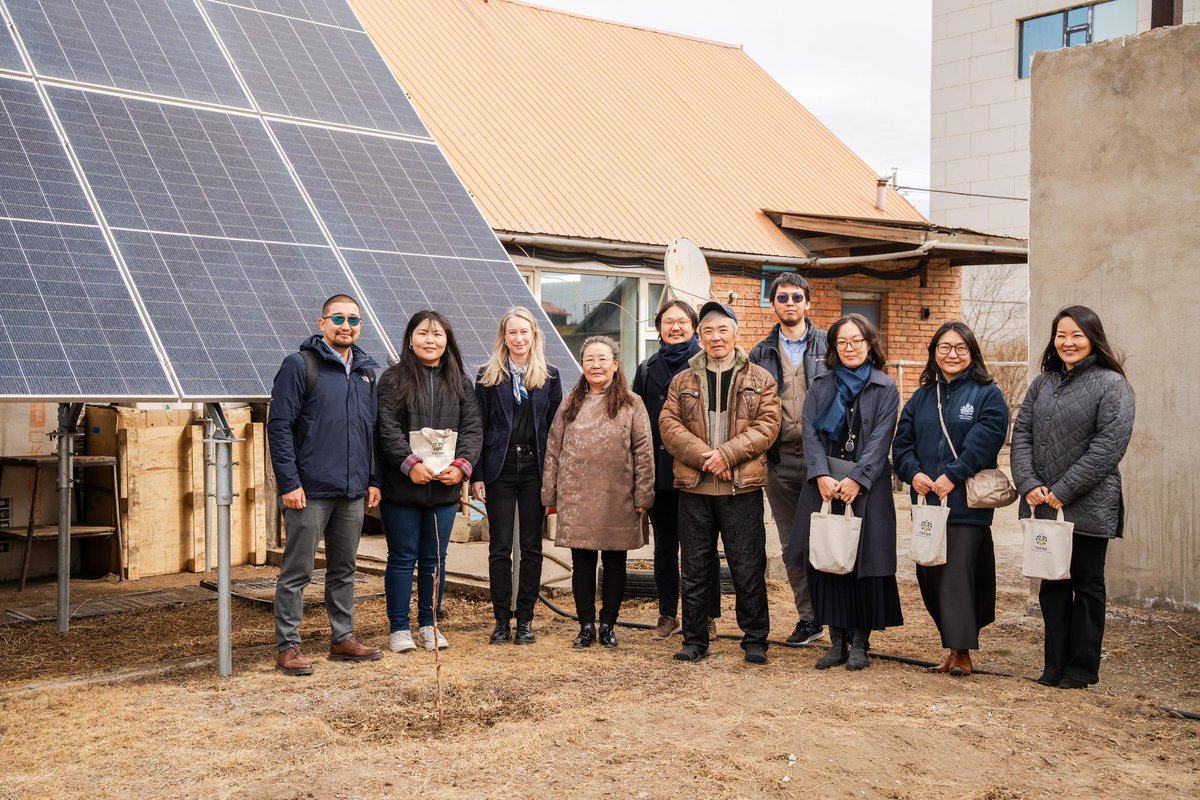
From a very young age, Mongol children experience a level of freedom most modern kids never know. Fewer rules. Fewer walls. They spend warm seasons outdoors, staring at distant mountains, the endless horizon, and the starry night sky. This upbringing creates a powerful, unboxed mind one that refuses to be confined by society’s limits. True nomadic freedom isn’t just a lifestyle… it’s a way of thinking 🇲🇳Would you want your children to grow up like this?
YES or NO👇
Instead of watching an hour of Netflix, watch this 2-hour Stanford lecture on AI careers. It will teach you more about winning in the AI race than all the AI content you’ve scrolled past this year.
Michael Phelps won 23 Olympic gold medals using a mental technique most athletes ignore:
"The biggest thing that really separated me through my career was my mental game. Everything that was in between my ears."
Michael explains how he used visualization:
"When I would visualize, I'd visualize every single thing getting up to a meet, probably a month or so in advance. What could happen. What I want to happen. And what I don't want to happen. Because when it happened, I was prepared for it."
He describes the goal:
"When I got to a swim meet, there's nothing I can control at that point except what I do. I can't control what anybody else does. So I want to know how the race could go, how I don't want the race to go, and in a perfect world, how the race should go. So I could get behind the block and not have to think about anything."
His coach Bob Bowman reveals how they trained this skill:
"When Michael was young, I gave his mom a book of progressive relaxation. Before he'd go to bed at night, she would read this progression of things: clench your fists, work through your whole body. He got so good she'd just open the book, say two things, and he'd be asleep."
Bowman explains why visualization works:
"The brain cannot distinguish between something that's vividly visualized and something that's real. By the time Michael steps up on the block at the Olympics, he's swum that race hundreds of times in his mind. All he has to do is shut everything down and it goes on autopilot."
Michael adds the key detail most miss:
"When I would visualize, it would be what you want it to be, what you don't want it to be, what it could be. So you're always ready for anything. If I have a suit rip, fine, I need another suit, put it on. Any small thing that could go wrong, I'm ready for."
Hugh Grant: "It's been very, very depressing watching Big Tech kidn*p their lives, and to see children really finding it very, very difficult to get properly interested in anything that isn't a screen."
Our brains doesn’t care how old you are, it cares about what thoughts you repeat.
scientists used to believe your brain was fixed, like your height!
that after a certain age, it stopped developing.
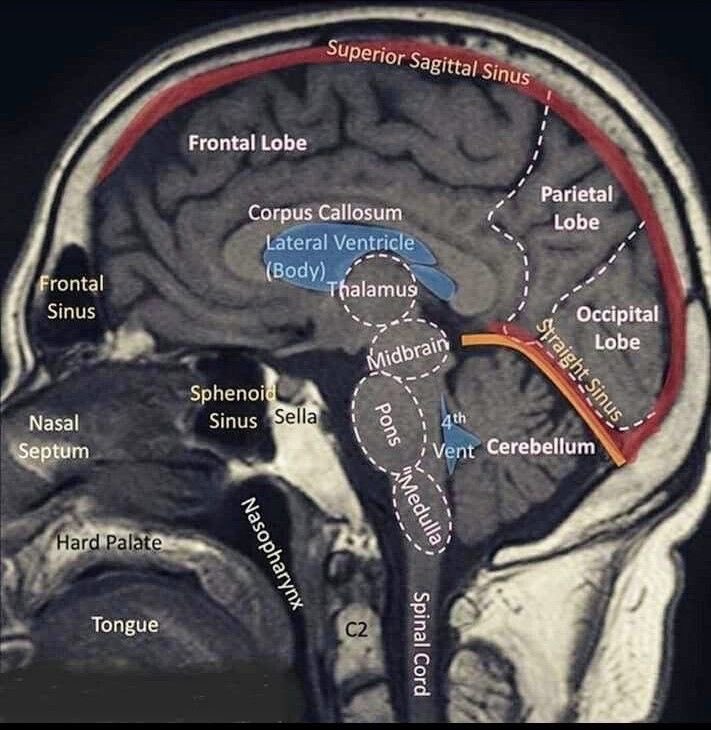
but in the 1990s, with tools like MRI and fMRI, we could finally observe the living brain in real time and everything changed.
research showed that the brain is constantly adapting.
repeated thoughts and behaviors strengthen neural connections, increasing efficiency in pathways that are used often.
> this is neuroplasticity
areas like the basal ganglia become more active as habits are formed, while the prefrontal cortex becomes less involved as behaviors turn automatic.
this is based on hebb’s law: neurons that fire together, wire together.
so your brain isn’t changing based on what you want.
it’s changing based on what you repeat.
what you practice, you become!
🚨BREAKING: 8 weeks of gratitude practice physically rebuilds the neural pathways between your memory and reward centers.
Your brain physically rewires itself every time you feel grateful.
Eight weeks of intentional gratitude practice creates measurable structural changes in the neural pathways connecting your hippocampus to your ventral tegmental area. The memory center starts talking to the reward center in a fundamentally different way. New synaptic connections form. Existing ones strengthen. The physical architecture of how you process positive experiences rebuilds itself.
Most people approach gratitude like a mood they can choose to feel. A psychological vitamin they remember to take when life gets difficult. The neuroscience reveals something far more profound.
Gratitude is a biological intervention that sculpts brain tissue.
Researchers tracked participants practicing gratitude exercises for two months using brain scans. They watched new neural highways construct themselves in real time. The anterior cingulate cortex developed stronger connections to the medial prefrontal cortex. The brain learned to route positive emotional experiences through higher order thinking centers instead of storing them as fleeting feelings.
Every positive experience you’ve ever had exists as a neural trace in your memory network. Most sit dormant, accessible only when something external triggers the specific sensory combination that originally encoded them. You smell coffee, suddenly remember a conversation from years ago. Random. Unreliable. Outside your control.
Gratitude practice systematically rewires that retrieval system.
After two months, participants could voluntarily access positive memories with increasing ease. Their brains had built stronger pathways between memory storage areas and emotional processing centers. They experienced deeper emotional resonance during memory retrieval. The quality of remembering itself had improved.
The participants also started noticing positive details in their present environment they had previously filtered out. Their attention systems recalibrated. The same neural pathways pulling positive memories forward were scanning current experiences more thoroughly for elements worth encoding as positive memories.
Their brains became biased toward collecting evidence that life contains meaningful moments.
Most cognitive interventions try to change how you interpret negative experiences. Gratitude practice changes how thoroughly you notice positive ones. It teaches your visual and emotional processing systems to detect opportunities and pleasures that were always present but neurologically invisible.
The timeline reveals something crucial about neural plasticity.
Weeks one through three showed minimal structural changes.
Participants felt slightly more positive, but brain scans looked identical to baseline. Weeks four through six showed the first measurable increases in gray matter density. Weeks seven and eight revealed entirely new neural network formation.
Two months. Your nervous system can physically restructure itself with consistent practice.
The method was almost embarrassingly simple. Participants wrote down three specific things they felt grateful for every evening, explaining why each mattered. No meditation apps. No guided visualizations. Just pen, paper, and the requirement to identify gratitude targets with enough detail that their brains had to actively search for positive elements.
Specificity drives the neural development.
General statements like “I’m grateful for my family” generate different brain activity than precise observations like “I’m grateful my daughter laughed at my terrible joke during dinner because it showed me she still finds me funny despite growing more independent.”
The brain needs detailed targets to practice connecting memory specifics to emotional rewards.
After eight weeks, participants developed a fundamentally different relationship with their attention and memory systems. Someone whose brain automatically scans for and emotionally amplifies aspects of experience that make existence feel worthwhile.
The neural pathways remain permanent after practice ends.
Gratitude carves lasting roads through consciousness.