Postdoc in theoretical biology @kokkonutter @uni_mainz. Evolution & development, gene regulation, symbiosis, health & disease. And a fondness for the humanities
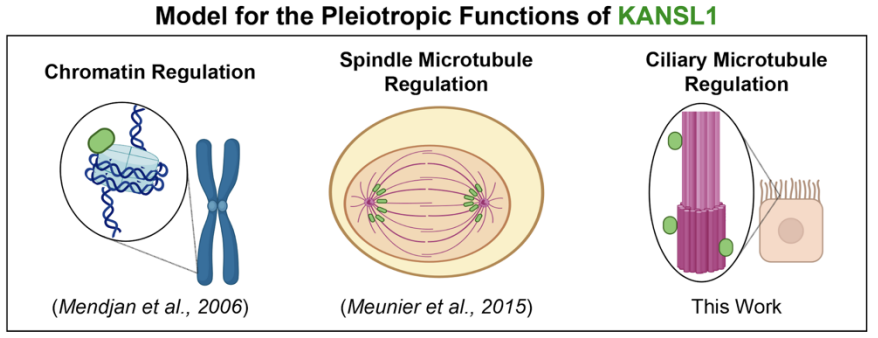
Check out our new ✨preprint✨ led by James Schmidt! Here we identified a new role for the gene KANSL1 in ciliary biology using Xenopus, with validations in patients with associated Koolen-de Vries Syndrome, which is characterized by hypersociability.
https://t.co/PWkiHSB7dl
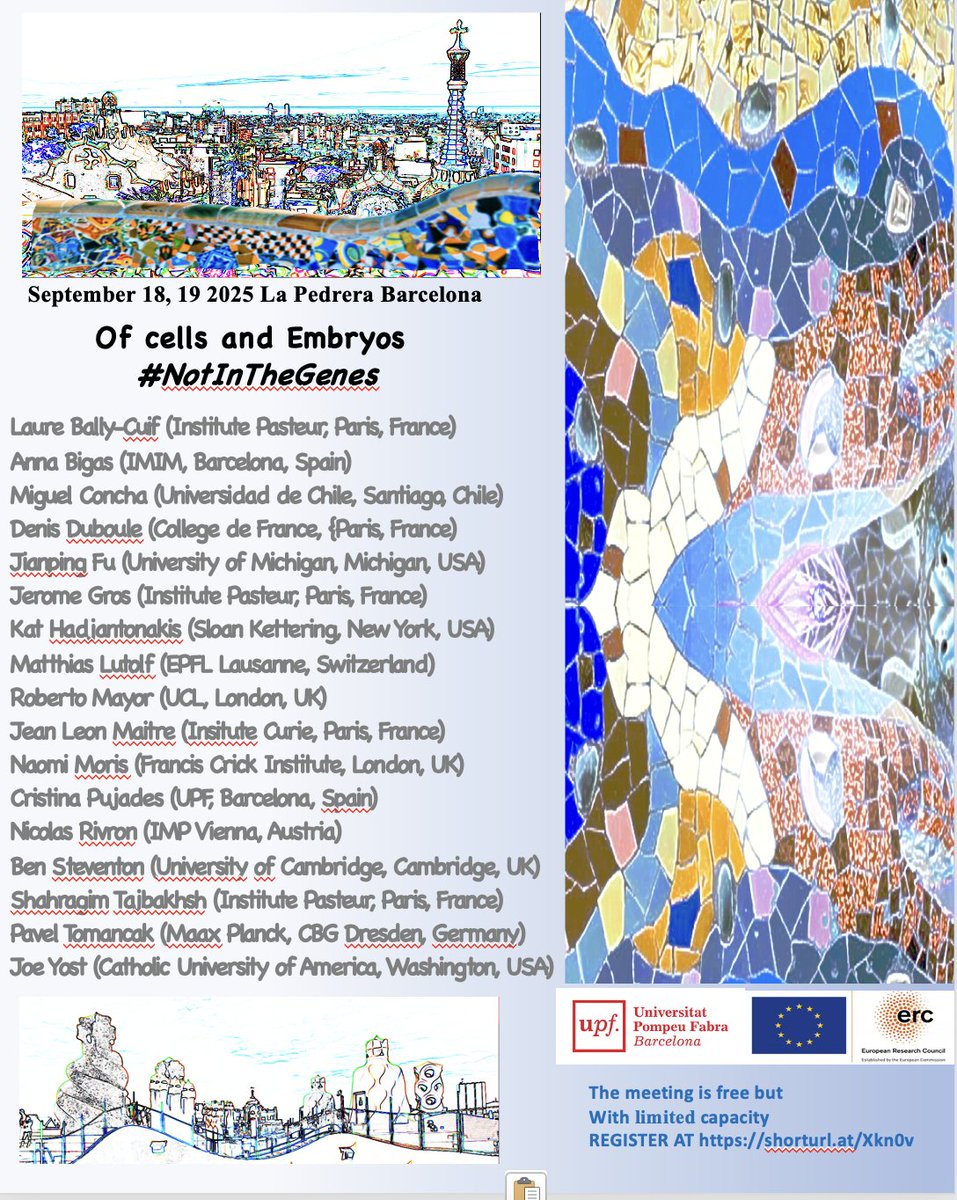
Registration is open for a Symposium on “Cells and Embryos: #NotInTheGenes” in La Pedrera, Barcelona. 18/19 of September 2025.
Attendance is free but you need to register https://t.co/3fO7kUlLcu
Stembryo lab @UPFbiomed@ERC_Research
🧵 I am very excited to share my postdoc project preprint investigating the role of NR4A2, a transcription factor linked to neuropsychiatric disorders, in the establishment of cell type identities in the claustro-insular region of the brain. 1/9
https://t.co/aXe8HXhTWm
@LFodoulian Great work! It also lends further support to the hypothesis that (neuro)developmental disorders caused by haploinsufficiency of transcriptional regulators result from defects in cell fate determination:
https://t.co/LxTz91ugFs
Importantly, it is IRF6's own enhancer that gets disrupted, thereby perturbing the positive feedback loop needed for proper IRF6 expression levels.
This is further evidence showing that disrupted positive feedback can lead to developmental disorders: https://t.co/koszELDIc9
GWAS of non-syndromic cleft palate in 228 cases and 300k controls from Finland. The striking signal in chromosome 1 is driven by a noncoding variant near a transcription factor IRF6 disrupting an enhancer. The variant is 19 times more frequent in Finns than other Europeans.
Rahimov et al. Nat Comm
https://t.co/0TjihvymzA
My take on scientists leaving Twitter/X: It's great to see communities really developing on other platforms and there are lots of good reasons to boycott this place... 1/n
I am excited to share our review, published online today @NatRevMCB. Pilong Li, Gaofeng Pei, @Heankel_, and I review the current literature on the regulation of transcription by condensates, large length-scale assemblies of complexes (Figure 1).
https://t.co/k5F3HElanv
Welche „gemeinsamen Überzeugungen“ hat eine Ministerin für *Bildung und Forschung* mit einem Donald Trump, der paradigmatisch für die Verachtung der Wahrheit steht? #Bullshit
Strong evidence of reduced NPAS3 expression in modern humans due to loss of enhancer function!
Further support for the hypothesis that loss-of-function of genes involved in brain development was important for human evolution:
https://t.co/i5n1pmrTK8
https://t.co/uUJw9FQbRu
@dagarfield Depends on what you mean. Given that disorders caused by TF haploinsufficiency are rare overall, TF limitation isn't a frequent event (due to buffering mechanisms). On the other hand, TFs are in limiting concentrations much more often than, say, enzymes or other recessive genes.
In fact, I discussed many of the "unsuspected links" between phase separation and transcription factor haploinsufficiency in my 2022 review...
https://t.co/LxTz91ugFs
ARID1B controls transcriptional programs of axon projection in an organoid model of the human corpus callosum. Check out the study led by @IMBA_Vienna@Knoblich_lab in @CellStemCell#SfN24 https://t.co/lC2zg2egBd
Our new paper by Hiroshi Arai et al. has been published!
Cell-based assays and comparative genomics revealed the conserved and hidden effects of Wolbachia on insect sex determination https://t.co/zxMAaHCEfr