Out today! We find that an epigenetic modification (6mA) to the mitochondrial genome (mtDNA) influences lifespan and the heritability of mtDNA mutations to the next generation. It implies that epigenetics determines genetic composition in future offspring.
https://t.co/U1kiQ1bjrQ
Apply now for EMBO Workshop onCell Biology of the Nervous System: Cellular Mechanisms of Communication 05 – 08 May 2025 in Heraklion, Greece
📜 Abstract submission and registration deadline: 1 March 2025
https://t.co/W6WuTYpDOv
#EMBOcellBioComm
Congratulations to Anne Hahn from our lab who has won the best PhD student publication in 2024 at our institute @QldBrainInst 🥳🥳🥳 2nd year in a row we have won this award! Well done, Anne! Her amazing paper is pinned above.
This year’s medicine laureates Victor Ambros and Gary Ruvkun studied a relatively unassuming 1 mm long roundworm, C. elegans.
Despite its small size, C. elegans possesses many specialised cell types such as nerve and muscle cells also found in larger, more complex animals, making it a useful model for investigating how tissues develop and mature in multicellular organisms.
Read how the 2024 medicine laureates’ investigations into C. elegans revealed an entirely new dimension to gene regulation: https://t.co/8RwUplwYQA
#NobelPrize
BREAKING NEWS
The 2024 #NobelPrize in Physiology or Medicine has been awarded to Victor Ambros and Gary Ruvkun for the discovery of microRNA and its role in post-transcriptional gene regulation.
While many products promise to reverse ageing without scientific backing, the real secret may lie in epigenetics!
Dr Anne Hahn discusses her research into a mechanism in DNA that regulates the inheritance of disease-causing mutations.
Listen: https://t.co/6OHqvhNN9R
@ZurynLab
Do you know a grad student who has completed an outstanding PhD research project in #genetics & #genomics of #Celegans?
Nominate them for the Sydney Brenner Dissertation Thesis Award by Sept 30—the recipient will present their research at #Worm25: https://t.co/jUIIQT1Erb 🪱🧬
Super excited to share our latest work on the native in-cell organization of the mitochondrial respiratory chain 🥳
Using cryo-electron tomography🔬, we show how the respiratory complexes (and other complexes) are organized inside native mitochondria!
https://t.co/cxHl1j20CJ
Very cool that our lab will be part of this new NHMRC centre of research excellence led by Prof Jürgen Götz @AustraliaGoetz to investigate the mitochondrial contribution to Alzheimer's disease and treatments 👏 @QldBrainInst
Exciting news! #UQ researchers at have secured two $3 million grants from the National Health and Medical Research Council (NHMRC) to fast-track Alzheimer's disease treatments and enhance gynaecological cancer care.
Read: https://t.co/xJd1IkZanm
Out today! We find that an epigenetic modification (6mA) to the mitochondrial genome (mtDNA) influences lifespan and the heritability of mtDNA mutations to the next generation. It implies that epigenetics determines genetic composition in future offspring.
https://t.co/U1kiQ1bjrQ
We find that mtDNA 6mA is wdiely conserved across animals and plants, including human cells implying an ancient mechanism of regulation.
This work was driven by Dr Anne Hahn in the lab and is out in @Cell_Metabolism.
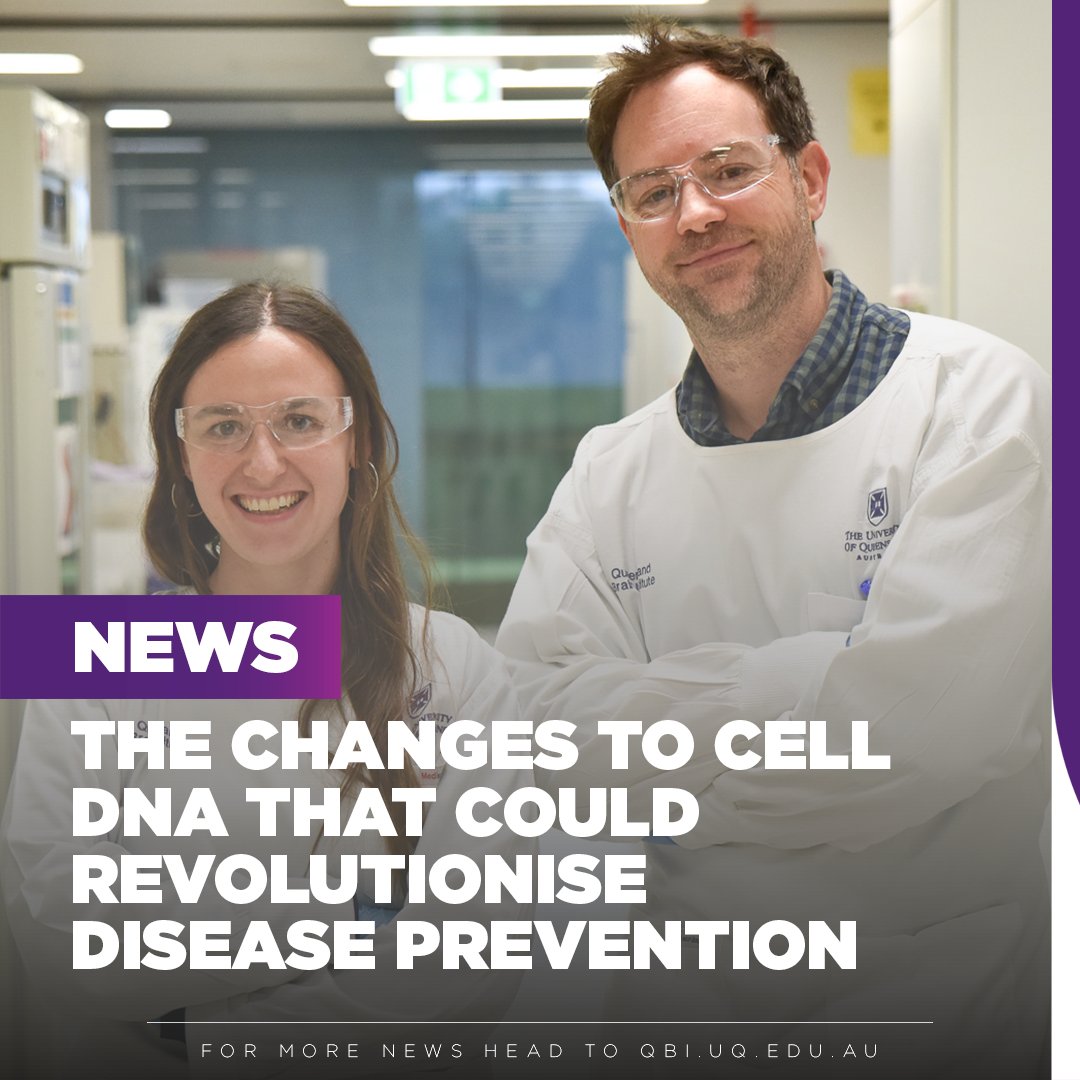
QBI researchers have discovered a DNA mechanism that controls how disease-causing mutations are inherited.
Dr. Anne Hahn and A/Professor Steven Zuryn believe this could lead to therapies that prevent heritable and age-related diseases.
Read: https://t.co/roLDFklpZ5
@ZurynLab